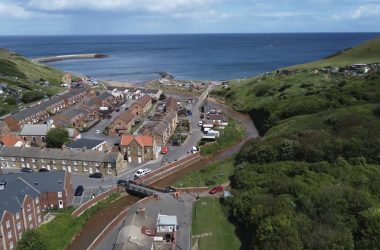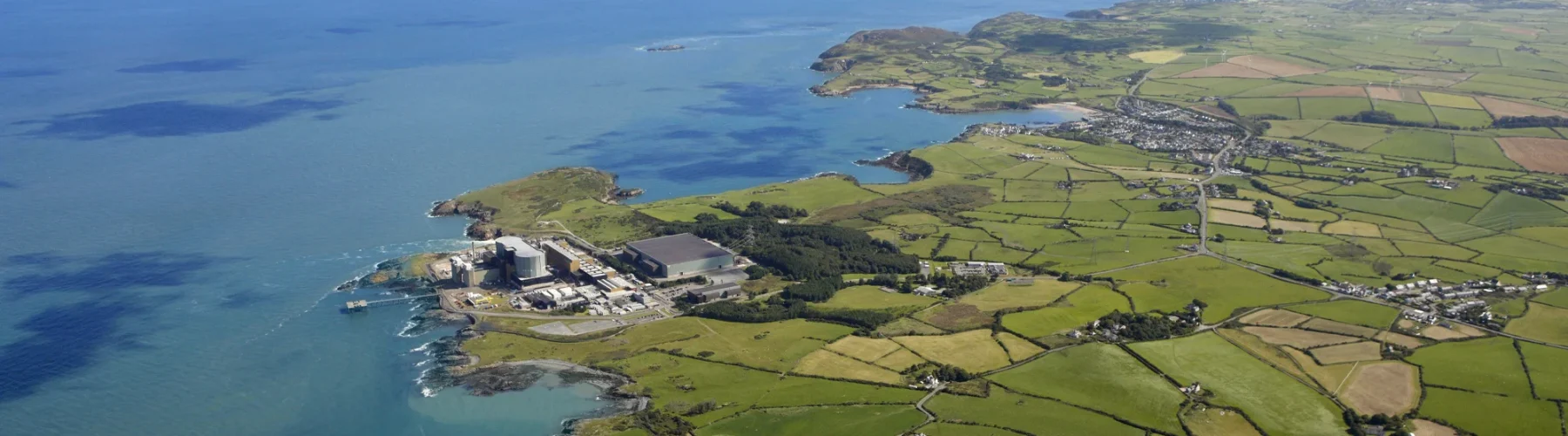
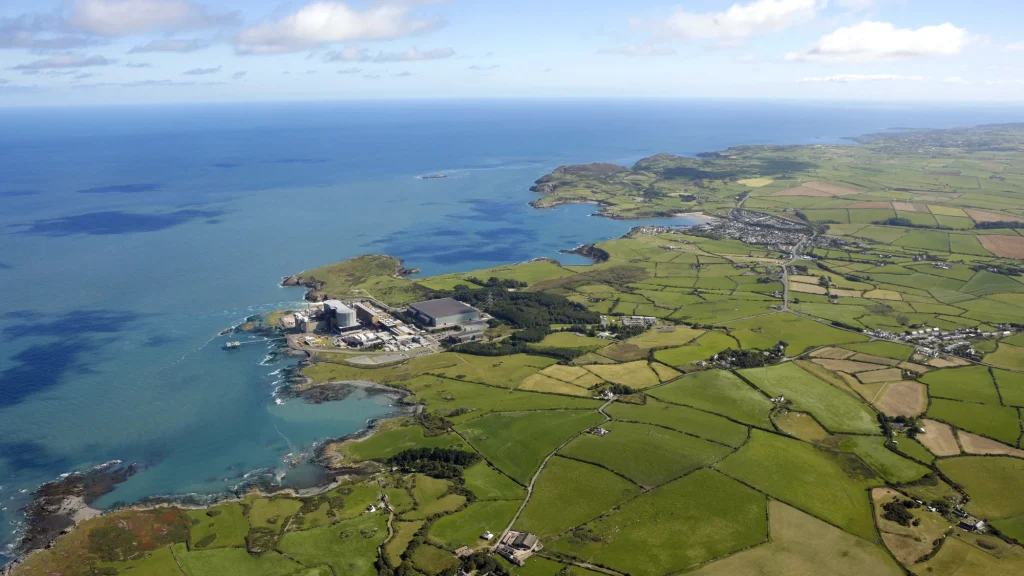
The Magnox station at Wylfa, which is located on the north-western part of Anglesey, has already produced nuclear power in the past; it operated for many decades before closing in 2015 and left behind a workforce, a connection to the grid and a section of coastline that had previously been studied for possible nuclear development. The site will now become the first in Britain to host a small modular reactor as part of the Wylfa scheme, the country’s first effort to build nuclear power in factory-made sections rather than as a single, custom-built project.
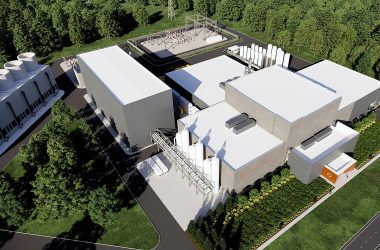
Arup has been appointed by Great British Energy-Nuclear (GBE-N) to take charge of the engineering consultancy aspect of the project, the contract for which can reach a value of £19.5 million. The design involves three Rolls-Royce SMRs, each producing 470 megawatts electrical (MWe), resulting in a total output of 1.5 gigawatts electrical (GWe), sufficient to supply power to millions of households. Arup is leading a team composed of Costain, LDA Design, TÜV SÜD Nuclear Technologies, Mace and Gleeds, and the team’s responsibilities include structural engineering as well as landscape design and the independent nuclear safety assessment.
What makes a small modular reactor different
The agreement includes the RIBA Stage 2 Concept Design work as well as the early works and enabling design, that is the preliminary work which must be carried out before a project of this kind can proceed to construction. The aim is that the reactors should provide clean power by the mid-2030s, with a peak of up to 3,000 jobs being expected.
What distinguishes a small modular reactor from a conventional nuclear power plant is the method of its construction. Rather than pouring the concrete and assembling the steel on site over nearly ten years, SMRs are designed so that they are mostly manufactured in factory conditions in standard sections and then transported to the site for assembly. Although each individual reactor is smaller than a conventional plant, the modular approach enables capacity to be increased by adding more units, just as Wylfa’s three-reactor design will do.
The fact that Wylfa has a nuclear background is one of the reasons why it was considered suitable for the job. As noted by Ground Engineering, since the site has already been used before, much of the ground investigation and environmental data which engineers would normally have to collect from scratch is already available and could thus shorten the early design stages by several months or even years. Should the Wylfa project be a success, it is anticipated to be the first of a broader programme of SMR projects in the UK, with the aim of finding out whether the modular approach can truly deliver nuclear power more quickly and in a more predictable way than Britain’s recent record with large-scale projects has allowed.
Engineering Deep Dive: Building Nuclear Power in Sections
The argument in favour of small modular reactors is based on a straightforward engineering point: large, custom-built nuclear projects have continually exceeded both their time and budget estimates, partly since a great deal of the work takes place at an active construction site and is thus affected by the weather, the availability of local labour, and the natural unpredictability involved in building something on a huge scale for the first time in many decades. SMRs aim to overcome this by getting as much of the work as possible carried out in a factory.
The SMR design developed by Rolls-Royce, the version that has been chosen for the Wylfa project, generates 470 MWe per unit, whereas a single reactor at a large-scale power station such as Hinkley Point C produces roughly 1.6 GWe. This compromise is intentional, since by having the individual reactor modules be smaller, the components can be made to standard specifications in controlled factory environments and then sent by road or rail to the construction site where they are assembled, rather than being constructed one piece at a time on site. Manufacturing in a factory enables better quality control, consistent processes, and the kind of learning curve that results from producing the same component on several occasions, all of which are far more difficult to obtain when each weld and each pour takes place outdoors at an active construction site.
The decision to install three reactors at Wylfa rather than just one is a clear example of the modular approach. Rather than having one single 1.5GWe reactor, which would require completely custom engineering, the site instead has three 470MWe units that are based on the same design. This method shares the risk since if one unit requires maintenance or experiences a delay the other two can keep producing power, a kind of operational flexibility that a single large reactor cannot provide. Moreover, the experience gained from constructing and commissioning the first unit can be directly applied to the second and third units, something that isn’t possible with a one-off design.
At the present stage of the contract, which is RIBA Stage 2 Concept Design, the engineering team headed by Arup converts the reactor technology and the site conditions into a design and layout that is practical to implement. This involves carrying out the structural engineering for the reactor buildings and the associated infrastructure, landscape design carried out by LDA Design in order to achieve the site’s visual and environmental integration with the Anglesey coastline, and an independent nuclear safety assessment by TÜV SÜD Nuclear Technologies, whose responsibility is to check that the design complies with the UK’s nuclear safety and regulatory requirements without being influenced by the design team. Costain and Mace provide expertise in construction and programme management, while Gleeds offers cost management, all of which are functions that large nuclear projects require to be co-ordinated from the very earliest stages in order to prevent future delays and cost overruns.
The fact that Wylfa has a history as a nuclear site is a real engineering benefit in this case, not merely a matter of convenience. Ground investigations - covering soil composition, seismic assessment, groundwater conditions and the suitability of the foundations - are expensive, time-consuming and essential before any nuclear construction can take place. A large part of this kind of investigation, together with the environmental baseline data relating to the surrounding coastline and marine environment, was carried out during the period when the Magnox station was in operation and also during the earlier Horizon Nuclear Power proposals for the site; thus the present team are not having to start from scratch.
If Wylfa is able to show that small modular reactors can be designed, obtained consent for and constructed more quickly than conventional nuclear power plants, then the model is meant to be applied in other parts of the UK. The very idea of being able to carry out the second, third and fourth SMR programmes more rapidly than the first - because the design, the supply chain and the regulatory process have already been proven - is in fact what originally prompted the decision to go modular.
The small modular reactor plan of Wylfa is essentially as much a test of the method of construction as it is an attempt to set up a power station; if Arup’s team manages to have three factory-built reactors designed, approved and producing clean power by the mid-2030s then it will be the best evidence so far that Britain is able to build nuclear power faster than its recent record indicates, and will be the first of a number of sites which might later do the same.
- Arup has been appointed to lead engineering consultancy on the UK’s first small modular reactor scheme at Wylfa, Anglesey.
- The £19.5m contract covers design for three Rolls-Royce SMRs generating a combined 1.5 GWe.
- Unlike conventional reactors, SMRs are manufactured in factory-built sections and assembled on site.
- Wylfa’s nuclear history means existing ground and environmental data can speed up the design process.
- Clean power delivery is targeted for the mid-2030s, with up to 3,000 jobs at peak construction.