Three miles beneath the pine forests of Newberry, Oregon, the rock reaches 750°F, hot enough to melt lead.
Drilling engineers at Mazama Energy have spent the past year getting a well down to it, and what they have found there could reshape how much of the world thinks about geothermal power.
Superhot rock geothermal, once considered too deep and too hot to be economically viable, is starting to look like a serious contender for round-the-clock clean electricity.
The second well that Mazama drilled at Newberry, which was named Athena, attained a depth of 10,350 feet in only 15 days, that being about 80 per cent fewer days than the previous time the company had tried to reach a similar depth. At that depth and temperature,, water ceases tobehavet like ordinary steam and instead enters what engineerscalls a supercritical state, neither entirely liquid nor entirelygaseouss. Supercritical water absorbs much more energy than steam from a conventional geothermal well, which is why superhot rock geothermal is worth the extra difficulty of drilling for it. it.
Traditional geothermal wells generally function at about 390°F (200°C). Mazama is aimingfort rocktemperatures ofs 750°F (400°C), and in 2025 it had alreadyreachedd the highest temperature ever recorded in an engineered geothermal system, namely 629°F (331°C). The company states that wellsoperatingg at these extremely high temperatures can generate up to10n times more power than conventional geothermal wells of the same size, and that each well at Newberry should be able to produce up to 15MW of electricity continuously, day and night,regardless ofr the weather.
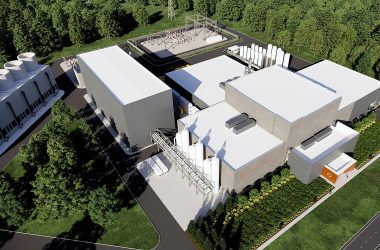
The site has a significance that goes beyond that of any individual well. Mazama thinks that Newberry could become the first place in Oregon able to generate a total of 10 gigawatts of geothermal power, a amount that places it on a par with major fossil fuel or nuclear power stations, except that it will be using heat which will continue to be available as long as the Earth’s core remains hot. As reported by TechCrunch, the company has obtained a second development site in order to go beyond Newberry.
Investors have noticed this development. Mazama, which has the support of Khosla Ventures, has raised a $135m Series B funding round that has been oversubscribed in order to carry out faster and deeper drilling. The company intends to begin producing electricity from Newberry next year and aim to reach a capacity of 200MW by 2030. A study carried out by the University of Twente and the Clean Air Task Force indicates that the size of the available resource is enormous, since drawing on just 1% of the world’s superhot rock could in theory yield 63 terawatts, a amount several times greater than today’s global electricity demand. Because data centres used for artificial intelligence are causing electricity demand to rise faster than most power grids are able to meet, superhot rock geothermal has acquired a new nickname within the energy sector: the dark horse candidate for powering the next generation of always-on computing.
Engineering Deep Dive: Drilling for Supercritical Heat
It is not just a deeper form of ordinary drilling to get a well three miles down into rock so hot that it can melt lead; every stage of the process, including the drill bit, the casing, and the fluid which carries the rock cuttings back to the surface, has to be capable of withstanding conditions that would destroy normal oilfield equipment.
The reasons that interest Mazama begin with what happens to water when it is subjected to extremely high pressure and temperature. At the surface, water boils at 100°C and turns into steam. However, if both pressure and temperature are increased enough - above about 374°C and 22 megapascals, that is, above the critical point - water reaches a supercritical state in which the difference between liquid and gas vanishes. Supercritical water has considerably more thermal energy than an ordinary steam of the same volume and also has a lower viscosity so that it flows more easily through rock and pipework. It therefore becomes possible for a geothermal well that reaches supercritical conditions to obtain much more energy per well than a conventional one, which is the economic reason for attempting to exploit very hot rock geothermal energy even though this involves extra difficulty.
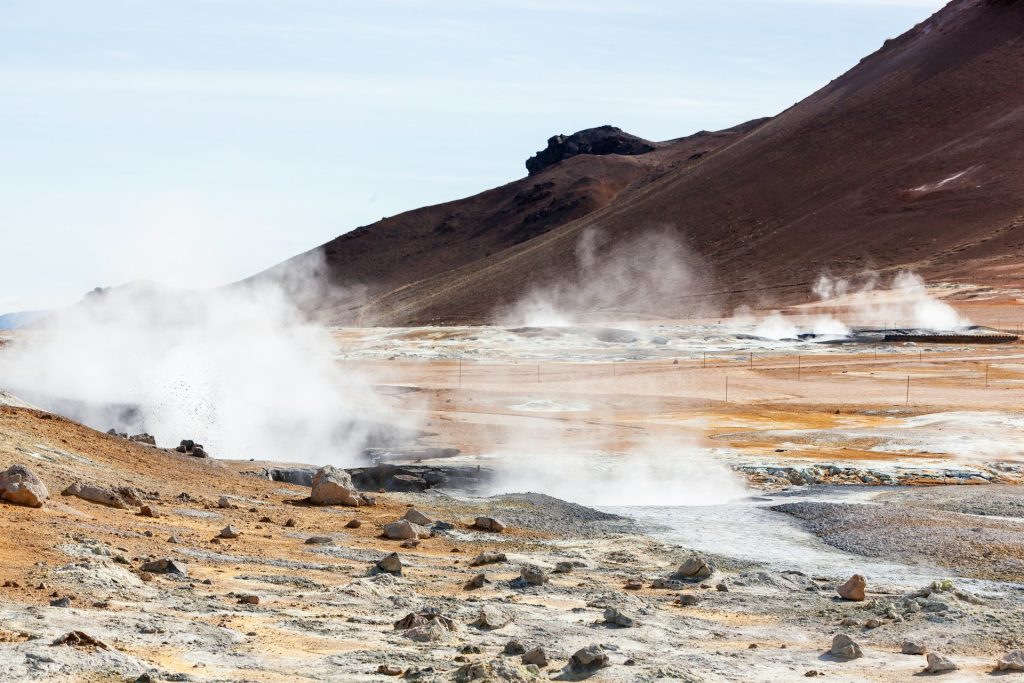
The problem begins with the drill bit. Ordinary drilling fluids and downhole tools have a rating that is well under 400°C, and components such as elastomer seals, the sensor electronics and even certain steel alloys break down or fail completely when exposed to such high temperatures. Similarly to other companies developing superhot rock technology, Mazama uses specialised high-temperature drilling fluids, ceramic and high-alloy components that have been designed for use in high-temperature environments, as well as drill bit designs adapted from experience in geothermal and deep oil and gas operations in order to cut efficiently through the hard, often volcanic rock encountered at these depths.
In this type of drilling, speed is of great importance when it comes to both cost and safety. The fact that Mazama’s Athena well reached a depth of 10,350 feet in just 15 days - representing an 80% improvement compared to its previous well - shows that there have indeed been real advances in drilling methods, probably involving better choice of bits, more optimised formulations of the drilling fluid, and improved real-time monitoring which enables engineers to adjust settings such as rotational speed and the weight on the bit as the conditions vary with depth. Since drilling is faster, the expensive rigs and special equipment are for a shorter time subjected to the most severe part of the well, and the cost per well is directly reduced, this being the most important factor in determining whether superhot rock geothermal can compete with other power generation methods in terms of price.
When a well has reached the required depth and temperature, the engineering problem becomes one of dealing with the intense heat and pressure at the wellhead and in the power generation equipment. The turbines and heat exchangers designed for use with supercritical fluids have to be made from materials and include seals that can cope with both the high temperature and the corrosive, mineral-containing water which flows through deep geothermal systems. That is where enhanced geothermal system (EGS) methods come into play: it is possible for engineers to create or enlarge fractures in hot, dry rock by means of controlled hydraulic operations, after which water can be pumped through that network of fractures to transfer the heat to the surface, thus producing a geothermal reservoir in a location where no such reservoir exists in nature. Mazama’s 2025 achievement of 629°F in an engineered system shows that this method can indeed achieve truly superhot conditions, not merely the more modest temperatures that EGS projects have usually aimed for.
What attracts grid planners is that, unlike solar or wind power, a well which generates energy from superhot rock provides power continuously and is not affected by the weather or the time of day. Since researchers believe that the resource could in theory meet many times the world’s current electricity demand using only a small portion of the Earth’s superhot rock, the technology is now attracting interest from investors and utilities who are seeking clean baseload power to meet the constant, round-the-clock demands of AI data centres.
Mazama’s timetable is ambitious: it aims to have electricity from Newberry next year, 200MW by 2030, and already has a second site secured. Whether or not superhot rock geothermal can keep up with the expectations of its supporters will depend on whether drilling speed and well costs continue to improve at the rate indicated by the Athena well. If they do, a technology which was dismissed a decade ago as being too deep and too hot might become one of the more reliable solutions to the need for clean, continuously available power.
- Mazama Energy is drilling three miles down at Newberry, Oregon, targeting rock at 750°F (400°C).
- At that depth, water becomes supercritical, absorbing far more energy than conventional steam.
- Each well can generate up to 15MW of electricity continuously, up to 10 times more than conventional geothermal.
- The Athena well reached 10,350 feet in 15 days, 80% faster than the company’s previous attempt.
- Mazama raised an oversubscribed $135m Series B, targeting electricity generation next year and 200MW by 2030.