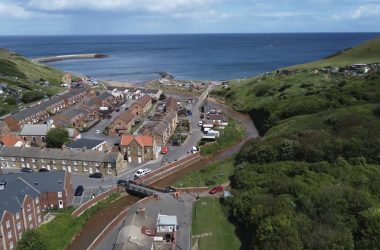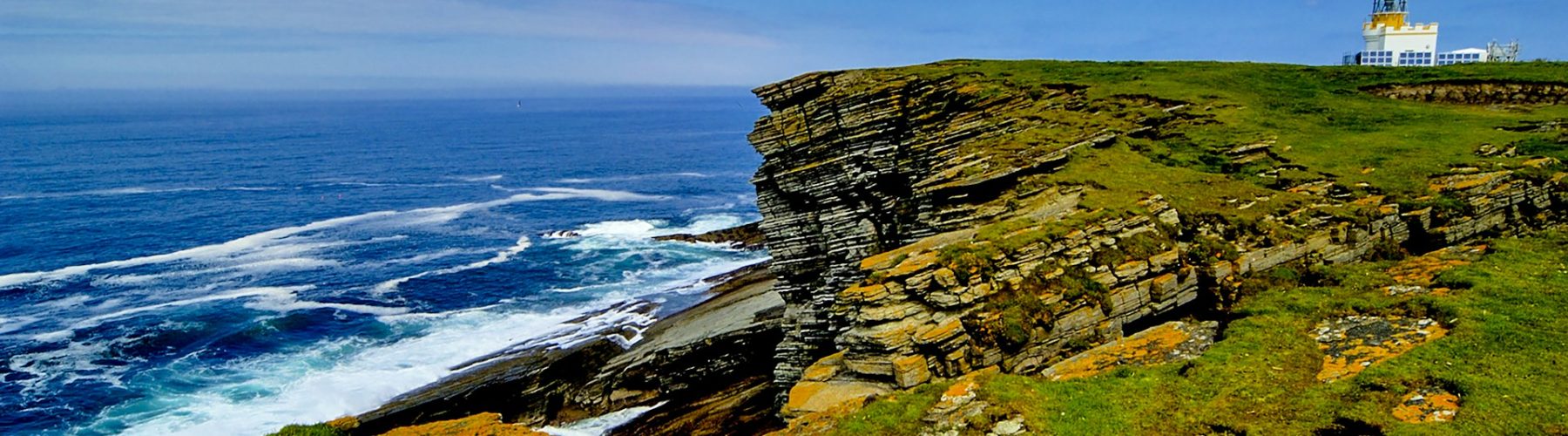
In 1951 a single wind turbine started to turn at Costa Head on Orkney’s Mainland and thus became the first machine in Britain to supply power to what later developed into the national grid. However, this was somewhat of a false start since Orkney has, over the past seven decades, produced more electricity than it can use and there has been no place for the excess to go. This situation is now going to be resolved with the completion of a £1bn Orkney subsea cable, which will be the first link ever to connect the islands with Great Britain’s transmission network.
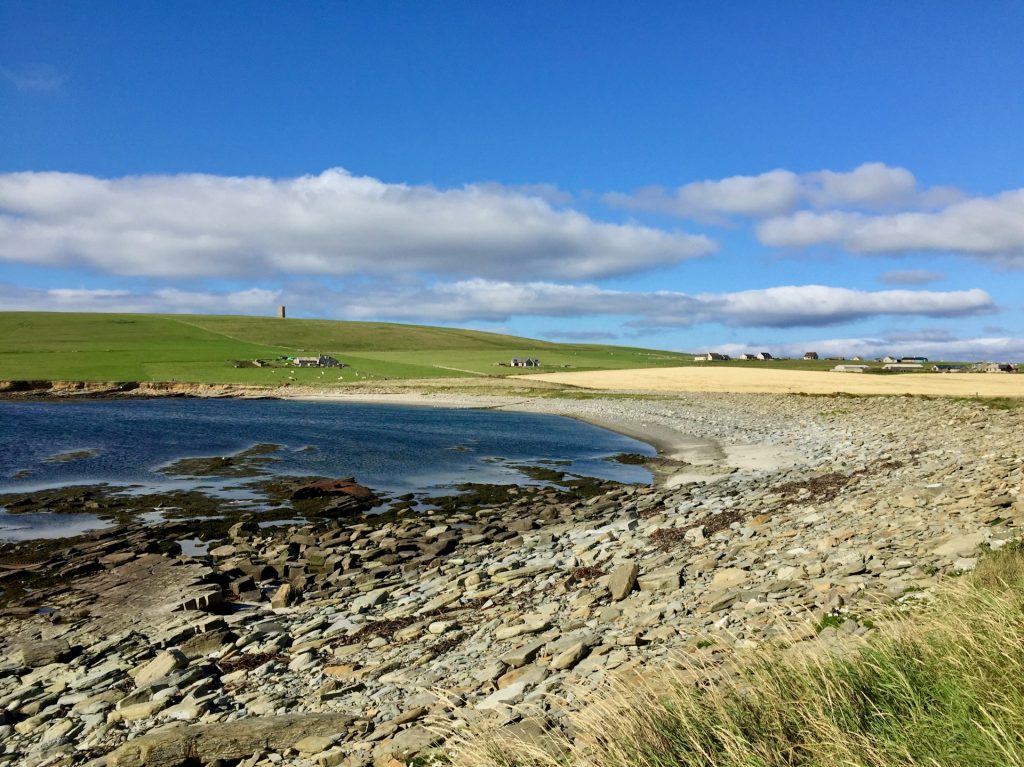
SSEN Transmission is constructing the link, and the magnitude of the task matches the magnitude of the problem it is addressing. A 53 km high-voltage alternating current cable, made by Nexans, will be laid under the Pentland Firth, a body of water well known to sailors for currents that can reach 10 knots or more. On land, new substations will be connected to the cable at Finstown on Orkney and at Dounreay in Caithness by means of underground and subsea sections, thus forming a single uninterrupted route from the islands to the main mainland grid.
Orkney is the third and final of Scotland’s three main island groups - after Shetland and the Western Isles - to receive a transmission connection of this type; this lack has for a long time formed the odd contradiction at the centre of the islands’ energy situation. The islands have more than 500 domestic wind turbines and also include wave and tidal test sites distributed across the Pentland Firth and at the Fall of Warness. Renewable energy currently meets more than 100% of the islands’ annual demand for electricity, and since there is no export link, the excess has on various occasions meant that operators have had to switch off turbines in order not to overload the local network, thereby wasting power which the rest of Britain could readily make use of.
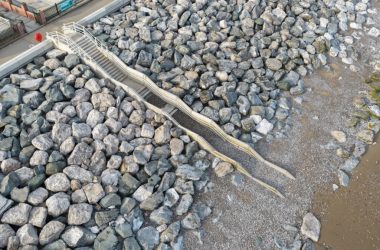
When it has been energised, the new link will for the first time enable up to 220MW of renewable capacity to connect and export power to the mainland, a amount which goes well beyond the boundaries of Orkney and supplies wind and marine energy to a grid extending southwards to England and beyond. The engineers working on the project have stated that the earthworks are finished at both the Finstown and Dounreay sites, the building frames are now in place and the structural foundations are approaching completion.
It is more than just basic preparatory work; to lay the cable across the Pentland Firth you have to navigate around shipping routes, deal with strong tidal currents and take into account the fact that the seabed changes with the flow of the water. The engineers have been required to carefully plan the depths at which the cable will be buried and the paths it will follow in order to prevent damage caused by anchors, fishing equipment and the immense force of the water itself, while at the same time ensuring that the islands’ own supply of materials continues to be maintained during the construction work.
So long as the schedule is kept, the Orkney subsea cable should be switched on at some point between 2027 and 2028. For those residents who have seen wind turbines remain inactive on windy days because there was no place to send the electricity, that date represents the conclusion of a lengthy delay, since Costa Head first demonstrated seventy-five years ago that the wind in Orkney could be used to light up Britain.
Engineering Deep Dive: Cabling Through the Pentland Firth
At first sight, linking an island group to a mainland electricity grid seems a straightforward task, but when you consider the conditions that the cable has to meet, it is a very different matter. The Pentland Firth is one of the most rapid tidal races in Europe and the current speeds there are so great that they would cause a poorly protected cable to break down within a matter of months. The engineers working on the Orkney subsea cable project had to deal with two problems simultaneously: they needed to transmit power over a distance of 53 km across open water and at the same time ensure that the power would continue to flow for decades in one of the most severe marine environments in the UK.
When it came to choosing the type of current to use, high-voltage direct current (HVDC) is generally the better option for extremely long distances since alternating current suffers from capacitive losses which increase as the length of the cable grows, especially when the cable is underwater because the entire cable functions like a huge capacitor. However, at a distance of 53 km the losses remain acceptable, so SSEN Transmission decided on high-voltage alternating current (HVAC). The reason for this choice is that the substations at both ends can be simpler and less expensive since alternating current can be connected directly to the existing grid without the need for the large converter stations that an HVDC link would require.
The cable, which is manufactured by Nexans, has its conductors - made of either copper or aluminium - covered with insulation consisting of cross-linked polyethylene (XLPE) and is then protected by layers of armouring wire intended to guard against crushing, abrasion and the corrosive action of seawater. Subsea power cables of this type are installed using specially equipped cable-laying vessels that are fitted with tensioning systems to pay out the cable at a steady rate, at the same time as a plough or a water-jetting sled buries the cable in the seabed to a depth of one to two metres in order to safeguard it from anchors, trawling equipment and the tidal scour which can reveal unprotected sections within one storm season.
Planning routes in the Pentland Firth is a field all of its own. To do this, surveyors carry out a detailed survey of the seabed using multibeam sonar in order to detect rock outcrops, areas of sediment mobility and any existing infrastructure, after which they select a corridor that, where possible, avoids the strongest currents even though it also has to be the shortest reasonable route. At the same time, environmental engineers take into account the movements of seals, seabirds and cetaceans and schedule the intrusive work to coincide with times when breeding and migration seasons are not taking place, as the Pentland Firth and the coastal waters of Orkney are home to large numbers of both.
On land the substations at Finstown and Dounreay carry out the less glamorous but no less demanding task of converting the electricity transmitted by the cable into a form suitable for use by the wider network. The transformers adjust the voltage up or down, the switchgear guards the system against faults and the control systems keep an eye on the load in real time to ensure that power flows smoothly between the power generated on the island and that required on the mainland. The civil engineering work involved in constructing these facilities in Orkney and in Caithness included foundations, drainage and structural steel, but had to be carried out in accordance with a marine construction programme determined by the tides, weather windows and the availability of vessels rather than the calendar.
The 220MW capacity that the link makes available is a design figure and not a strict limit. When transmission engineers carry out projects of this kind they usually include a margin because the amount of renewable power in places such as Orkney tends to exceed forecasts once an export route is in place. This was exactly what happened with Shetland’s own HVDC link, which came in a few years earlier, since new wind projects were then proposed once the developers realised that there was a destination for the power. The Orkney subsea cable is likely to have a similar impact, transforming a currently constrained network into the starting point of a much bigger one.
Once the Orkney subsea cable has been buried and switched on, it will not be visible from the land. Turbines that had previously been left idle on windy days will finally start generating power, and Orkney’s long-standing surplus will become an asset for all of Britain. Keep an eye on the announcements regarding energisation in 2027 and 2028, and also watch for the new wave of wind and marine energy projects that are likely to come after the link is opened.
- SSEN Transmission’s £1bn Orkney subsea cable is the first link connecting the islands to the GB transmission network.
- A 53km HVAC cable, made by Nexans, runs beneath the Pentland Firth between new substations at Finstown and Dounreay.
- Orkney generates more renewable power than it needs but has had no way to export the surplus until now.
- The link unlocks up to 220MW of new renewable generation capacity once energised.
- Earthworks are complete at both sites, with energisation expected in 2027-2028.