
Construction & InfrastructureInnovation
Engineers begin an 18-month programme to demolish and rebuild the HS2 Saltley Viaduct in Birmingham, raising it two metres to make way for high-speed rail.
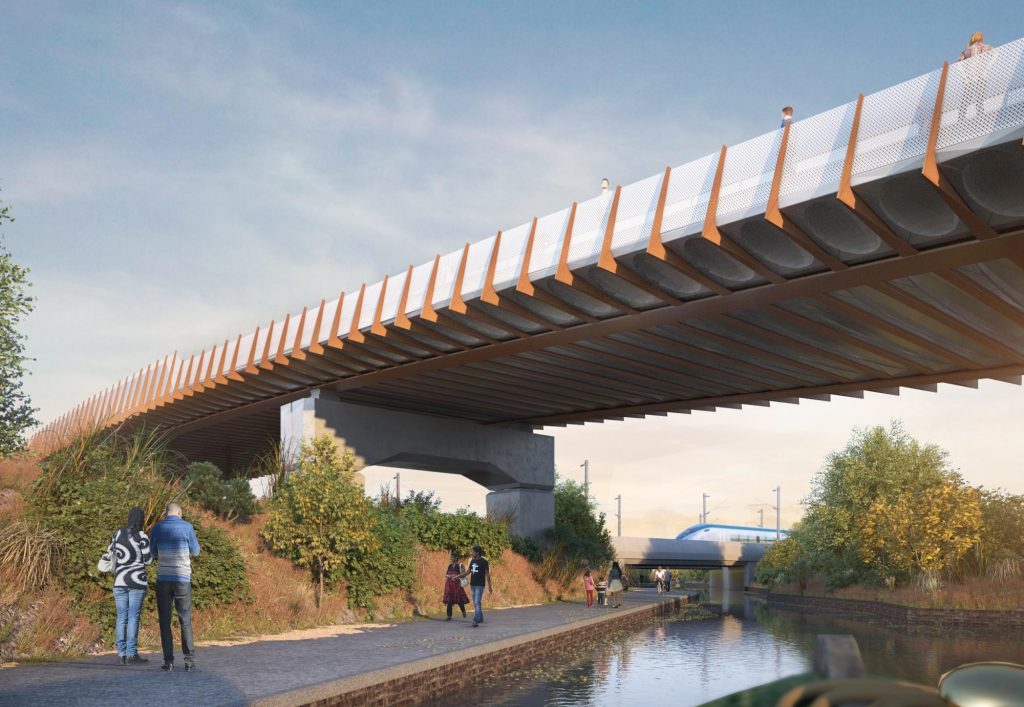
A viaduct located approximately two miles north-east of the centre of Birmingham, one that most people have driven over without realising it, is about to turn into one of the most complicated engineering sites in Britain. The HS2 Saltley Viaduct, a structure 183 metres long which carries the B4114 over a complicated arrangement of infrastructure, is to be demolished and rebuilt. It is not to be repaired or widened in situ. Instead it is to be torn down and completely replaced, being built two metres higher and 4.5 metres wider so that Britain’s new high-speed railway can run underneath it.
As Rail Technology Magazine has explained, the project is being carried out by Balfour Beatty VINCI (BBV), who is HS2’s principal construction partner in the West Midlands. It is anticipated to last up to 18 months and will be carried out in four carefully arranged stages. The reason for taking such care is what is located underneath.
The viaduct does more than just span a road or a valley; it has to cross three separate important assets, namely the Birmingham and Derby rail line (which carries both passenger and freight trains every day), the Birmingham and Warwick Junction Canal (a navigable waterway for narrowboats), and the River Rea. Each of these presents different requirements. The railway insists on as little disruption to its services as possible. The canal needs to allow boat navigation or else involve a controlled closure with alternative arrangements. The river must keep flowing and must not be blocked or contaminated by the construction work.
Dan Binns, who is a senior project manager with Balfour Beatty VINCI, is straightforward when it comes to the difficulty of the task: “Carrying out this construction programme in such a busy and confined area is a massive challenge and has called for a great deal of planning.”
The initial stage consists of taking down sections of the present structure over the railway during the weekend possession periods, when rail traffic can be halted for a short time. Two weekends have been set aside for the removal of the old Aston Church Road overbridge and the railway part of the Saltley Viaduct. The subsequent stages will then deal with the eastern and western spans crossing the River Rea and the canal. The canal will be closed to narrowboats and pedestrians for approximately a month, and during this time a temporary pontoon access system will be put in place together with a diversion route being provided through the Birmingham and Fazeley Canal.
The utility diversion work has already been finished under the viaduct, with a dense network of gas, water, power and telecommunications cables having been removed from the area to be demolished. Although this type of preparatory work is generally not visible to the public it can take many months to carry out and involve a considerable amount of money in large infrastructure projects.
Engineering deep dive
The reconstruction of a viaduct in an urban area over which transport routes are still in operation is a problem which involves almost all the fields of civil and structural engineering, and the HS2 Saltley Viaduct project shows a number of techniques that A-level Design and Technology and Physics students will come across when studying more advanced topics.
The most notable method used is the employment of a Self-Propelled Modular Transporter (SPMT) when crossing the railway line. This type of SPMT is a platform built on a number of independently steered axle lines, each equipped with hydraulic suspension, and is capable of moving very heavy loads with precision down to a millimetre. Instead of assembling the bridge span directly over the tracks, which would necessitate long periods of closure of the railway and crane work right above the live infrastructure, the span is constructed on land next to the railway. When it is finished, the SPMT lifts it and then drives it laterally into position within a short possession period. The whole process can be completed in as little as one weekend, whereas conventional crane lifting would take weeks.
The structural design of the new viaduct has to take into account loading conditions which are considerably different from those of the original. Since the deck is raised by two metres, the geometry of the approach ramps is altered, the bearing loads on the abutments change and the lateral forces caused by wind on the taller structure also increase. Because the viaduct is widened by 4.5 metres, both the dead load (that is, the weight of the structure itself) and the live load capacity required for traffic, cyclists and pedestrians rise. The foundations will either have to be strengthened or replaced in order to cope with these greater forces, and the ground conditions in the River Rea floodplain add an extra element of complexity.
The steel referred to in the design for the new building is an alloy which, when exposed to the atmosphere, develops a stable and protective layer of rust thus making painting unnecessary. This represents a decision in lifecycle engineering since painting a viaduct spanning a railway, a canal and a river would require costly access scaffolding and environmental containment measures. Although weathering steel has a higher initial material cost, it results in greatly reduced maintenance over the 120-year design life of the structure. Another feature is the incorporation of LED lighting into the steel panels, a detail that reflects current standards in infrastructure design and which enhances the safety of pedestrians and cyclists without the need for individual lighting poles.
The step-by-step demolition programme shows an example of interface management, which involves coordinating a number of stakeholders (Network Rail, the Canal and River Trust, Birmingham City Council, the utility companies and the bus operators) since their assets and operations all come together at one point. In reality, each stage of the demolition has to take into account the requirements of all the stakeholders at the same time. The period during which the canal is closed, the railway possession weekends, the utility diversions and the road traffic diversions all have to match one another, and if there is a delay in one part of the programme it can have a knock-on effect for the whole programme.
The project serves as a typical illustration of the way real infrastructure projects are delivered for those students who are studying structural engineering or construction management. Although the engineering aspects of the bridge - such as the steelwork, the bearings and the deck - are important, the logistics involved in building it in the correct location at the right time without damaging anything else are arguably even more so.
Links to the curriculum: A level, GCSE
When the new HS2 Saltley Viaduct is finished, it will have wider walkways and integrated LED lighting alongside the roadway, just as the design standards introduced at the recently completed Aston Church Road overbridge nearby have done. The HS2 route will go through below, on its way towards Birmingham Curzon Street station. Eventually hundreds of thousands of people will use both the road above and the railway below, the majority of them not knowing about the 18 months of careful planning that enabled this.
Credit via railtechnologymagazine.com
Construction & InfrastructureInnovation

Construction & InfrastructureInnovation
Construction & Infrastructure
Construction & InfrastructureInnovation