Aerospace, Defence & Marine
Five peer-reviewed papers confirm the physics behind Commonwealth Fusion Systems' ARC compact fusion reactor, designed to power 280,000 homes.
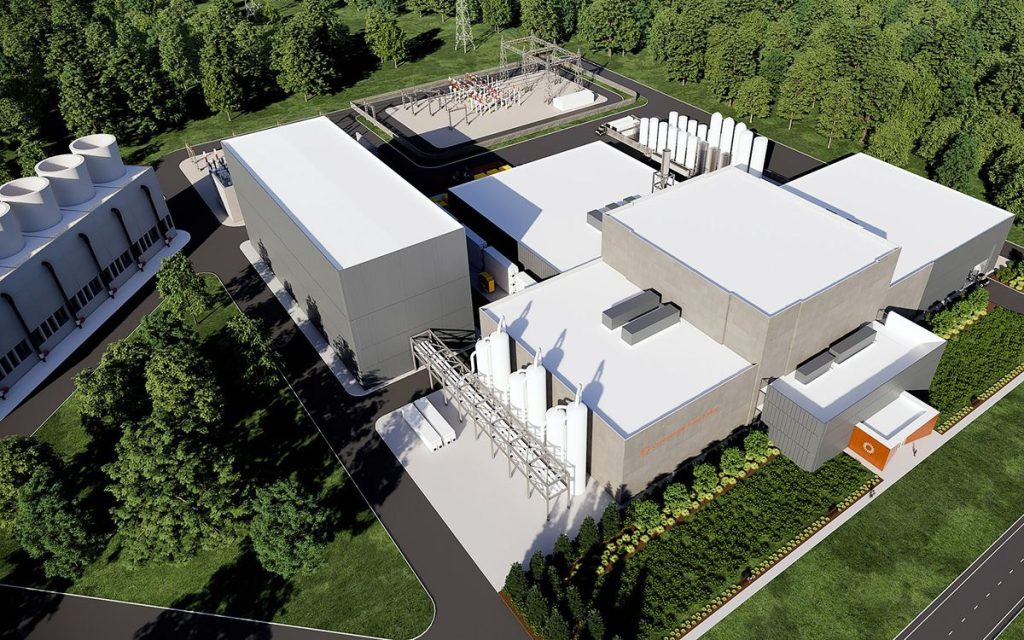
At a facility in Devens, Massachusetts, people are currently assembling a device that is lighter than a commercial airliner with the objective of replicating what the Sun does. This is not just a figure of speech; it is actual fact. Commonwealth Fusion Systems is building a machine which will get hydrogen isotopes up to a temperature of 150 million degrees Celsius so that their atomic nuclei fuse and a part of their mass is changed into energy. Moreover, five new peer-reviewed studies show that the physics supports this method.
The research papers published in the Journal of Plasma Physics set out the scientific basis for the company’s ARC compact fusion reactor, as first reported by IEEE Spectrum; ARC stands for affordable, robust and compact. This kind of description is uncommon in the field of fusion engineering, since that field has previously been associated with cost overruns and long development times. The company, however, believes that its approach actually does achieve these characteristics.
What is important is the use of magnets. For instance, conventional fusion reactors such as the International Thermonuclear Experimental Reactor (ITER), which is being built in southern France, employ low-temperature superconducting magnets and these have to be cooled down to near absolute zero. While the magnets work correctly, they are extremely large; the tokamak of ITER, that is, the doughnut-shaped vessel which contains the plasma, weighs 23,000 tonnes.
CFS has adopted a different method; their compact fusion reactor employs high-temperature superconductor (HTS) magnets made from a material called rare earth barium copper oxide. In this instance, the term ‘high-temperature’ is relative. The magnets still operate within the temperature range of minus 200 to minus 250 degrees Celsius. Nevertheless, this temperature is high enough to enable the cooling system to be greatly reduced, which in turn allows all the other components to be reduced as well. The result is a reactor that can generate 1.1 gigawatts of fusion power and supply 400 megawatts of net electricity to the grid - sufficient for about 280,000 homes - from a device which is only a small fraction of the size of ITER.
Brandon Sorbom, who is one of the founders of CFS and holds the position of chief science officer, states that the fuel could be carried in a pickup truck. Deuterium is derived from seawater and tritium, the rarer isotope of hydrogen, will later be produced inside the reactor when the neutrons from the plasma strike the lithium in the molten salt blanket that surrounds the reactor.
The five papers concern the part which Sorbom calls the most complicated section of the machine - the plasma. Plasma physics is notoriously difficult because the superheated gas, carrying an electrical current of 12 million amperes, is inherently unstable; disruptions occur when the plasma spirals out of control and strikes the reactor wall, and at 150 million degrees that is no gentle collision.
A group of scientists from MIT, Columbia University, and the Max Planck Institute for Plasma Physics have described ways of reducing the damage resulting from disruptions. One of these methods involves rapidly introducing large quantities of gas into the reactor as a sort of cushion. The engineers have not only designed ARC with the aim of preventing disruptions but also so that it can survive them. The reactor is built to withstand one disruption per day and will restart the plasma within a minute while continuing to produce electricity. The molten salt blanket situated around the plasma retains enough heat to keep the turbines running during the brief interruption.
Two-thirds of the 58 authors who took part in the papers are not from CFS. This is significant since it demonstrates that the validation does not rest merely on internal optimism. The fusion science community as a whole looked at the calculations and confirmed them independently by means of peer review.
Engineering deep dive
At its heart ARC is a tokamak, a design that was first suggested by Soviet physicists in the 1950s; its name comes from the Russian acronym 'toroidal chamber with magnetic coils'. This kind of device uses strong magnetic fields to confine the plasma in a torus shape, thereby keeping the superheated material away from the vessel walls.
Magnetic confinement works because of two superimposed fields. The coils which generate the toroidal field are placed around the outer section of the doughnut and create a field that runs along the long axis of the torus. The poloidal field is obtained by passing a current through the plasma and it winds in the short direction. Together, these fields produce helical field lines which cause the charged particles to move in stable orbits. Since you will have met electromagnetic fields at A-level, the situation here is an example of the Lorentz force on a large scale; the charged particles spiral along the magnetic field lines and if those lines form closed loops in the shape of a torus the particles will remain confined.
It is due to the development of the high-temperature superconductor magnets that a compact design is possible. For instance, traditional superconductors such as those based on niobium-tin - which are used in ITER - have to be cooled to about 4 kelvins (that is, minus 269 degrees Celsius). The HTS magnets made from REBCO tape can operate at 20 kelvins; although this difference may appear small it has a significant impact on engineering. Because less cooling is required, the cryogenic systems can be smaller and this in turn results in a smaller tokamak, meaning that less shielding and less structural material are needed and therefore the overall cost is much lower.
Each of the 18 superconducting magnets used by ARC has a weight of approximately 24 tonnes and produces a magnetic field of 20 tesla. For comparison, an MRI machine typically produces a field of 1.5 to 3 tesla. The stronger the magnetic field, the greater the pressure it exerts on the plasma, and therefore the smaller the reactor can be while still attaining the necessary temperatures and pressures for fusion.
The method for obtaining energy makes use of a molten salt blanket. Neutrons produced by deuterium-tritium fusion carry about 80% of the energy generated in the reaction; since these neutrons escape the magnetic confinement (because they are uncharged and thus cannot be retained by magnetic fields), they collide with the molten salt which is flowing around the reactor vessel and as a result the salt is heated. The salt is then passed through a heat exchanger in order to produce steam, this steam in turn causing a conventional turbine to turn. This part of the power plant is essentially identical to that of any ordinary thermal power station, which is a reassuring instance of well-established engineering within an otherwise innovative system.
The vacuum container which is in direct contact with the plasma gets worn down over time as a result of neutron bombardment and therefore has to be replaced once every one to two years. CFS has designed the vessel so that it can be quickly taken out by draining the salt blanket and then removing the old vessel to replace it. As materials science continues to advance, it is possible that each later vessel will last for a longer period. The amount of time expected for the reactor to operate is between 25 and 30 years, the major limitation being the neutron damage to the superconducting magnets situated behind the shielding.
Students studying A-level Physics will know a number of the ideas mentioned here, for example the function of nuclear binding energy and the mass-energy equivalence formula (E=mc²) in producing fusion energy, the application of electromagnetic fields to confine charged particles, and heat transfer by conduction and convection in the molten salt loop. The problem for engineers is in getting all of these principles to work together reliably in extreme conditions.
Links to the curriculum: A level
The prototype reactor which CFS is developing, called SPARC, has now reached a stage beyond 75% at its Devens site, with the objective of achieving first plasma in 2027 in order to show that net energy gain is possible; should this goal be reached, ARC could then begin feeding power into the grid in Virginia in the early 2030s. There remain significant engineering problems to be solved, for example identifying materials that can endure continuous neutron bombardment and there is still the issue of the economics of tritium breeding. Nevertheless, at least the physics side of the matter appears to be settled.
Credit via spectrum.ieee.org
Aerospace, Defence & Marine

Energy & EnvironmentBreakthroughs
Construction & Infrastructure
Energy & Environment