Construction & Infrastructure
Henrik Stiesdal and Andrew Garrad have won the 2024 Queen Elizabeth Prize for Engineering for turbine designs and modelling tools that helped wind power grow into a major source of clean electricity.
The 2024 Queen Elizabeth Prize for Engineering (QEPrize) has been awarded to wind energy pioneers Henrik Stiesdal and Andrew Garrad for their decades of groundbreaking innovations in wind turbine technology.[1][2] The prize honours engineers whose work provides global benefit to humanity.

As early innovators, Stiesdal and Garrad developed new wind turbine designs and analysis tools in the 1970s-1990s that catalyzed the growth of modern wind power.[3][4]
Their pioneering contributions increased turbine scale and efficiency and enabled wind energy to become a significant renewable electricity source supplying grids globally.
Stiesdal pioneered the Danish concept turbine design in 1978 – a three-bladed horizontal axis turbine that became the predominant modern wind turbine configuration.[5][6] His innovative design operates upwind of the tower for improved efficiency.
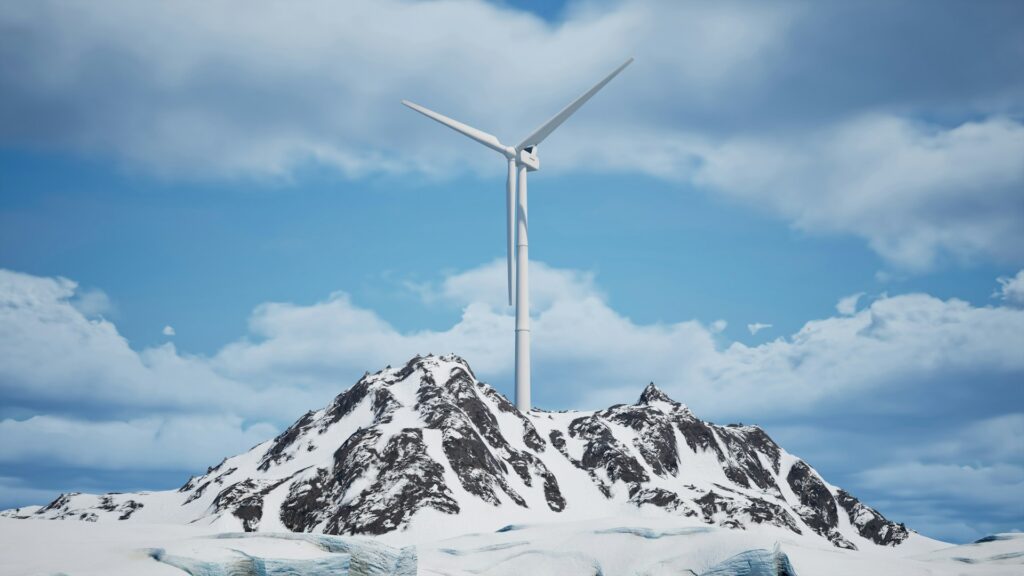
Most modern wind turbines utilize Stiesdal’s Danish concept of three-bladed upwind design. Three blades enable excellent rotational stability and peak aerodynamic efficiency at typical operating speeds. Locating the rotor upwind of the tower minimizes turbulence for optimized energy capture.
Stiesdal’s turbine utilizes electrical pitch control – motors turn the blades along their longitudinal axis for speed regulation and shutdown during excessive winds. Pitch-regulated blades yield better performance across varied wind speeds than simpler stall-regulated rotors.
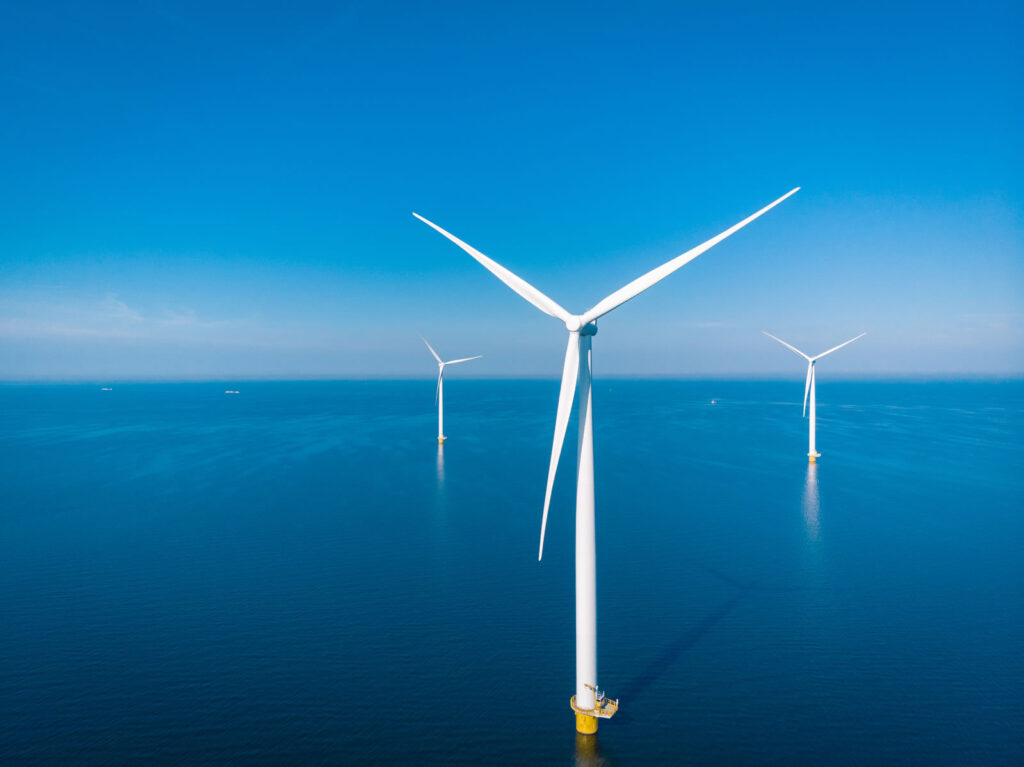
The Danish concept configuration has become a global design paradigm. Most installations, including large multi-megawatt offshore machines, employ three pitch-controlled blades upwind of the tower. Contemporary turbine designs draw upon Stiesdal’s original elegant innovation, which catalyzed the growth of the modern wind power industry.
Garrad pioneered the BLADED wind turbine modelling software that simulates and predicts system behaviours under different conditions.[7][8] This analytical tool enabled precise design optimization and provided technical confidence for manufacturing ever-larger turbines.
Additionally, Garrad’s consultancy advanced industry practices in areas like turbine testing, project analysis, and due diligence.[4] His wind farm energy assessments facilitated project financing and global market expansion by improving investor confidence.
Due to Stiesdal and Garrad’s contributions, wind turbines have transformed over recent decades – rotor diameters have grown many times over,[9] and capacity has jumped from less than 1 MW in 1990 to over 10 MW today.[10][11]
Installed wind capacity rose dramatically from 7.6 GW worldwide in 1997[12] to over 900 GW in 2022.[13][14] Wind energy continues rapid growth as a low-cost, sustainable power supply for grids globally.
Upon receiving the Prize, Stiesdal commented: “To me, it represents much more than personal recognition; it is a tribute to the collective efforts of pioneers and engineers in wind power…I am very happy to have had the opportunity to contribute to this development, and I look forward with eagerness to the future growth of wind power, driven by the dedication of new generations of engineers.”[15]
Similarly, Garrad said, “I count myself as extraordinarily lucky to have been part of that transition…Henrik and I see ourselves as representatives of a much bigger group of people who have made wind energy an essential part of our zero-carbon future and we have, all of us together, earned this Prize.”[16]
Through decades of innovation, Henrik Stiesdal and Andrew Garrad overcame barriers to enable the remarkable scaling of wind turbine technology from small machines to gigantic offshore turbines powering grids worldwide.
Credit via qeprize.org
2024 Queen Elizabeth Prize for Engineering awarded for Modern Wind Power Technology
The 2024 Laureates, who share the £500,000 prize, will be formally honoured at the QEPrize Presentation Ceremony
Checked 23 November 2026
Modern wind turbine technology developers win 2024 Queen Elizabeth Prize for Engineering
The 2024 Laureates, who share the £500,000 prize, will be formally honoured at the QEPrize Presentation Ceremony
Checked 23 November 2026
He built his first wind turbine in 1976 and in 1978 designed a commercial turbine representing the so-called “Danish Concept” that came to dominate the world market. The design was licensed to Vestas in 1979.
Checked 23 November 2026
In 1971 Andrew Garrad built his first wind turbine in his parent’s field. In 1984 he co-founded the Garrad Hassan Group (GH) which grew to become the world’s largest renewable energy consultancy.
Checked 23 November 2026
2024 Queen Elizabeth Prize for Engineering awarded for Modern Wind Power Technology
Initially designed in 1978, Henrik Stiesdal is credited for a three-blade turbine that represents what is sometimes described as the Danish concept.
Checked 23 November 2026
Wind turbine pioneers Stiesdal and Garrad win 2024 QEPrize
Initially designed in 1978, Stiesdal pioneered the three-bladed turbine on a horizontal axis – known as the Danish concept – which Vestas bought
Checked 23 November 2026
2024 Queen Elizabeth Prize for Engineering awarded for Modern Wind Power Technology
The BLADED computational design tool, pioneered by Andrew Garrad, allows engineers to model a complicated turbine system in its entirety
Checked 23 November 2026
Wind turbine pioneers Stiesdal and Garrad win 2024 QEPrize
Garrad, meanwhile, developed the Bladed software that is used by engineers to simulate turbine systems.
Checked 23 November 2026
2024 Queen Elizabeth Prize for Engineering awarded for Modern Wind Power Technology
The 10m diameter turbines of my early professional life have become the 250m giants of today – simply amazing!
Checked 23 November 2026
featuring 11 turbines with a 450 kW capacity and 35-meter rotor
Checked 23 November 2026
Vestas' V236-15.0 MW prototype wind turbine produces first kWh
Vestas has finalised installation of the V236-15.0 MW prototype turbine at the Østerild National test centre for large wind turbines in Western Jutland, Denmark. The prototype has successfully produced its first kWh of power
Checked 23 November 2026
World Cumulative Installed Wind Power Capacity and Net Annual Addition, 1980-2014
1997 7,600 1,500
Checked 23 November 2026
Globally, 77.6 GW of new wind power capacity was connected to power grids in 2022, bringing total installed wind capacity to 906 GW
Checked 23 November 2026
Renewables 2023 Global Status Report: Wind Power
An estimated 89 GW of wind power capacity was mechanically installed in 2022, of which more than 77 GW was added to the world's grids, bringing the total grid-connected capacity to an estimated 906 GW.
Checked 23 November 2026
2024 Queen Elizabeth Prize for Engineering awarded for Modern Wind Power Technology
To me, it represents much more than personal recognition; it is a tribute to the collective efforts of pioneers and engineers in wind power.
Checked 23 November 2026
2024 Queen Elizabeth Prize for Engineering awarded for Modern Wind Power Technology
Henrik and I see ourselves as representatives of a much bigger group of people who have made wind energy an essential part of our zero-carbon future and we have, all of us together, earned this Prize.
Checked 23 November 2026
Construction & Infrastructure
Construction & Infrastructure
Aerospace, Defence & Marine
Electronics & Communications