As NASA is preparing to send an astronaut on the first trip around the moon since the last Apollo missions (over half a century ago), engineers at NASA Langley Research Centre in Hampton, VA, are performing the final validation of all of the complex systems that will allow the Artemis II crew to travel safely to the moon and back. The Artemis II mission represents an important milestone on the path toward sustainable lunar operations and demonstrates a major difference in how we engineer today compared with Apollo-era engineering techniques, while continuing to build on the foundational accomplishments of the past.
The engineering challenges associated with the Artemis II mission go well beyond merely replicating the technical capabilities of the Apollo missions. The current generation of mission designers must combine advanced computational tools, automation, and industry partnerships to create a viable engineering approach that protects crew lives and provides the foundation for long-term lunar infrastructure. To transition from an era of exploration to an era of habitation, engineers must reconsider many fundamental assumptions about spacecraft design, mission planning, and resource utilisation.
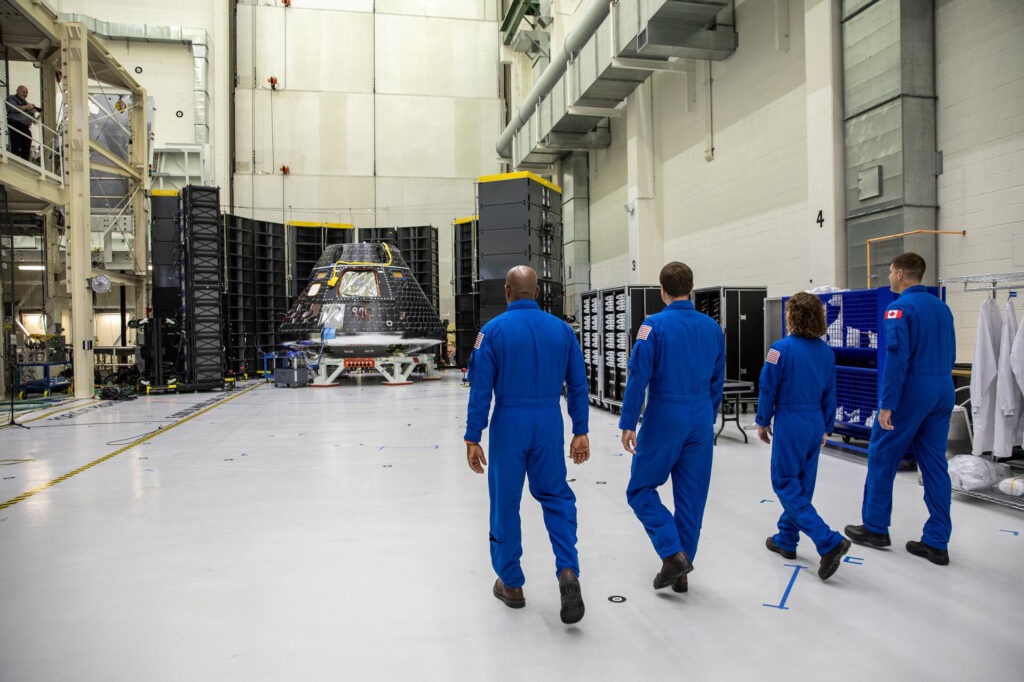 KSC Orion Media Day – Artemis II CrewDate: August 8, 2023Location: O&C High BayPhotographer: NASA/Kim Shiflett
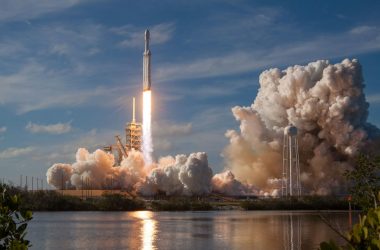
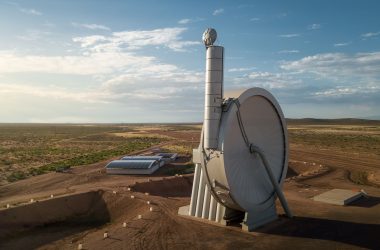
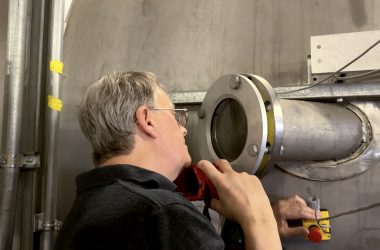
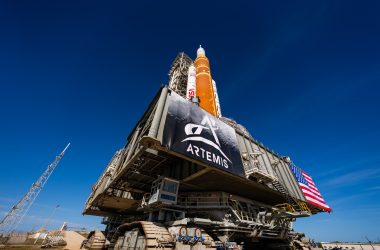
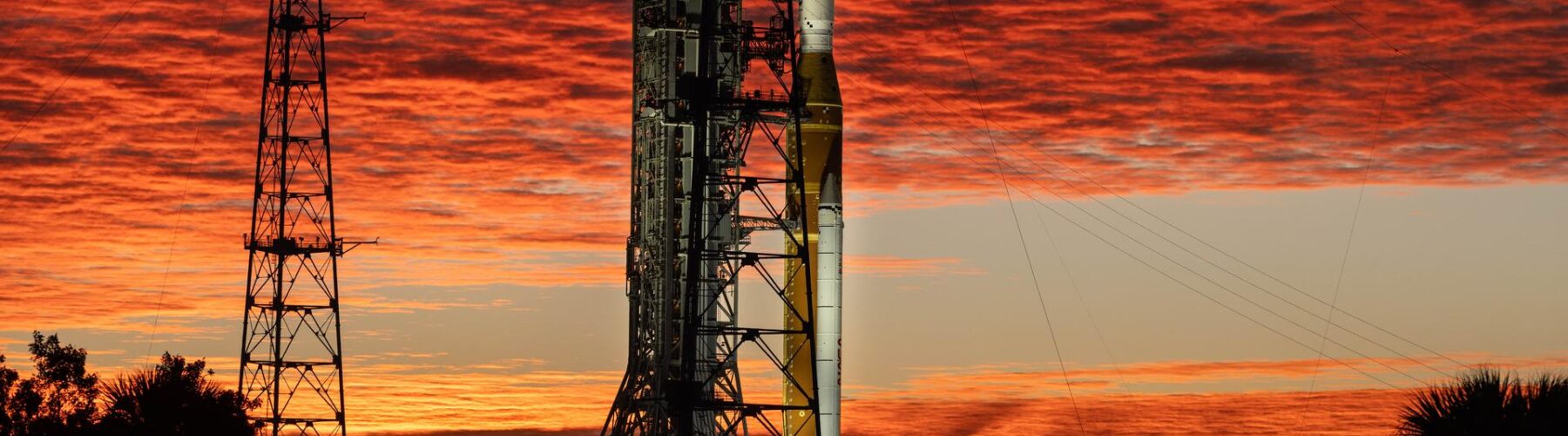
One of the most impressive rocket systems ever built has been developed by the Artemis program to provide the launch capability for the Orion spacecraft. At lift-off, the Artemis launch system produces nearly 8.8 million pounds of thrust. For several years, engineers at Langley Research Centre have been working to validate that the launch vehicle’s structural integrity will remain intact throughout its flight trajectory through Earth’s atmosphere. To achieve this, they conducted extensive aeroelastic testing using scale models subjected to wind-tunnel conditions simulating the wide range of aerodynamic loads encountered during the ascent phase of flight, including transonic buffet and max-Q dynamic-pressure loading occurring roughly 90 seconds after launch.
It should be noted that the precision needed to insert the spacecraft into orbit cannot be overstated. All factors affecting the mission’s success must be accounted for. This includes factors such as the variation in atmospheric density with altitude, the thermal expansion of propellant tanks and other hardware components, and so forth. Any small error in thrust vector control or propellant flow rate can lead to mission failure. A recent incident where a hydrogen leak was detected during a dress rehearsal shows just how difficult it still is to manage the cryogenic propellants used in spaceflight. Because propellants must be handled at extremely low temperatures, specialised materials and sealing technologies must be used that can operate over a wide temperature range (hundreds of degrees).
How Modern Rocket Systems Achieve Orbital Velocity
To understand how Artemis II reaches lunar orbit, we need to look at the basic physical concepts and engineering techniques that enable space travel. The mission will be supported by a multi-stage rocket system that needs to get out of the Earth's gravity well; to do so, it has to achieve a speed of approximately 17,500 miles per hour to get into Low Earth Orbit, then make additional engine burns to get into a lunar trajectory.
First, the engineering process starts with the design of the propulsion system. For the Space Launch System (SLS), there are two types of rocket stages: solid rocket boosters and liquid-fueled core stages. The solid rocket boosters produce a large amount of thrust instantly, depending on their size and the materials used. Aluminium powder and ammonium perchlorate oxidiser in a rubber-like binding matrix are the primary components used in the solid rocket booster. When ignited, the aluminium powder and ammonium perchlorate react under controlled combustion,n producing hot gas that is expelled through special nozzles to generate force, as described by Newton’s Third Law of Motion.
The RS-25 liquid-fueled engines in the core stage work on different principles. In the RS-25 liquid-fueled engines, liquid hydrogen is the fuel and liquid oxygen is the oxidiser; both are stored at extremely low temperatures (-423°F and -297°F). Engineers selected the hydrogen-oxygen combination as the rocket propellant because hydrogen is the most efficient chemical rocket fuel available to achieve the high speeds required for lunar missions. However, the major problem was maintaining those very cold temperatures while minimising boil-off and the extreme thermal stresses imparted to the tank materials during the burn.
Structural engineers had to develop a spacecraft capable of withstanding multiple load conditions. During launch, the rocket experiences compressive loads from its own weight and tensile loads from acceleration. As aircraft pass through the atmosphere, aerodynamic forces generate bending moments that can cause structural buckling. Structural engineers used extensive finite element modelling to analyse the rocket’s structure. This involved dividing the rocket into millions of smaller elements to compute stress distributions throughout the rocket and identify potential structural failure locations.
The solution employs aluminium-lithium alloys, which provide a high strength-to-weight ratio, and composites in non-critical locations. Additionally, the tanks employ an isogrid design, a triangular lattice structure machined into the interior of the tank walls to maximise strength while minimising weight. This method, developed over many years of engineering experience, reduces structural mass by approximately 30% compared with traditional design methods.
Scale-model wind tunnel testing at Langley was also key to validating computational models. Engineers subjected scale models to airflow velocities up to Mach 4.5 and measured pressure distributions, shockwave formation, and vortex-shedding characteristics. These tests showed that certain configurations could produce resonance frequencies similar to the rocket’s natural vibrational modes, potentially leading to structural failure. Therefore, engineers modified the rocket’s configuration and addedan aerodynamic fairing to disrupt these undesirable airflow patterns.
Another major engineering challenge is temperature management. Due to the friction-generated heat, the rocket’s surface temperatures can increase above 1,000°F as it travels through the atmosphere. To manage this issue, engineers developed specialised thermal protection systems using ablative materials that char and ablate in a controlled manner to dissipate heat from the structural members. The exact thicknesses and compositions of these materials were determined through numerous tests conducted in arc-jet facilities simulating atmospheric heating conditions.
Lunar Infrastructure Engineering Philosophy Evolution Since Early Conceptual Studies Historically, conceptual studies in engineering for lunar infrastructure have undergone a major paradigm shift in how engineers design spacecraft for lunar operations. In contrast to the Apollo program, which focused on developing single-mission spacecraft that were designed to be as light as possible (thus allowing for a higher payload capacity) and as simple as possible (therefore reducing the number of parts), the Artemis program is developing multi-mission spacecraft that can perform multiple functions and provide for future growth and expansion in its systems. Therefore, Artemis engineers are being tasked with designing both the initial functionality for the spacecraft and providing the necessary interface(s) for yet to be developed technologies so that they may be integrated into the system without having to redesign the spacecraft completely.

In addition to developing modular spacecraft systems that can be easily expanded or modified after initial deployment, the engineers are developing modular systems that can be upgraded over time without replacing the entire system.
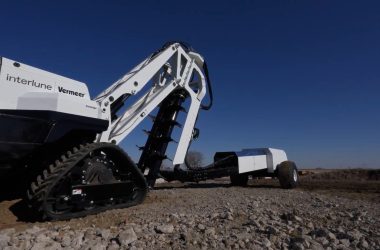
From conceptual studies dating back to the 1980s, early proposals for establishing lunar bases envisioned astronauts performing manual assembly of habitat modules and power systems in space. Because it would have exposed the astronauts to excessive radiation, this manual assembly process would have required significant time for extravehicular activities. Modern engineers have moved away from manually assembling lunar bases and are developing robotic precursor missions to the Moon to prepare sites for potential human habitation before astronaut arrival.
One key challenge for robotic systems operating on the surface of the Moon will be the extreme environmental conditions. Temperatures will range from -280 degrees F to 260 degrees F; regolith particles will be electrostatically charged and extremely abrasive; and communication delays will preclude real-time remote control of the robots from Earth. To address these challenges, engineers are developing new materials and mechanical designs to enable the robots to operate in these harsh conditions while maintaining the precision required to assemble structures and construct a lunar base. The challenge to the engineers goes beyond simply surviving the harsh environment, however. They must develop robots capable of performing complex assembly operations, including site preparation, placing structural elements, and integrating systems.
Engineers are developing in-situ resource utilisation (ISRU) technologies that could produce building materials from lunar regolith. The engineers are testing several sintering and binding methods that could enable them to convert loose lunar soil into structural blocks for the lunar base without transporting materials from Earth. Successful implementation of ISRU technologies may reduce mission mass requirements for certain elements of the lunar base by up to 90%. Some engineering challenges associated with ISRU technologies include developing heating systems that operate in a vacuum, developing binding agents that remain stable across extreme temperature ranges, and developing automated quality-control systems to verify the structural integrity of lunar base components.
Engineering Development Challenges Associated With Power Generation And Distribution Systems Another key area of engineering development is establishing reliable, efficient power generation and distribution systems for the lunar base. On Earth, solar panels that are installed in areas such as rooftops and parking lots benefit from the effects of atmospheric scattering and the relatively consistent day/night cycle experienced in most locations on Earth. Lunar solar panels, on the other hand, must contend with 14-day nights and direct solar radiation that can degrade the photovoltaic materials used in the solar panels. Engineers are considering vertical solar panel configurations that can track low sun angles at polar landing sites, while developing high-capacity battery systems based on lithium-sulfur chemistry that offer higher energy density than traditional lithium-ion batteries.
Transition From Demonstration Missions To Operational Infrastructure Requires Adoption Of Standards And Interfaces That Enable Interoperability Between Systems Developed By Different Organizations Once the transition from demonstration missions to operational lunar infrastructure is complete, engineers will need to develop standards and interfaces to enable interoperability among systems developed by different organisations. While this development of standards and interfaces will add complexity to the system during the early stages of development, it is expected to reduce long-term costs and increase system reliability through the use of common components. Engineers must therefore strike a balance between the desire to optimize the performance of the systems in known conditions and the need to provide the systems with the flexibility to adapt to unforeseen challenges.
Currently, the engineering teams at Langley Research Center and other NASA centres continue to refine models and conduct tests that push the limits of current technology as Artemis II prepares to launch. Artemis II is not just a return to lunar exploration, but rather a paradigm shift in how humans approach space development. Ultimately, success will be dependent on the engineers’ ability to combine lessons learned from previous missions with modern computational tools and commercial capabilities to create systems that are both more capable and more affordable than those of their predecessors. The engineering solutions that are developed for Artemis II will serve as patterns and practices that will shape space development for generations to come, and will ultimately transform what was previously the exclusive domain of superpowers into an area of collaboration among commercial entities and international partners with common goals.
TLDR
- NASA Langley engineers are completing final validations of propulsion and protection systems for the Artemis II lunar mission
- The Space Launch System generates 8.8 million pounds of thrust and requires precise aeroelastic testing to maintain structural integrity
- Modern engineering approaches integrate computational modelling, automated systems, and commercial partnerships, unlike Apollo-era missions
- Engineers must manage extreme temperature variations (-423°F to 1,000°F+) and cryogenic propellant challenges including hydrogen leaks
- Robotic precursor systems are being developed to establish lunar infrastructure before human arrival, operating in -280°F to 260°F conditions
- New technologies focus on in-situ resource utilisation, potentially reducing mission mass requirements by 90%
- The mission represents a shift from single-use exploration to sustainable lunar habitation infrastructure