Every so often a fusion energy announcement appears in the headlines, and every so often the reservations follow. Although the physics is sound the engineering is not up to the task. The experiment has worked once but cannot be reproduced. The results seem promising yet commercial power is still decades away. The news from Pacific Fusion in October 2026 is different in character. The company has carried out four successful tests at the Sandia National Laboratories Z Pulsed Power Facility, showing a fusion target design which could be the missing element in an approach that most of the industry has been ignoring.
Fusion research may be divided into two categories. The approach based on magnetic confinement, exemplified by the ITER project in France, makes use of strong magnets to keep a plasma at millions of degrees for a number of seconds. Inertial confinement, as is the case at the National Ignition Facility in the United States, involves firing lasers at a small fuel pellet to compress it until fusion starts. Fusion reactions have been achieved in both cases, but in neither instance has there been a net energy gain from the wall plug.
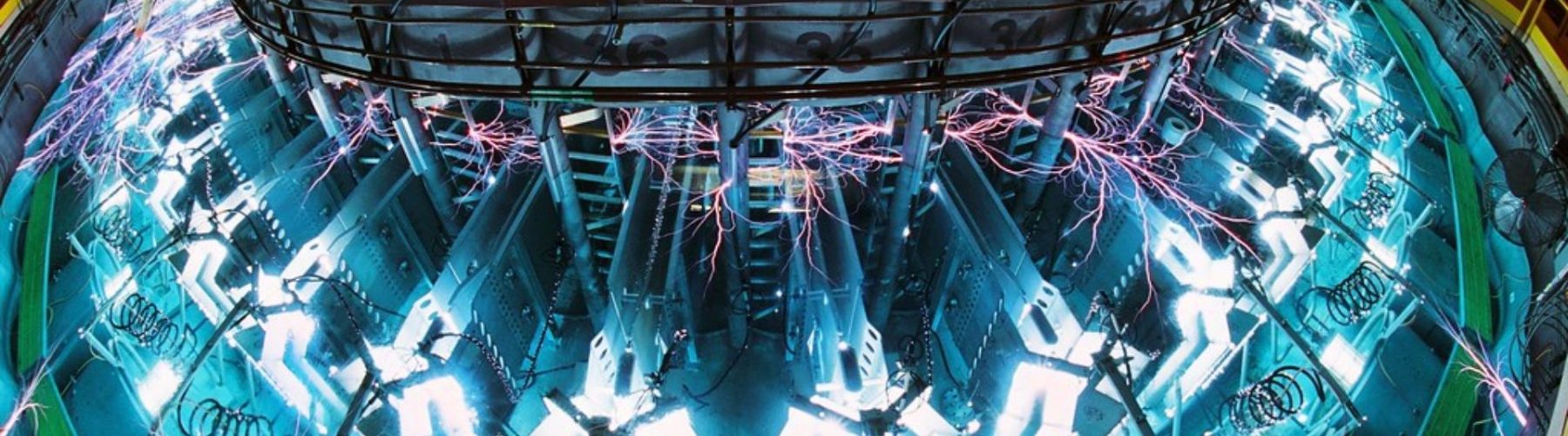
Pulsed power fusion follows another route. Rather than relying on lasers or magnets, it employs a huge surge of electric current to compress the fuel target. The Z machine at Sandia is capable of releasing a current of 22 million amperes in about 120 nanoseconds, generating magnetic pressures strong enough to cause a small target to collapse at speeds approaching hundreds of kilometres per second. This leads to intense compression and heating, which are precisely the conditions required for hydrogen isotopes to fuse.
The breakthrough of Pacific Fusion does not lie in the Z machine itself, which has been in operation since the 1990s, but in the target at its centre. The company has created a fuel target about the size of a pencil eraser, made of a thin plastic cylinder covered with aluminium; within it, the deuterium-tritium fuel is arranged so that the magnetic fields generated during the implosion pre-magnetise the fuel before it is compressed.
The fact that pre-magnetisation is the key insight. In a conventional pulsed-power implosion, the magnetic fields generated by the current pulse can leak through the target, reducing the energy delivered to the fuel. In Pacific Fusion’s design, Keith LeChien, the company’s CTO, refers to the magnetic fields as “leaky”. Instead of attempting to contain the fields perfectly, the shape of the target allows the fields to pass through the fuel in a controlled manner, thereby producing a seed magnetic field that is amplified during compression.
Pacific Fusion conducted four tests at the Z facility under a Cooperative Research and Development Agreement with Sandia. In each of the tests, the pulsed-power fusion target performed as predicted, with the fuel reaching the pressure and temperature conditions needed for a significant fusion yield. The company has not made the specific yield figures public, but has described the results as exceeding expectations for this stage of development.
It is just as important to have good consistency as it is to have good performance. Fusion experiments are well known for being fickle. Even minor variations in how the target is fabricated, in timing, or in the delivery of energy can lead to quite different results. The fact that there have been four successful shots out of four attempts indicates that Pacific Fusion has a manufacturing process that is robust enough to produce reliable targets and a theoretical model that is accurate enough to predict their behaviour.
The Z machine can fire only once a day, and each time it fires, it destroys the target and a large amount of the surrounding hardware. Although this firing rate is acceptable for a research programme, it is not suitable for a power plant. According to Pacific Fusion’s roadmap, a specially designed facility should be established in New Mexico that fires targets repeatedly to generate heat to drive a conventional steam turbine.
The Path to Net Energy
The company’s aim is to achieve a net gain in facilities by 2030. This means the total fusion energy produced in a single experiment exceeds the total electrical energy supplied to the device. This represents a different and more rigorous criterion than the “scientific breakeven” obtained by NIF in 2022, since that latter figure accounted only for the energy carried by the laser beams, not the substantial energy consumed by the laser systems themselves.
To achieve a gain at the facility, it will be necessary to make improvements in all three areas: the driver, the pulsed power machine, and the target. Pacific Fusion is currently designing a next-generation driver that will deliver higher currents more efficiently than the Z machine, and the target design will continue to evolve with more refined fuel arrangements and better containment of the pre-magnetised field.
Engineering Deep Dive
Energy at the Z Pulsed Power Facility is stored in a bank of capacitors in a circular configuration known as a Marx generator; on trigger, as the capacitors discharge in series, the voltage is multiplied and then delivered to the central load area via 36 transmission lines that converge at the target.
The current pulse of 22 million amperes exerts a magnetic pressure of about 100 megapascals on the target surface. To put this into perspective, the pressure is approximately 1,000 times the atmospheric pressure, but it is focused on an area smaller than the tip of a finger. The aluminium outer layer of the target functions as a liner and collapses under this magnetic pressure at speeds exceeding 100 kilometres per second.
The target of Pacific Fusion contains a mixture of deuterium and tritium embedded in a structured inner capsule. To achieve pre-magnetisation, a magnetic field of about 10 to 30 tesla is introduced into the fuel prior to compression. When the implosion occurs, the trapped magnetic field is compressed along with the fuel, reaching hundreds of tesla. This intensified magnetic field prevents thermal conduction losses, so the fuel remains at a higher temperature for longer, improving the conditions for fusion reactions.
The energy balance equation for pulsed-power fusion depends on two factors: the yield per shot and the driver’s efficiency. The Z machine’s wall-plug efficiency, the ratio of energy delivered to the target to energy drawn from the grid, is about 15 per cent. A commercially built driver might be capable of reaching 40 to 50 per cent, which would greatly favour the breakeven calculation in terms of net gain.
Compared to magnetic or laser confinement, pulsed-power fusion has attracted less attention and received considerably less funding, since the Z machine was built as a facility for weapons physics rather than as a tool for energy research. However, Pacific Fusion’s results could alter this situation by showing that the method has real potential for power generation, not merely for simulating weapons.
For anyone studying nuclear physics or energy engineering, pulsed-power fusion provides an alternative way to enter a field that has usually been dominated by tokamaks and laser systems. The engineering difficulties are different: rather than dealing with superconducting magnets or precision optics, the issues concern high-voltage switching, the production of target masses, and the development of repetitive pulsed power systems. Those problems are certainly difficult. But they are engineering problems, and engineering problems, if sufficient time and a sufficient number of clever people are available, tend to be solved.
- Pacific Fusion has completed four successful pulsed power fusion tests at Sandia National Laboratories’ Z facility
- The approach uses 22 million amperes of current to crush a pencil-eraser-sized fuel target in 120 nanoseconds
- A novel target design uses deliberately ‘leaky’ magnetic fields to pre-magnetise the fuel before compression
- The company aims to achieve net facility gain by 2030 at a purpose-built site in New Mexico
- Pulsed power represents a third approach to fusion alongside magnetic and inertial confinement