Norway has chosen a contractor for one of the world's most ambitious engineering projects. AF Gruppen, a leading Scandinavian construction company, will build the Stad Ship Tunnel, the first full-size ship tunnel ever made. The contract is worth about NOK 5.6 billion (around £420 million). The agreement should be signed in August 2026, and construction is set to start in early 2027.
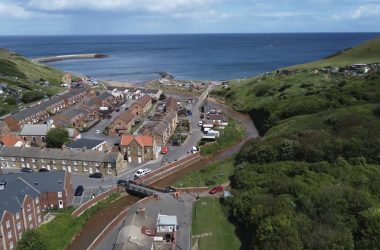
The tunnel will cut through the Stad peninsula in Vestland county on Norway's west coast. This area is well known for its dangerous waters. Strong currents, rough waves, and storms have caused shipwrecks here for centuries. Smaller ships often wait days for safe weather, and larger vessels sometimes have to take a different route. The Stad Ship Tunnel is designed to solve this problem by creating a safe passage through the rock.
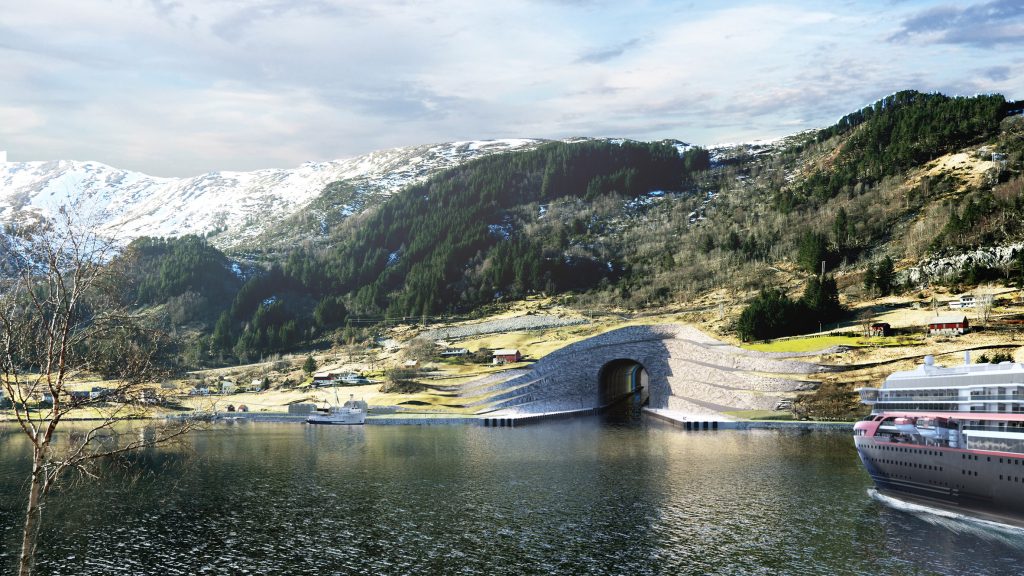
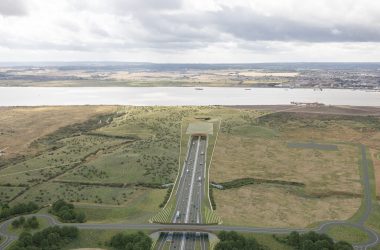
The scale of the project is impressive. The tunnel will run 1.7 kilometres through solid gneiss, a tough type of rock. It will be 50 metres high and 36 metres wide, big enough for cruise ships, cargo ships, and fast ferries that connect remote Norwegian towns. There is no previous example of a tunnel like this - no one has ever built a tunnel for ships through a mountain before.
Norconsult, Norway's largest engineering consultancy, is leading the design and planning. The main excavation method will be drill and blast, just like in Norway's many road tunnels. However, this project is much bigger than anything done before with this method. About three million cubic metres of rock will be taken out - enough to fill around 1,200 Olympic swimming pools.
Logistics are another big challenge. The Stad peninsula is remote, and local roads are not built for heavy equipment or large amounts of materials. Almost everything - drilling machines, explosives, concrete, and the rock removed - will be transported by sea. Temporary harbours will be built at both ends of the tunnel.
Managing water is another challenge. The tunnel needs to stay dry during construction, even though both ends reach the sea. Crews will build rock walls or cofferdams at each entrance to keep the ocean out while they work. These barriers will only be removed after the tunnel is lined and sealed, allowing the channel to be flooded. The tunnel is expected to open around 2031.
Engineering deep dive: drilling through gneiss at ship-tunnel scale
Gneiss is a tough metamorphic rock created by intense heat and pressure deep underground. It mainly contains quartz, feldspar, and mica, which form light and dark bands. Its compressive strength is usually between 100 and 250 megapascals, making it much harder than most rocks used in tunnelling. For comparison, regular concrete has a compressive strength of about 30 MPa.
The drill-and-blast method for the Stad Ship Tunnel uses a standard process, but the required size here is remarkable. Most road tunnels in Norway have a cross-section of about 50 to 70 square metres. The Stad Ship Tunnel will have a cross-section of over 1,600 square metres. Each blast, or round, will break up rock over an area more than 20 times larger than that of a typical road tunnel.
To manage this, engineers will likely split each tunnel face into sections. They will probably dig out the top part first, then work down to the full height. Each round starts by drilling a set pattern of holes into the rock using hydraulic drills. These holes are usually 45 to 51 millimetres wide and 4 to 6 metres deep. The pattern, number, and angle of the holes are carefully planned to break the rock efficiently and avoid removing too much.
Explosives, usually a type of emulsion, are pumped into the drilled holes and set off in a carefully timed order. Small delays between each charge make sure each blast opens up space for the next one, sending the force inward instead of outward. This helps reduce vibrations and keeps the tunnel walls strong.
After each blast, fans remove the dust and gases. Loaders and dump trucks then carry away the broken rock, known as muck. Because the tunnel is so large, this process is a big job. Three million cubic metres of gneiss weighs about eight million tonnes. Moving all that rock by sea will need a nonstop conveyor or truck-to-barge system at the tunnel entrance.
The rock taken out will be put to good use. In Norway, tunnel projects often crush the excavated rock to use as construction material. The gneiss from the Stad tunnel will probably become fill for roads, coastal protection, or concrete.
Waterproofing a tunnel that will always be underwater is different from keeping a tunnel dry. The Stad Ship Tunnel's lining must handle pressure from groundwater around the rock and also resist corrosion from seawater inside. The likely solution is a mix of sprayed concrete, drainage membranes to control groundwater, and a final layer of reinforced concrete with corrosion-resistant protection. Cathodic protection systems, such as those used on ships, may be embedded in the concrete to prevent the steel from rusting.
When it opens, the Stad Ship Tunnel will make history by letting ships travel through a mountain. For coastal communities that rely on ferries and for cargo operators who lose days to bad weather, this practical benefit is more important than any engineering record. Norway has talked about this project since the 1870s. Now, 150 years later, work is finally about to start.
- AF Gruppen awarded a NOK 5.6 billion turnkey contract to build the Stad Ship Tunnel in Vestland county, Norway
- The world’s first full-size ship tunnel will measure 1.7 km long, 50 m high, and 36 m wide through solid gneiss rock
- Three million cubic metres of rock will be removed using drill and blast methods, with materials transported by sea
- Construction starts early 2027, with the tunnel expected to open around 2031