Construction & Infrastructure
Herrenknecht will build a 16.4m TBM, Europe's largest, to bore the Lower Thames Crossing tunnel connecting Essex and Kent from 2028.
National Highways has chosen a winner in the competition to build the machine which will dig the Lower Thames Crossing tunnel, and the winner is a major one.
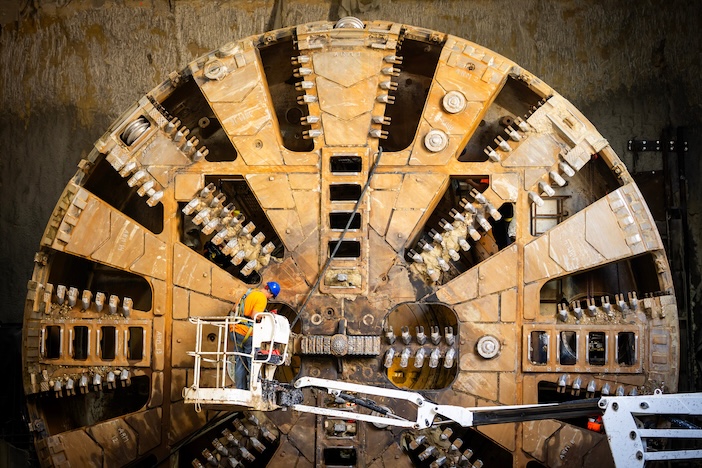
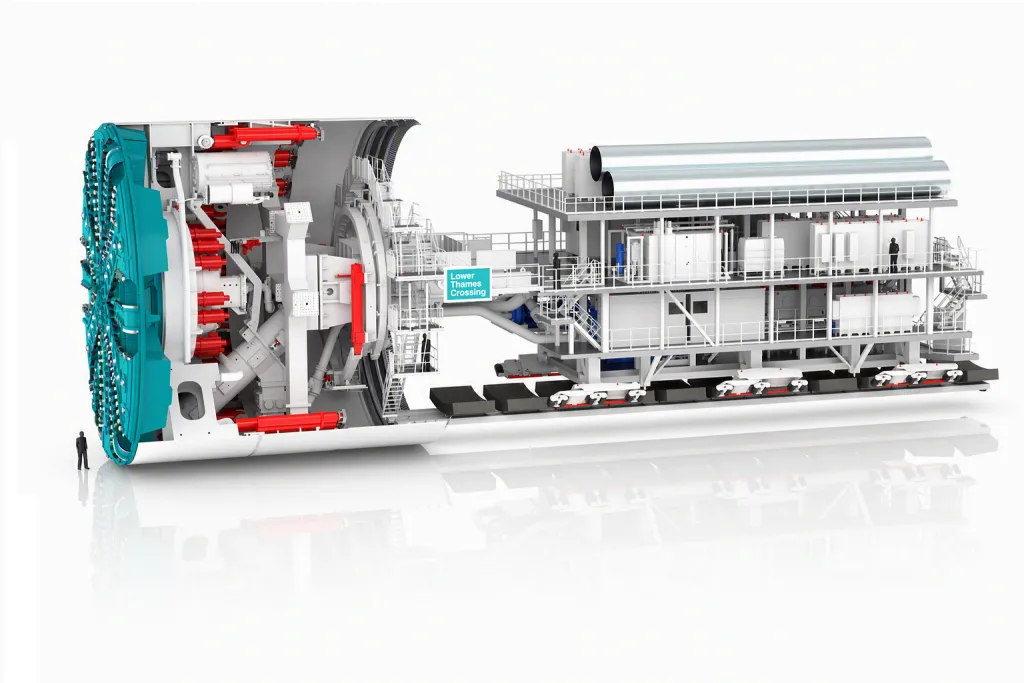
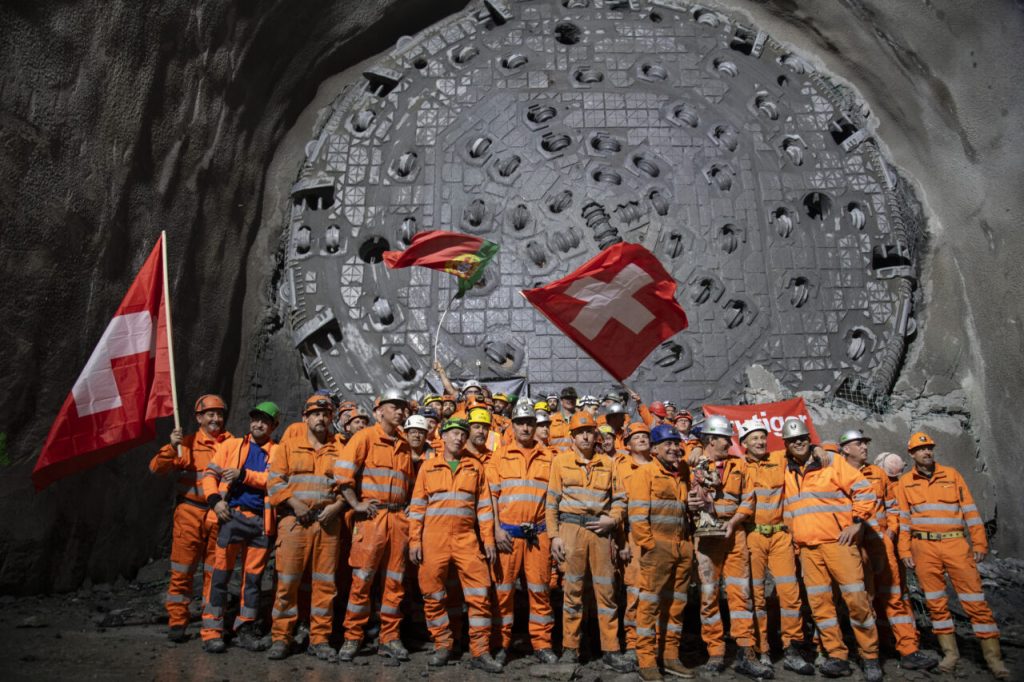
The German company Herrenknecht has been chosen to construct a variable-density tunnel boring machine with a diameter of 16.4 metres, making it the largest ever used in Europe and the third-largest in the world. The machine will be 120 metres long, about the length of a football pitch, and will weigh about 5,000 tonnes, more than the weight of a fully loaded Boeing 747.
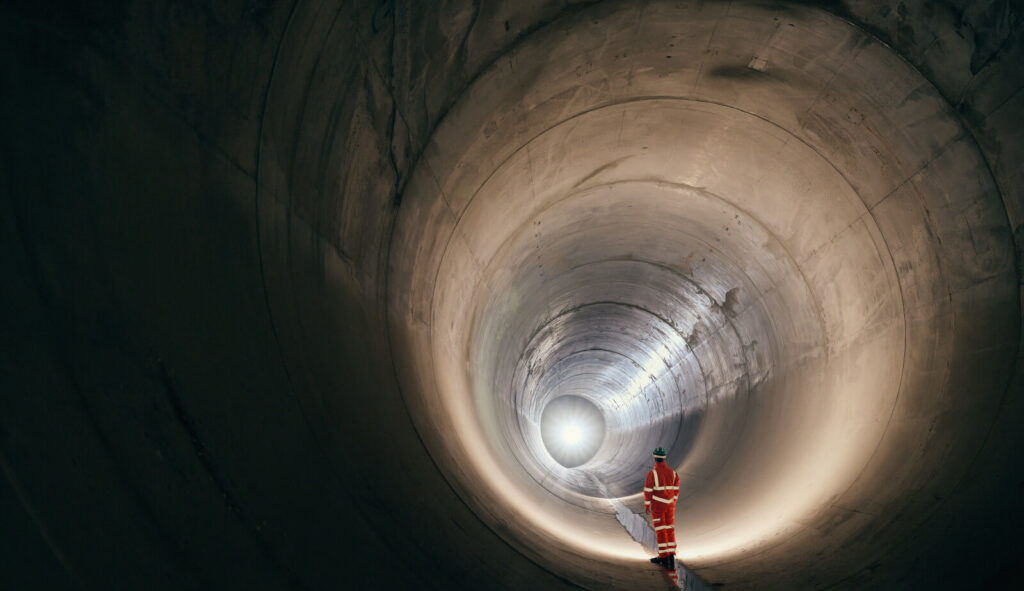
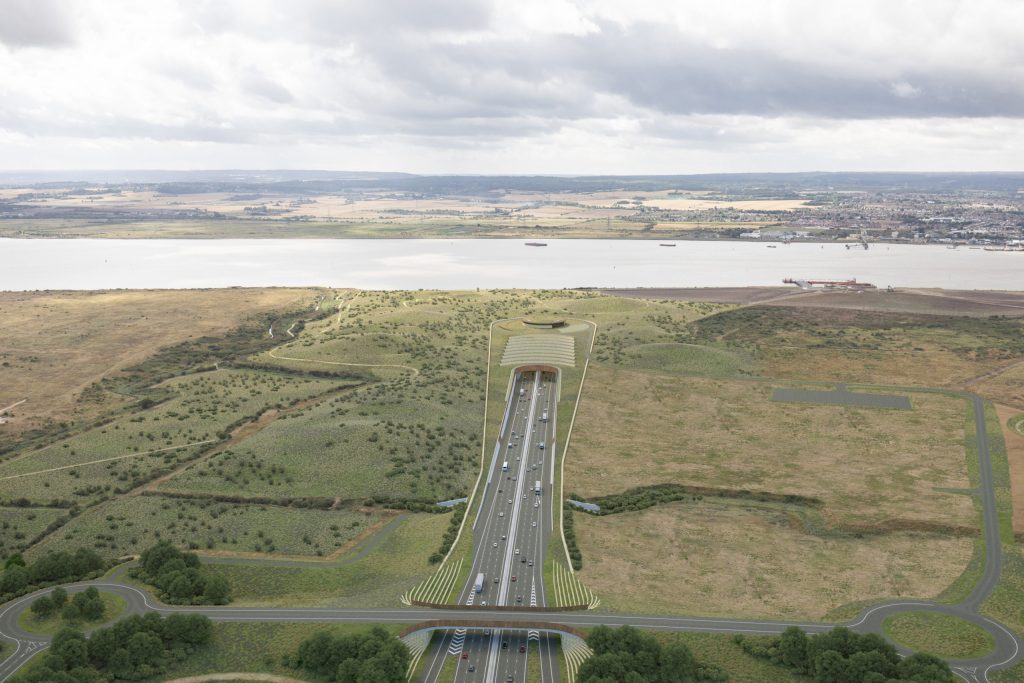
One machine will be used to dig two parallel tunnels under the River Thames, linking Essex with Kent to the east of the present Dartford Crossing. Each tunnel will be wide enough to allow three lanes of traffic to travel at 70mph and will have more than twice the cross-sectional area of the tunnels currently in use at Dartford, which have been carrying traffic since the 1960s and 1980s and are now among the most congested sections of road in the country. Instead of employing two separate boring machines, the engineers intend to dig one tunnel and then reverse the same machine to dig the second, a method which reduces manufacturing costs but places heavy demands on the machine’s reliability, since any failure would bring the entire project to a standstill rather than just one of the two parallel operations.
It is described as being of a variable density design, which enables the operators to alter the density of the slurry used to support the tunnel face as the machine advances through various types of ground, ranging from soft river silt to more solid clay layers underneath the Thames. Since the machine is too large to be transported as a single unit, Herrenknecht will deliver it to the UK in sections and will assemble it on site near the Port of Tilbury, the boring work being due to start in 2028. As Ground Engineering reported, the crossing is expected to open to traffic in the early to mid-2030s.
The need to build tunnels of this width is in part a reaction to the fact that the existing Dartford Crossing has been severely overloaded. Since it was opened many decades ago, before the surrounding road network had become one of the busiest freight routes in the country, it now regularly handles far more vehicles each day than it was intended to, and because of its narrower tunnels the rate at which traffic can pass through is limited, particularly when it comes to lorries. By having a wider tunnel shaft three full lanes can be provided instead of the cramped two, thus alleviating the bottleneck which at present forces the majority of Thames crossing traffic to go through a single narrow point east of London. Moreover, mechanically speaking, digging tunnels of this size is completely different from digging a standard rail or utility tunnel since the larger opening has to bear a much greater amount of ground pressure and water pressure from the river above, which is precisely the reason why the machine’s variable density slurry system has to keep adapting as it proceeds.
Tunnel boring machines function by using a rotating cutterhead to grind away the material in front of the machine, while some kind of support is provided to prevent the exposed tunnel face from collapsing before a lining is in place behind it. In soft, water-containing ground there are two main types: earth pressure balance machines, which use the excavated soil itself - this soil being kept under pressure - to support the face, and slurry machines, which pump a fluid mixture, typically consisting of bentonite clay suspended in water, against the face in order to hold it in position while cutting takes place. A variable density machine, which is the type selected for the Lower Thames Crossing tunnel, is an improvement on the slurry method in that it allows engineers to alter the density of the supporting fluid as the ground conditions vary along the route, rather than being restricted to a single slurry mixture for the entire tunnel boring process.
How important that flexibility is when working under a river such as the Thames, since the material under the riverbed is almost never uniform. A bore of this size will have to go through a combination of soft alluvial silts close to the surface, more compact gravels, and chalk or clay strata lower down, each of which reacts in a different way to pressure and therefore needs a different ratio of slurry density to face pressure in order to remain stable. If the face pressure is miscalculated, even for a short time, there is a risk of the cutterhead collapsing or, at the other end of the scale, a blowout occurring which would force the slurry up through the riverbed and might thus disrupt shipping on one of the busiest waterways in the country. It is only because the density can be adjusted on the go, rather than having to stop the machine to reconfigure it, that tunnelling under an active tidal river of this width becomes at all feasible.
The enormous size of the machine brings about its own engineering difficulties well before it gets to the riverbed. Since the finished machine is 16.4 metres in diameter and 120 metres long, it cannot be built in a factory and then transported as one piece, and so Herrenknecht will build it in sections and assemble it within a specially constructed launch shaft close to the Port of Tilbury. The cutterhead alone, with the disc cutters which grind through rock and soil, requires a drive system that can provide a massive torque steadily for months on end without the regular maintenance access that a smaller machine would offer, as it is much more complicated to stop a machine of this size during boring under a flowing river than it is simply to pull it back for servicing.
Deciding to use a single machine for digging both tunnels rather than having two work in parallel is a purposeful compromise: it is cheaper to manufacture one large TBM than two, and it makes the launch shaft and on-site logistics simpler. The drawback is the amount of time taken - the second tunnel cannot start until the first is finished and the machine has been retrieved, refurbished and relaunched, thus extending the total construction programme even though it reduces the number of components that could fail at the same time. Since the project is already aiming for an opening in the early to mid-2030s, the engineers have concluded that the advantages of reliability and lower manufacturing risk justify the extra months caused by carrying out the tunnels one after the other rather than side by side.
For A-level physics or engineering students who are studying the topics of forces, pressure and materials, this kind of project serves as a practical example of pressure balance in operation: the pressure of the slurry at the cutting face must be constantly matched against the total weight of the ground together with the hydrostatic pressure of the water in the river above it, with the use of real-time sensor feedback instead of a fixed setting. The project also acts as a case study showing how civil engineering projects scale in a non-linear manner; since doubling the diameter of a tunnel does not just result in the forces being doubled, they increase by approximately the square of the diameter when it comes to cross-sectional loading, which is the reason why a machine only slightly larger than the existing TBMs in Europe represents a real engineering challenge rather than merely an incremental improvement.
The assembly of the machine at Tilbury is not due to start until 2028, which gives National Highways and Herrenknecht several years to complete the detailed ground investigations that will specify exactly how the slurry density will need to be altered along the route. After boring has begun, the machine will take well over a year to carry out each tunnel before it can be turned around for the second bore. The people who at present have to queue at Dartford will not experience any benefits for almost ten years, but the Lower Thames Crossing tunnel is meant to be a long-term solution rather than a short-term one.
Credit via geplus.co.uk
Construction & Infrastructure
Construction & Infrastructure
Construction & InfrastructureInnovation
Construction & InfrastructureInnovation