A UK-Brazilian engineering partnership has developed a one-meter-long flexible robotic tentacle that could reduce the need for human divers and large support vessels in offshore infrastructure inspections, potentially cutting operational costs while improving safety for subsea pipeline maintenance operations.
The soft manipulator, created by the UK’s National Robotarium at Heriot-Watt University and Brazil’s Senai Cimatec, uses a flexible backbone combined with tendon-like cables to navigate around complex subsea structures. Position and shape sensors enable precise movement control even in turbulent water conditions at depths reaching 3,000 meters.
Tests at the National Robotarium’s wave tank facility demonstrate the robot can maintain position accuracy when subjected to external forces up to 300g. When disturbed, the system corrects its position and returns to the desired state within seconds.
The manipulator’s soft construction allows it to conform to structures during contact, a critical advantage when operating near sensitive subsea equipment. Unlike rigid robotic arms that risk damaging infrastructure through impact, the flexible design distributes contact forces across a wider surface area, reducing the risk of damage.
The control system utilises multiple tendon cables that run through the flexible backbone. By adjusting cable tension, operators can achieve complex three-dimensional movements. Embedded sensors continuously monitor the tentacle’s shape and position, providing real-time feedback for precise control.
The robot’s compact one-meter length enables deployment from smaller remotely operated vehicles (ROVs), eliminating the need for large surface vessels that traditional inspection operations require. This size optimisation targets the growing market for autonomous underwater vehicle (AUV) deployments in offshore wind farm maintenance and pipeline monitoring.
Engineering Deep Dive: Soft Robotics in Subsea Applications
Soft robotics represents a fundamental shift from traditional rigid manipulator design, borrowing principles from biological systems to create compliant structures that safely interact with their environment. The tentacle-like robot utilises continuum mechanics, distributing movement evenly across its entire length, rather than relying on discrete joints.
The backbone structure consists of elastomeric materials-likely silicone or polyurethane composites-that maintain flexibility while resisting the extreme pressures found at depths of 3,000 meters. At these depths, ambient pressure reaches approximately 300 bar (4,350 psi), requiring careful material selection to prevent compression-induced stiffening that would compromise flexibility.
The tendon-driven actuation system operates on principles similar to those of human muscle pairs. Multiple cables run through internal channels or external guides along the backbone. By increasing tension on one side while relaxing the opposite, the structure bends in a controlled manner. This design typically employs at least three tendons spaced 120 degrees apart for omnidirectional movement, though more sophisticated systems may use four or more for enhanced control resolution.
Position sensing presents unique challenges in soft robotics. Traditional encoders used in rigid robots are unable to measure the continuous deformation of flexible structures. The system likely employs either fibre-optic shape sensors based on Fibre Bragg Gratings (FBGs) or resistive/capacitive stretch sensors embedded within the structure. FBGs measure strain through wavelength shifts in reflected light, providing high-resolution shape reconstruction immune to electromagnetic interference common in industrial environments.
The control algorithms must solve the inverse kinematics problem for a continuum structure, determining the required cable tensions to achieve the desired tip positions. This involves modelling the backbone as a series of infinitesimal segments following constant curvature assumptions. The Cosserat rod theory provides the mathematical framework, treating the backbone as an elastic rod subject to distributed forces and moments.
Hydrodynamic forces significantly impact control performance. Water currents create distributed loads along the tentacle’s length, requiring adaptive control strategies. The system likely implements model predictive control (MPC) algorithms that anticipate disturbances and pre-compensate cable tensions. Machine learning techniques, particularly reinforcement learning, show promise in adapting to varying flow conditions without the need for explicit hydrodynamic modelling.
Material fatigue presents long-term reliability concerns. Repeated flexing causes the propagation of microcracks in elastomers, ultimately leading to failure. The design must balance flexibility requirements against fatigue life, potentially incorporating self-healing polymers or redundant load paths. Saltwater exposure accelerates degradation through plasticiser leaching and hydrolysis, necessitating protective coatings or inherently seawater-resistant materials.
Power and data transmission through the flexible structure requires specialised solutions. Traditional cables would constrain movement or fail under repeated flexing. The system likely utilises highly flexible conductors, such as liquid metal alloys or conductive textiles, routed to minimise strain during bending. Wireless power transfer and optical communication offer alternatives but face challenges in the subsea environment.
Wave tank trials at the National Robotarium validated the robot’s stability under dynamic loading conditions representative of subsea environments. The 300g force tolerance exceeds typical current-induced loads at inspection depths, though extreme weather events could generate higher forces.
Response time measurements indicate that position recovery occurs within seconds following disturbances. This rapid correction capability is essential for maintaining contact with structures during detailed inspections, particularly when operating from moving platforms that are affected by surface waves.
The testing protocol likely included cyclic loading to assess fatigue resistance, which is critical for commercial deployment, where robots may operate continuously for weeks. Temperature cycling between surface and operating depth conditions would verify material stability across the operational envelope.
The offshore energy sector maintains thousands of kilometres of subsea pipelines, which require regular inspection to prevent failures. Current methods utilise large vessels that cost $100,000 to $500,000 per day, with human divers facing safety risks and depth limitations.
If successfully commercialised, the technology could enable smaller, less expensive vessels to conduct sophisticated inspections. A 50-ton support vessel could replace 200-ton diving support vessels for many operations, reducing fuel consumption and emissions while improving weather windows for operations.
The approaching $100 billion decommissioning challenge for ageing offshore infrastructure by 2030 creates additional market pressure for cost-effective inspection technologies. Extending asset life through better monitoring could defer decommissioning costs while maintaining safety standards.
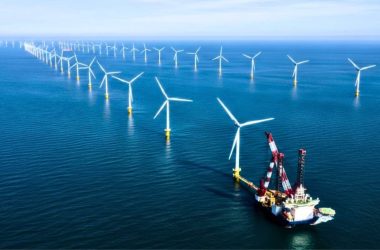
Offshore wind farms present a growing market segment. Fixed foundation inspections currently require divers or large ROVs. A soft robotic system deployed from a small autonomous vehicle could inspect multiple turbines without surface vessel support, if the technology proves reliable in field conditions.
Scaling from laboratory demonstrations to commercial deployment requires addressing several challenges. Long-term reliability in harsh marine environments remains unproven. Biofouling can impair sensor performance and increase hydrodynamic drag, necessitating anti-fouling strategies that are compatible with flexible materials.
Integration with existing ROV and AUV platforms needs standardised interfaces for power, data, and mechanical attachment. The subsea robotics industry lacks universal standards, which can potentially limit adoption unless custom integration is performed for each platform.
Operator training presents another consideration. Controlling a continuum robot differs significantly from traditional manipulators, requiring new interfaces and potentially autonomous capabilities to reduce operator workload.
If these challenges are resolved, soft robotics could expand beyond inspection to include intervention tasks such as valve operations or cable installations. The compliant nature suits applications where rigid robots risk damage, opening new possibilities for subsea automation.
The UK-Brazil collaboration demonstrates the international nature of subsea technology development, combining British robotics expertise with Brazilian offshore experience. Success could position both countries as leaders in the emerging soft robotics market for marine applications.
TLDR:
- UK-Brazil team develops 1-meter flexible robotic tentacle for subsea inspections
- Soft design conforms to structures, reducing damage risk compared to rigid robots
- Successfully tested at 300g force tolerance and 3,000m depth capability
- Could replace expensive diving vessels with smaller ROV deployments
- Targets $100 billion offshore decommissioning market by 2030
- Uses a tendon-cable system with shape sensors for precise control
- If commercialised, it could cut inspection costs and improve safety