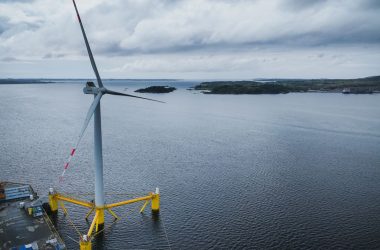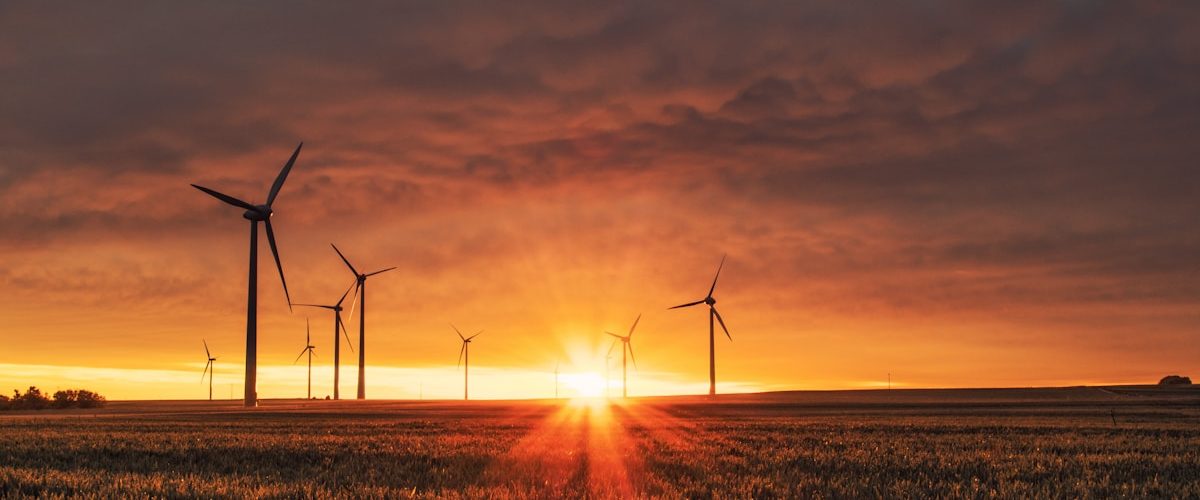
The first wave of large-scale offshore wind farms is ageing. Turbines installed in the mid-2000s are approaching the end of their 20-25-year design lives, and the UK, which has more offshore wind capacity than almost anywhere else in the world, will soon see large numbers of them coming down. Inside each turbine generator sits a quantity of rare-earth metal that, in the current geopolitical climate, is worth rather more attention than it has received.
A report from the National Engineering Policy Centre (NEPC), published through the Royal Academy of Engineering, has put a number on the opportunity. Recycling the rare earth magnets from decommissioned UK offshore wind turbines could recover enough neodymium to manufacture the permanent magnets needed for approximately one million electric vehicle motors every year. The UK has, in the words of the report, a real opportunity to develop sovereign manufacturing capability in a material sector where it currently has almost none. The critical caveat is that no domestic commercial-scale rare earth recycling operation exists in the UK today.
The element in question is neodymium. Combined with iron and boron to form neodymium-iron-boron (NdFeB) alloy, it produces the strongest permanent magnets commercially available - capable of generating magnetic fields roughly ten times stronger per unit mass than conventional ferrite magnets. These properties make NdFeB magnets indispensable in the direct-drive generators used in modern offshore wind turbines, the traction motors of electric vehicles, the actuators of aircraft control surfaces, and dozens of other applications where high magnetic force in a compact volume is required.
Neodymium is classified as a critical mineral. Not because it is geologically scarce - it is more abundant in the Earth’s crust than copper - but because the processing infrastructure that transforms raw ore into magnet-grade alloy is almost entirely located in China. China controls roughly 60% of global rare earth mining and approximately 90% of the processing and separation capacity. That concentration creates a supply chain vulnerability that Western governments have discussed since at least 2010 and have done relatively little to address.
Wind turbine neodymium recycling offers an alternative supply route that bypasses Chinese processing entirely. The neodymium in a turbine generator has already been mined, separated, alloyed, and magnetised. Recovering it from a decommissioned turbine requires chemical or physical extraction of the magnet material, followed by reprocessing into new alloy - processes that are technically understood but not yet operating at commercial scale in the UK. The NEPC report argues that the economics are becoming favourable: the volume of decommissioned turbines will grow steadily over the coming decade, and NdFeB magnet prices are exposed to supply chain risks that recycled material would avoid.
The recycling picture for turbines overall is already reasonably good. Roughly 85-90% of a turbine’s mass - the steel tower, the cast iron nacelle components, the copper cables - is recyclable through existing commercial processes. The stubborn exceptions are the blades. Made from fibre-reinforced composites, typically fibreglass or carbon fibre in an epoxy resin matrix, turbine blades have until very recently been consigned to landfill at the end of their lives because no cost-effective recycling route existed for thermoset composites. The European wind industry’s self-imposed landfill ban on decommissioned blades, which took effect on 1 January 2026, is now forcing the development of alternatives - mechanical shredding for use as filler material in cement production is the leading near-term option.
But blades are not where the rare earth problem lies. The neodymium is in the generator, a component already separated from the rest of the turbine during decommissioning, and it has a well-understood metallurgical composition. The engineering challenge is not one of identification or separation from other materials. It is one of the investments: building chemical processing plants, developing supply chain logistics, and establishing commercial arrangements that would make UK-based rare earth recovery economically viable at scale.
The nickel, cobalt, and zinc in power electronics add a further layer of critical mineral recovery. These are not rare earth elements, but they are listed as strategic materials by the UK government and the European Union due to their own supply chain pressures. From this perspective, a decommissioned turbine is a mobile warehouse of strategic materials waiting to be unlocked.
Engineering Deep Dive: The Physics of Neodymium Magnets and Electromagnetic Generation
Wind turbine neodymium recycling matters because of what NdFeB magnets do inside a generator - and understanding that requires a detour through the physics of permanent magnetism and electromagnetic induction.
Permanent magnets work because of a quantum mechanical phenomenon called exchange coupling. In ferromagnetic and ferrimagnetic materials, the electron spins on neighbouring atoms align parallel within regions called magnetic domains. In a demagnetised magnet, the domains point in random directions and their fields cancel. When the material is magnetised - by exposure to a strong external field during manufacture - the domains align, and the material retains this alignment permanently (or until it is heated above its Curie temperature, at which point thermal energy disrupts the exchange coupling and the magnetisation is lost).
Neodymium-iron-boron achieves its exceptional magnetic strength because of a combination of factors: a very high magnetisation saturation (the maximum magnetic flux density the material can produce) and a high coercivity (resistance to demagnetisation). The coercivity comes from the tetragonal crystal structure of the Nd₂Fe₁₄B compound, which creates a strong preferential axis for magnetisation. The result is a material that, once magnetised, maintains its field even in the presence of significant opposing magnetic forces.
In a wind turbine direct-drive generator, a ring of these permanent magnets rotates around a stationary coil assembly (the stator) as the rotor turns in the wind. By Faraday’s law of electromagnetic induction, the changing magnetic flux through the stator coils as the magnets pass induces an electromotive force (EMF) in the coils, which drives an alternating current into the grid. The formula is ε = -dΦ/dt, where ε is the induced EMF and Φ is the magnetic flux through the coil. The magnitude of the induced voltage depends on how rapidly the flux changes, which depends on the strength of the magnets, the number of magnet poles, and the rotational speed of the rotor.
Using permanent magnets rather than electromagnets in the generator eliminates the need for an excitation current, reducing electrical losses and removing the slip rings and brushes that would otherwise require maintenance. This is particularly valuable in offshore wind turbines, where access for maintenance is expensive and time-consuming. Direct-drive permanent magnet generators - dispensing with the gearbox that conventional turbines use to step up rotor speed - are now the dominant technology in large offshore installations precisely because they minimise moving parts and maintenance intervals.
Each large offshore turbine generator typically contains several hundred kilograms of NdFeB magnet material. A 5 MW turbine might use 600-800 kg. The growing fleet of 12-15 MW machines installed since 2020 uses proportionally more of it. Multiplied across the hundreds of turbines that will be decommissioned over the next decade in UK waters alone, the total mass of recoverable magnet material runs to thousands of tonnes.
The recycling chemistry involves two main routes. Hydrogen decrepitation exposes the alloy to hydrogen gas at elevated pressure: hydrogen is absorbed preferentially into the grain boundaries of the NdFeB microstructure, causing the material to crumble into a fine powder that can be reprocessed into a new magnet alloy. Hydrometallurgical routes dissolve the magnet in acid and use selective precipitation or solvent extraction to separate neodymium from the iron and boron. Both approaches are established at laboratory and pilot scale. The engineering challenge for wind turbine neodymium recycling is achieving the throughput, purity, and cost per kilogram that would make the recycled material competitive with primary material refined from ore.
The comparison with electric vehicle motors is instructive. A typical EV traction motor uses 1-2 kg of NdFeB magnet material. One million EVs, therefore, requires one million to two million kilograms of magnet alloy - a number that the NEPC report suggests is within the range of what systematic UK offshore turbine decommissioning could provide, given the volume of machines approaching end of life and the magnet loadings of the turbine generator designs that were installed in UK waters between 2005 and 2015.
The physics connects A-level topics directly. Faraday’s law of induction explains how the turbine generates electricity. The properties of NdFeB explain why that generation is efficient. And the supply chain geography explains why recovering those materials matters far beyond the engineering of any single turbine. The machines coming down from UK waters are not just scrap. They are a domestic source of materials that only one country in the world can reliably supply right now.
- A Royal Academy of Engineering report finds that recycling decommissioned UK offshore wind turbines could recover enough neodymium to manufacture one million electric vehicle motors annually.
- Neodymium-iron-boron (NdFeB) magnets are the strongest permanent magnets commercially available and are essential components in EV motors and wind turbine generators.
- China controls around 60% of global rare earth mining and 90% of processing, making domestic recycling a supply chain security priority for the UK.
- About 85–90% of turbine mass is already commercially recyclable, but no domestic commercial-scale rare earth recycling currently exists in the UK.
- The European wind industry’s self-imposed landfill ban on decommissioned blades, which took effect on 1 January 2026, is increasing pressure to develop full turbine recycling infrastructure.