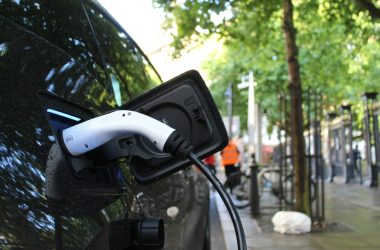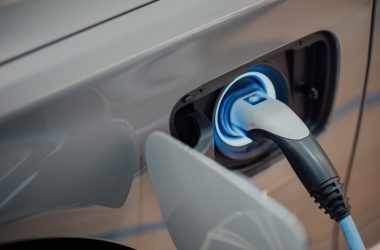
Here is an engineering puzzle. You are building a four-door electric grand tourer that must be longer than a Porsche Panamera, lower than most saloons and quick enough to justify a six-figure price. The battery that makes it go 400 miles is a slab roughly the size of a double bed. Put it flat under the floor and the car grows 20 centimetres taller. Squash it and it will not fit.
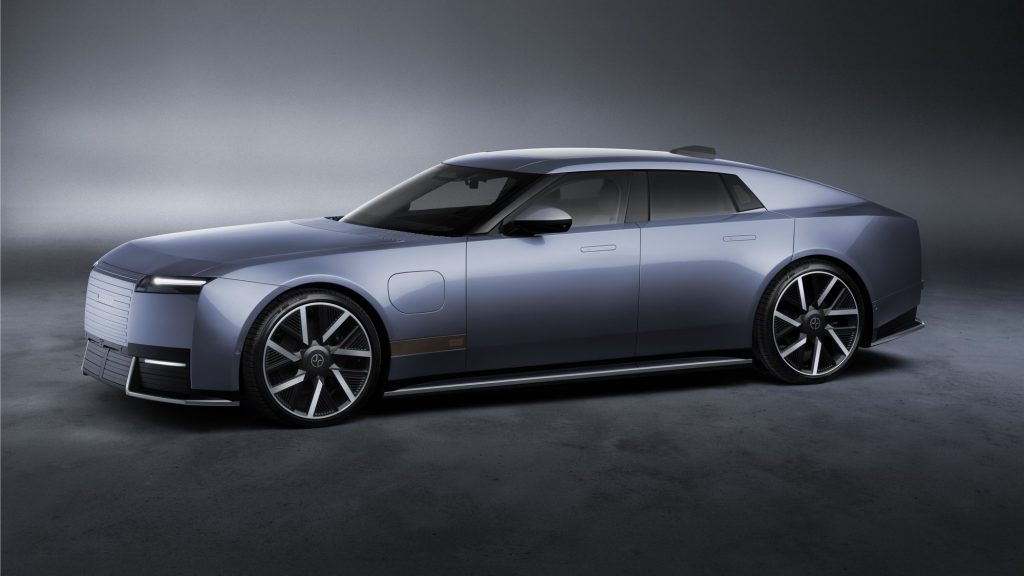
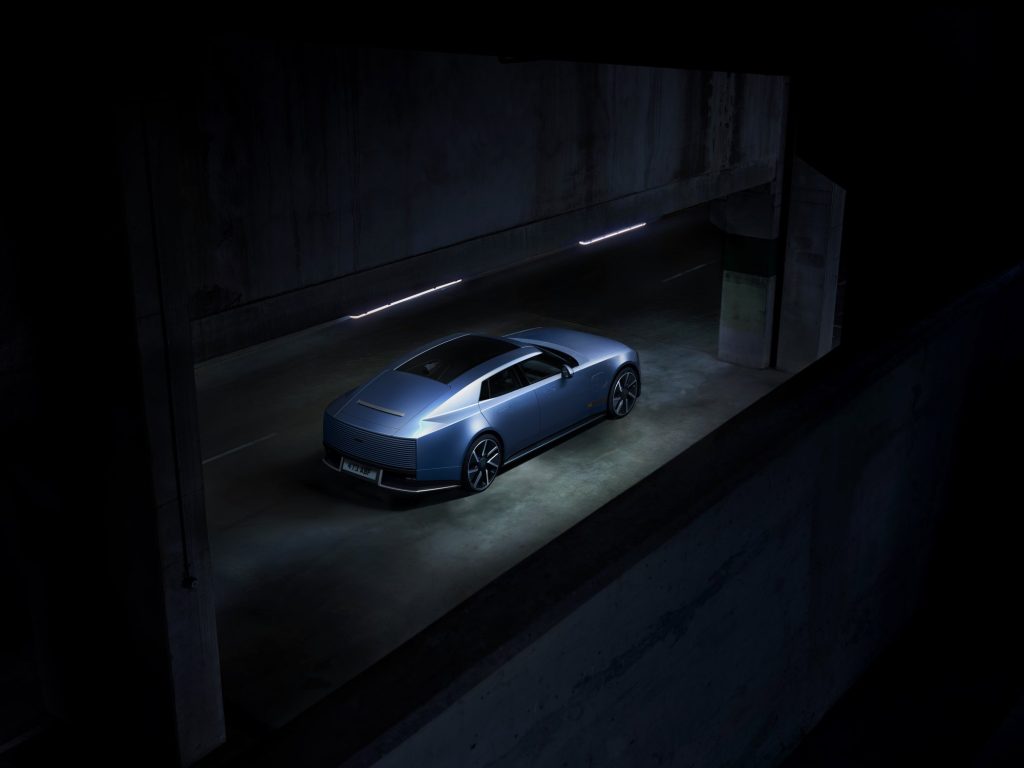
The Jaguar Type 01. Image: Jaguar Land Rover.
Jaguar’s answer is the interesting part of the Type 01, the production electric GT it revealed in New York on 6 October 2026. The battery is split in two. It reaches forward ahead of the cabin and dips low beneath the rear seats, and the seat cushions themselves are only 83 millimetres thick, according to Top Gear. Jaguar says 32 extra cells squeezed in this way are worth up to 70 miles of range and 148 horsepower. The roofline stayed where the designers wanted it.
Most of the coverage this week has been about the company: the divisive rebrand, the sharp fall in sales, the £130,000 price, whether Jaguar can survive. That is a fair story. It is not this one. This article asks a different question. What did 90 years of building cars in the English Midlands, and eight years of building electric ones, teach Jaguar, and how much of it shows up in the metal?
We read more than 100 pages to find out, from Jaguar’s own press releases to a 2003 engineering paper on the aluminium XJ. We have flagged every place where sources disagree, because there are plenty during launch week.
Here’s what we actually know.
| Item | Figure | Source |
|---|---|---|
| Usable battery | 118 kWh, NMC chemistry; reports prismatic cells | Jaguar. Gross capacity is not published |
| Electrical system | 850 V | Jaguar |
| Peak power | Up to 1,030 PS (1,015 hp, about 757 kW) | Jaguar. Top Gear prints 1,035 bhp |
| Peak torque | 1,365 Nm (1,007 lb-ft) | Jaguar |
| Motors | One 260 kW front, two 310 kW rear in a single drive unit | Jaguar US release |
| 0 to 62 mph | 3.2 seconds (3.1 s to 60 mph) | Jaguar, UK and US figures |
| 62 to 112 mph | 4.0 seconds | Jaguar US release |
| DC charging | 350 kW peak. 200 miles added in as little as 13 minutes. 10 to 80% in about 22 minutes | Jaguar |
| Range | Up to 400 miles (EPA estimate, with 21-inch wheels). 320 miles at a steady 75 mph | Jaguar. EPA figure to be confirmed |
| Range, WLTP | 450 miles reported | Press only. Not in Jaguar’s releases |
| Drag coefficient | 0.23 | Jaguar US release |
| Aluminium | 73% | Jaguar. Basis (body or total mass) not stated |
| Torsional rigidity | About 38,100 lb-ft per degree, or 51.7 kNm per degree | Jaguar US release. |
| Length / height | 5,235 mm / 1,403 mm | Jaguar |
| Price | From £130,000 UK, $130,500 US | Jaguar |
| Orders / deliveries | Orders early 2027, first deliveries second half of 2027 | Jaguar |
| Build | Solihull assembly. Drivetrains and packs from Wolverhampton. Panels produced at Halewood | Jaguar |
Four numbers are conspicuously missing, though: Jaguar has not published the weight (the press estimates 2.7 tonnes), the width, the cell supplier, or the gross battery capacity. We come back to why those gaps matter at the end.
The name, incidentally, is engineering shorthand. According to Jaguar, the “0” in Type 00 stood for zero tailpipe emissions and the “1” is the first of a new generation.
Part one: the aluminium inheritance
The Type 01 body is, by Jaguar’s account, 73% aluminium. To see why that sentence matters, you have to start in Coventry in 1948.
The XK120 that made Jaguar famous at the 1948 London Motor Show wore aluminium panels over an ash wood frame. Only the first 242 cars were built that way. From 1950 Jaguar switched to pressed steel for the main body and kept aluminium for the doors, bonnet and boot lid, because steel could be stamped at volume. The company’s early identity was craft. Its fortune would depend on learning to do the craft at scale.
The scaling had a geography. Jaguar leased the Browns Lane factory in Coventry from the Ministry of Supply in 1950, a five-year lease costing £30,000, and the move took until November 1952. Browns Lane might have produced 447,677 cars before the last one, an XJ, left the line on 1 July 2005, according to Jaguar Heritage. Browns Lane could assemble. It did not have a press shop or a paint plant, which is why Ford’s decision to close it in 2005 was less of a shock than it sounded.
The tub that came from a racing car
In March 1961 Jaguar showed the E-Type. Under its famous skin was a monocoque tub with a bolted-on front subframe carrying the engine and suspension. That arrangement came from the D-Type racer, whose centre section was a riveted aluminium-magnesium alloy monocoque, and it was designed by Malcolm Sayer, an aircraft aerodynamicist who had come from the Bristol Aeroplane Company, according to the Revs Institute. The lesson was a durable one: use the structure as the structure. A load-bearing tub, with the heavy parts bolted to it, beats a separate chassis and body.
We have not found a source that states the E-Type production tub’s material, so we will not claim it was aluminium. The D-Type’s was. Jaguar’s later cars would return to that idea.
The rivet-bonded XJ
The pivotal car in this story is the 2002 XJ, internally the X350. A technical paper presented in 2003 and a trade-press account in IndustryWeek describe an aluminium monocoque in which parts were joined not by welding but by self-piercing rivets plus an aerospace-grade epoxy adhesive that cured in the paint oven. The numbers are striking:
- The body comprised 15 castings, 35 extrusions and 284 stampings.
- The paper counts 3,204 self-piercing rivets, with a further 180 blind rivets, and 104 metres of structural adhesive. Other sources say about 3,200 rivets and 120 metres of adhesive, so treat the adhesive length as approximate.
- The paper and IndustryWeek credit a body about 40% lighter and 60% stiffer than the steel XJ it replaced. Some secondary sources say 50% stiffer. We have used the technical paper.
The bodies were pressed and built at Castle Bromwich, in Birmingham. A WardsAuto report from 2003 lists a press hall with 13 hydraulic presses ranging from 448 to 2,240 tons, producing 125 major aluminium parts, with Alcan supplying the sheet.
A word of caution on “firsts”, because launch coverage loves them. The Type 01’s heritage is not that Jaguar invented aluminium cars. Audi’s A8 arrived in 1994 with an aluminium spaceframe that cut its body to 231 kilograms. The Lotus Elise used a bonded aluminium sis from 1996, and the Aston Martin Vanquish used bonded extrusions in 2001. What IndustryWeek and Jaguar claimed for the X350 was narrower and more defensible: the first rivet-bonded aluminium monocoque built in volume, with the outer panels carrying load too. A spaceframe like the A8’s hangs unstressed panels on a frame. A monocoque makes the skin work. The distinction is the whole story.
Twenty years of refinement
The recipe spread across the I-PACE. The X used over 75% aluminium, bonded and riveted in the same way as the XJ and F-Type, and introduced a recycled alloy. The XF claimed 75% aluminium architecture and torsional stiffness up to 28% higher than the car it replaced. The I-PACE of 2018 went further still. Novelis, the sheet supplier, said its body was 94% aluminium, and Jaguar stated a torsional rigidity of 36 kNm per degree.
Set that beside the Type 01. Its stated rigidity of about 51.7 kNm per degree is roughly 44% higher than the I-PACE’s 36 (according to our maths). Its aluminium share, 73%, is lower than the I-PACE’s 94%. Those two statements look contradictory until you remember the likely reason: the Type 01’s battery is a structural member. Jaguar says the pack is bonded into the chassis and absorbs 70% of side-impact crash energy. Some of the stiffness now comes from a box of cells rather than from sheet metal. One caution: the two percentages may not be based on the same basis, since Jaguar does not specify whether 73% refers to body mass or the whole car. We read the shift as a hypothesis, not a stated design philosophy.
The Type 01’s most dramatic metalwork is the rear quarter panel. Jaguar calls it the “Impossible Panel”: five geometric planes converging, pressed in six stages with 2,500 tons of force at Halewood, after more than 1,500 engineering hours, according to the US release. Reports from Design Week and Dezeen describe it as a surface that software initially judged unformable. Aluminium is harder to stamp than steel because it springs back and tears more easily at tight radii, which is why an aluminium rear quarter with that geometry is a real forming problem and not a styling flourish.
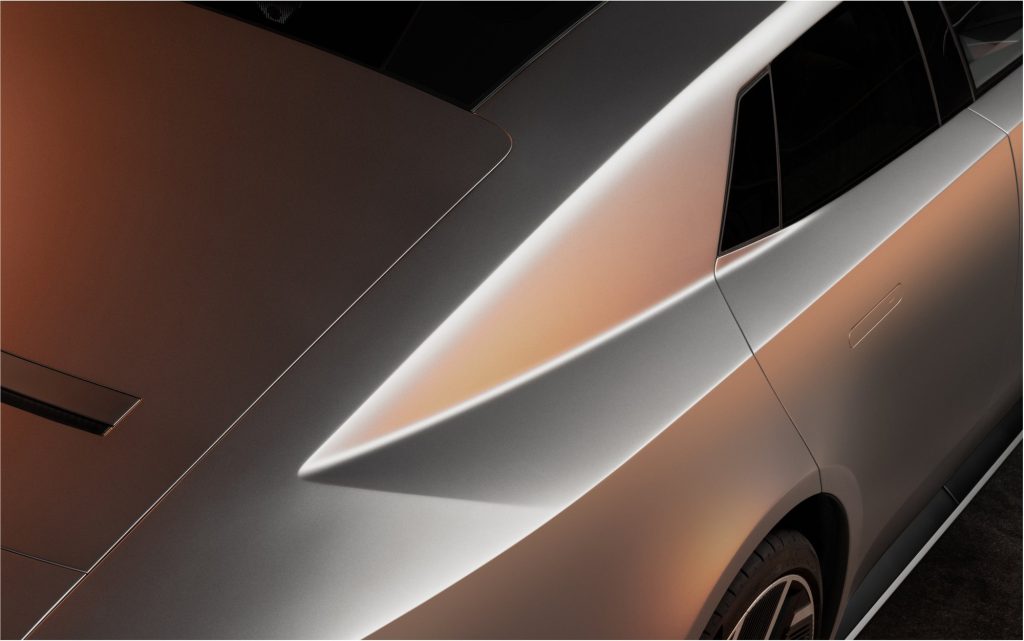
Rear quarter detail. Image: Jaguar Land Rover.
Part two: a factory chain rebuilt for electronics
Where the Type 01 is made tells you what Jaguar and its parent, JLR, spent the last decade learning.
Wolverhampton. The engine plant at i54 opened in October 2014 at a cost of £500 million, with 1,400 jobs, to build the Ingenium four-cylinder, whose first product was the diesel for the new XE. Today it makes electric drive units and battery packs for the Type 01. Express & Star reported in May 2024 that £356 million had been spent on equipment for packs and drive units there. A factory built for combustion engines was turned into one for electric ones. That is a more interesting story than a brand-new plant, because it means the same logistics, the same machining know-how and many of the same people.
Halewood. JLR announced in September 2024 a £500 million investment to convert Halewood, on Merseyside, into an electric-vehicle factory, with a body shop designed to produce 500 bodies a day and a final assembly line stretched from 4 km to 6 km. Halewood’s job for the Type 01 is the pressings, including the Impossible Panel. It is not where the car is assembled, despite some early reports.
Solihull. Final assembly will be in Solihull from 2027. JLR says nearly 9,000 people there have been retrained to build electric vehicles. The last petrol Jaguar, a black F-Pace SVR, was built there on 19 December 2025. The Castle Bromwich plant that built the aluminium XJ stopped making complete cars in mid-2024. JLR said production would end in June 2024, with the stamping operation expanded to make panels for all of its brands, per Express & Star. Other accounts date the last car to May 2024.
Browns Lane could not press its own panels, so Jaguar learned to move bodies between sites. Today, panels from Halewood, drive units from Wolverhampton and final assembly in Solihull are three sites, three kinds of skill, tied together by logistics. That is the same pattern Jaguar has used since the 1950s, now carrying kilowatt-hours instead of crankshafts.
Not everything in the chain is settled. JLR’s parent, Tata, is building a battery cell gigafactory in Somerset, but its first building has slipped to 2027, and no source we read names it as the Type 01’s cell supplier. Nobody has said who makes the cells. We return to that below.
Part three: eight years of electric learning
Jaguar’s electric education is easy to caricature as a single car: the I-PACE. In fact, it ran on several tracks at once.
The concept that had four motors and a jet engine
The C-X75 concept of 2010 had four electric motors, one per wheel, at 145 kW each, a 19 kWh battery, and two micro gas turbines as range extenders. It never reached production. It established the idea that Jaguar’s electric cars should prioritise performance.
I-PACE: the expensive lesson
The I-PACE, revealed in March 2018, was a genuinely good car. It won European Car of the Year and World Car of the Year in 2019, and its aerodynamics (Cd of 0.29) and packaging were ahead of the German incumbents. It also taught Jaguar three expensive lessons.
First, it was built by Magna Steyr in Graz, Austria. Jaguar designed it and did not build it. The Type 01 is made in Jaguar’s own plants.
Second, its 90 kWh pack used 432 pouch cells from LG, and the cells caused trouble. In May 2023, JLR recalled 6,367 US vehicles due to a fire risk, with an interim 75% charge limit. A 2024 recall of 2,760 older cars told owners to park outside. A February 2026 NHTSA filing, campaign 26V067, covered a further 2,278 cars with a 90% charge cap. We do not know how much of Type 01’s pack design is a direct response, because Jaguar does not say. What we can say is that the Type 01 uses a different cell format, prismatic rather than pouch, and that Jaguar’s US release describes an immersion test of 20 cycles in cold water and single-cell isolation in as little as five milliseconds. That reads like a company that has thought hard about cell failure. The causal link is our inference.
Third, the I-PACE showed the market was hard. Production ended in December 2024.
Jaguar has run a works team in Formula E since the 2016/17 season. For the 2018/19 season, it launched the I-TYPE 3, with its first fully in-house powertrain: a custom motor-generator unit, a silicon carbide inverter, a transmission, cooling, and software. Team boss James Barclay called it a test bed for future road cars.
The payoff is claimed, and specific. Jaguar’s US release says Formula E contributed learnings to the Type 01’s inverters and traction control. The inverters are silicon carbide devices that switch between 2 and 20 kilohertz, and Jaguar says they cut torque response from 100 milliseconds to as little as 1 millisecond. The racing team won the 2025/26 Teams’ World Championship, finishing on 288 points, 17 clear of Porsche.
Why does a faster inverter matter on the road? A silicon carbide transistor can switch faster and dissipate less heat than a silicon one, which means a smaller, cooler inverter and a motor controller that can adjust torque thousands of times per second. For a three-motor car in a skid, that is the difference between a correction you feel and one you do not.
Part four: what makes the Type 01 technically interesting
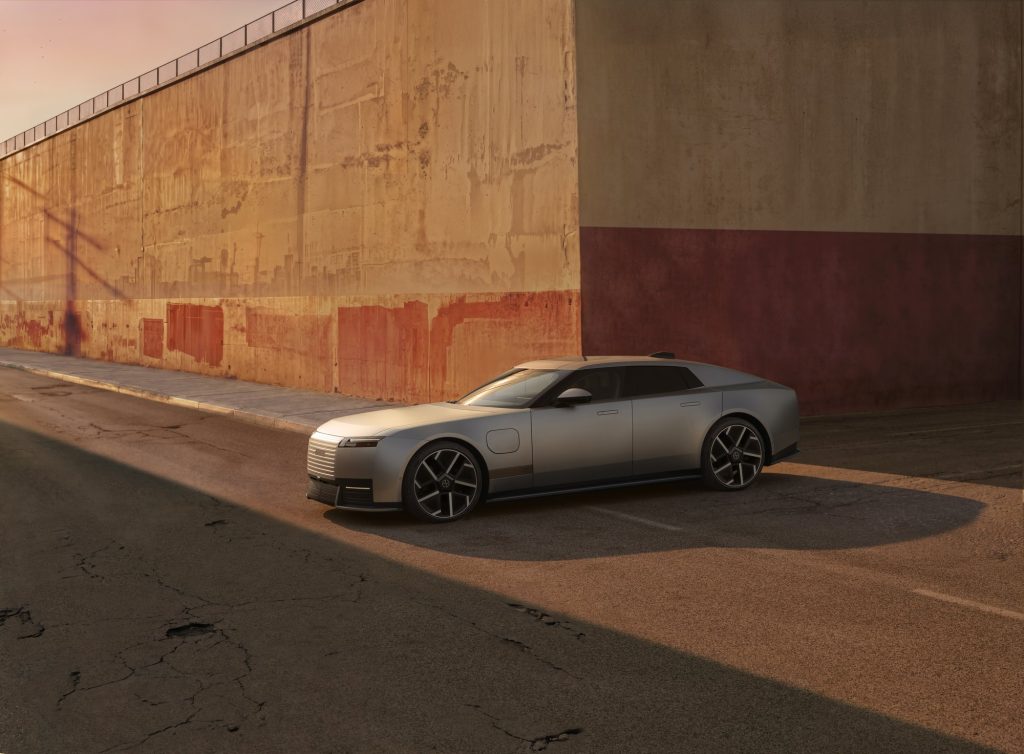
The battery is the floor, the crash structure and the seats. Strip away the headline kilowatt-hours, and the Type 01’s best engineering is in its packaging. The pack is 150 millimetres thick including armour, per Top Gear, and Jaguar says 80% of that height is energy storage. The pack is split to carve out rear footwells. The car has a structure Jaguar calls the Tri-Apex Node, which it says stops 28.7 tons in a frontal crash and also houses the front motor. The pack itself, per Jaguar, takes 70% of side-impact energy.
The cost is paid by the people in the back. Top Gear found the rear cramped, and the Irish Times called it “selfish” to rear passengers. Edmunds says four six-footers fit “only just”. That is the trade a low, long GT makes.
The Type 01 has one 260 kW motor at the front and two 310 kW motors in a single rear unit. Add those up, and you get 880 kW, or about 1,180 horsepower. Jaguar’s stated system power is 757 kW (1,030 PS). The difference is not an error. Peak motor ratings are not simultaneous system ratings: the battery, the inverters and the cooling set a ceiling below the sum of the parts. It is a good example of why headline power figures are about the system, not the motors.
Jaguar says the car sends up to 87% of power to the rear axle in Dynamic mode. It can also shut down the rear motors when cruising, a technique Jaguar calls inverter deactivation, which it says contributes up to 18 miles of range. It claims torque density of 17.1 lb-ft per lb of drive unit, and gear ratios of 8.76:1 front and 7.72:1 rear. The press is divided on whether the platform shares anything with JLR’s other electric models. Top Gear quotes Jaguar saying it shares nothing with Range Rover Electric. Chasing Cars reports the front motor type is shared. We could not resolve it.
850 volts, and the trick for 400-volt chargers
Most public chargers in the UK and Europe run at 400 volts or lower. A car with an 850-volt battery can charge very fast on an 800-volt charger. On a 400-volt one, a naive design would be capped at half the voltage and hence half the power. Jaguar’s answer is to split the pack into two halves, which it can arrange to charge at 400 volts each, reaching up to 250 kW. That detail is in Jaguar’s release and PistonHeads’ report, and it is missing from much of the headline coverage.
We checked Jaguar’s charging claims against each other, because they look like marketing until you do the sum. 80% of 118 kWh is 94.4 kWh. In 22 minutes, that is an average of about 225 kW. The other claim, 200 miles in 13 minutes, works out at about 59 kWh at Jaguar’s own 400-mile efficiency, or roughly 272 kW on average. Both sit comfortably under the 350 kW peak. They are consistent, and they are an average, not a peak that lasts.
Aerodynamics
Jaguar states a drag coefficient of 0.23. That is excellent for a car 5.2 metres long. Look closely, though. Top Gear says the figure is for 21-inch wheels. Jaguarr also ties the 400-mile figure to 21-inch wheels. The standard car wears 23-inch wheels. We found no published drag or range figure for the wheels most customers will actually get.
The aerodynamic kit is elaborate. Jaguar says the active front vanes add up to 27 miles of EPA range, and redirecting air around the front adds up to 12 miles. The rear spoiler lowers by 15 mm when cruising, deploys at 7 degrees above 50 mph, and moves to a 21-degree aero-balance position above 96 mph, generating up to 75 kg of downforce. Jaguar also claims 4 kg of positive aerodynamic thrust, and more than 7,000 wind-tunnel tests. The engineering aim is to reduce the energy needed to cruise: Jaguar says the car uses only two per cent of available power at a steady 60 mph, a figure we would like to see defined.
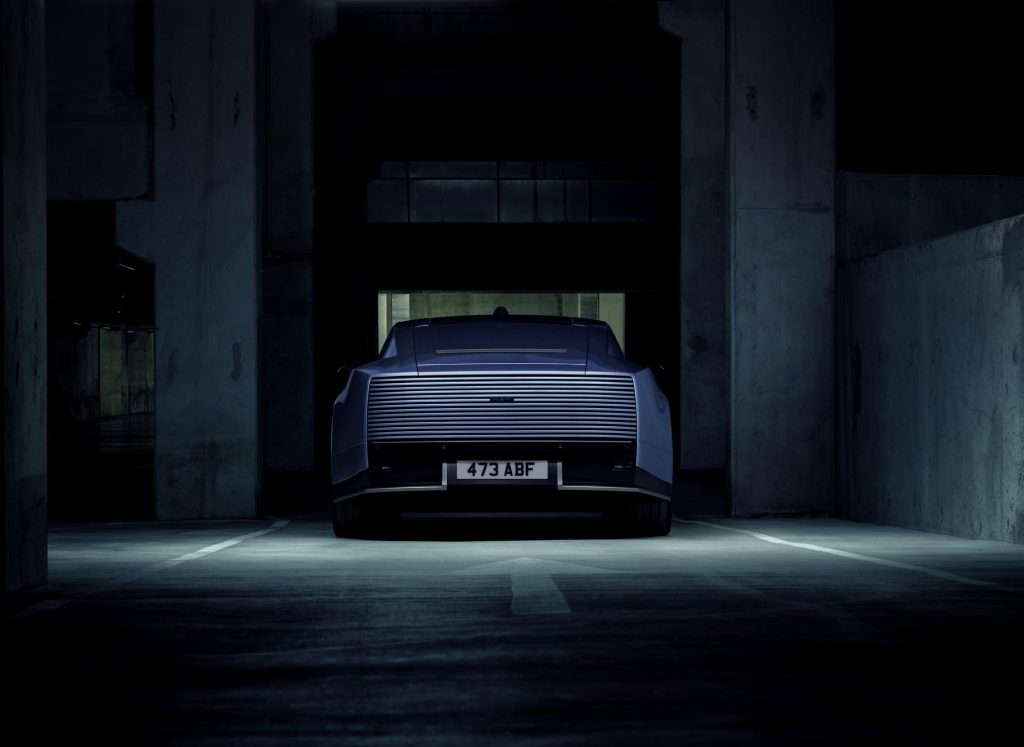
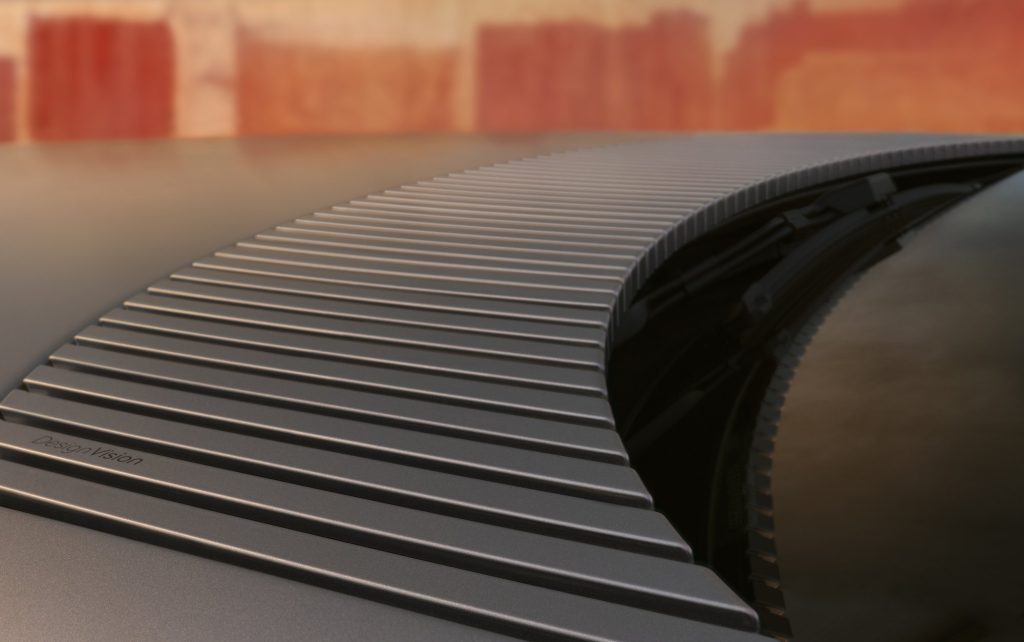
The tail. There is no rear window, and the view behind comes from cameras. Image: Jaguar Land Rover.
The car without a rear window
Look at the rear of the car in the press photographs, and you will not find a glass window. Rear vision comes from a camera-fed display plus conventional door mirrors, according to Dezeen and Jalopnik. It removes a large area of glass, improves aerodynamics and structure, and puts your view behind a camera and a screen. The broader question of how regulators in different markets treat clear-view cameras is not discussed in any of the sources we read, so we will not guess.
Suspension, steering and why the centre of gravity matters
The chassis has switchable-volume air springs and twin-valve active dampers. Jaguar says it monitors the road 500 times a second and adjusts the dampers 1,000 times a second. Rear-wheel steering turns up to six degrees, giving an 11.5-metre turning circle. Weight is split 50:50, and the centre of gravity sits 60 mm below the driver’s hip point. Jaguar claims lateral grip of up to 0.94 g on bespoke Pirelli P Zero tyres. These are impressive numbers for a car of roughly 2.7 tonnes, and the early verdicts should be read in that light. Auto Express found the prototype “floaty” in its default mode and upset by crests and cambers, though the car’s engineer put its software at about 70% complete in April.
Heat and software
JLR’s heat-management system, ThermAssist, operates from minus 40 to plus 40 degrees Celsius, and Jaguar says it recovers up to 3.5 kW of heat for every 1 kW of electrical input. The central computer is NVIDIA-based and, Jaguar says, ten times faster than its predecessors. The company reports 150,000 software tests. The car has 10 cameras, five radars and 12 ultrasonic sensors.
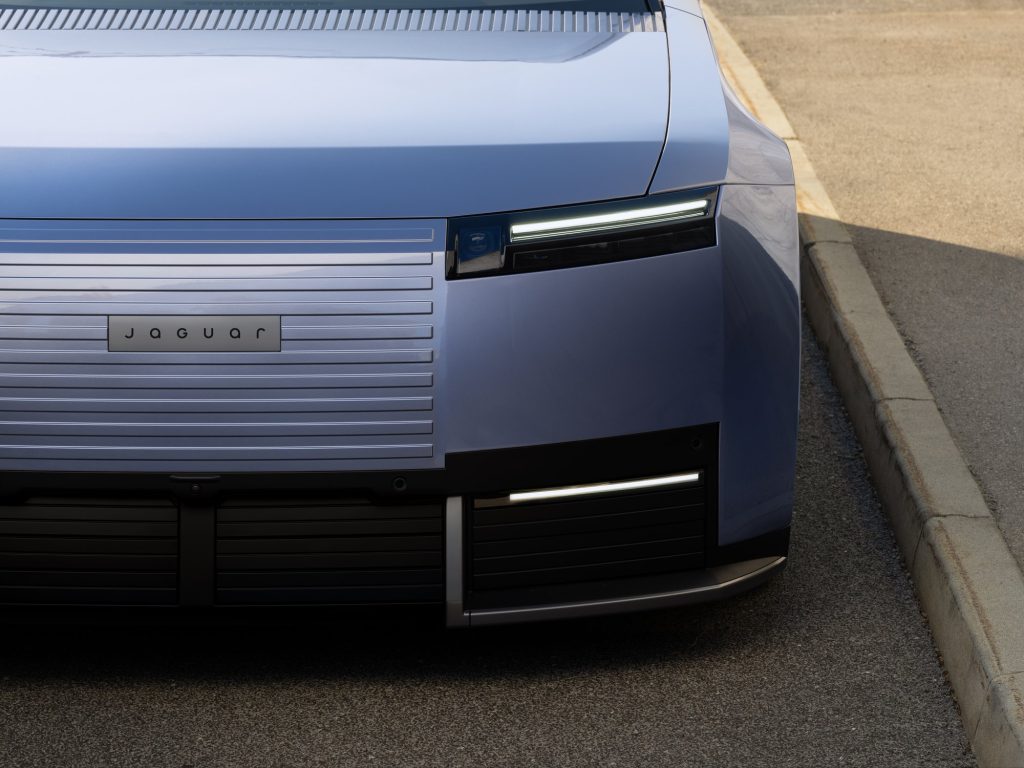
The front. Jaguar says each headlight is 84 mm tall and has 17,000 pixels. Image: Jaguar Land Rover.
Part five: what it means for a buyer
The range you can use. The honest headline is not 400 or 450 miles. It is Jaguar’s 320 miles at a steady 75 mph, which is the figure that describes motorway driving. A footnote in the US release cites JLR’s own data that 99.7% of journeys fall within 303 miles. Those are Jaguar’s numbers, and we have not independently verified them. The 450-mile WLTP figure is widely reported but appears in none of the releases we read, and Electrive notes the car is not yet certified.
The charge. The 22-minute, 10-to-80% figure is competitive. It is not class-leading. Bentley’s new Torcal, reported by Electrek, charges at up to 400 kW, and Ferrari’s Luce at 350 kW.
The size. At 5,235 mm, the car is long, and a Guardian report flagged a fairly obvious problem that it will not fit in most UK parking spaces. The boot is over 450 litres, and there is no useful front boot. Digital Trends and Jalopnik say only an emergency kit fits under the bonnet.
The price and the timing. £130,000 in the UK and $130,500 in the US. That price is well below a direct currency conversion from the sterling price. Orders open in early 2027, with deliveries in the second half of 2027. That is a long wait for a car whose software was about 70% complete in April.
The warranty. The battery warranty is eight years or 100,000 miles, according to the US release.
None of this happens in a vacuum. JLR’s results for the year to 31 March 2026 showed revenue of £22.9 billion, down 20.9%; profit before tax and exceptional items of £14 million, down from £2.5 billion a year earlier; and a loss after tax of £244 million. A September 2025 cyber-attack halted production and cost £196 million in direct exceptional costs, and the UK Government guaranteed a £1.5 billion loan to JLR as a result.
JLR says it has invested £11.5 billion of a planned £15-£18 billion over five years. The Type 01 is the first product of that money to reach the public. It is, as Reuters put it, a gamble. Our job here was only to read the engineering.
What to watch next
Four things will tell us whether the engineering lands. First, the homologated range and weight. Second, which wheels is the 400-mile figure quoted on in the UK? Third, who supplies the cells. Fourth, how the software behaves when the first production cars are driven in early 2027.
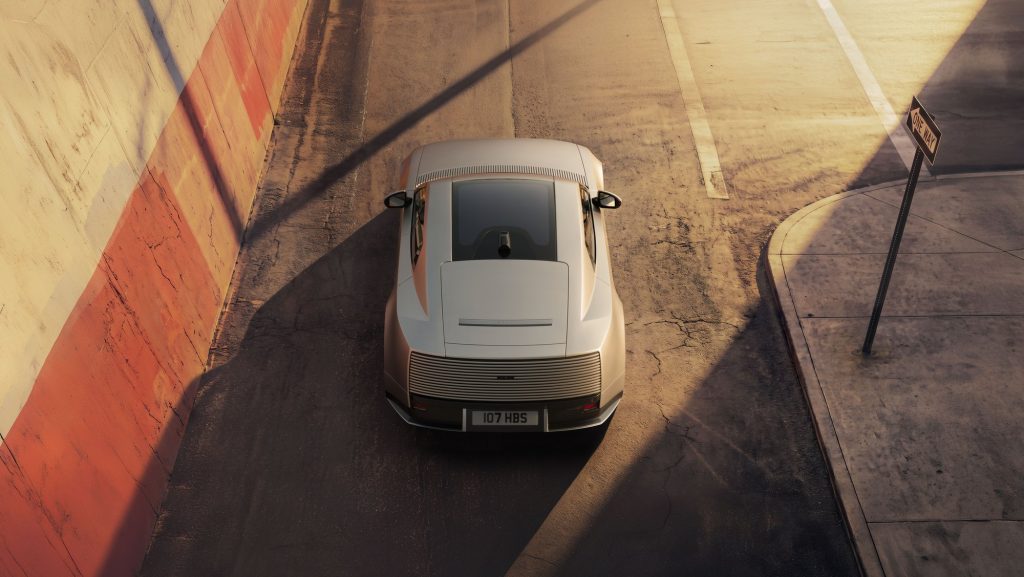
Image: Jaguar Land Rover.
If this makes you want to build cars like this
The jobs in this story are not one job. A rivet-bonded aluminium body needs materials and structures engineers. A split battery pack needs thermal and electrical engineers who are also packaging experts. A silicon carbide inverter needs power-electronics engineers. A press shop needs forming and tooling specialists.
If you are trying to work out which of these suits you, start with our honest guide to engineering disciplines. If you are weighing a degree against a degree apprenticeship, read our comparison first. Manufacturers like JLR recruit through both routes.
Jaguar’s Type 01 is a £130,000, 1,000-plus-horsepower electric GT, and its most interesting engineering feat is how it hides a huge 118 kWh battery while staying low. The pack is split and tucked under the rear seats, and it also acts as a crash structure.
Much of the car comes from Jaguar’s past. The bonded-and-riveted aluminium body is derived from the 2002 XJ. The drive units and packs are built in a converted engine plant in Wolverhampton. The inverters borrow from its Formula E team.
The useful numbers are 320 miles at a steady 75 mph and 10 to 80% charging in about 22 minutes. A neat trick lets it charge at up to 250 kW on older 400 V chargers.
Still unknown: the weight, the cell supplier, and the range on the 23-inch wheels most buyers will get. Deliveries start in the second half of 2027.