The idea of plastic that eats itself might sound like science fiction, but a team of researchers in China has made it real. They created a self-destructing living plastic that completely breaks down in just six days, leaving no microplastics behind. The key is dormant bacterial spores mixed into the material, ready to activate and break down the plastic from within. This research, published in ACS Applied Polymer Materials in July 2026, offers a new solution to one of environmental engineering’s toughest challenges.
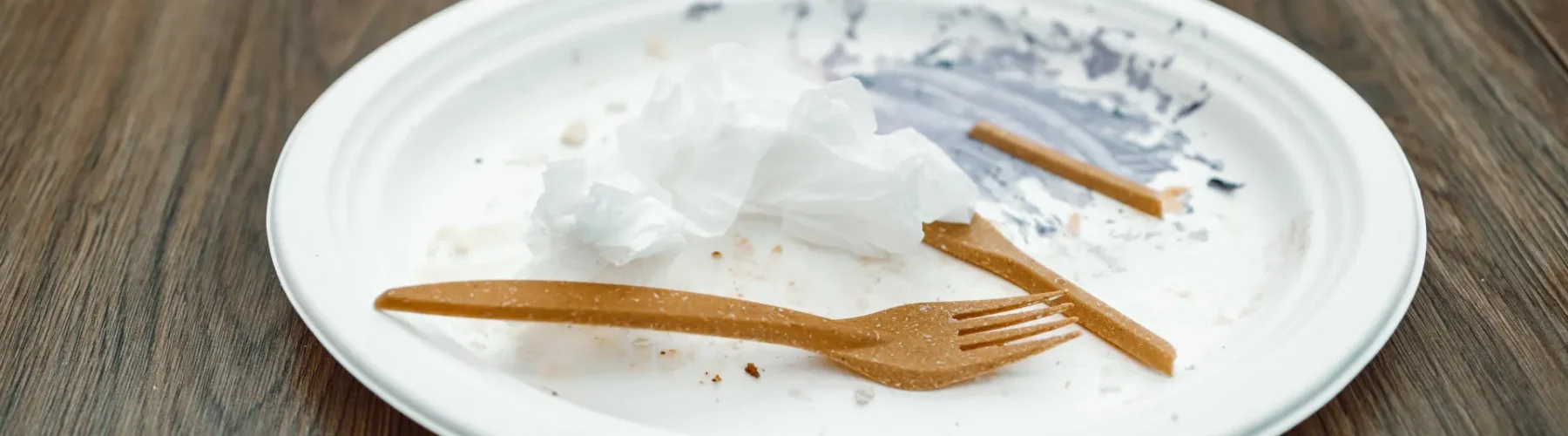
The researchers started with a simple question: “Could we build degradation directly into the material’s life cycle?” said Zhuojun Dai, the study’s lead author. Instead of depending on industrial composting or waiting for ocean microbes to slowly break down discarded packaging, the team wanted the plastic to destroy itself at the end of its use.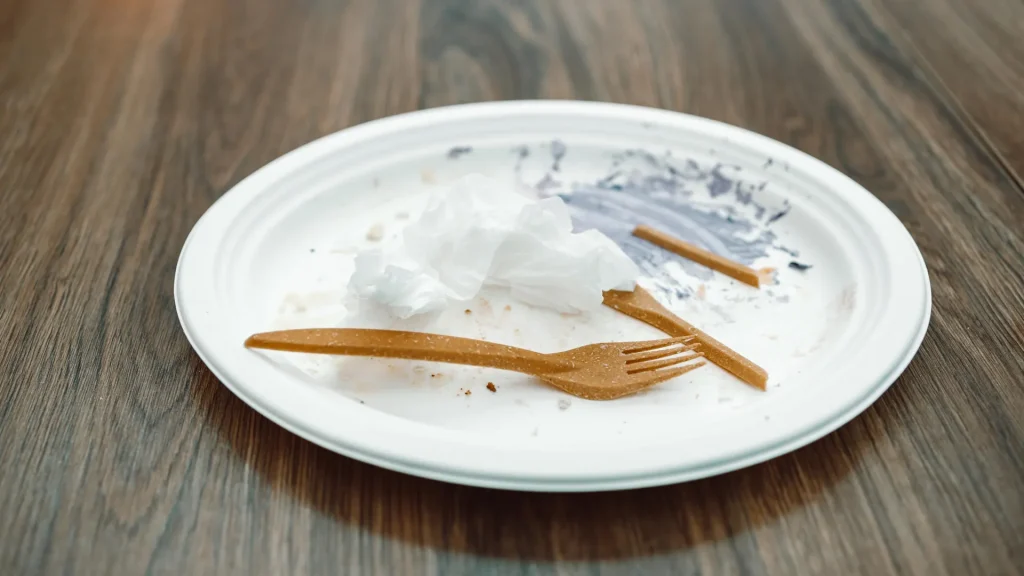
The plastic in question is polycaprolactone, or PCL. If you have used a 3D printer with flexible filament or undergone surgery with dissolvable stitches, you have likely encountered it. PCL is a polyester, meaning ester bonds hold its long molecular chains together. That chemistry matters because it gives enzymes a target to aim at.
Chenwang Tang, Jing Sun, Qing Wang, and their team genetically modified the common soil bacterium Bacillus subtilis to make two types of enzymes that break down plastic. The first enzyme acts like scissors, randomly cutting the long PCL chains into smaller pieces. The second enzyme works more slowly, starting at the ends of these fragments and removing one unit at a time, turning the plastic back into its basic building blocks. Together, these enzymes do more than just break the plastic into tiny pieces - they completely get rid of it. After six days, as reported by ScienceDaily, the researchers found no microplastics left.
This difference is important. Many plastics labeled as biodegradable just break down into micro- and nanoplastics in the environment, which can be even harder to clean up. The self-destructing living plastic avoids this problem completely.
Putting living organisms inside plastic is a big engineering challenge. The bacteria have to survive the manufacturing process without breaking down the plastic too soon. The team solved this by using Bacillus subtilis in its spore form. Bacterial spores are some of the toughest biological structures known. They can survive heat, dryness, UV light, and chemicals for years, acting like tiny biological time capsules.
The spores stayed inactive inside the PCL film, and tests showed that the self-destructing plastic had similar properties to regular PCL. It could bend, stretch, and hold weight as expected. The spores only became active when the researchers added a nutrient broth heated to 50 degrees Celsius. Then, the bacteria started to grow and make enzymes.
To prove their idea worked, the team made a wearable plastic electrode. It worked as expected during use and then completely broke down within two weeks after activation. This showed that self-destructing living plastic can be useful before it is designed to break down.
Engineering deep dive: how self-destructing living plastic actually works
Polymer chemistry and why PCL was chosen
If you have studied A-level chemistry, you might know polycaprolactone as a condensation polymer. It forms when caprolactone monomers go through ring-opening polymerisation, where the ring structure opens up and the molecules join together in long chains. Each link in the chain has an ester bond, which is the same group you learn about when studying how carboxylic acids react with alcohols.
PCL was a good choice for this experiment. Its melting point is about 60 degrees Celsius, which is low enough to process without harming the bacteria but high enough for normal use. It is already used in medicine, so its breakdown products are known to be safe. Also, its ester bonds can be broken by water, and the enzymes make this process much faster.
How the enzymes work
The two enzymes use different methods to break down the polymer chain. The first enzyme is called an endoesterase. “Endo” means it cuts bonds inside the chain. Imagine making random cuts along a long rope - each cut creates two shorter pieces, and the number of chain ends doubles each time. This random cutting quickly lowers the average size of the polymer chains.
The second enzyme is called an exoesterase. “Exo” means it works from the outside, starting at the ends of the chain. It attaches to a free chain end and removes one monomer at a time. By itself, this enzyme would work slowly because the original polymer only has two ends. But after the first enzyme makes many cuts, there are hundreds of ends for the second enzyme to work on. The two enzymes help each other: the first creates more places for the second to act.
This is why there are no microplastics left. If only the endoesterase was used, it would make smaller and smaller pieces, but might not break them down completely. The exoesterase finishes the process by turning every fragment into caprolactone monomers and short chains that dissolve and are eaten by the bacteria.
Spore biology and the embedding challenge
Bacillus subtilis is a Gram-positive bacterium that lives in soil and in the human gut. When conditions get tough, it forms an endospore - a dried-out, layered structure with a strong protein shell and its DNA safely stored inside. These spores can survive temperatures over 100 degrees Celsius for short times, long exposure to UV light, and even the vacuum of space. This toughness makes it possible to put them inside plastic.
There are two main engineering challenges. First, the spores must stay dormant during manufacturing and storage, which requires careful control of moisture and temperature. Second, once activated, the bacteria need to make enough enzyme to break down the plastic from the inside. The researchers solved this by spreading enough spores throughout the film, so enzymes were produced in many places at once, breaking down the plastic from the inside instead of just at the surface.
Comparison with other biodegradable approaches
Polylactic acid, or PLA, is the most common “biodegradable” plastic. PLA products are labeled as compostable, but they need industrial composting at temperatures above 58 degrees Celsius for weeks. In home compost, landfills, or the ocean, PLA lasts for years and breaks into microplastics. Polyhydroxyalkanoates, or PHAs, are made naturally by bacteria and do break down in the ocean, but they are costly to produce on a large scale. The living plastic approach is different: because the bacteria are alive and can multiply when activated, they keep making more enzymes over time. This makes the system self-amplifying.
This research is not an instant fix for the plastic crisis. PCL is a specialty plastic, the activation process still needs improvement, and there are big regulatory questions. Still, building a full, controllable breakdown system into the plastic itself is a new way to tackle plastic waste. The researchers are now trying to make the spores activate with just water, which could help fight plastic pollution in rivers and oceans.
- Researchers embedded engineered Bacillus subtilis spores into polycaprolactone plastic, creating a material that fully self-destructs in six days when activated
- Two synergistic enzymes produced by the bacteria break polymer chains into monomers, leaving zero microplastics behind
- The living plastic maintains normal mechanical properties during use, with degradation triggered only by warm nutrient broth
- The team is now working on water-activated versions that could tackle ocean plastic pollution