Water Harvesting Jacket Pulls Drinking Water From Air
Engineers at UT Austin created a water harvesting jacket that produces up to 900ml of drinking water daily from atmospheric moisture using biomass hydrogel.
Key points
- University of Texas engineers built a jacket containing biomass-derived hydrogel that absorbs moisture from air and releases it as drinking water when heated by sunlight
- The water harvesting jacket produced 400–900 ml of clean water per day, performing 3–10x better than existing materials at scale
- A separate standalone system from the same team achieved a record 1.3 litres per day
- Applications include backpacks, tents, and emergency shelters for disaster response
- Published in Science Advances (10 June 2026) and Nature Water (9 June 2026)
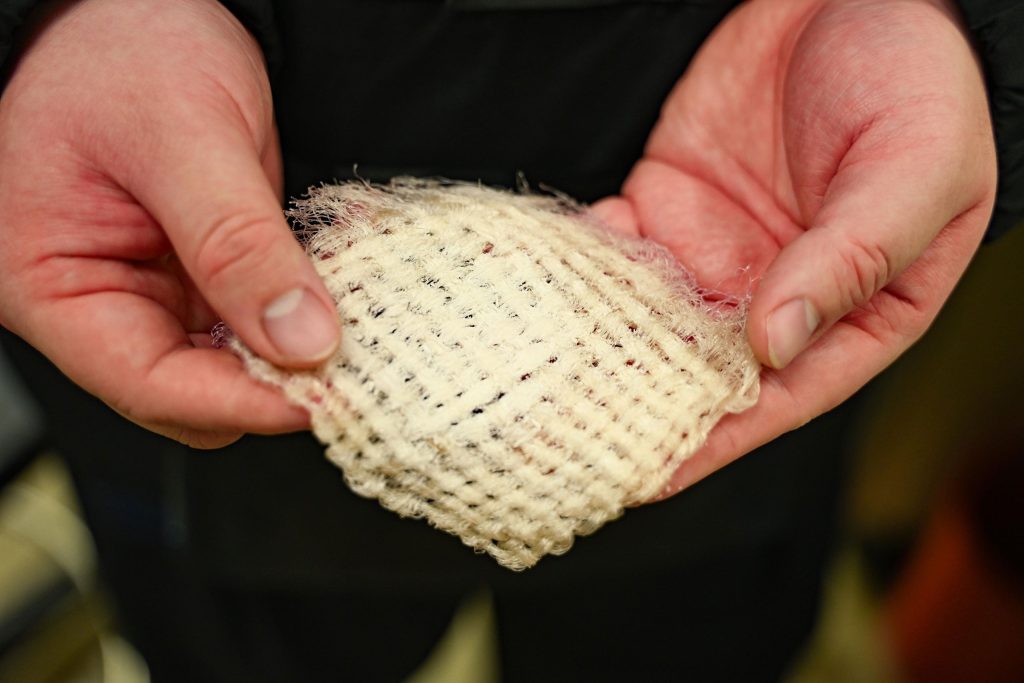
Researchers at the University of Texas at Austin have created a jacket that can collect drinking water from the air. The jacket uses a special hydrogel textile made from plant-based materials. It soaks up moisture from the air at night, then releases it as the sun warms the fabric during the day. The water vapor condenses inside the jacket and is collected in a small container. In tests, the jacket produced between 400 and 900 millilitres of clean water per day, depending on humidity. That's enough to fill a typical water bottle, all from a piece of clothing.
The project was led by Guihua Yu, a professor at the Cockrell School of Engineering, along with co-author Keith Johnston. Their findings were published in Science Advances on June 10, 2026. When tested on a larger scale, the material worked three to ten times better than other water-harvesting technologies. The same research group also published another study in Nature Water a day earlier, showing a different system that collected a record 1.3 litres of water per day with a standalone device, or 4.3 litres per kilogram of material each day.
The jacket works without batteries, pumps, or filters. It operates passively. At night, when it's cooler, the hydrogel fibers soak up water vapor from the air. Because the material is hygroscopic, it naturally draws in and holds water molecules. As the day warms up, sunlight heats the fabric, causing the water to turn into vapor. This vapor moves through the layers of the jacket and condenses on a cooler surface inside. The water then drips into a small container.
How much water the jacket produces depends on the weather. In humid places, it made up to 900 millilitres (about 30 fluid ounces) of water. In drier areas, it produced around 400 millilitres (14 ounces). Even at the lower amount, this can help meet a person's daily water needs, especially in emergencies when regular water sources are not available.
Yu's team won first place at the 2025 National Collegiate Inventors Competition with an earlier version of this technology, called AirGel. Turning their prototype into a working jacket meant they had to solve some real-world challenges. The hydrogel had to be spun into fibers that were flexible enough to weave into fabric. It also needed to handle many cycles of soaking up and releasing water without breaking down. Most importantly, the material had to be light enough for someone to actually wear.
The researchers believe this technology could be used for more than just jackets. Backpacks, tents, and emergency shelters could also use the same fabric. In disasters, when clean water systems are often damaged first, a tent that makes its own drinking water could help save lives before help arrives.
Engineering deep dive
the chemistry of atmospheric water harvesting
Atmospheric water harvesting exploits the fact that air contains water vapour even in arid environments. The Sahara Desert, for instance, typically has a relative humidity of 20 to 25 per cent. That translates to roughly 5 to 10 grams of water per cubic metre of air. The engineering challenge is to capture that diffuse moisture efficiently and release it in a concentrated, collectable form.
The jacket uses a hydrogel, which is a three-dimensional network of polymers that can soak up and hold a lot of water. Yu's hydrogel stands out because of what it's made from. Instead of using petroleum-based materials, it's made from plant-based cellulose and other natural sources. The polymer chains are designed with special groups that attract water molecules by forming hydrogen bonds with them.
The absorption mechanism relies on the difference in water vapour pressure between the air and the hydrogel surface. When the hydrogel's surface vapour pressure is lower than that of the ambient air, water molecules migrate from the air into the gel. This happens spontaneously. No energy input is needed. The gel swells as it absorbs water, and the polymer network stretches to accommodate the additional volume.
Release is triggered by heat. When sunlight raises the hydrogel's temperature, the polymer chains undergo a conformational change. The hygroscopic groups lose their affinity for water. The gel contracts, squeezing water out of the network. The released water evaporates from the gel surface and is captured by a condensation layer within the garment. This layer is cooler than the heated gel, so the vapour condenses back into liquid water.
The condensation layer is a key part of the design. It needs to stay separate from the heated hydrogel layer to keep a temperature difference. Yu's team does this by adding an air gap and a membrane that doesn't conduct heat well. The condensed water then flows down to a collection point by gravity.
The 3- to 10-fold performance improvement over existing materials comes from two factors. First, the biomass-derived hydrogel has a higher density of hygroscopic sites per unit mass, so it captures more water per gram. Second, the fibre geometry maximises surface area. By spinning the hydrogel into thin fibres rather than casting it as a thick sheet, the team dramatically increased the surface-area-to-volume ratio. More surface means faster absorption during the cool phase and faster release during the warm phase.
Durability is the outstanding question. Hydrogels can degrade through repeated swelling and contraction cycles. The polymer chains may break, the hygroscopic groups may oxidise, or microbial growth may contaminate the gel. Yu's team reports stable performance throughout their field tests, but long-term data spanning months or years of daily cycling is not yet available. The biomass-derived composition may actually help here, as cellulose-based hydrogels tend to resist microbial colonisation better than synthetic alternatives.
Links to the curriculum: A level, GCSE
Nearly two billion people live in regions facing water scarcity. Existing solutions, such as desalination plants, deep wells, and long-distance pipelines, require infrastructure that takes years and billions to build. A water harvesting jacket will not replace a desalination plant. But a textile that generates half a litre of drinking water per day, using nothing but the air and the sun, addresses a different kind of need. It is personal, portable, and immediate. And for someone stranded after a flood, an earthquake, or a drought, that half-litre could be the difference.
Credit via scitechdaily.com
Share
Related stories
All Energy & Environment
Aerospace, Defence & Marine
Hydrogen Powered Drone sets World Record
Energy & Environment
Could textile waste water revolutionise liquid battery technology?

HealthBreakthroughs