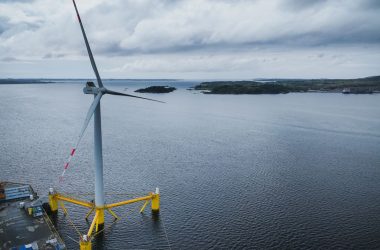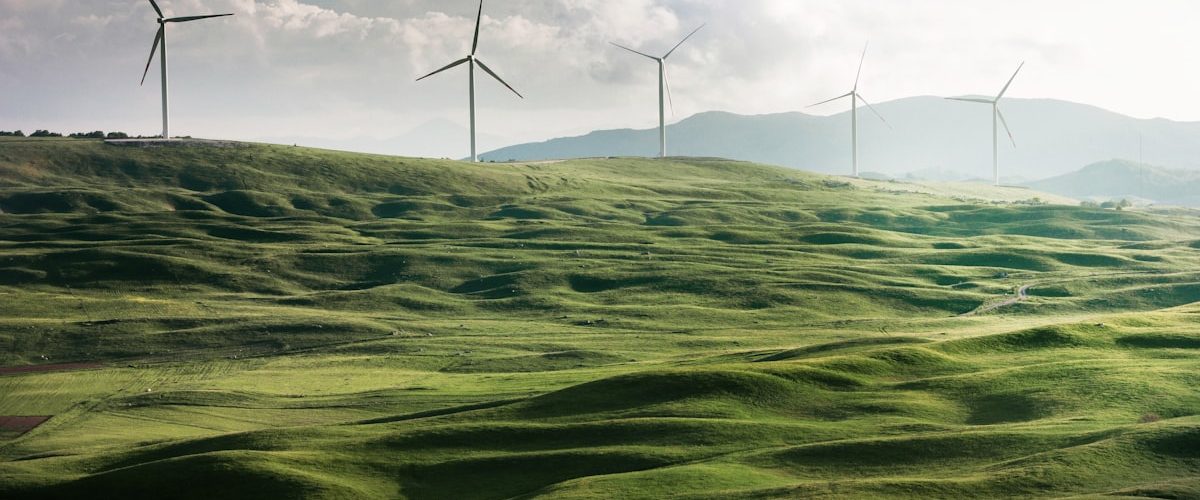
Somewhere off the coast of Yorkshire, a turbine the height of a 30-storey building turns slowly in the North Sea wind. Inside its generator sits a magnet made partly from neodymium, a silvery metal extracted in Inner Mongolia and shipped halfway around the world. In roughly fifteen years, that turbine will be retired. The question that engineers at the University of Warwick are now answering is: what happens to the neodymium next?
A report from the National Engineering Policy Centre (NEPC), led by the Royal Academy of Engineering and analysed by the Warwick Manufacturing Group (WMG), argues that those magnets are an asset rather than a disposal problem. The numbers are striking. A single large offshore turbine at the end of its life contains enough neodymium to manufacture motors for approximately 12,000 electric vehicles. From around 2038, as the first generation of UK offshore turbines reaches the end of its operational life, the country could see close to one million kilograms of neodymium-rich magnet material becoming available every year.
That figure matters because neodymium is not easy to come by. It belongs to a group of elements called rare earth metals, most of which are mined and processed in China. Mining neodymium is a messy business. The ore must be separated from surrounding rock using acids and solvents, generating radioactive waste, acidifying gases, and a range of toxic pollutants. The environmental cost is significant. So too is the economic one: recycling neodymium from existing magnets costs up to 70 per cent less than importing freshly mined material from abroad.
Why wind turbine rare earth recycling is a structural advantage for the UK
Britain installed offshore wind turbines earlier than almost any other country. That first-mover position, often cited as a grid-planning headache, turns out to carry a material benefit. The UK will be among the first nations to decommission offshore turbines at a significant scale. That means it will also be among the first to have a reliable domestic supply of recoverable rare earth material, years before competitors face the same opportunity.
Neodymium is not just for wind turbines. The same permanent magnets are used in electric car motors, aircraft flight control actuators, and medical imaging equipment. Demand is rising sharply. The automotive sector alone is expected to require vast quantities of neodymium as petrol and diesel vehicles are phased out. If the UK can build the infrastructure to recover and reprocess these magnets domestically, it insulates itself from supply chain shocks tied to geopolitical tensions with China, where over 80 per cent of global rare earth processing currently takes place.
The technical challenge is real but not insurmountable. Neodymium magnets in wind turbines are typically bonded with resins or encased in housings that must be carefully dismantled. Several recovery methods exist. Hydrogen decrepitation involves exposing the magnet to hydrogen gas, which causes it to fracture along grain boundaries into a powder that can be resintered into new magnets. Other approaches use short-loop recycling, in which the alloy composition is adjusted, and the material is reformed without full chemical separation. The WMG team has been working on scaling these processes to make them economically viable at industrial volumes.
Building the circular economy in practice
The NEPC report does not just describe a technical opportunity. It calls for coordinated action: investment in recycling infrastructure, updated decommissioning regulations that mandate magnet recovery, and skills development so that engineers graduating in the next decade are equipped to work in this sector. The circular economy, a phrase that can sound abstract, becomes concrete when you are talking about a turbine blade being lowered onto a decommissioning vessel and an engineer deciding whether the generator inside is stripped for parts or sent to landfill.
Wind turbine rare earth recycling also changes the economics of the UK’s energy transition in subtle ways. If recovered neodymium is used in domestic EV motor production, the supply chain for electric vehicles becomes partially decoupled from global commodity markets. Automakers sourcing magnets from UK recyclers rather than Chinese processors gain a degree of price stability, for consumers, that could eventually translate into more predictable vehicle costs.
The infrastructure does not yet exist at anything close to the required scale. But the timeline gives engineers a window. Turbines installed in the early 2010s will not reach the end of life until the late 2030s. That is roughly 12 years to build processing capacity, train the workforce, and establish supply chain connections. Twelve years sounds comfortable. In engineering terms, it is not long.
Engineering Deep Dive: How Neodymium Magnets Work and Why Recycling Them Is Hard
Neodymium magnets belong to a class called rare-earth permanent magnets, and they are among the most powerful magnetic materials known. The specific alloy used in most industrial applications is neodymium-iron-boron, or NdFeB, developed independently by teams at General Motors and Sumitomo Special Metals in 1982. A magnet the size of a chocolate bar can lift a small car. For engineers designing compact, high-torque motors, that energy density is the point.
To understand why these magnets are so powerful, it helps to think about what magnetism actually is at the atomic level. In most materials, the tiny magnetic fields produced by individual electrons point in random directions and cancel each other out. In ferromagnetic materials like iron, neighbouring atoms interact so that their electron spins align within small regions called magnetic domains. Apply an external magnetic field, and those domains align globally, producing a strong macroscopic field. What makes NdFeB special is the crystal structure. Neodymium atoms sit in a lattice alongside iron and a small amount of boron in a specific tetragonal arrangement. This structure produces a very high magnetocrystalline anisotropy, meaning the magnetic moments strongly prefer to point along one particular axis. It takes a very large opposing field to knock them out of alignment. That resistance to demagnetisation is quantified by coercivity, and NdFeB magnets have among the highest coercivity values of any material.
In a wind turbine generator, these magnets sit on the rotor and interact with coils of copper wire on the stator. As the rotor turns, the changing magnetic field induces a current in the stator coils. This is Faraday’s law of electromagnetic induction, the same principle that governs every generator from a bicycle dynamo to a nuclear power station. The advantage of using permanent magnets rather than electromagnets is that you do not need to supply electrical current to maintain the magnetic field, thereby reducing losses and simplifying the drivetrain. Many modern offshore turbines are direct-drive, meaning there is no gearbox between the rotor blades and the generator. The generator runs slowly, at roughly ten to twenty revolutions per minute, which demands magnets with very high field strength to induce adequate current at low speed. NdFeB magnets are the only practical choice at this scale.
Recycling them presents several layers of difficulty. First, the magnets in a turbine generator are bonded into assemblies using epoxy resins and sometimes coated to prevent corrosion. Separating the magnet material from its housing without damaging it requires careful mechanical disassembly. Second, the magnetic field itself is a hazard. A large NdFeB magnet can exert forces strong enough to crush fingers or trap tools, so demagnetisation is usually the first step, achieved by heating the magnet above its Curie temperature, around 310 to 400 degrees Celsius, depending on the specific alloy. At this point, it loses its magnetisation entirely and becomes safe to handle.
Once demagnetised and separated, the magnet alloy can be recycled via several routes. The most direct is hydrogen decarbonization. When the NdFeB alloy is exposed to hydrogen gas at around 200 to 300 degrees Celsius, hydrogen atoms diffuse into the material and react preferentially at the grain boundaries between the neodymium-rich phases and the main magnetic phase. This causes the material to fracture into a coarse powder along those boundaries, a process that happens almost spontaneously and requires relatively little energy. The powder can then be milled further, blended with fresh alloy, if needed, to correct the composition, and re-sintered under a magnetic field to produce a new oriented magnet. The resulting material retains most of the magnetic properties of the original.
A more involved alternative is a full hydrometallurgical process in which the alloy is dissolved in ac, id, and the individual rare earth elements are separated by solvent extraction. This produces very pure neodymium oxide that can be used to make entirely new alloys, but the process generates liquid waste streams and is energy-intensive. For short-loop recycling, where the composition of the recovered material is already known and controlled, hydrogen decrepitation is generally preferred because it keeps the material in the metallic state rather than converting it to an oxide that must then be reduced back to metal before reuse.
The WMG team at Warwick has been investigating how to make these processes work at the scale that decommissioning will eventually require, including handling variability in magnet composition across turbines from different manufacturers and production eras. Getting that right is as much a logistics and process-engineering problem as it is a chemistry problem.
The UK built its offshore wind fleet without fully accounting for what would happen at the end of each turbine’s life. That oversight is now an opportunity. Wind turbine rare earth recycling is not a guarantee of anything, but it is one of the clearest examples of circular engineering producing concrete economic and environmental benefits simultaneously. For students considering a career in materials engineering, chemical engineering, or energy systems, the supply chains being built around recovered neodymium over the next decade will be some of the most consequential infrastructure the UK puts in place. The old turbines coming down are worth paying attention to.
- A NEPC report shows recycling neodymium from retired UK wind turbines could supply motors for one million EVs per year from 2038
- Recycling is up to 70% cheaper than importing from China and avoids the radioactive waste of mining
- The UK’s position as an early offshore wind adopter gives it first-mover advantage in recovering rare earth magnets
- Each large decommissioned turbine contains enough neodymium for approximately 12,000 EV motors