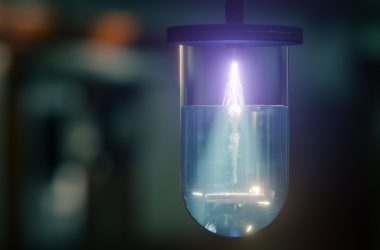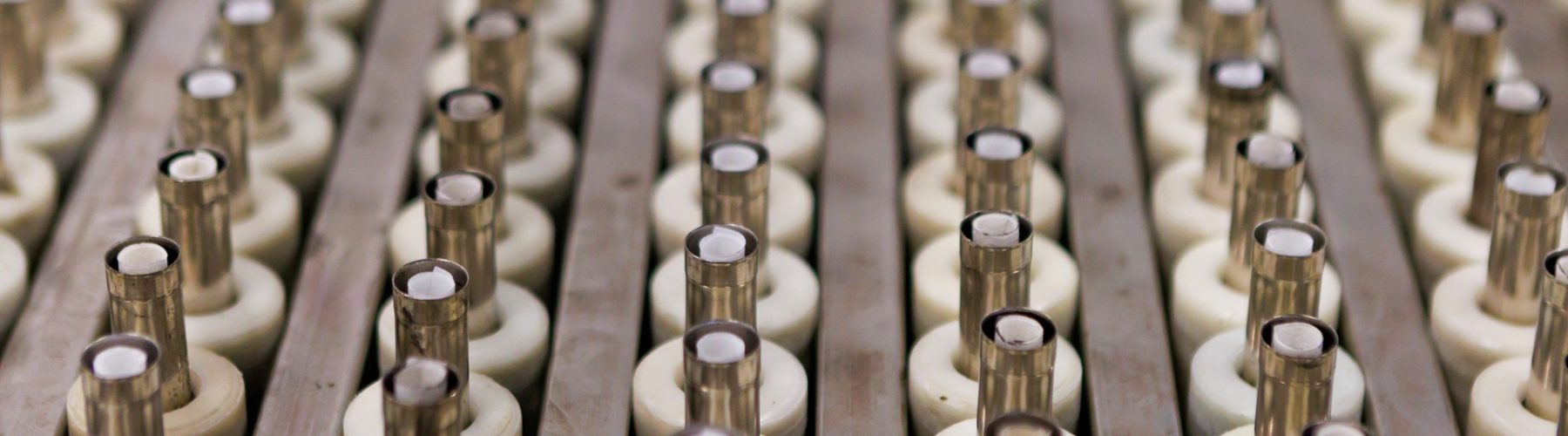
The idea came from watching an industrial process. Fei Wang, a researcher at Fudan University, visited a zinc electrowinning plant, where zinc ions in acid are turned into metal sheets on cathodes using electricity. He noticed that the way zinc ions gain electrons to become metal is similar to what happens inside a battery.
The main question was whether this process could be made reversible, efficient, and steady enough to store electricity from wind and solar power.
The answer, published in Nature Energy, is a zinc slurry battery energy storage system that ran for 5,128 hours straight in the lab.
Instead of using a solid zinc electrode like regular zinc batteries, this system uses a slurry made of zinc nanoparticles in a conductive liquid. The slurry moves between a storage tank and the battery cell, letting zinc switch between metal and ion forms as the battery charges and discharges. This design separates two things that are usually connected in batteries: how much energy can be stored and how fast power can be delivered. To store more energy, you just make the slurry tank bigger. To get more power, you increase the size of the electrochemical cell. Each can be changed on its own.
How zinc slurry battery energy storage solves a specific problem
Renewable energy is not always available, which makes storing it a challenge. Lithium-ion batteries work well for short-term storage but not for longer periods. For example, solar farms make most of their electricity in about six hours around midday. If this energy is not used or stored, it goes to waste. Lithium-ion batteries can fill short gaps, usually releasing energy over two to four hours. But to store enough energy for overnight or longer periods without wind, other solutions are needed.
Flow batteries are made for long-term energy storage. They separate energy storage from power delivery, so they can store a lot of electricity without costs rising as the battery gets bigger. Vanadium redox flow batteries are the most common type, but vanadium is expensive and mostly found in a few places. Zinc, on the other hand, is the fourth most-produced metal in the world. It is cheap, easy to find, and not toxic.
The main problem with zinc is how it acts after many charge and discharge cycles. The metal often builds up unevenly, forming needle-like shapes called dendrites that can break through separators and cause short circuits. Zinc particles also tend to clump together over time, which reduces the active surface area and lowers the battery's capacity. The research team from Fudan University and the Chinese Academy of Sciences focused on solving these problems.
The researchers addressed both particle clumping and uneven zinc buildup at the same time. By keeping zinc nanoparticles in a flowing slurry, the active material is always moving and does not stay in one spot to get damaged. A hollow carbon framework helps spread out the zinc evenly. They also used a special electrolyte with added chemical groups to keep the nanoparticles from sticking together. The results were impressive. The system reached a Coulombic efficiency of 99.94 percent, meaning almost all the electrons used during charging were recovered during discharging. Zinc-manganese dioxide cells built with this design kept 81.1 percent of their original capacity after 5,500 cycles. Both results are big improvements over earlier zinc battery designs.
Engineering Deep Dive: The chemistry behind zinc slurry battery energy storage
The basic chemistry of a zinc battery is simple. When the battery discharges, metallic zinc at the anode loses two electrons and becomes zinc ions (Zn to Zn2+ plus 2e-). The electrons travel through a circuit to do work, then reach the cathode, where a reduction reaction happens. In a zinc-manganese dioxide cell, manganese dioxide at the cathode takes in the electrons. When charging, these reactions go in reverse: zinc ions turn back into metal, and the cathode is restored. One big challenge is that zinc does not deposit evenly. Zinc ions tend to build up on rough spots where the electric field is strongest, which leads to bumps that grow over time. In still electrodes, these bumps can become dendrites that bridge the gap between anode and cathode, causing failure. This is a known problem in zinc-air and zinc-bromine batteries. Using a flowing slurry stops this from happening. The constant movement keeps zinc particles from staying in one place long enough to form dendrites. The flow also spreads heat and keeps ion levels even throughout the cell, which helps prevent uneven buildup.
This idea is similar to electroplating and follows Faraday’s laws of electrolysis. The amount of zinc that gets deposited depends directly on the charge passed (m = MIt/zF, where M is zinc's molar mass, I is current, t is time, z is the number of electrons per ion, and F is the Faraday constant). A Coulombic efficiency of 99.94 percent means that almost all the charge used to deposit zinc during charging is recovered when the zinc dissolves during discharging. Only 0.06 percent is lost to side reactions, mostly hydrogen gas, which the special electrolyte helps prevent.
The hollow carbon framework is key to how well the system works. Carbon conducts electricity and does not react with the mild acids used in zinc batteries. The hollow structure gives a large surface area inside, so zinc can form thin, even layers instead of thick, uneven ones. This framework also acts as a current collector, lowering the electrical resistance of the slurry and improving the battery's voltage efficiency.
The special electrolyte with ligands helps stop zinc particles from clumping together. Without it, zinc nanoparticles in the liquid would stick to each other because of van der Waals forces. Ligand molecules attach to the surfaces of the particles, creating a barrier that keeps them apart. This idea is often used in paint to keep pigments from settling, and here it helps keep the zinc particles active in the battery.
Running for 5,128 hours without stopping is a big milestone, equal to about 214 days of nonstop cycling. For a grid-scale battery used daily, that's more than seven months of operation. The battery also kept 81.1 percent of its original capacity after 5,500 cycles, which is a good sign. Still, commercial flow batteries are usually expected to last 15 to 20 years, or about 5,000 to 7,000 cycles, with little loss in capacity. It is not yet clear if the zinc slurry system can last as long in real-world conditions, where things like temperature changes, impure water, and the stress of large pumps come into play.
Zinc has a big cost advantage over vanadium. Vanadium pentoxide costs about 8 to 15 US dollars per kilogram and its price can change a lot. Zinc metal, on the other hand, costs only 2 to 3 US dollars per kilogram and more than 13 million tonnes are made each year worldwide. If zinc-based flow batteries can last as long as vanadium ones, they could offer a much cheaper way to store energy on a large scale for a long time.
Wang and his team intend to scale the system from laboratory demonstration to practical, long-duration storage applications. They are also investigating the feasibility of applying the flowing metal slurry concept to metals other than zinc. For electrical grids requiring storage of renewable energy over hours or days, the reversible deposition and dissolution of zinc may offer advantages over conventional lithium-ion cells.
- Researchers at Fudan University developed a flowing zinc slurry battery that ran for 5,128 hours continuously
- The system achieved 99.94% Coulombic efficiency and 81.1% capacity retention after 5,500 cycles
- Flowing nanoparticles prevent the dendrite growth that normally kills zinc batteries
- Zinc costs a fraction of vanadium, potentially enabling cheaper grid-scale renewable storage