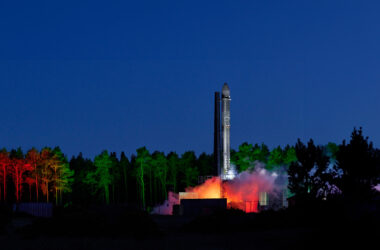
On 8 April 2026, a SpaceX Falcon 9 will lift off from Kennedy Space Center carrying a cargo manifest that includes one of the more unusual passenger lists in recent spaceflight history. Inside a 10 by 10 by 30 centimetre aluminium box, several thousand Caenorhabditis elegans nematodes, each about a millimetre long, will travel to the International Space Station to help answer a question that has been bothering space agencies since Apollo: what exactly does long-duration spaceflight do to a living body, and can we do anything about it?
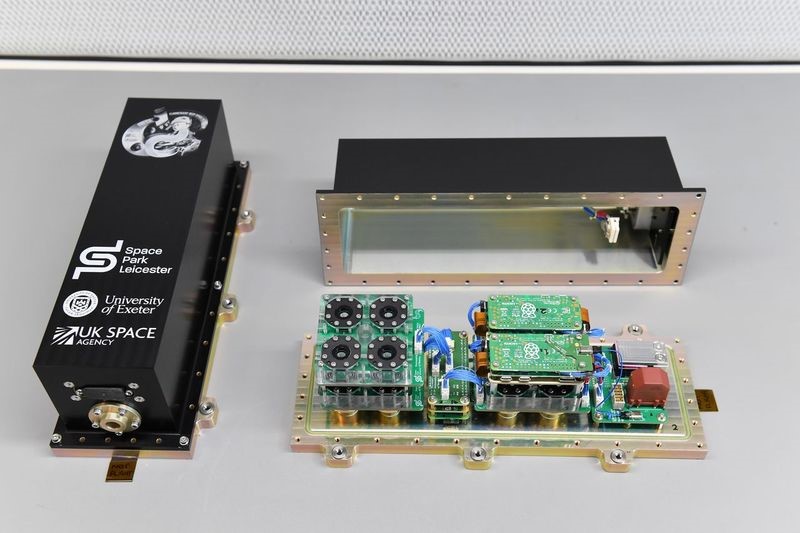
The space worms mission is officially called the Fluorescent Deep Space Petri-Pods experiment, or FDSPP. It is led by Dr Tim Etheridge at the University of Exeter and built at Space Park Leicester under Professor Mark Sims, with mission management by Voyager Space Technologies and funding from the UK Space Agency, as announced by the UK Space Agency. “These tiny worms could play a big role in the future of human spaceflight,” said Space Minister Liz Lloyd. The worms will spend up to 15 weeks on the ISS, first inside the pressurised modules and then mounted on an external experimental platform exposed to vacuum and radiation.
Why worms?
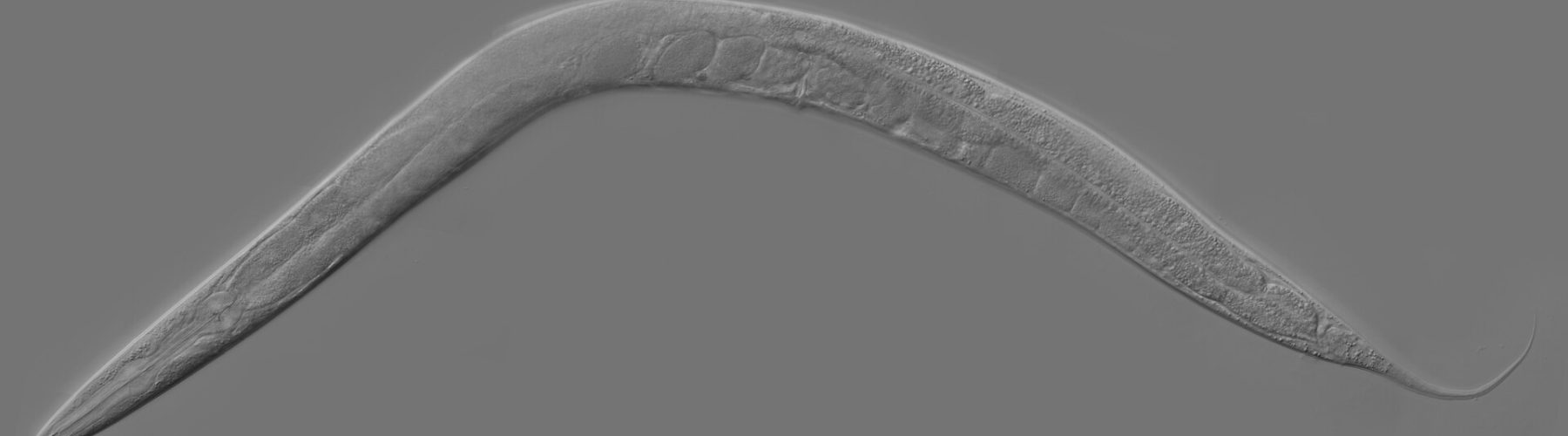
It is tempting to ask why a mission about human health in space is sending a box of worms rather than, say, a box of humans. The short answer is that C. elegans is one of the most extensively studied organisms in biology. Its entire genome is sequenced, every one of its 959 adult cells has been mapped, and its nervous system of 302 neurons is the only complete connectome of any animal. Crucially for the space worms mission, roughly 60 to 80 per cent of human genes have a recognisable counterpart in the worm, including many of the genes that control muscle maintenance, bone-equivalent tissue, and response to stress.
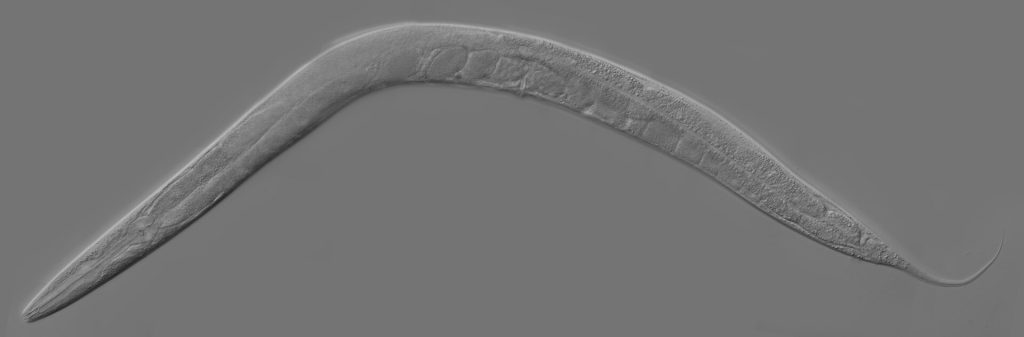
Astronauts returning from long stays on the ISS show measurable bone density loss, muscle wasting, fluid shifts towards the head that affect vision, and cellular damage from cosmic radiation. The mechanisms behind these changes are not fully understood. Studying them in humans is slow, ethically constrained, and statistically limited by the small number of people who have ever been to space. A population of worms, by contrast, can deliver thousands of genetically identical subjects, a full life cycle in three days, and molecular readouts of stress responses in near real time.
A laboratory the size of a shoebox
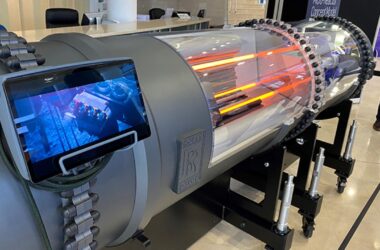
The Petri Pod is where the engineering gets interesting. The 3-kilogram unit contains 12 separate chambers, each holding a small population of worms on a layer of nutrient agar that provides food and moisture. Temperature and pressure are controlled inside the pod, and each chamber is monitored by miniature cameras using both white-light and fluorescence imaging. Fluorescent markers, engineered into the worms’ DNA, light up when specific stress-response genes are switched on, giving researchers a visual record of cellular activity without having to physically retrieve the samples.
After the initial phase inside the ISS, the pod will be moved to an external platform where some chambers will be exposed to the vacuum and hard radiation of low Earth orbit. A trapped volume of air inside the pod lets the team study what happens as conditions shift, and whether the worms’ protective stress responses can cope. The results will feed directly into planning for longer missions, including the crewed Moon landings scheduled for later this decade under the Artemis programme.
Engineering Deep Dive: How to run a biology lab in orbit
Building a self-contained biological laboratory that fits in a shoebox, survives launch, operates unattended for 15 weeks, and returns useful data is a problem that sits at the intersection of mechanical engineering, thermal control, optics, and molecular biology. Every design choice is a trade-off against mass, volume, power, and the unforgiving logistics of spaceflight.
Start with the agar. On Earth, a petri dish holds its gel by gravity. In microgravity, a careless agar layer would detach and float. The Petri Pod’s chambers use agar formulations and geometries designed to stay in place through surface tension and mechanical containment. The worms crawl on the agar surface, feeding on a bacterial lawn (typically E. coli), and the system must remain stable through launch vibration, which for a Falcon 9 peaks at several g of acceleration and broadband vibration across hundreds of Hz.
Temperature control matters because C. elegans biology is strongly temperature-dependent. The worm’s life cycle at 20 °C is roughly three days; at 15 °C it slows to five. A swing of even a few degrees would confound the experiment. The pod therefore includes active thermal regulation, almost certainly using Peltier (thermoelectric) elements, which can heat or cool by reversing current direction. The trade-off is efficiency: Peltiers are power-hungry, typically around 30 per cent efficient, so the designers must balance the thermal budget against the power available from the ISS experimental platform.
Imaging is where the mission earns its name. Fluorescence microscopy works by illuminating a sample with a specific wavelength of light and capturing the longer-wavelength light emitted by fluorescent proteins engineered into the worm. Green fluorescent protein (GFP), originally isolated from a jellyfish, is the workhorse: it absorbs blue light at around 488 nanometres and emits green light at around 510 nm. By attaching the GFP gene to a stress-response gene, biologists create a worm that literally glows when that gene is active. Students who have covered A-level Biology’s gene expression topic will recognise this as a reporter gene technique.
The optical system inside the Petri Pod must separate the excitation light from the weaker emitted fluorescence. This is done with dichroic mirrors and bandpass filters, carefully chosen so that the camera only sees the emitted signal. In a desktop microscope this is straightforward. In a sealed pod that must survive launch and operate autonomously, the optics must be compact, aligned permanently, and tolerant of thermal expansion. Miniature CMOS camera sensors, the same technology in a modern smartphone, do the actual imaging.
Exposing biological samples to vacuum is a subject in itself. Liquid water boils rapidly in a vacuum, which would kill the worms within minutes. The Petri Pod uses a trapped air volume to buffer the internal environment, and the agar itself acts as a moisture reservoir. By carefully controlling when and how chambers are exposed, the team can study the worms’ response to reduced pressure, radiation, and eventually hard vacuum in a stepwise way.
Radiation is the biggest unknown for long-duration missions. Beyond the Earth’s magnetic field, astronauts are exposed to galactic cosmic rays, high-energy particles that deposit energy along tracks through tissue and damage DNA. Low Earth orbit is partially shielded by the magnetic field, so the ISS environment is not a perfect analogue for deep space. But the external platform gives a meaningful increase in exposure compared with the shielded interior, and the fluorescent reporters make it possible to see which repair and stress pathways the worms activate in response.
For students considering a career in bioengineering or space systems, the space worms mission illustrates something important: a modern space experiment is not one discipline but a stack of them. Molecular biology sets the scientific question. Mechanical and thermal engineering build the hardware. Optics and electronics handle measurement. Software and communications return the data. Get any one of these wrong and the whole mission fails.
FDSPP is a relatively small experiment in a sector dominated by multi-billion-pound flagships, but small experiments have a habit of producing outsized results in space biology. If the fluorescent worms come back with clear molecular signatures of how microgravity and radiation affect muscle and bone maintenance, that data will feed into drug development, exercise countermeasures, and shielding design for every human who follows. The crewed missions to the Moon and, eventually, to Mars depend on understanding the slow damage that space inflicts on living tissue. Starting with something a millimetre long is, in its way, a sensible place to begin.
- UK-led FDSPP mission launches thousands of C. elegans worms to the ISS on 8 April 2026 aboard a SpaceX Falcon 9
- The 3 kg Petri Pod holds 12 chambers with temperature control, fluorescence imaging and an agar food supply
- Led by Dr Tim Etheridge at the University of Exeter, built at Space Park Leicester under Prof Mark Sims, funded by the UK Space Agency
- The worms will spend up to 15 weeks on the ISS, first inside the station and then on an external platform, to study bone, muscle and radiation effects relevant to future crewed Moon missions