A figure that would have seemed fanciful a decade ago is now reality: one rocket booster has gone to the edge of space and returned to Earth thirty-seven times. Not thirty-seven different boosters, but the same one. Booster 1067, the first stage of a Falcon 9, has been refurbished and relaunched so often that its landing legs have become a well-known feature on SpaceX’s drone ships. World Space Week 2026, from 4 to 10 October with the theme “Rocket Revolution”, comes at a time when reusable rocket technology has progressed from an audacious experiment to an established industry practice.
The numbers began to build as soon as the technique succeeded. SpaceX has now achieved more than 650 successful booster landings. The company carried out 165 orbital missions in 2025 alone. This amounts to about one launch every 53 hours, a rate that would have used up the entire global launch schedule just fifteen years earlier.
The Engineers Behind the Reusable Rocket Engineering Breakthrough
The first Neil Armstrong Space Prize was given on 15 September 2026 to five engineers employed by SpaceX, namely Lars Blackmore, Joe Diez, John Edwards, David Kuwata and Marco Velazquez; it was their work on propulsive landing - that is, the capability to fly a rocket booster back for a pinpoint landing after it had reached orbital velocities - which made large-scale reuse possible.

The first successful landing took place on 21 December 2015, when the first stage of a Falcon 9 landed at Landing Zone 1 at Cape Canaveral. The engineers in the control room broke into cheers. The footage, showing a tall white cylinder descending through a column of flame and coming to rest on the concrete, still looks slightly unreal even after being played back hundreds of times.
Landing a booster is the spectacular part. The harder engineering happens in the minutes before and after landing and in the weeks between flights.
What Makes Landing an Orbital Rocket So Difficult
A Falcon 9 first stage separates from its payload at roughly 7,000 kilometres per hour and about 80 kilometres altitude. It then flips around, survives re-entry heating, slows from supersonic to subsonic speeds, and touches down on a platform roughly 50 metres across, sometimes on a ship pitching in ocean swell. The entire sequence takes about eight minutes from separation to landing.
Three burns accomplish this. The boostback burn, fired shortly after separation, reverses the booster’s trajectory toward the landing site. The entry burn, a brief firing of three engines, creates a protective shock layer that shields the booster from aerodynamic heating during the fastest part of its descent. The landing burn, using a single engine at minimum throttle, brings the vehicle to a stop just as it touches down.
Engineering Deep Dive: Grid Fins, Propellant Slosh, and the Art of Supersonic Retropropulsion
The engineering systems that make reusable rocket engineering work read like a checklist of problems that aerospace textbooks used to call unsolvable.
Grid fins are the waffle-shaped surfaces near the top of a returning Falcon 9 booster. They provide aerodynamic steering during descent through the atmosphere. Unlike conventional fins, grid fins work across a wide range of speeds, from supersonic to subsonic, without the sudden loss of control that plagues flat-plate surfaces at transonic speeds. Each fin is machined from a single piece of titanium, measures roughly 1.2 metres across, and can withstand temperatures exceeding 1,300°C during re-entry. The actuators driving them must respond in milliseconds because at supersonic speeds, a delayed correction translates into hundreds of metres of positional error by landing.
Before SpaceX demonstrated it, supersonic retropropulsion was considered impractical by most aerospace engineers. Firing a rocket engine into a supersonic oncoming airflow creates a complex shock structure ahead of the vehicle. The interactions between the engine plume and bow shock were thought to produce unpredictable aerodynamic forces that would make the vehicle uncontrollable. SpaceX’s approach was direct: build it, fly it, collect data, iterate. Early attempts produced some spectacular failures. The data from those failures proved more valuable than decades of computational modelling because the real shock interactions behaved differently from simulations.
Propellant management during landing manoeuvres is a problem that receives little attention. A returning booster carries residual liquid oxygen and kerosene for its three burns. During high-deceleration phases, these liquids experience forces exceeding 10g, sloshing inside tanks designed for the gentler 3g environment of ascent. If propellant moves away from the engine inlet, vapour ingestion, combustion instability, and engine shutdown can occur at the worst moment. SpaceX uses baffles inside the tanks and carefully timed engine sequences to manage slosh. Getting this wrong caused several early landing failures.
Thermal protection for re-entry is handled not with tiles or ablative coatings but with the entry burn itself. By firing three engines during the hottest part of re-entry, the exhaust plume creates a bubble of relatively cool gas ahead of the booster. The aluminum-lithium alloy structure, which has no thermal protection system, sits inside this protective envelope. Stopping the engines too early causes the structure to overheat. This is elegant but unforgiving engineering.
The turnaround process between flights has improved from months to weeks and, in some cases, days. Inspection protocols, initially exhaustive, have been streamlined as engineers gathered data on which components degrade with reuse and which were over-inspected. The Merlin engines, each producing around 845 kilonewtons of thrust at sea level, have proven remarkably durable, with turbopump bearings and injector faces showing less wear than predicted.
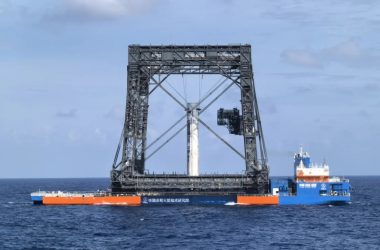
China’s first controlled orbital rocket recovery in July 2026, achieved by a Chinese launch provider, signals that the technology is no longer a SpaceX monopoly. The engineering principles are understood. The implementation details, the thousands of small decisions about materials, control algorithms, and inspection criteria, are what separate a successful landing programme from a series of expensive craters.
Reusable rockets have done something that rarely happens in engineering: they have made a previously ruinous cost simply ordinary. Launching a satellite used to require building and then discarding a vehicle weighing tens of millions of pounds. Now it requires renting one. That shift, from expenditure to operating cost, is what “revolution” actually means in industrial terms. The engineers who made it possible are still iterating, still pushing turnaround times shorter and flight counts higher. Booster 1067 will fly again. Probably next month.