Aerospace, Defence & Marine
JetZero has started assembling its full-scale blended wing body aircraft demonstrator Jet1 in Mojave, promising 50% lower fuel burn for airlines.
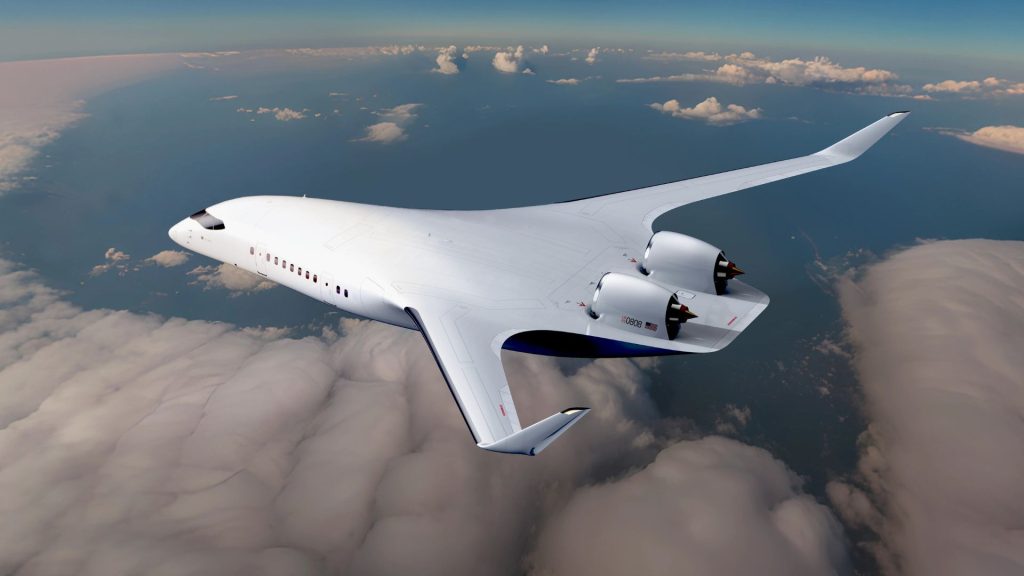
In the Mojave Desert, at Northrop Grumman’s Scaled Composites facility, engineers are building an aircraft unlike any other. JetZero’s Jet1, a full-scale blended wing body demonstrator, is now in final assembly. If successful, it could reduce airline fuel use by half.[1]
This idea isn’t new - NASA tested blended wing body shapes in wind tunnels years ago. But no one has built one for commercial use or certified it for passengers. JetZero aims to do both. Their design merges the fuselage and wings into one smooth lifting surface. Imagine a manta ray, flattened and stretched to a 185-foot (56-metre) wingspan. The entire underside of the aircraft generates lift, not just the wings, so it can carry the same payload with much less thrust.
The Jet1 demonstrator is made almost entirely from carbon fibre reinforced polymer (CFRP). Composites are common in modern planes - Boeing’s 787, for example, is about half composite by weight.[2] But blended-wing-body aircraft are harder to build because their large, unusual shape does not fit inside a standard autoclave, the pressurised oven used to cure composite parts.
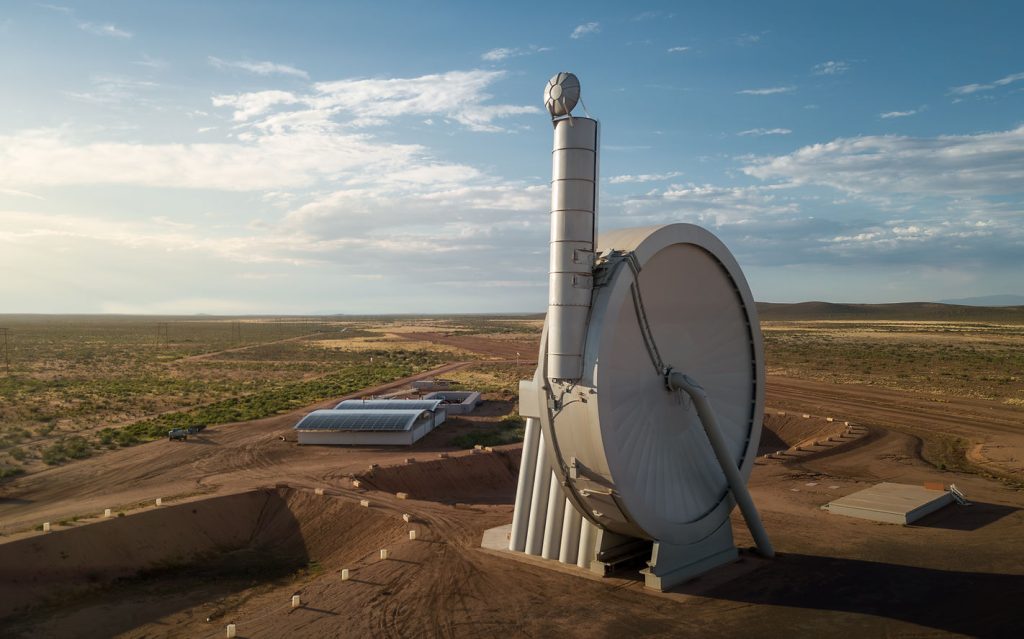
JetZero solves this by building the autoclave around the aircraft itself. Instead of moving large composite sections to a curing facility, engineers assemble the carbon fibre parts in place and cure them right there. This co-curing method bonds the parts into one solid structure in a single heating cycle. With fewer joints, there are fewer fasteners, less weight, and fewer places where problems could develop.
JetZero has a clear plan to move from prototype to airline service. Jet1 is set for its first flight in late 2027.[3] At the same time, JetZero is working on a production model called the Z4, which will have a 213-foot wingspan and seat about 250 passengers.[4] Serial production will take place at a new campus in Greensboro, North Carolina.[5]
Money is not the constraint it once was. In January 2026, JetZero raised $175 million[6] from a roster that includes B Capital, United Airlines Ventures, Northrop Grumman, and RTX Ventures.[7] United Airlines has gone further, securing a path to order up to 100 blended-wing-body aircraft, with an option for 100 more.[8] The US Air Force, which funded early development, remains closely involved. And the FAA has transferred the design to its normal transport aircraft certification office, a quiet but significant signal that regulators consider this a real commercial programme, not a research curiosity.
Engineering deep dive
To see how JetZero could save 50 per cent on fuel, it's important to consider three aerodynamic factors that work together.
First is the lift distribution. In a regular plane, most lift comes from the wings, while the fuselage is just extra weight the wings have to support. In a blended wing body, the whole shape helps generate lift. The fuselage is part of the wing, not just a tube underneath. This spreads the load over a larger area, so each part has to work less hard, reducing drag.
Second is wetted area. Drag depends on how much of the aircraft's surface is exposed to the air. Blended wing body planes have a much lower ratio of surface area to internal volume than traditional designs. There is no wing-fuselage junction, which usually creates a lot of drag. The smooth, continuous surface helps reduce drag everywhere.
Third is structural efficiency. Regular planes have round fuselages because circles handle internal pressure well. Blended wing body cabins are wider and flatter, so they need to handle pressure differently. This could be a problem, but carbon fibre composites are much better than aluminium at handling loads from different directions. JetZero's co-curing process eliminates the need for bolted joints, creating a strong shell in which the outer surface carries the load. The weight saved by skipping thousands of fasteners offsets the extra material required for the new shape.
The co-curing process is interesting on its own. Normally, making composite parts means laying carbon fibre prepreg onto a mould, sealing it in a vacuum bag, and putting it in an autoclave. For Jet1, the mould stays in place. Instead, a portable autoclave, like a big heated pressure bag, wraps around the structure. The temperature rises to about 180 degrees Celsius, and the pressure increases to around 6 bar, which bonds the resin and fuses the parts together. This method removes the usual size limits. It's been used for boat hulls and wind turbine blades, but never before at this scale for a pressurised aircraft.
Getting certified is another challenge. The FAA's safety rules were made for traditional tube-and-wing planes. Blended wing body aircraft behave differently in areas like flutter, cabin evacuation, and structural loads. JetZero has to demonstrate compliance with Part 25 transport standards, likely through a mix of analysis, ground tests, and flight tests. The fact that the FAA moved the project to its regular certification office suggests they believe the current rules can work for this design, perhaps with some special conditions, rather than rewriting everything.
Links to the curriculum: A level, GCSE
Aviation is responsible for about 2.5 percent of global carbon dioxide emissions[9], and that number is rising as more people fly and other industries cut their emissions faster. Sustainable aviation fuel helps, but there isn’t enough of it yet. Electric planes work for short trips, but can’t match jet fuel for long flights. Cutting fuel use by 50 percent just by changing the shape of the plane would be the biggest efficiency jump in commercial aviation since turbofan engines arrived in the 1960s. JetZero’s assembly floor in the Mojave could be where this new chapter starts.
Credit via interestingengineering.com
JetZero Raises $175 Million in Series B Financing to Transform Aircraft Innovation
With up to 50% better fuel efficiency and lower carbon emissions compared to existing commercial airliners, JetZero's Z4 will offer the aviation industry a clear path to achieving its 2050 net-zero goals
Checked 14 October 2026
787 No-Compromise Design (AERO magazine, Q4 2006)
The result is an airframe comprising nearly half carbon fiber reinforced plastic and other composites.
Internet Archive copy, November 2020
Checked 14 October 2026
JetZero Raises $175 Million in Series B Financing to Transform Aircraft Innovation
The Demonstrator is on track for its first flight in 2027.
Checked 14 October 2026
United Invests in Next Generation Blended Wing Aircraft Start-Up JetZero
The JetZero Z4 airplane is designed to accommodate 250 passengers and fly on conventional jet fuel, with propulsion systems able to utilize sustainable aviation fuel blends.
Checked 14 October 2026
JetZero Breaks Ground on First Aircraft Factory in Greensboro, North Carolina
JetZero today broke ground on its first manufacturing and final assembly campus, an 8 million square foot factory on more than 600 acres in Greensboro, North Carolina.
Checked 14 October 2026
JetZero Raises $175 Million in Series B Financing to Transform Aircraft Innovation
announces it has raised approximately $175 million in its Series B financing, led by B Capital, a global multi-stage investment firm.
Checked 14 October 2026
JetZero Raises $175 Million in Series B Financing to Transform Aircraft Innovation
United Airlines Ventures, Northrop Grumman, 3M Ventures, Trucks VC, Marlinspike, Aero X Ventures, and RTX Ventures, the corporate venture capital arm of RTX, among others, also participated in the round.
Checked 14 October 2026
United Invests in Next Generation Blended Wing Aircraft Start-Up JetZero
The investment includes a path to order up to 100 airplanes and an option for an additional 100.
Checked 14 October 2026
What share of global CO2 emissions come from aviation?
Aviation accounts for 2.5% of global CO₂ emissions.
Checked 14 October 2026
Aerospace, Defence & Marine
Aerospace, Defence & Marine
Aerospace, Defence & MarineBreakthroughs
Aerospace, Defence & Marine