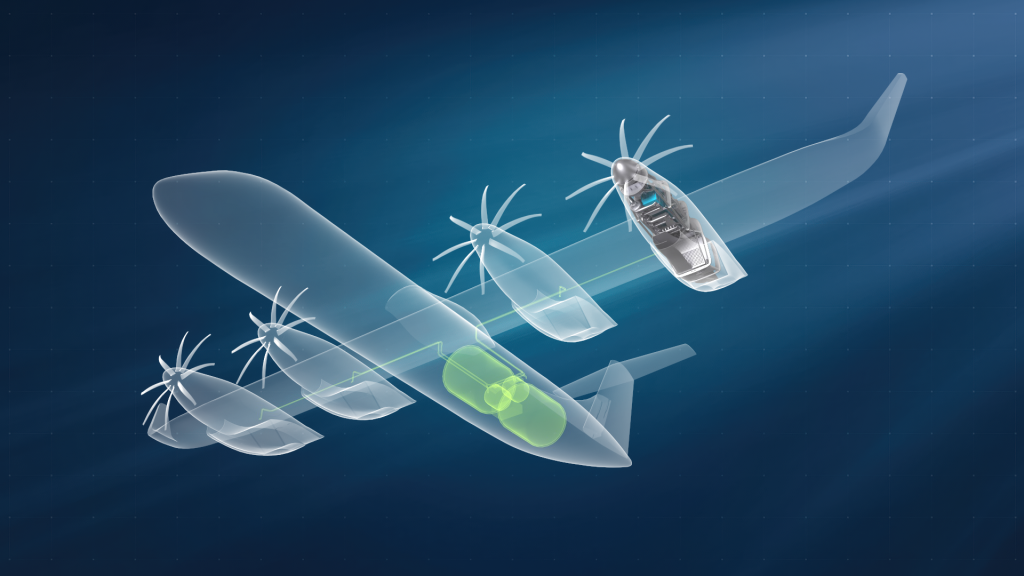
Two of Europe’s biggest aerospace companies are joining forces to build a hydrogen fuel cell aircraft engine that could eliminate carbon emissions from commercial flights. On 7 July 2026, Airbus (based in the Netherlands) and Germany’s MTU Aero Engines announced a joint venture to develop and sell a fully electric propulsion system powered by hydrogen fuel cells. This technology generates electricity by combining hydrogen and oxygen, producing only water vapour as exhaust.
This partnership follows an agreement signed at the Paris Air Show in June 2025. If it works, it will be the first time a commercial airliner flies without any fossil fuel.
Aviation produces about 2 to 3 percent of global CO2 emissions. This may sound small, but cutting these emissions has been difficult. Cars can use electric power, and ships can run on fuels like ammonia or methanol. However, planes still use kerosene because no other fuel offers as much energy per kilogram.
Hydrogen could change things. One kilogram of hydrogen holds about three times more energy than a kilogram of jet fuel. The main challenge is storage: hydrogen has to be kept as a cryogenic liquid at minus 253 degrees Celsius, which means using large, well-insulated tanks. Airbus believes this trade-off is worth it for short and medium flights, where the extra weight is less of an issue and the environmental benefits are greatest.
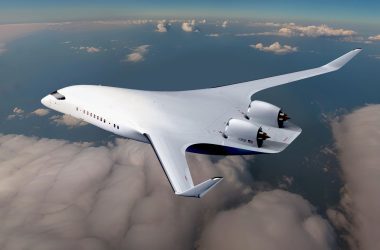
The joint venture hopes to begin in 2027, if regulators approve it. This project is a major part of Airbus’s ZEROe initiative, which aims to launch the first zero-emission hydrogen-powered commercial aircraft by 2035. Bruno Fichefeux, Airbus’s head of future programmes, called the venture “the next logical step in our shared vision.” Stefan Weber, MTU’s senior vice-president of engineering, said the goal is “a newly developed, safe, reliable, and economical propulsion system.”
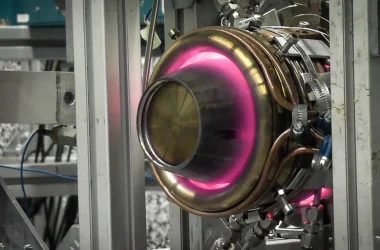
This partnership is logical. Airbus has years of experience fitting complex systems into commercial planes and knows how to work with liquid hydrogen. MTU adds its expertise in engine design, precise manufacturing, and fuel cell technology. MTU has already finished designing its Flying Fuel Cell, started making fuel cell stacks, tested an electric motor system called eMoSys, and opened its first test cell in Munich.
Building a hydrogen fuel cell aircraft engine is much more than just attaching a fuel cell to a plane. The whole propulsion system needs to be redesigned. Liquid hydrogen is pumped from cryogenic tanks, warmed up, and sent into fuel cell stacks, where it reacts with oxygen from the air. The electricity produced then powers electric motors that turn propellers or fans. Every step in this process, from storing the hydrogen to managing the power and heat, brings engineering challenges that have never been solved at this scale for aviation.
Infrastructure is another big challenge. Airports will need storage for hydrogen, facilities to turn it into liquid, and new refuelling systems. Regulators will also need to create new rules for this kind of engine, since it is completely new to them. None of these systems exist yet. The joint venture will also help build this wider hydrogen aviation network, not just the engine.
Engineering deep dive: how a hydrogen fuel cell aircraft engine actually works
A hydrogen fuel cell is an electrochemical device, more similar to a battery than a combustion engine. At the anode, hydrogen molecules split into protons and electrons. The protons pass through a polymer electrolyte membrane (PEM) to the cathode, while the electrons move through an external circuit, creating electric current. At the cathode, protons, electrons, and oxygen from the air combine to form water. There is no combustion, no CO2, and no nitrogen oxides.
If you have studied electrochemistry at A-level, you will know this is a galvanic cell. The half-equations are simple. At the anode: H2 to 2H+ + 2e-. At the cathode: O2 + 4H+ + 4e- to 2H2O. The overall cell reaction is 2H2 + O2 to 2H2O. The theoretical maximum voltage for a single PEM fuel cell is about 1.23 volts under standard conditions, based on the Gibbs free energy change. In real use, losses from membrane resistance, activation overpotentials, and mass transport lower this to about 0.6 to 0.7 volts per cell. To get the megawatts needed for aircraft, hundreds of cells are put together into stacks, and several stacks are used in parallel.
Unlike heat engines, fuel cells are not limited by the Carnot efficiency limit. A turbofan engine turns chemical energy into heat, then into mechanical work, losing energy at each step. A fuel cell converts chemical energy directly into electricity, with its efficiency set by the ratio of Gibbs free energy to the reaction’s enthalpy. For hydrogen and oxygen, the theoretical maximum is about 83 percent under standard conditions. In practice, PEM fuel cells reach 50 to 60 percent, which is still better than the 35 to 45 percent typical for gas turbines.
So why not just use batteries? The reason is energy density. The best lithium-ion batteries today store about 250 watt-hours per kilogram. Hydrogen, even when you include the weight of the fuel cell system, tanks, and other parts, provides between 500 and 1,500 watt-hours per kilogram at the system level. For a short-haul plane carrying 100 passengers over 1,000 nautical miles, the difference between a battery pack weighing tens of tonnes and a much lighter hydrogen system is the difference between a plane that can fly and one that cannot even take off.
The engineering challenges are significant. Storing hydrogen as a liquid at minus 253 degrees Celsius requires double-walled, vacuum-insulated tanks. These tanks must be light enough for planes, strong enough to handle vibration, pressure changes, and temperature shocks during flights, and safe enough to meet regulations. Fuel cell stacks also need to work well at high altitudes, where air pressure and oxygen levels are much lower. Compressors are needed to push pressurised air to the cathode, which adds weight, complexity, and usesFor students interested in aerospace engineering, this project combines electrochemistry, thermodynamics, fluid mechanics, materials science, and systems integration. A-level chemistry covers the electrochemical basics, and A-level physics explains the thermodynamics. The real challenge is making all these parts work together reliably at 35,000 feet.t 35,000 feet.
MTU’s test cell in Munich is already running. The fuel cell stacks are being built, and the electric motor has been tested. These are real hardware achievements, not just ideas. The goal of having a commercial aircraft by 2035 is ambitious, and building hydrogen infrastructure will take time. But the physics is sound, the chemistry is proven, and two of Europe’s largest aerospace companies are investing real money.
- Airbus and MTU Aero Engines have formed a joint venture to develop the first fully electric hydrogen fuel cell aircraft engine for commercial aviation, with operations starting in 2027
- The engine uses hydrogen fuel cells to generate electricity through an electrochemical reaction, producing only water vapour and eliminating in-flight CO2 and NOx emissions
- MTU has already completed its Flying Fuel Cell design, begun stack manufacturing, and tested key components at its Munich facility
- The project is part of Airbus’s ZEROe programme, which aims to deliver the first zero-emission commercial aircraft by 2035