A sophisticated magnetic field sensor developed by British engineers has launched into space as part of NASA’s Interstellar Mapping and Acceleration Probe mission. This marks a significant advancement in our ability to monitor and predict space weather phenomena that could disrupt Earth-based technologies.
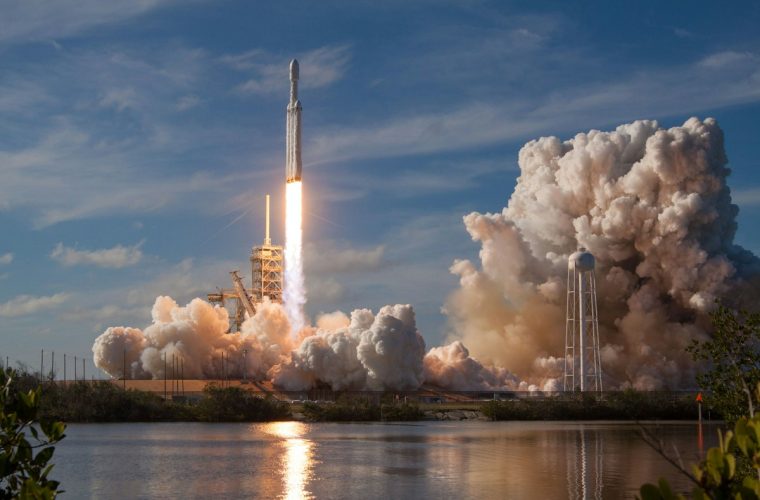
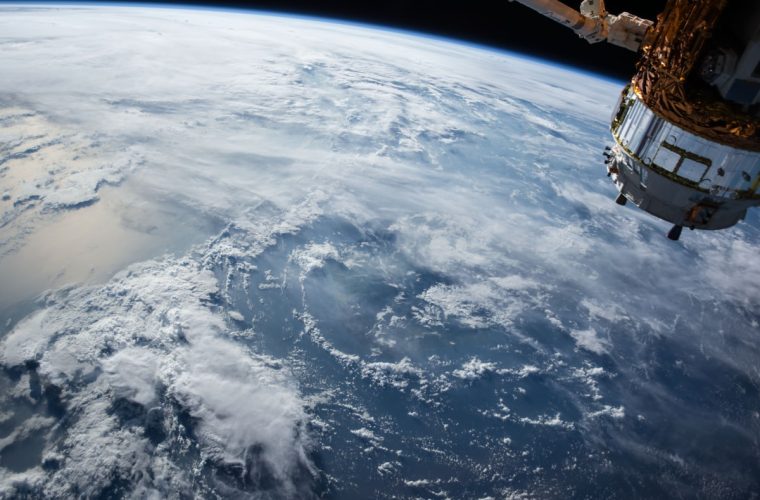
The MAG instrument, a precision magnetometer engineered at Imperial College London with £4.2 million in UK Space Agency funding, launched from Kennedy Space Centre in Florida aboard the IMAP spacecraft. After a three- to four-month journey, the probe will position itself approximately one million miles from Earth in a strategic orbit around the Sun, where it will serve as an early warning system for potentially hazardous space weather events.
The magnetometer represents a critical component in IMAP’s mission to map the heliosphere-the vast magnetic bubble that extends far beyond Pluto’s orbit and shields our solar system from harmful cosmic radiation. By measuring the strength and direction of magnetic fields in interplanetary space with unprecedented precision, the instrument will help scientists understand how streams of charged particles from the Sun interact with this protective barrier.
The technical achievement behind MAG extends beyond simple magnetic field detection. The instrument must operate in the extreme environment of deep space, where temperatures fluctuate wildly and radiation levels would destroy conventional electronics. British engineers successfully designed, constructed, and delivered this sophisticated instrument in just three years-a timeline that demonstrates both the maturity of UK space engineering capabilities and the efficiency gained from building upon previous magnetometer designs used in the Solar Orbiter mission, launched in 2020.
The magnetometer’s measurements will directly address practical concerns on Earth. Solar eruptions can send waves of charged particles racing through space at speeds exceeding one million miles per hour. When these particles strike Earth’s magnetosphere, they can induce electrical currents in power grids, potentially causing widespread blackouts. The same phenomena can scramble GPS signals, disrupt satellite communications, and even pose radiation hazards to airline crews flying polar routes. If engineers can predict these events with greater accuracy, operators of critical infrastructure will have more time to implement protective measures.
Understanding Magnetometer Engineering in Space
The MAG instrument aboard IMAP exemplifies how engineers adapt fundamental electromagnetic principles to the challenges of space exploration. At its core, a magnetometer measures magnetic field strength and direction using sensors that detect how magnetic fields interact with electrical currents-a principle students encounter in introductory physics courses through Faraday’s law of electromagnetic induction.
Space magnetometers face unique engineering constraints that terrestrial instruments never encounter. The device must maintain sensitivity to magnetic fields as weak as a few nanoteslas-about 10,000 times weaker than Earth’s surface magnetic field-while operating in an environment where temperature swings of 200 degrees Celsius occur as the spacecraft rotates between sunlight and shadow. Engineers addressed this challenge by carefully selecting materials, utilising components with minimal thermal expansion coefficients to prevent measurement drift as temperatures change.
The instrument’s design incorporates multiple fluxgate sensors, a technology that works by driving a ferromagnetic core through repeated magnetisation cycles. When an external magnetic field is present, it creates an asymmetry in this cycle that generates a measurable voltage proportional to the strength of the field. This approach, while conceptually straightforward, requires extraordinary precision in implementation. The sensor cores must be manufactured to tolerances measured in micrometres, and the supporting electronics must filter out electromagnetic noise from the spacecraft’s own systems.
Engineers also faced the challenge of magnetic cleanliness-ensuring the spacecraft itself doesn’t contaminate the measurements. Every component near the magnetometer underwent screening for magnetic properties. Even seemingly non-magnetic materials, such as certain stainless steels, can become magnetised during manufacturing or launch, creating spurious signals. The solution involved mounting the sensors on a deployable boom that extends away from the main spacecraft body, physically separating the sensitive instruments from potential interference sources.
Power consumption presented another constraint. Operating millions of miles from Earth, the instrument must function on just a few watts of power-less than a typical LED light bulb. Engineers achieved this through custom-designed, low-power amplifiers and digital signal processors that can detect and digitise the tiny voltages from the sensors without introducing electronic noise. The data processing algorithms running on these processors compress the measurements for transmission back to Earth, where scientists will reconstruct the complete picture of the magnetic field.
The requirement for real-time data transmission added complexity to the system design. Unlike many space missions where data can be stored and transmitted during scheduled communication windows, IMAP’s space weather monitoring role demands near-instantaneous data delivery. Engineers implemented a streamlined data pipeline that processes raw sensor readings, applies calibration corrections, and formats the information for immediate transmission-all while maintaining measurement accuracy to within one per cent across the instrument’s full dynamic range.
The international collaboration underlying IMAP demonstrates how complex space missions require pooling engineering expertise across nations. With 25 institutions from six countries contributing specialised instruments and analysis capabilities, the mission exemplifies the systems engineering approach necessary for modern space exploration. Each component must integrate seamlessly with others, sharing power, data buses, and thermal management systems while avoiding electromagnetic interference that could compromise sensitive measurements.
The engineering investment in IMAP extends beyond pure scientific research. The mission’s real-time monitoring capability will directly inform space weather prediction models that protect billions of dollars’ worth of infrastructure. Satellite operators will use IMAP data to decide when to place spacecraft in safe modes during solar storms, potentially preventing the loss of communications satellites that cost hundreds of millions to build and launch. Power grid operators will receive warnings of geomagnetic disturbances, allowing them to adjust grid configurations to prevent cascading failures, such as the 1989 Quebec blackout that left millions without power.
Looking toward future human spaceflight missions to the Moon and Mars, IMAP’s measurements become even more critical. Without Earth’s protective magnetosphere, astronauts on deep space missions face increased radiation exposure during solar particle events. The engineering data from IMAP will inform the design of radiation shielding systems, helping determine optimal materials and thicknesses needed to protect crew members during multi-year journeys. The mission will also validate computer models that predict radiation dose accumulation, enabling mission planners to schedule extravehicular activities during periods of lower particle flux.
The three-year development timeline for the MAG instrument showcases how modern engineering practices accelerate complex projects. By leveraging proven designs from the Solar Orbiter mission while adapting them for IMAP’s specific requirements, engineers avoided starting from scratch. This heritage approach reduced both technical risk and development time, though it still required extensive testing to verify performance in IMAP’s unique operational environment. The team conducted thermal vacuum tests simulating the temperature extremes of space, vibration tests replicating launch conditions, and electromagnetic compatibility tests ensuring the magnetometer wouldn’t interfere with other spacecraft systems.
As IMAP begins its journey to its operational position at the Sun-Earth L1 Lagrange point-a gravitationally stable location where the spacecraft can maintain position with minimal fuel consumption-engineers will monitor the spacecraft’s systems through the critical deployment phases. The magnetometer boom must extend properly, and initial calibration measurements will verify that the instrument survived launch intact. Once operational, the continuous stream of magnetic field data will enhance our understanding of how our solar system’s protective bubble shields us from the harsh radiation environment of interstellar space, while providing practical benefits for our technology-dependent society back on Earth.