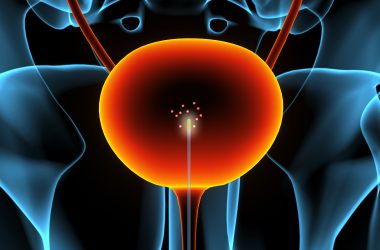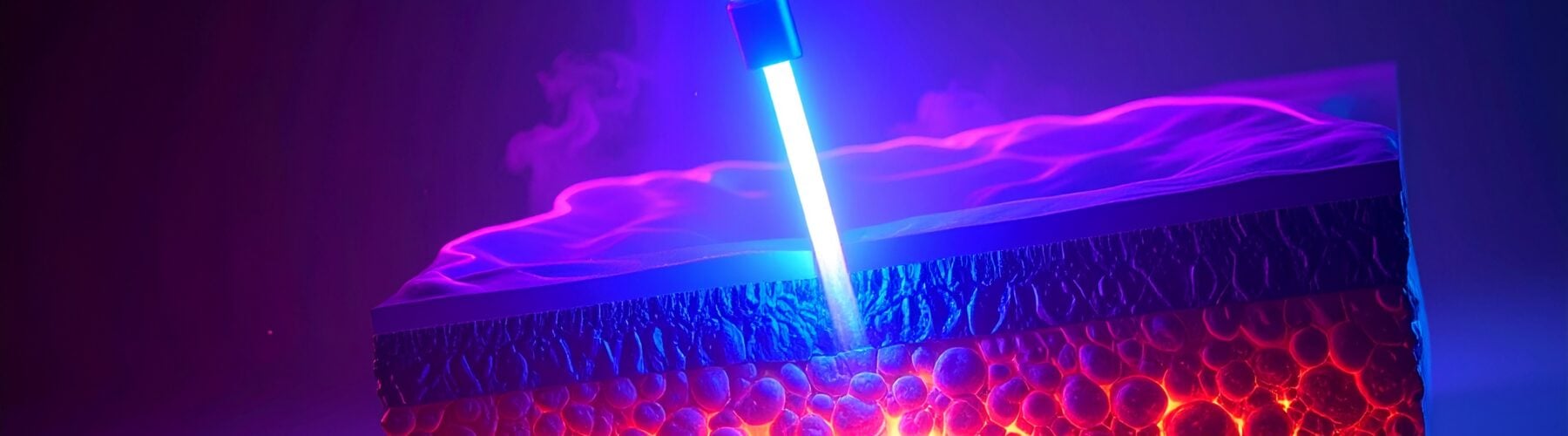
Scientists at the Leibniz Institute for Plasma Science and Technology have demonstrated that cold atmospheric plasma can destroy cancer cells several millimetres beneath tissue surfaces, challenging previous assumptions about the depth limitations of plasma medicine. The research, conducted in collaboration with Greifswald University Hospital and University Medical Centre Rostock, identifies specific reactive molecules responsible for the anti-cancer effects and opens up new possibilities for post-surgical cancer treatment-if the technology proves effective in clinical trials.
The research team developed sophisticated three-dimensional hydrogel models that accurately mimic tumour tissue architecture. These models allowed researchers to track molecular penetration patterns and identify which plasma-generated species reach cancer cells at various depths. This methodological advance addresses a critical gap in plasma medicine research, where previous studies relied on two-dimensional cell cultures that failed to capture the complexity of actual tissue environments.
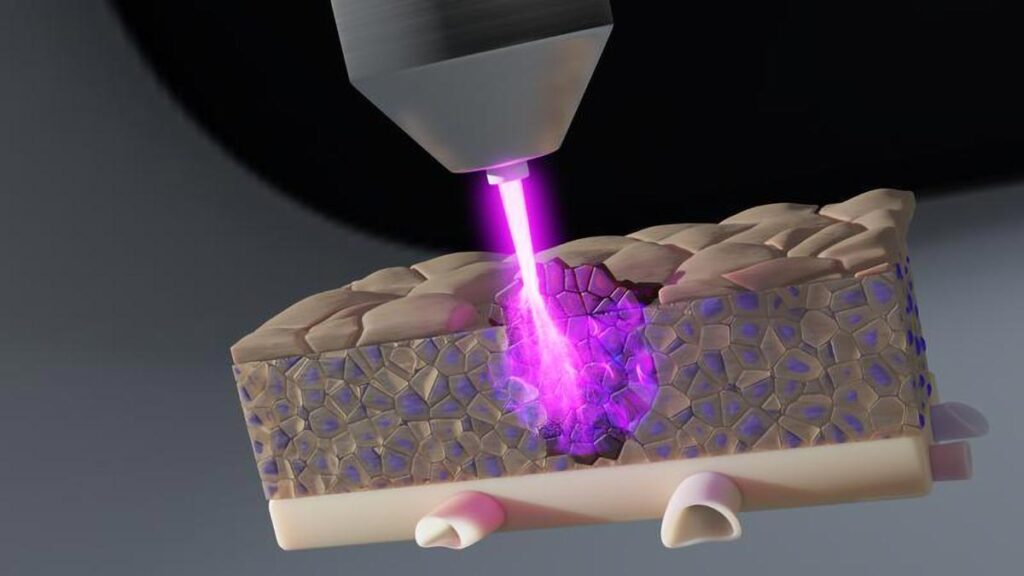
Lead researcher Lea Miebach and her team constructed these models using biocompatible hydrogels with adjustable porosity and density parameters. The models incorporated multiple cell layers with varying oxygen gradients and nutrient distributions, closely approximating the heterogeneous environment found in solid tumours. This approach enabled precise measurement of reactive species diffusion rates and concentration gradients at different tissue depths.
The study revealed that short-lived molecules, particularly peroxynitrite, penetrate several millimetres into tissue-significantly deeper than previously thought possible. This finding contradicts earlier research that attributed plasma’s biological effects primarily to hydrogen peroxide. When researchers selectively removed hydrogen peroxide from the plasma-treated environment, the anti-cancer effects persisted, indicating that other reactive species drive the therapeutic response.
The team employed advanced spectroscopic techniques and chemical probes to map the spatial distribution of various reactive oxygen and nitrogen species within the tissue models. They discovered that peroxynitrite and other short-lived radicals maintain their reactivity longer than expected when diffusing through the complex tissue matrix, potentially due to stabilising interactions with extracellular proteins and lipids.
Engineering Principles of Cold Atmospheric Plasma Generation
Cold atmospheric plasma represents a unique state of matter where gas molecules become partially ionised at near-ambient temperatures, creating a cocktail of electrons, ions, excited atoms, and reactive molecular species. The kINPen device used in this research operates on dielectric barrier discharge principles, generating plasma through controlled electrical discharges in noble gas streams, typically helium or argon.
The engineering challenge lies in maintaining plasma stability while controlling the production of reactive species. The kINPen utilises a coaxial electrode configuration, featuring a high-voltage electrode surrounded by a grounded electrode, separated by a dielectric barrier. When sinusoidal voltage (2-6 kV, 1-2 MHz) is applied, micro-discharges form in the gas flow, creating plasma. The gas flow rate (typically 3-5 standard litres per minute) determines residence time and influences the types and concentrations of reactive species generated.
Temperature control proves critical for biomedical applications. The device incorporates active cooling mechanisms and operates in a pulsed mode to prevent thermal damage to biological tissues. The plasma temperature at the point of application remains below 40°C, while electron temperatures within the discharge can exceed 10,000 K. This temperature differential enables high-energy chemistry without thermal tissue damage.
The generation of reactive species follows complex kinetic pathways. Primary reactions involve electron impact dissociation and excitation of feed gas molecules. When the plasma jet comes into contact with ambient air, secondary reactions produce reactive oxygen and nitrogen species. Key reactions include:
- Electron impact dissociation: e⁻ + O₂ → 2O + e⁻
- Penning ionization: He* + N₂ → N₂⁺ + He + e⁻
- Three-body recombination: O + O₂ + M → O₃ + M
The plasma jet geometry influences the distribution and penetration depth of species. Laminar flow conditions maintain a stable plasma plume, while turbulent mixing at the jet boundaries enhances air entrainment and RONS production. Computational fluid dynamics simulations guide the design of nozzles to optimise the delivery of species to target tissues.
Electric field effects contribute to the plasma’s biological activity beyond the generation of chemical species. Transient electric fields (10-100 kV/cm) at the plasma-tissue interface can induce electroporation, temporarily increasing the permeability of cell membranes. This phenomenon may enhance uptake of plasma-generated species and synergistically amplify therapeutic effects.
Mass transport limitations govern the penetration of species into tissues. Diffusion coefficients vary significantly among reactive species, with smaller molecules, such as nitric oxide, penetrating deeper than larger species, like ozone. The tissue’s tortuosity, porosity, and chemical composition influence effective diffusion rates. Mathematical modelling using reaction-diffusion equations helps predict species distribution:
∂C/∂t = D∇²C – kC + S
Where C represents species concentration, D is the diffusion coefficient, k is the decay rate constant, and S is the source term from plasma.
The research team investigated plasma treatment of residual cancer cells following simulated tumour resection. Using their tissue models, they created artificial surgical margins and treated them with the kINPen plasma jet. Results showed powerful effects on cells that had invaded surrounding tissue-precisely the cells most likely to cause recurrence if left untreated during surgery.
This application addresses a persistent challenge in surgical oncology: achieving clear margins while preserving healthy tissue. If plasma treatment can selectively eliminate microscopic tumour deposits at surgical boundaries, it could reduce recurrence rates without requiring more extensive tissue removal. The technology’s ability to operate at body temperature makes it compatible with delicate surgical sites where thermal ablation methods would cause unacceptable damage.
The team tested various treatment parameters, including exposure time (30 seconds to 5 minutes), distance from tissue (2-20 mm), and gas flow rates. Optimal parameters were identified that balance maximum cancer cell death with minimal impact on surrounding healthy cells. Interestingly, cancer cells showed greater susceptibility to plasma-induced oxidative stress than normal cells, possibly due to their already elevated baseline oxidative state.
Several engineering challenges must be addressed before plasma therapy transitions to clinical practice. Dosimetry standardisation remains problematic, as reactive species production varies with environmental conditions, including humidity, temperature, and atmospheric composition. Developing real-time monitoring systems for species concentration would enable more precise treatment protocols.
The current kINPen design, while effective for accessible tumours, requires modification for internal applications. Researchers are developing flexible plasma jet configurations compatible with endoscopic procedures. These designs must maintain plasma stability while navigating anatomical constraints and ensuring uniform treatment coverage.
Integration with imaging systems presents another frontier. Combining plasma jets with fluorescence imaging or optical coherence tomography could enable real-time visualisation of treatment effects and margin assessment. Such systems would require careful electromagnetic shielding to prevent plasma discharge interference with sensitive imaging electronics.
Professor Sander Bekeschus, head of INP’s Plasma Medicine program, emphasises that understanding active molecular species enables targeted device optimisation for specific cancer types. Different tumours may respond preferentially to particular reactive species ratios, suggesting the possibility of tailored plasma formulations.
If clinical trials validate these laboratory findings, plasma technology could complement existing cancer treatments. The approach offers several advantages: no systemic toxicity, immediate application during surgery, and compatibility with other therapies. However, questions remain about optimal treatment protocols, long-term effects, and cost-effectiveness compared to established methods.
The medical device regulatory pathway for plasma systems continues evolving. The kINPen’s existing medical approval in Europe for wound treatment provides a foundation, but cancer applications will require extensive safety and efficacy data. Researchers must demonstrate consistent performance across diverse patient populations and tumour types.
As this technology advances, collaboration between plasma physicists, biomedical engineers, and clinical oncologists becomes increasingly essential. The multidisciplinary nature of plasma medicine demands expertise spanning electrical engineering, chemistry, biology, and medicine. Success will depend on translating complex plasma science into practical, user-friendly medical devices that deliver reproducible therapeutic outcomes.
TLDR:
- Cold plasma penetrates several millimetres into tumour tissue, destroying cancer cells
- 3D hydrogel models revealed peroxynitrite, not hydrogen peroxide, drives anti-cancer effects
- kINPen plasma jet operates at body temperature using dielectric barrier discharge
- Technology shows promise for treating residual cancer cells after surgery
- If successful in trials, it could reduce cancer recurrence without systemic toxicity