If you transport goods using lorries, you use up diesel, cause motorways to become congested, and reduce the useful life of road surfaces which were never intended to handle trucks of 40 tonnes in weight. Transporting the goods by rail, on the other hand, cuts fuel consumption per tonne-kilometre by about 75 per cent. The problem is that conventional rail freight requires complete trains, fixed schedules, and large marshalling yards. Parallel Systems, a startup in Los Angeles established by former engineers from SpaceX, believes it has discovered an improved method: an autonomous electric railcar that operates on existing tracks and does not need a locomotive, a crew, or a set timetable.
On 7 October 2026 the company announced a $100 million raise in funding as part of its Series C round, which has now made the total amount of investment exceed $200 million. This money is to be used on the deployment of its third-generation Panther vehicle, an all-electric rail system with a range of 500 miles that is capable of carrying intermodal containers on its own throughout the US freight network.
How the Autonomous Electric Railcar Actually Works
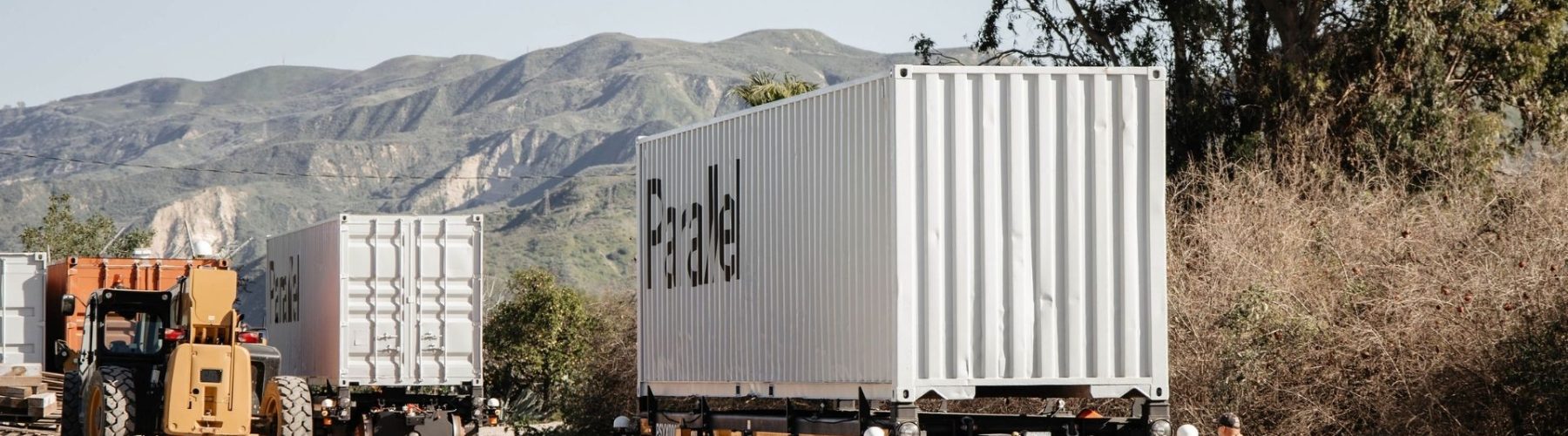
The Panther doesn’t count as a train in the ordinary way; it is a four-axle, battery-electric vehicle about the same length as a standard shipping container. It transports one container and moves along regular rail tracks on its own. Several Panther units can combine to form platoons and travel in close convoy while communicating with one another, but each unit functions as a completely independent system with its own means of propulsion, braking, and navigation.
The lithium-iron-phosphate battery packs, which are located under the container platform, are used to power the electric powertrain. LFP chemistry was selected on the grounds of its durability, thermal stability, and because it is less expensive per kilowatt-hour than nickel-based options. The 500-mile range is aimed at what Parallel Systems considers to be the ideal area in freight logistics - - routes of under 500 miles where trucking is currently the main mode of transport since traditional rail is unable to compete in terms of speed and flexibility.
The CEO, Matt Soule, who earlier has been involved in the development of rocket landing systems at SpaceX, has explained that the philosophy which underlies Parallel Systems is to apply autonomy to the most efficient transport infrastructure that is already in existence; rail tracks extend over about 225,000 kilometres throughout the United States, and a large part of this network is underused, especially the short-haul branch lines which link smaller cities and distribution centres to the main freight corridors.
The Panther’s navigation system combines the use of GPS, inertial measurement units, lidar, and track-level mapping. In contrast to road autonomy in which the vehicle has to deal with unpredictable pedestrians, cyclists, and other drivers, rail autonomy functions in a far more restricted environment since the tracks offer a fixed route and positive train control systems already keep an eye on most of the US main-line network for any possible conflicts.
Testing on Real Track in Georgia
Parallel Systems has been carrying out operational tests on a 30-mile section of track in Georgia, which is operated by Genesee and Wyoming - one of the largest short-line rail companies in North America - the tests, carried out with the approval of the Federal Railroad Administration, have shown that the autonomous electric railcar is capable of navigating turnouts, grade crossings, and variable track conditions without the need for human intervention.
The fact that Genesee and Wyoming has been selected as a testing partner is in keeping with the company’s strategy. Short-line railroads link up industrial areas and distribution centres with the Class I main-line network and are responsible for carrying out the first and last miles of rail freight - precisely the sections where trucking’s flexibility currently holds an advantage. A reliable ability on the part of autonomous railcars to serve these routes would result in a fundamental change in the competitive position in the mid-range freight sector.
The FRA’s approval is more important than it may at first seem. American rail regulation is conservative and for a valid reason. Freight trains share the same tracks with passenger services, cross public roads, and transport hazardous materials. Before regulators will permit a new kind of vehicle to be near a public crossing it must show that it meets the requirements concerning crash-worthiness, braking performance, and communication standards.
Engineering Deep Dive
Each powered axle of the Panther is fitted with permanent-magnet synchronous motors, which give the vehicle a peak traction power of about 600 kilowatts. By means of regenerative braking, energy is recovered when the vehicle is decelerating, thus increasing the effective range beyond what the battery capacity alone would indicate. Additionally, the vehicle is capable of drawing power from wayside charging points, a feature that has been designed for use in future network deployments where charging infrastructure will be installed at key stops along the route.
The energy density of the battery system is about 160 watt-hours per kilogram when measured at the pack level. To achieve a driving range of 500 miles with a fully loaded 20-tonne container at average speeds between 50 and 70 kilometres per hour, the total battery capacity ranges from 1,200 to 1,500 kilowatt-hours. The LFP cells can endure between 4,000 and 6,000 charge-discharge cycles before showing significant degradation, which corresponds to a battery life of around eight to ten years when used daily.
Platooning communication makes use of short-range radio links that are specifically allocated to the 5.9 GHz band, the same frequency range that is used for vehicle-to-vehicle communication in the automotive industry. The vehicles within a platoon keep a separation distance of about 10 metres, which is close enough to reduce aerodynamic drag yet far enough to enable each vehicle to brake individually. The vehicle at the front determines the speed, and the ones behind match their throttle and braking inputs with a latency of less than a millisecond.
What This Means for Freight Transport
The figures make it quite clear that in the United States trucks are responsible for about 72 per cent of the freight tonnage but also account for a greater than proportionate amount of road maintenance expenses, accidents, and carbon emissions. Although rail transport moves the remainder at a much lower cost per tonne-kilometre, it can only do so on routes which have sufficient volume to warrant the assembly and operation of a full train.
The aim of Parallel Systems is to eliminate that volume limit; by having each container function as a separate unit, rail freight can be used for smaller consignments and shorter distances. A distribution centre which sends ten containers each day to a nearby city need not wait for a hundred-wagon train since each Panther unit leaves as soon as it is loaded and travels autonomously to its destination.
The $100 million fundraising round was headed by the current investors and included involvement from partners in the logistics and rail industries. The money will be used for manufacturing the Panther fleet, extending the testing programme to areas outside Georgia, and for developing the software platform which coordinates the vehicles’ movements across the network.
For engineering students who are interested in transport, the Parallel Systems approach shows a principle that is worth remembering in that the most effective innovation at times consists not in coming up with something completely new, but in finding better ways of making use of infrastructure which already exists; 225,000 kilometres of rail track is a great deal of infrastructure to leave underused.
- Parallel Systems has raised $100 million in Series C funding for its autonomous electric railcar fleet
- The third-generation Panther vehicle carries shipping containers on existing rail tracks with a 500-mile battery range
- Testing is underway on a 30-mile stretch of track in Georgia with FRA approval
- The company targets freight routes under 500 miles where trucking currently dominates
- Founded by former SpaceX engineers, the company aims to make rail freight viable for smaller shipments