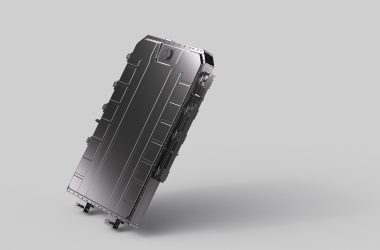
Electric vehicle manufacturers face a fundamental engineering challenge: battery enclosures must provide thermal protection, electrical insulation, and structural integrity while minimising weight to maximise driving range. Steel has traditionally served this purpose, but its mass penalty limits vehicle efficiency. Zircotec, a thermal management specialist based in Abingdon, Oxfordshire, unveiled ceramic coating technology at Cenex Expo 2025 that could enable manufacturers to replace steel battery enclosures with aluminium and composite materials, thereby reducing the environmental impact of battery production.
The ElectroHold coatings emerged from the CeraBEV (Ceramics for Battery Electric Vehicles) project, a 12-month research program led by Zircotec in collaboration with Cranfield University. The Advanced Propulsion Centre UK provided partial Government funding for the initiative, which aimed to advance the UK’s capabilities in battery energy storage safety.
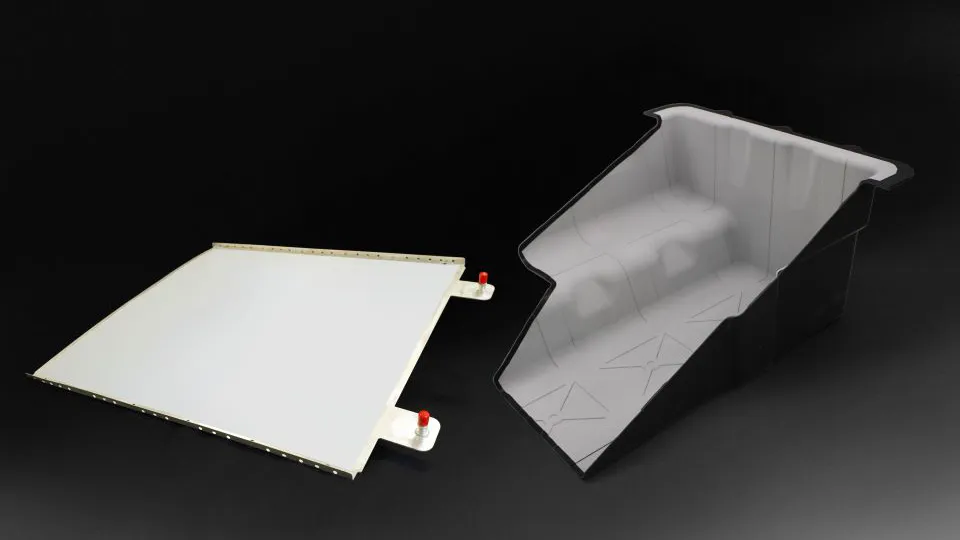
The coating system integrates three critical properties into a single application: dielectric strength for electrical insulation, flame resistance for thermal protection, and enhanced thermal conductivity for heat dissipation. This multifunctional approach allows engineers to specify lighter substrate materials without compromising safety standards.
“We’ve used our thermal management expertise to develop multifunctional coatings that address the new challenges of electrification,” stated Dominic Graham, Zircotec’s engineering director. The coatings protect against heat and flame while ensuring electrical insulation and improving thermal transfer. This combination could unlock the use of lightweight materials across battery boxes and cooling plates.
Understanding Thermal Management and Dielectric Properties in EV Battery Systems
Thermal Runaway Mechanisms
Battery thermal management represents one of the most critical safety considerations in electric vehicle design. Lithium-ion cells generate heat through multiple mechanisms during regular operation: ohmic heating from internal resistance, entropic heat from electrochemical reactions, and heat generation from side reactions. Under abnormal conditions-such as physical damage, manufacturing defects, or extreme overcharging-cells can enter thermal runaway, a self-reinforcing reaction in which heat generation exceeds the dissipation capacity.
During thermal runaway, cell temperatures can exceed 800°C within seconds. The exothermic decomposition of the solid electrolyte interface begins around 90-120°C, followed by electrolyte breakdown at 200°C. Once initiated, the reaction releases oxygen from the cathode material, fueling combustion of the organic electrolyte. This process can propagate to adjacent cells, creating a cascading failure throughout the battery pack.
Dielectric Requirements in High-Voltage Systems
Modern EVs operate at voltages between 400V and 800V, with some systems reaching 1000V. These voltages require robust electrical insulation to prevent arc formation, current leakage, and electrochemical corrosion. The dielectric strength of an insulating material-measured in volts per unit thickness-determines its ability to withstand electric fields without breakdown.
Traditional polymer insulators are susceptible to degradation from thermal cycling, moisture absorption, and mechanical stress. Ceramic materials offer superior dielectric properties due to their ionic-covalent bonding structure, which resists electron mobility even under high electric fields. Plasma-sprayed ceramic coatings can achieve dielectric strengths exceeding 10 kV/mm while maintaining stability across a temperature range of -40°C to 200°C.
Heat Transfer in Composite Structures
The thermal conductivity of battery enclosure materials directly affects cooling system efficiency. Steel exhibits thermal conductivity around 50 W/m·K, while aluminium reaches 200 W/m·K. Carbon fibre composites, despite their excellent strength-to-weight ratios, typically show thermal conductivities below 10 W/m·K in the through-thickness direction due to their anisotropic structure.
Ceramic coatings can modify surface thermal properties through several mechanisms. Microstructured surfaces increase effective surface area for convective heat transfer. Selected ceramic compositions can enhance radiative heat transfer through optimised emissivity. Advanced coating architectures incorporate thermally conductive pathways within an electrically insulating matrix, enabling simultaneous thermal management and electrical isolation.
Coating Application Technologies
Plasma spraying deposits ceramic materials by injecting powder feedstock into a high-temperature plasma jet, typically generated by direct current arc discharge. The plasma reaches temperatures of 10,000-15,000°C, melting ceramic particles that impact and solidify on the substrate surface. Process parameters-including plasma power, spray distance, and powder feed rate-control coating microstructure, porosity, and adhesion strength.
The resulting coating structure consists of overlapping splats formed from individual molten droplets: inter-splat boundaries, micro-cracks, and controlled porosity influence both the thermal and electrical properties. Engineers can tailor these characteristics through the selection of feedstock, spray parameters, and post-deposition treatments. Multi-layer architectures enable graded properties, with bond coats ensuring adhesion to metallic or composite substrates while functional layers provide specific performance attributes.
Understanding Thermal Management and Dielectric Properties in EV Battery Systems
Thermal Runaway Mechanisms
Battery thermal management represents one of the most critical safety considerations in electric vehicle design. Lithium-ion cells generate heat through multiple mechanisms during regular operation: ohmic heating from internal resistance, entropic heat from electrochemical reactions, and heat generation from side reactions. Under abnormal conditions-such as physical damage, manufacturing defects, or extreme overcharging-cells can enter thermal runaway, a self-reinforcing reaction in which heat generation exceeds the dissipation capacity.
During thermal runaway, cell temperatures can exceed 800°C within seconds. The exothermic decomposition of the solid electrolyte interface begins around 90-120°C, followed by electrolyte breakdown at 200°C. Once initiated, the reaction releases oxygen from the cathode material, fueling combustion of the organic electrolyte. This process can propagate to adjacent cells, creating a cascading failure throughout the battery pack.
Dielectric Requirements in High-Voltage Systems
Modern EVs operate at voltages between 400V and 800V, with some systems reaching 1000V. These voltages require robust electrical insulation to prevent arc formation, current leakage, and electrochemical corrosion. The dielectric strength of an insulating material-measured in volts per unit thickness-determines its ability to withstand electric fields without breakdown.
Traditional polymer insulators are susceptible to degradation from thermal cycling, moisture absorption, and mechanical stress. Ceramic materials offer superior dielectric properties due to their ionic-covalent bonding structure, which resists electron mobility even under high electric fields. Plasma-sprayed ceramic coatings can achieve dielectric strengths exceeding 10 kV/mm while maintaining stability across a temperature range of -40°C to 200°C.
Heat Transfer in Composite Structures
The thermal conductivity of battery enclosure materials directly affects cooling system efficiency. Steel exhibits thermal conductivity around 50 W/m·K, while aluminium reaches 200 W/m·K. Carbon fibre composites, despite their excellent strength-to-weight ratios, typically show thermal conductivities below 10 W/m·K in the through-thickness direction due to their anisotropic structure.
Ceramic coatings can modify surface thermal properties through several mechanisms. Microstructured surfaces increase effective surface area for convective heat transfer. Selected ceramic compositions can enhance radiative heat transfer through optimised emissivity. Advanced coating architectures incorporate thermally conductive pathways within an electrically insulating matrix, enabling simultaneous thermal management and electrical isolation.
Coating Application Technologies
Plasma spraying deposits ceramic materials by injecting powder feedstock into a high-temperature plasma jet, typically generated by direct current arc discharge. The plasma reaches temperatures of 10,000-15,000°C, melting ceramic particles that impact and solidify on the substrate surface. Process parameters-including plasma power, spray distance, and powder feed rate-control coating microstructure, porosity, and adhesion strength.
The resulting coating structure consists of overlapping splats formed from individual molten droplets: inter-splat boundaries, micro-cracks, and controlled porosity influence both the thermal and electrical properties. Engineers can tailor these characteristics through the selection of feedstock, spray parameters, and post-deposition treatments. Multi-layer architectures enable graded properties, with bond coats ensuring adhesion to metallic or composite substrates while functional layers provide specific performance attributes.
Zircotec subjected the ElectroHold coatings to comprehensive testing protocols, including the UL 2596 Method A thermal runaway test, considered the industry’s most stringent battery safety evaluation. During this test, engineers deliberately drove a battery module to failure within a coated carbon fibre enclosure, simulating the most severe safety scenario an EV might encounter.
The coated enclosure maintained structural integrity throughout the event, preventing flame egress and sustaining electrical isolation. This performance demonstrates the coating’s ability to extend protection time for vehicle occupants and surrounding systems under extreme thermal stress conditions exceeding 800°C.
Laboratory testing conducted with HORIBA MIRA revealed a four-fold increase in dielectric strength compared to previous coating iterations. The Royal Institute in Sheffield provided thermal conductivity measurements, while BeonD contributed to battery propagation safety assessments. The coatings demonstrated resistance to mechanical stress, corrosion, chemical attack, and temperature cycling across ranges typical of automotive applications.
If successfully integrated into production vehicles, the technology could enable a significant reduction in mass for battery pack designs. A typical EV battery enclosure weighs between 50 and 100 kilograms when constructed from steel. Aluminium alternatives could reduce this mass by 40-50 per cent, while carbon fibre composites could achieve a 60-70 per cent weight reduction. Each 10 per cent reduction in vehicle weight typically yields a 6-7 per cent improvement in driving range, assuming a constant battery capacity.
The coating process integrates with existing manufacturing workflows. Plasma spray application requires surface preparation through grit blasting or similar methods, followed by robotic deposition of the ceramic coating. Quality control measures include thickness verification, adhesion testing, and electrical resistance measurements. Production cycle times depend on part geometry and coating thickness specifications, but typically range from minutes to hours per component.
Cost considerations include raw material expenses, processing energy, and equipment amortisation. While ceramic coatings add manufacturing steps, the enabled use of lower-cost substrate materials could offset these expenses. Aluminium and engineering plastics often cost less than high-strength steel alloys when considering both material and processing requirements.
The multifunctional coating approach could extend beyond battery enclosures to other EV components. Power electronics generate substantial heat during operation and require electrical isolation from cooling systems to prevent overheating. Electric motor housings need thermal management while maintaining electromagnetic shielding. High-voltage cables and connectors require insulation that can withstand thermal cycling and environmental exposure.
Terry Graham, Zircotec CEO, emphasised the collaborative nature of the development: “Thanks to our strong collaboration with Cranfield University and other industry partners, we believe these proprietary coatings could transform the global EV market by unlocking the use of prized lightweight materials.”
If the technology achieves widespread adoption, it could accelerate the industry’s transition toward multi-material vehicle architectures. Engineers could specify materials based on structural requirements rather than thermal or electrical constraints, enabling optimised designs that balance performance, safety, and sustainability considerations. The UK’s materials science and coating expertise, as demonstrated through the CeraBEV project, positions the nation to contribute to the development of next-generation electric vehicles.
- Zircotec developed ceramic coatings enabling aluminum and composites to replace steel in EV battery enclosures
- ElectroHold coatings combine electrical insulation, flame resistance, and thermal management properties
- Technology passed UL2596 thermal runaway testing, maintaining integrity at temperatures exceeding 800°C
- Four-fold improvement in dielectric strength compared to previous coating generations
- Potential weight savings of 40-70 percent in battery enclosures if adopted
- Developed through UK government-backed CeraBEV project with Cranfield University