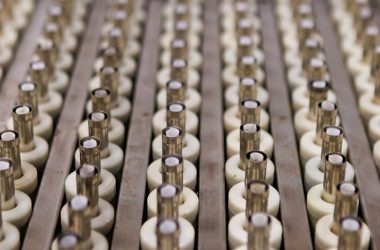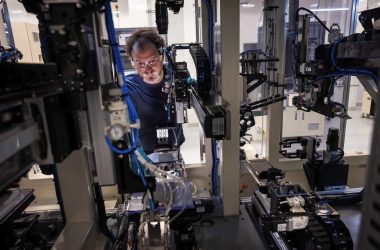
Outside Swindon at a former site of the Ministry of Defence, calcium hydroxide in the form of blocks is stored in racks and fans are used to blow air over their surfaces. The place looks more like a builders’ yard than an energy plant. Nevertheless, it is here that a British startup is demonstrating that the production of synthetic methane, something previously regarded as too expensive to be of any significance, could be carried out on a commercial scale using nothing more than air, water and sunlight.

Rivan Industries, which was set up in 2024 by Harvey Hodd, combines in a new way three technologies that are already well established: direct air capture (DAC), electrolysis, and a Sabatier reactor, a chemical process that has been around for a century and which involves the combination of hydrogen and carbon dioxide to yield methane and water. Each of these technologies on its own is nothing new, but Rivan’s achievement lies in making the entire process cheap and clean enough to allow the gas to be fed directly into the national grid.
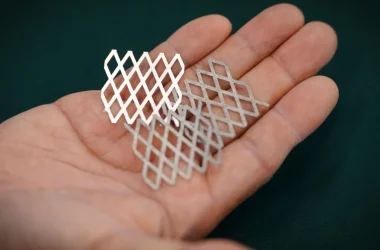
The capture process uses blocks of calcium hydroxide which are shaped and left exposed to the ambient air, which is caused to move across them by fans. As the air flows through the blocks, carbon dioxide reacts with the calcium hydroxide. When a block becomes saturated, it is fired in a kiln at temperatures reaching 1000°C, during which pure CO2 is released and calcium oxide is left behind. This calcium oxide is then mixed with water and extruded again to form new blocks, restarting the cycle.
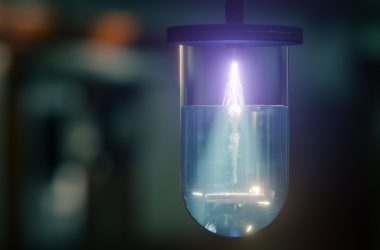
Together with the capture units, a custom-built electrolyser splits water into hydrogen and oxygen. Rivan intentionally designed it to avoid rare-earth metals and the high temperatures and pressures that make many industrial electrolysers expensive to operate. The hydrogen and the captured CO2 then come together in a Sabatier reactor, which, according to The Engineer, achieves a conversion efficiency of 99.9% and can adjust its output to match variations in solar irradiance throughout the day.
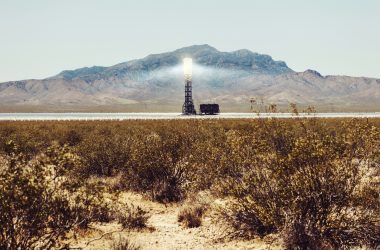
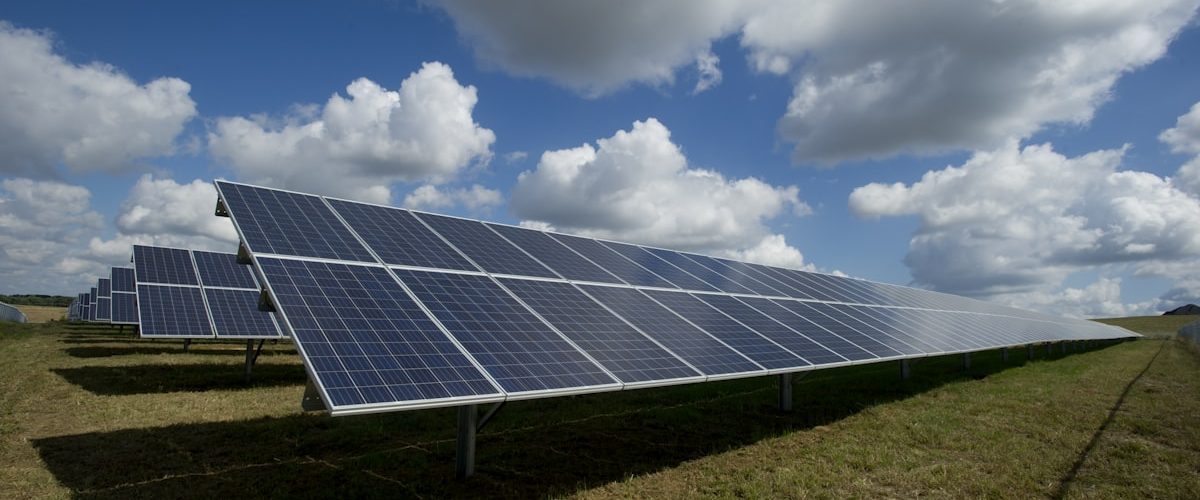
Rivan has been demonstrating the concept using a 100kW pilot plant at Wroughton, the former MOD site close to Swindon. The next phase involves the Little Rose Lane Energy Park near Blunsdon, where up to 15MW of solar PV will be combined with eleven containerised technology stacks containing the equipment for capture, electrolysis and reaction. The gas produced at this site has a purity of 99.9% and already satisfies the GS(M)R specification set out in the UK’s Gas Safety (Management) Regulations regarding the hydrogen content in grid gas, which must be less than 0.1%.
Since the carbon in the methane is drawn from the atmosphere rather than from fossil fuels and the entire process is powered by off-grid solar energy, Rivan refers to the output as carbon neutral. The only CO2 released when it is burned was that which had been captured during the initial production of the methane. In April 2026 the company raised £25m in a Series A financing round chaired by IQ Capital, the funds being intended for the purpose of scaling up synthetic methane production from pilot to commercial level over the coming years.
Engineering Deep Dive: Thin Air to the Gas Grid
Rivan’s plant is in fact made up of three chemical processes which have been taken from existing industries and then re-engineered so as to function without the normal reliance on rare materials or extremely harsh conditions.
The method of directly capturing carbon dioxide using calcium hydroxide is based on a chemistry that is well known to anyone who has learned about lime. Calcium hydroxide, which has the formula Ca(OH)2, reacts with carbon dioxide in the atmosphere to produce calcium carbonate, CaCO3, and water. By shaping the material into blocks, the surface area that is exposed to the passing air is maximised, since the rate of capture depends strongly on the amount of carbon dioxide-containing air that can come into contact with the reactive surface during a given time period. Fans continuously blow the ambient air over the blocks, and since the concentration of carbon dioxide in the atmosphere is only about 420 parts per million, the DAC systems require large volumes of air if they are to collect a significant amount of the gas; it is for this reason that both the design of the surface area and that of the airflow are just as important as the chemistry itself.
The energy-intensive part of the process is regeneration of the blocks. When calcium carbonate is heated to as high as 1000°C, CO2 is driven off in the form of a concentrated and capturable stream and the material is converted back into calcium oxide, CaO. Calcium hydroxide is then obtained by adding water, at which point it is ready for re-extrusion. This calcination step is thermodynamically demanding and is on a similar principle to the kilns used in cement production, and it is a question of achieving the correct energy balance - ideally by using renewable heat or power - whether the entire system can be regarded as genuinely low-carbon.
In the electrolysis process water is separated into hydrogen and oxygen by means of an electric current. Traditional proton exchange membrane and alkaline electrolysis systems usually make use of catalysts based on platinum group metals or iridium, materials which are rare, costly and geographically concentrated. By choosing to design its own electrolyser without employing rare-earth metals and without having to use the high temperatures and pressures that increase capital and maintenance costs, Rivan is aiming at one of the main obstacles to producing hydrogen in an affordable way.
The last stage, the Sabatier reaction, was discovered by the French chemist Paul Sabatier in 1897 and has since been put to use in a variety of applications, including the synthesis of ammonia and, more recently, in the life support systems of the International Space Station. It involves reacting carbon dioxide with hydrogen in the presence of a nickel or ruthenium catalyst at moderate temperature and pressure to yield methane and water: CO2 + 4H2 → CH4 + 2H2O. To achieve a conversion rate of 99.9 per cent, as is the case with Rivan’s reactor, it is necessary to carefully regulate the ratio of hydrogen to carbon dioxide, this ratio should ideally be close to the stoichiometric 4:1, together with the choice of catalyst and control of the reactor temperature in order to prevent undesirable side reactions.
The most difficult engineering problem consists in adapting the entire system to the varying solar power available throughout the hour. Since both electrolysers and Sabatier reactors have preferred operating ranges, it is necessary to run them intermittently, increasing and decreasing their output as the amount of sunlight changes, which in turn calls for responsive control systems and equipment capable of withstanding cycling without suffering rapid degradation. Rivan’s use of a containerised solution at the Little Rose Lane Energy Park - dividing the process into eleven modular stacks instead of using a single large plant - provides the flexibility to bring some of the capacity online or offline as the solar output changes during the day, and to increase the system’s scale by adding more containers rather than having to redesign it from the beginning.
The requirements go beyond simply meeting chemical specifications; in order to be admitted to the UK gas grid, methane has to comply with the GS(M)R standards regarding purity, calorific value and the presence of trace contaminants, including having a hydrogen content below 0.1%. It is the fact that methane can be produced with a purity of 99.9% and thus meet these specifications in a plant constructed using only air, water and sunlight that transforms synthetic methane production from a mere laboratory demonstration into something that the present gas network will actually accept.
Rivan’s pitch isn’t about introducing a new type of fuel but rather about providing a new means of obtaining an existing one. Methane is currently used in boilers, cookers and power stations all over Britain, and the production of synthetic methane provides a solution that allows the existing infrastructure to be continued while eliminating the fossil carbon from the supply. Having secured £25m in additional funding and with a 15MW site being developed near Swindon, the next step will be to see whether the process proves viable when it moves from being a pilot project to becoming an actual plant.
- Rivan Industries combines direct air capture, electrolysis and a Sabatier reactor to make carbon-neutral synthetic methane.
- Calcium hydroxide blocks capture CO2 from ambient air, regenerated by firing in a kiln at up to 1000°C.
- A custom electrolyser avoids rare-earth metals and extreme operating conditions.
- The Sabatier reactor achieves 99.9% conversion and follows solar power output through the day.
- A 15MW solar-powered site near Blunsdon will scale the process, backed by £25m in Series A funding.