
The transition to zero-emission aviation reached a significant milestone when engineers completed the world’s first refuelling of composite aviation tanks with liquid hydrogen at an international airport. The achievement, conducted at Christchurch Airport’s dedicated test facility, brings hydrogen-electric flight closer to reality for the Australasian region.
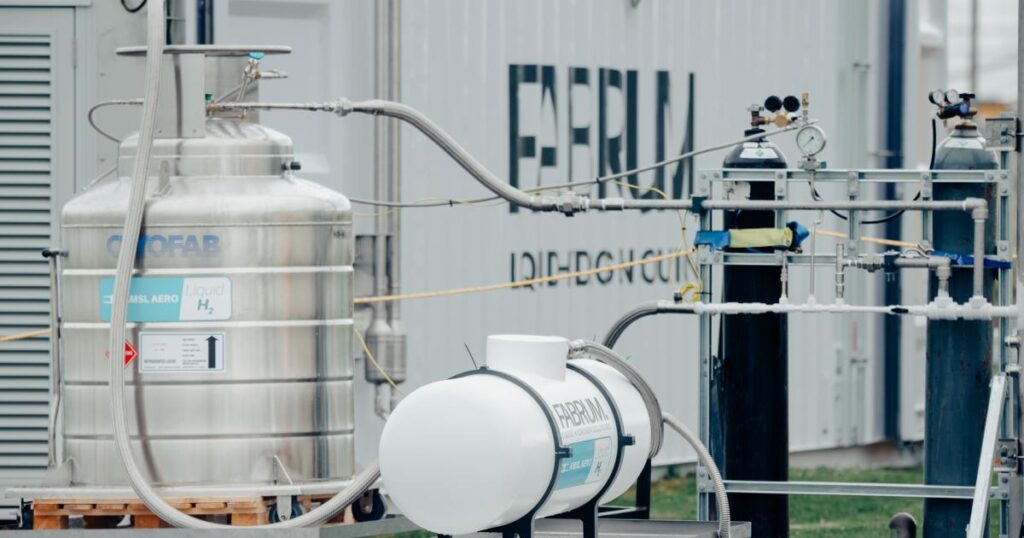
Three pioneering companies-Fabrum, AMSL Aero, and Stralis Aircraft-collaborated to demonstrate the complete liquid hydrogen fuel cycle at an airport setting. The test involved producing, storing, and dispensing liquid hydrogen into specially designed composite tanks that will power next-generation aircraft. This marks the first time these critical components have been integrated and tested together at an operational airport facility.
The engineering challenge of hydrogen aviation centres on energy density and storage efficiency. Liquid hydrogen offers specific energy approximately three times higher than sustainable aviation fuel and over 100 times greater than current battery technology. This extraordinary energy density makes it particularly suitable for aviation applications, where weight constraints significantly impact operational viability. However, storing a substance that boils at -252.87°C presents unique engineering challenges that require innovative solutions.
Revolutionary Tank Design Enables Practical Implementation
The breakthrough lies in Fabrum’s triple-skin composite tank technology, which represents over two decades of research in cryogenic and composite materials. Unlike conventional double-skin designs, the triple-skin configuration provides enhanced thermal insulation while enabling up to 70% faster refuelling times. The design also achieves an 80% reduction in boil-off losses during refuelling-a critical improvement for practical aviation operations.
These lightweight composite tanks address one of hydrogen aviation’s fundamental challenges: maintaining structural integrity while minimising weight. The tanks must withstand extreme temperature differentials while containing hydrogen at cryogenic temperatures, all within strict aviation weight limits. The composite construction allows for significant weight savings compared to traditional metal tanks, making long-range hydrogen flight feasible.
Understanding Cryogenic Storage Engineering
The engineering principles behind liquid hydrogen storage involve managing extreme temperature gradients and preventing heat transfer into the storage vessel. At -252.87°C, liquid hydrogen exists just 20 degrees above absolute zero, making thermal management crucial for practical applications.
The triple-skin tank design creates multiple thermal barriers between ambient air and the cryogenic liquid. The outermost layer provides structural support and environmental protection. The middle layer incorporates advanced insulation materials, potentially including vacuum spaces or aerogel composites, which minimise conductive heat transfer. The innermost layer directly contacts the liquid hydrogen and must maintain chemical compatibility while withstanding thermal cycling stresses.
Engineers calculate heat transfer through these layers using Fourier’s Law of Thermal Conduction, where heat flux equals thermal conductivity multiplied by the temperature gradient, divided by the material thickness. By incorporating multiple layers with different thermal properties, engineers create a thermal resistance network that dramatically reduces heat ingress.
The refuelling process presents additional engineering challenges. As liquid hydrogen flows into the tank, it must displace warmer gas while minimising pressure buildup and thermal shock to tank materials. Engineers employ specialised venting systems and flow control mechanisms to manage this process. The 70% reduction in refuelling time achieved through the triple-skin design relates to improved thermal management during filling, reducing the formation of gas pockets that slow fuel transfer.
Material selection proves critical in cryogenic applications. Engineers must consider factors including the coefficient of thermal expansion, brittleness at low temperatures, and hydrogen permeability. Composite materials offer advantages through tailored fibre orientations that manage thermal stresses while maintaining structural integrity. The manufacturing process involves precise control of resin chemistry and curing conditions to achieve optimal mechanical properties across the extreme temperature range.
The 80% reduction in boil-off losses during refuelling represents a significant achievement in managing the latent heat of vaporisation. When liquid hydrogen absorbs heat, it undergoes a phase change to gas, reducing fuel availability. Engineers minimise this through optimised flow patterns, pre-cooling procedures, and thermal stratification management within the tank.
The hydrogen-electric propulsion systems being developed offer compelling advantages beyond zero emissions. These systems contain fewer moving parts than traditional turbine engines and operate at lower temperatures, potentially reducing maintenance costs by 40-60%. The propulsion chain converts hydrogen to electricity through fuel cells, which then power electric motors driving the aircraft’s propellers. This architecture eliminates many mechanical components typically found in conventional engines, thereby simplifying maintenance and enhancing reliability.
Practical Applications Take Shape
AMSL Aero’s Vertiia represents one application of this technology-a vertical take-off and landing aircraft designed from inception for hydrogen power. The aircraft’s specifications include a 1,000-kilometre range, a 500-kilogram payload capacity, and a cruising speed of 300 km/h. Achieving these performance metrics requires minimising weight across all systems, making liquid hydrogen’s energy density essential for mission success.
Stralis Aircraft approaches the challenge differently with fixed-wing aircraft incorporating hydrogen-electric propulsion. Their system promises travel distances up to ten times greater than those of battery-electric alternatives, while reducing operational costs by 20-50% compared to fossil fuel systems. The company expects to conduct its first hydrogen test flight within six months, demonstrating the technology’s near-term viability.
The testing at Christchurch Airport’s renewable energy precinct demonstrates infrastructure requirements for hydrogen aviation. The facility produces green hydrogen through water electrolysis using renewable electricity, stores it as a liquid in specialised Dewars, and dispenses it into aircraft tanks via custom refuelling systems. This comprehensive ecosystem demonstrates that airports can effectively adapt existing infrastructure to support hydrogen operations.
Technical challenges remain before widespread adoption becomes feasible. Hydrogen’s low volumetric energy density means that aircraft require larger fuel tanks than conventional designs, which affects aerodynamics and cargo capacity. The cryogenic storage systems add complexity to ground operations and require specialised personnel training. Infrastructure development represents a significant capital investment for airports and operators.
Safety considerations drive many design decisions in hydrogen systems. Engineers implement multiple containment barriers, pressure relief systems, and leak detection mechanisms throughout the fuel handling chain. The lightweight nature of hydrogen gas means that any leaks dissipate rapidly upward, reducing the risk of ground-level accumulation compared to heavier fuel vapours.
The collaboration between these companies, facilitated through organisations like the Hydrogen Flight Alliance, accelerates technology development through shared expertise and resources. Government support through grants and research partnerships provides crucial funding for advancing these emerging technologies toward commercial viability.
If these technologies prove successful at scale, hydrogen aviation could transform regional air transport, particularly in markets where battery-electric aircraft lack sufficient range. The ability to refuel quickly, compared to battery charging times, makes hydrogen particularly attractive for commercial operations that require rapid turnaround times.
The successful refuelling demonstration represents tangible progress toward zero-emission aviation, though significant engineering and infrastructure challenges remain. As engineers refine these technologies and expand testing programs, the aviation industry moves closer to practical hydrogen-powered flight. The coming months will reveal whether these pioneering systems can deliver on their promise of sustainable, long-range air transport.
TLDR
- World’s first liquid hydrogen aircraft refuelling completed at Christchurch Airport by Fabrum, AMSL Aero, and Stralis Aircraft
- Revolutionary triple-skin composite tank design enables 70% faster refuelling and 80% reduction in fuel loss
- Liquid hydrogen offers 3x energy density of sustainable aviation fuel and 100x that of batteries
- Hydrogen-electric propulsion systems promise 40-60% lower maintenance costs than conventional engines
- AMSL Aero’s Vertiia aircraft targets 1,000km range with 500kg payload capacity
- Technology could enable regional flights up to 10x longer range than battery-electric alternatives
- Complete green hydrogen ecosystem demonstrated from production to aircraft refuelling
- First hydrogen test flights expected within six months