
Energy & Environment
Breakthrough Starshot plans to send gram-scale "nano craft", pushed by laser light from Earth, to Alpha Centauri within about 20 years of launch.
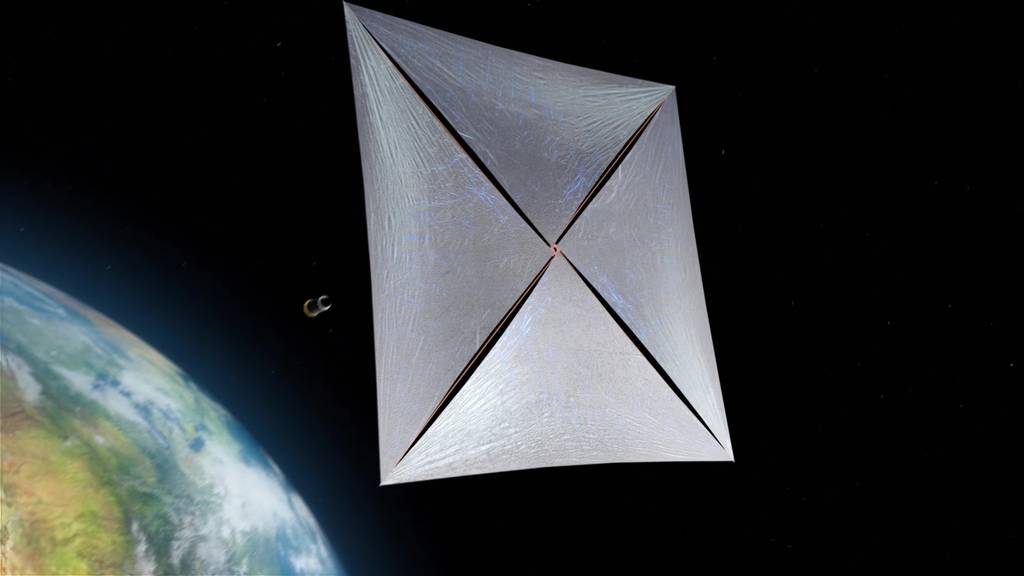
Breakthrough Starshot is taking a novel approach to space exploration by using “nano craft” to reach Alpha Centauri within 20 years of its launch.[1][2] These tiny crafts are designed to use light beams from Earth to accelerate themselves up to 100 million miles per hour.[3][4]
The project believes that Moore’s law has allowed for such a dramatic decrease in the size of electronic components that they will able to create gram-scale “wafers” that are capable of carrying cameras, power supplies, navigation and communication equipment and photon thrusters.[5][6] These elements combined will constitute a fully functional space probe.
These tiny probes can be accelerated away from Earth using thin and light-weight Light Sails which are designed to be no more than a few hundred atoms thick.[7][8] Both advances in nanotechnology and the falling cost of lasers should allow the development of this technology in the next few years.

The programme is led by Pete Worden, a former director of NASAs AMES Research Center,[9][10] and is backed by a US$100 million (about £70 million) research and engineering programme.[11][12] The board has been joined by Stephen Hawking, Yuri Milner, and Mark Zuckerberg giving it significant backing.[13][14]
Credit via @ Engineering and Technology Magazine source @ breakthroughinitiatives.org
A possible fly-by mission could reach Alpha Centauri within about 20 years of its launch.
Checked 12 November 2026
Stephen Hawking Helps Launch Project ‘Starshot’ for Interstellar Space Exploration
could visit the nearby star Alpha Centauri after a journey of just 20 years.
Checked 12 November 2026
Breakthrough Starshot Project to Develop 100 Million Mile per Hour Mission to the Stars
Checked 12 November 2026
Stephen Hawking announces $100m Starshot project to reach Alpha Centauri
100 million miles an hour or a thousand times faster than the fastest space craft today.
Checked 12 November 2026
a gram-scale wafer, carrying cameras, photon thrusters, power supply, navigation and communication equipment, and constituting a fully functional space probe.
Checked 12 November 2026
Is the New $100 Million ‘Starshot’ for Real?
Each nanocraft, or StarChip, will be packed with cameras, thrusters, and navigation and communications equipment
Checked 12 November 2026
meter-scale sails no more than a few hundred atoms thick
Checked 12 November 2026
Russian billionaire Yuri Milner invests $100m to send a fleet of spacecraft to Alpha Centauri
a sail that is only a few hundred atoms thick, a few meters wide
Checked 12 November 2026
The program will be led by Pete Worden, the former director of NASA AMES Research Center.
Checked 12 November 2026
Peter Worden, the former director of NASA's Ames Research Center
Checked 12 November 2026
Breakthrough Starshot is a $100 million research and engineering program
Checked 12 November 2026
Professor Stephen Hawking backs Breakthrough Starshot project
a £70million ($100million) research programme to develop the computer chip-sized "starships" has just been launched
Checked 12 November 2026
The board will consist of Stephen Hawking, Yuri Milner, and Mark Zuckerberg.
Checked 12 November 2026
Stephen Hawking Helps Launch Project ‘Starshot’ for Interstellar Space Exploration
Breakthrough Starshot's board consists of Hawking, Milner and Mark Zuckerberg, the founder and CEO of Facebook.
Checked 12 November 2026
Energy & Environment
Energy & Environment

Energy & Environment