Lithium is an exceptionally soft metal, even softer than lead or tin, and can be cut with a butter knife. Despite this softness, lithium consistently damages significantly harder ceramics. This paradox has challenged battery researchers for years. Recently, a team at the Max Planck Institute for Sustainable Materials (MPI-SusMat) in Düsseldorf published an explanation in Nature.
The primary issue is the formation of dendrites, which are tiny, needle-like lithium structures that develop during charging and can penetrate the solid electrolyte separating a battery’s electrodes. When a dendrite breaches the electrolyte in a solid-state battery, it causes a short circuit and, in severe cases, may result in fire. This failure mode represents the most significant obstacle to the commercialisation of solid-state batteries, which have the potential to triple electric vehicle range and enable multi-day smartphone battery life.


Traditionally, researchers attributed dendrite formation to grain boundaries, which are the junctions between individual crystal grains in the ceramic electrolyte. It was believed that electrons leaked along these boundaries, leading to preferential lithium deposition in the cracks between grains. However, Dr Yuwei Zhang, first author of the Nature paper and head of the Chemo-Mechanics of Battery Materials group at MPI-SusMat, identified a different mechanism.
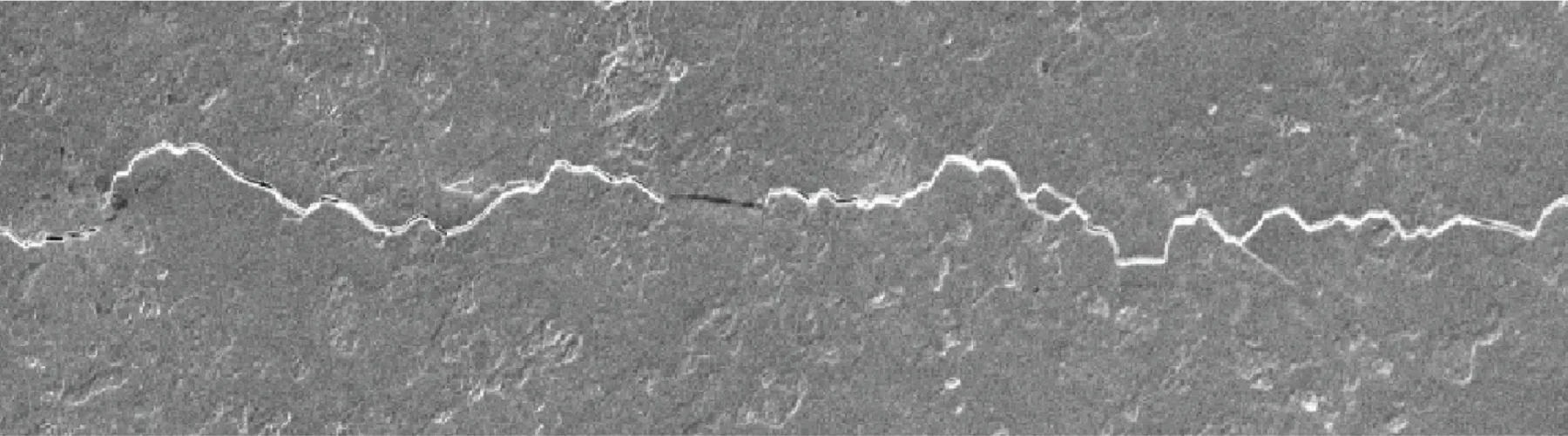
By employing cryo-vacuum advanced microscopy, Zhang’s team observed the real-time formation of lithium dendrites at nanometre resolution. Contrary to previous assumptions, they did not observe electron leakage along grain boundaries. Instead, lithium metal generated substantial hydrostatic pressure as it deposited within microscopic flaws in the ceramic. This pressure increased until the ceramic fractured, allowing lithium to flow into the resulting crack, and the process then repeated.
Zhang compared this process to a continuous waterjet penetrating rock, illustrating that a soft material does not need to be harder than the barrier but only needs to apply sustained, localised pressure. The team supported their microscopy observations with phase field simulations and electron backscatter diffraction, constructing a comprehensive understanding of the failure mechanism from the atomic scale to the microstructural level.
This discovery challenges years of research focused on engineering grain boundaries to prevent dendrite growth. If hydrostatic pressure, rather than electronic leakage, is the primary issue, alternative solutions are required. Zhang’s team proposed several approaches: increasing the electrolyte’s resistance to crack propagation (not merely its hardness), introducing microscopic voids to absorb lithium expansion without generating pressure, and applying protective coatings to redistribute stress.
Solid-state batteries represent a highly anticipated advancement in energy storage technology. By substituting the flammable liquid electrolyte in conventional lithium-ion cells with a solid ceramic or glass, these batteries could offer improved safety, higher energy density, and increased longevity. Major automotive manufacturers have initiated investment programs in solid-state technology, with companies such as Toyota, Samsung SDI, QuantumScape, and Solid Power announcing development timelines.
However, dendrite-induced failure has impeded progress in the field. Prototype cells typically function effectively for only a few dozen cycles before a dendrite penetrates the electrolyte and renders the cell inoperative. Gaining a precise understanding of the mechanisms underlying this phenomenon is essential for developing engineering solutions. The research conducted by the Max Planck team offers this understanding with exceptional clarity.
The practical implications of this research are substantial. If electrolyte designers prioritise fracture toughness over hardness, they can select materials and microstructures that resist crack propagation rather than merely resisting deformation. This principle is well established in structural engineering, where buildings are designed to flex during earthquakes rather than remain rigid. However, it has not yet been widely implemented in battery electrolyte design.
Engineering Deep Dive
The ceramic electrolytes most frequently investigated for solid-state batteries can be categorised into several families. Garnets, such as Li7La3Zr2O12 (LLZO), provide high ionic conductivity (up to 1 mS/cm at room temperature) and exhibit good stability against lithium metal. Sulfide-based electrolytes, including Li6PS5Cl (argyrodite), achieve even higher conductivities (up to 25 mS/cm) but are sensitive to moisture and are mechanically softer. Oxide perovskites and NASICON-type ceramics possess intermediate properties.
The fracture toughness of these materials is considered low by engineering standards. For example, LLZO exhibits a fracture toughness of approximately 1 to 1.5 MPa·m^(1/2), compared to 2 to 5 MPa·m^(1/2) for engineering alumina and 50 to 100 MPa·m^(1/2) for structural steels. As a result, cracks propagate readily once initiated, and the critical flaw size for catastrophic failure is small, often within the micrometre range.
The hydrostatic pressure mechanism identified by Zhang’s team functions as follows. During charging, lithium ions migrate from the cathode through the electrolyte and deposit as metallic lithium at the anode. Because deposition is never perfectly uniform, due to variations in local ionic conductivity, surface roughness, and nucleation energetics, lithium preferentially accumulates in small defects and pores within the electrolyte. As additional lithium deposits in these confined spaces, it generates hydrostatic pressure that can surpass the fracture strength of the ceramic.
The use of cryo-vacuum microscopy was essential because lithium metal is highly reactive under ambient conditions. Exposure to air or moisture leads to rapid oxidation and hydroxide formation, which would obscure the native dendrite morphology. By performing microscopy at cryogenic temperatures (below minus 170°C) in ultra-high vacuum, the researchers preserved the lithium structures in their original form as they developed during electrochemical cycling.
Electron backscatter diffraction (EBSD) provided complementary insights into the ceramic microstructure. EBSD maps the crystallographic orientation of individual grains, revealing grain boundaries, misorientation angles, and local stress states. By correlating EBSD maps with dendrite penetration sites, the team demonstrated that dendrites did not preferentially follow grain boundaries. Instead, dendrites penetrated through grains at locations with the highest local stress concentration, irrespective of grain boundary geometry.
Phase field simulations were used to model the coupled electrochemical and mechanical processes involved in dendrite growth. These simulations simultaneously solved the Cahn-Hilliard equation for lithium transport, the Navier-Stokes equation for mechanical deformation, and the Griffith criterion for crack propagation. The results mirrored experimental observations: lithium preferentially filled regions of highest stress, generated pressure, initiated cracks, and then flowed into these cracks, repeating the cycle. The simulations further predicted that increasing the fracture toughness of the electrolyte by a factor of two to three would completely suppress dendrite penetration at practical current densities.
The proposed solutions each address a different aspect of the mechanism. Tougher electrolytes could be achieved by composite designs, for example by incorporating zirconia particles that undergo a stress-induced phase transformation (from tetragonal to monoclinic) that absorbs crack energy, a technique borrowed from structural ceramics. Microscopic voids, introduced deliberately during sintering, would provide space for lithium expansion without pressure build-up. Protective coatings, such as thin films of lithium fluoride or aluminium oxide applied by atomic layer deposition, could redistribute lithium deposition more uniformly and reduce local stress.
The work conducted by the Max Planck team does not provide a commercially ready solid-state battery. Instead, it offers a revised understanding of the underlying failure mechanism.
For years, researchers have focused on reinforcing grain boundaries against a misidentified threat. With the actual mechanism now clarified, the engineering community can more effectively target its efforts. Zhang’s group is currently testing toughened electrolyte compositions, and several industrial partners have expressed interest in these findings.
- Max Planck researchers discovered that lithium dendrites crack solid-state battery ceramics through hydrostatic pressure, not electron leakage along grain boundaries
- Cryo-vacuum microscopy and phase field simulations revealed the true failure mechanism, published in Nature
- Solutions include tougher electrolytes, microscopic voids, and protective coatings, potentially enabling 3x EV range