Chinese engineers have achieved a significant milestone in renewable energy technology with the successful flight of the S1500.
This massive airborne wind turbine operates like a tethered blimp, harvesting high-altitude winds. The 60-meter-long floating power generator, developed through a collaboration between Beijing SAWES Energy Technology, Tsinghua University, and the Aerospace Information Research Institute, represents a fundamentally different approach to wind energy that could transform how engineers think about renewable power generation in challenging environments.
The S1500’s design challenges conventional wind turbine engineering by eliminating the need for towering support structures and deep concrete foundations. Instead, this helium-filled airship ascends to altitudes where winds blow with greater consistency and force, capturing energy that ground-based turbines cannot reach. The engineering team reports that their approach reduces material requirements by 40 per cent compared to traditional wind farms, while potentially lowering electricity costs by 30 per cent.
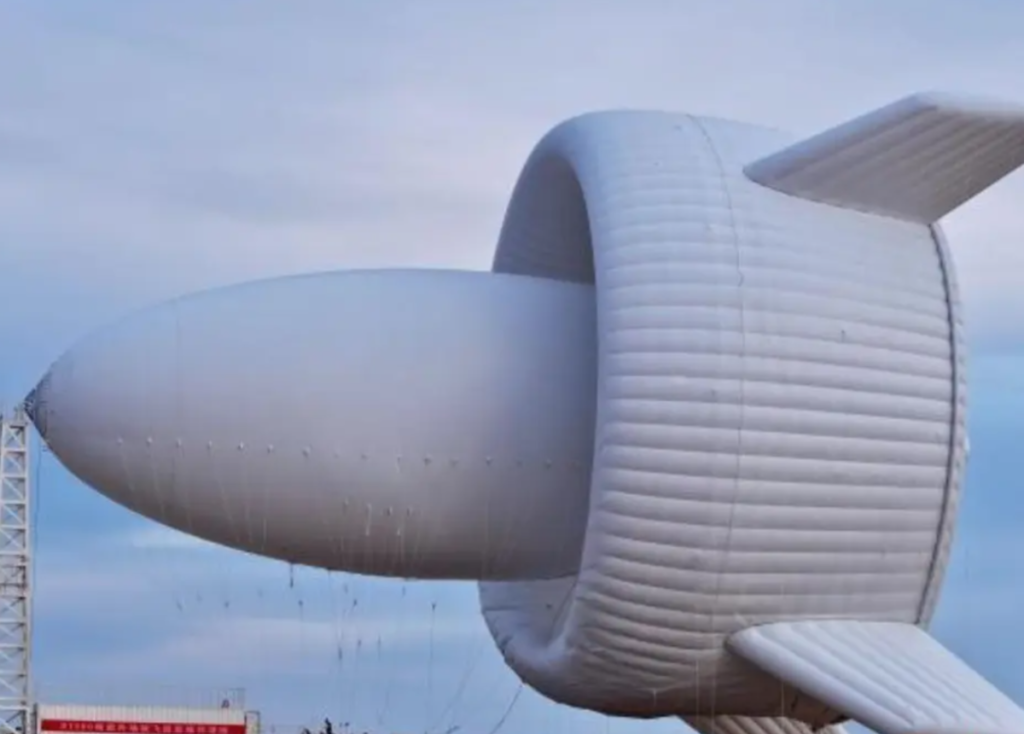
The floating turbine employs a simple engineering solution to a significant challenge in renewable energy: accessing the powerful jet streams that flow between 500 and 10,000 meters above ground level. The S1500’s structure features a main airfoil paired with an annular wing configuration, resulting in a large duct that accommodates twelve turbine-generator sets. Each generator unit produces 100 kilowatts, and the entire system transmits electricity to ground stations through its tethering cable, which serves the dual purpose of keeping the airship in position and conducting power.
This latest development in China’s airborne turbine program demonstrates further engineering progress in the country. Before the S1500’s maiden flight in Hami, Xinjiang, engineers tested smaller prototypes to validate their design concepts. The S500 model, filled with helium, reached an altitude of 500 meters in Hubei Province and generated over 50 kilowatts of power. The subsequent S1000 prototype doubled this output to 100 kilowatts while ascending to 1,000 meters, providing crucial data that informed the design parameters of the larger S1500.
Understanding Airborne Wind Energy
The engineering principles behind floating wind turbines differ substantially from their ground-based counterparts, offering students a fascinating case study in alternative energy system design. While traditional wind turbines rely on tall towers to reach faster winds at higher altitudes, they face fundamental limitations. Tower height increases material costs exponentially due to structural loading requirements, and even the tallest commercial turbines only access winds at about 200 meters above ground level.
Airborne wind energy systems capitalise on a critical atmospheric phenomenon that any engineering student studying fluid dynamics will recognise: wind speed typically increases with altitude due to reduced surface friction effects. The boundary layer effect, which causes wind to slow near the Earth’s surface, diminishes significantly above 500 meters. At these heights, wind becomes not only faster but also more laminar and predictable, reducing the turbulence-induced stress cycles that plague ground-based turbines.
The S1500’s duct configuration represents sophisticated aerodynamic engineering. By arranging twelve smaller turbines within a ducted structure rather than using a single large rotor, engineers addressed several technical challenges simultaneously. The duct accelerates airflow through the Venturi effect, where fluid velocity increases as it passes through a constriction. This acceleration allows smaller turbine blades to extract more energy than they could in open air. Additionally, the ducted design provides better control over tip vortices, those energy-wasting whirlwinds that form at blade tips in conventional turbines.
The tethering system presents unique engineering considerations that students might not initially appreciate. The cable must simultaneously provide mechanical restraint against wind forces that could reach several tons, conduct megawatt-level electrical power with minimal losses, and maintain flexibility to accommodate the airship’s movement. Engineers likely employed a composite cable design featuring high-tensile synthetic fibres for strength, aluminium conductors for power transmission, and protective sheathing to prevent electrical faults.
Material selection for the airship envelope involves balancing multiple constraints. The material must be lightweight yet strong enough to contain helium at pressure, resistant to UV degradation at high altitudes, and capable of maintaining gas retention over extended periods. Modern aerostats typically use laminated fabrics that combine polyester base layers for strength with specialised barrier films to prevent helium permeation.
The power generation system’s modularity-using twelve 100-kilowatt units rather than a single 1.2-megawatt generator-reflects sound engineering judgment. This redundancy ensures that individual component failures don’t ground the entire system. It also simplifies maintenance, as smaller generators can be standardised and replaced more easily than custom large-scale units. From a control perspective, multiple generators allow for load balancing and optimisation based on varying wind conditions across the duct’s cross-section.
The altitude-based approach to wind energy harvesting addresses a fundamental principle that determines available wind power. Wind energy varies with the cube of wind speed, meaning that doubling wind velocity increases available energy by a factor of eight. If engineers can access winds moving three times faster than at ground level, the available energy jumps to 27 times greater. This cubic relationship makes high-altitude wind harvesting particularly attractive from an engineering economics standpoint.
One of the most compelling advantages of the floating turbine design lies in its mobility. Traditional wind farms require extensive site preparation, including road construction for component delivery, concrete foundation work that can take months, and permanent grid connections. The S1500 system, by contrast, can be deployed and relocated within hours, making it suitable for temporary power needs or locations where permanent infrastructure isn’t feasible. Desert regions, remote islands, and mining operations could particularly benefit from this flexibility.
The engineering team has identified disaster relief as a critical application for their airborne platform technology. Following earthquakes, floods, or hurricanes that damage ground-based power infrastructure, the floating turbine could provide emergency electricity for hospitals, communication systems, and water treatment facilities. The system’s rapid deployment capability-launching from a truck bed without requiring cranes or construction equipment-makes it particularly valuable when traditional power restoration might take weeks.
The development of the S1500 aligns with China’s national energy strategy, explicitly addressing the objectives outlined in the country’s 2016-2030 action plan, which aims to advance large-scale high-altitude wind power generation. If the technology proves commercially viable at scale, it could open new areas for renewable energy development, particularly in regions where traditional wind farms face geographical or environmental constraints.
Examining the engineering trajectory from the 50-kilowatt S500 to the current S1500, the scaling approach demonstrates careful risk management in the development of novel technology. Each iteration validated specific subsystems while identifying challenges that needed to be resolved before proceeding to larger scales. This methodical progression, familiar to engineering students studying system development, reduces the likelihood of catastrophic failures that could set back the entire program.
AI Image Generator Prompt
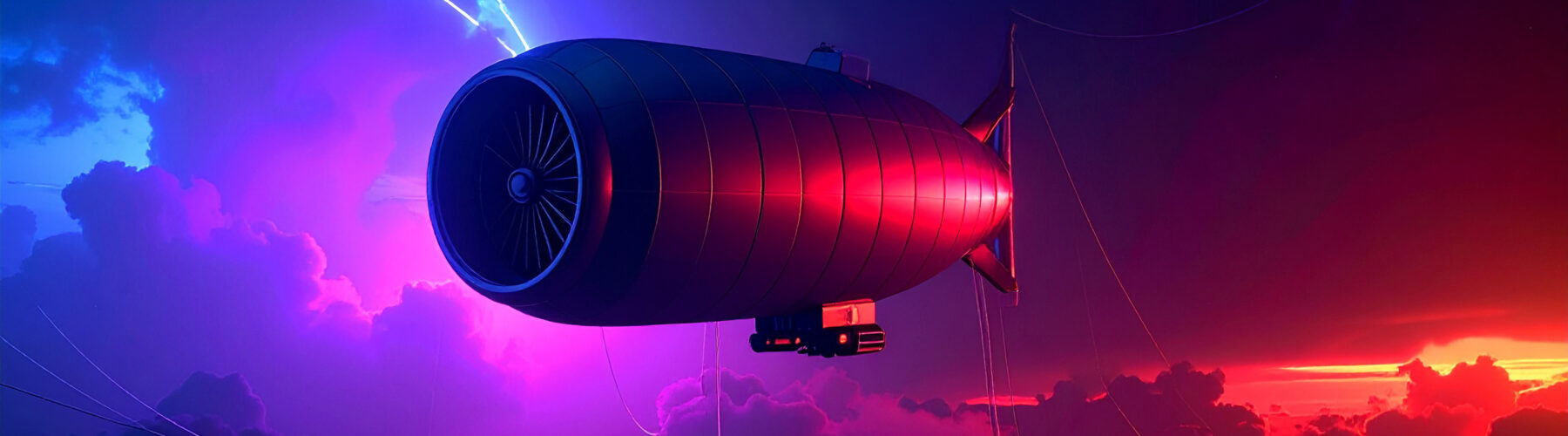
\”A massive 60-meter helium-filled airborne wind turbine floating high in the sky, tethered to the ground by a thick cable. The aircraft has a sleek aerodynamic design with a large circular duct housing multiple wind turbines, resembling a futuristic blimp or airship. Set against dramatic, cloudy skies at high altitude, with visible wind streams and power transmission lines running down the tether cable to ground stations below. Photorealistic style, emphasising the scale and engineering complexity of this revolutionary renewable energy system.\”
TLDR
- Chinese engineers successfully flew the S1500, a 60-meter airborne wind turbine that operates like a tethered blimp
- System harvests high-altitude winds between 500-10,000 meters, where winds are stronger and more consistent
- Reduces material requirements by 40% and electricity costs by 30% compared to traditional wind farms
- Features 12 turbine-generator sets producing 100kW each, totaling 1.2MW capacity
- Eliminates the need for tall towers and concrete foundations through helium-filled airship design
- Rapid deployment capability allows setup within hours, ideal for remote locations and disaster response
- Systematic development progressed from S500 (50kW) to S1000 (100kW) to current S1500 model
- Exploits the cubic relationship between wind speed and energy (3x faster winds = 27x more energy)
- Mobile design enables relocation for temporary power needs in challenging environments