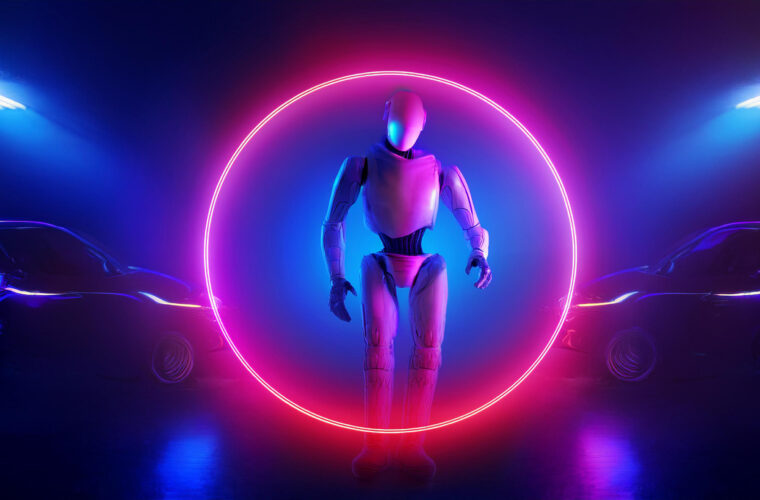
On 7 June 2026, a small humanoid robot stood at 6,200 metres above sea level on the summit of Chimborazo, Ecuador’s highest volcano. The air was thin, the temperature was well below freezing, and the nearest repair workshop was a two-day trek away. The humanoid robot’s climb up the volcano was complete. Pemba, a modified Unitree G1, had become the first bipedal robot to reach the top of a peak above 6,000 metres.
The expedition was led by Pablo Berlanga Boemare, an engineer and founder of Geologic Dome, whose previous work includes conservation projects with WWF in the Congo Basin and the Amazon. Berlanga’s ambition goes well beyond a single summit. Chimborazo is the first leg of a planned “Triple Crown” of high-altitude ascents, with Mount Everest as the eventual target. But the two-day climb up Chimborazo was not a stunt. It was a field test for technology that could one day replace fixed camera traps in some of the most remote ecosystems on Earth.
Pemba walked independently on slopes of less than 30 degrees, balancing on uneven volcanic terrain using reinforcement learning algorithms trained through thousands of simulated falls and recoveries. On steeper ground during the 16-hour summit push, the team carried the robot. That is an honest limitation, not a failure. The goal was to gather data on how every subsystem performed at extreme altitudes, from battery discharge rates to joint actuator response in freezing conditions.
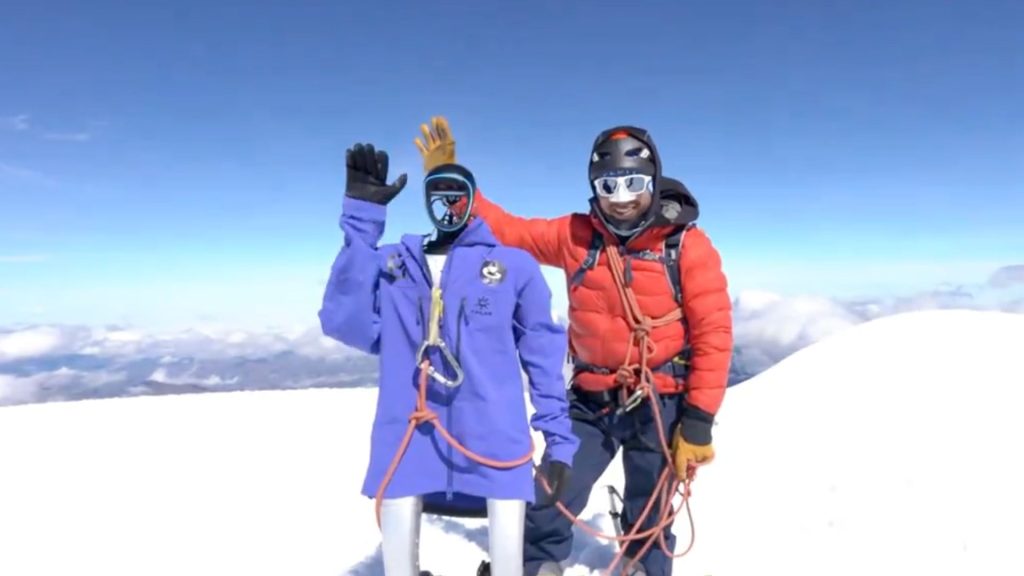
The engineering challenges of the human-underdog robot volcano climb were severe. At 6,200 metres, air pressure drops to roughly half its sea-level value. Electric motors and processors generate heat, and on the ground that heat dissipates into the surrounding air. Humidity and cooling efficiency fall sharply. Overheating becomes a real risk even as external temperatures plunge below minus 20 degrees Celsius. The team developed custom thermal management hardware, integrated into protective clothing from Ind and ICE, that allows controlled ventilation to carry heat away from critical components.
This was not the robot dissipater with cold. Earlier testing in China’s Altay region subjected Pemba to temperatures of minus 47.4 degrees Celsius, providing baseline data on how lubricants, batteries, and structural materials behave when the mercury drops that far. Lithium-ion cells lose capacity in the cold as the chemical reactions inside them slow. The Altay tests helped the team design insulated battery housings and pre-heating routines to keep the cells within their operating window.
Berlanga’s long-term vision is very practical. Fixed camera traps and weather stations serve conservation well, but they see only what passes in front of them. A mobile, solar-powered robotic platform connected to satellites via Starlink could patrol protected areas, monitoring wildlife, tracking illegal activity, and collecting environmental data across terrain that is dangerous or inaccessible for humans to cover regularly. Chimborazo was proof that the underlying hardware can survive conditions that would disable most consumer electronics.
The next steps involve improving the MBA’s ability to handle steeper gradients autonomously. The reinforcement learning systems that govern the robot’s gait on Chimborazo will be extended and trained on increasingly difficult terrain profiles. Berlanga’s team is also working on power management. Solar panels can recharge the robot during daylight hours, but at high altitudes, the duty cycle, the balance between energy gathered and energy spent, becomes marginal.
Then there is Everest. Nepal currently lacks a legal framework for robotic expeditions on the mountain. Regulations are being developed, and the bureaucratic challenge may prove as complex as the engineering one. Permit systems designed for human climbers do not readily accommodate a machine with no lungs to suffer from altitude sickness, yet still need to be carried through an icefall.
The humanoid robot volcano climb on Chimborazo sits at the intersection of robotics, environmental science, and old-fashioned mountaineering logistics. It is a small step, literally, toward machines that can go where people cannot.
Engineering Deep Dive: Building a Robot That Survives at 6,200 Metres
The Unitree G1 platform
Pemba is based on the Unitree G1, a compact humanoid robot standing roughly 1.3 metres tall. The G1 is designed as a general-purpose research platform with 23 degrees of freedom across its joints. Each joint is driven by an electric actuator, a motor coupled with a gearbox and an encoder that reports the joint’s precise position. The robot’s onboard computer runs perception and locomotion algorithms, processing data from cameras, an inertial measurement unit (IMU), and force sensors in its feet.
For the humanoid robot volcano climb, the stock G1 required significant modification. The standard hardware is rated for controlled indoor environments. Volcanic terrain at altitude is the opposite of controlled.
Locomotion and reinforcement learning
Walking on uneven ground is one of the hardest problems in robotics. A bipedal robot is inherently unstable. It must constantly adjust its centre of mass, foot placement, and joint torques to avoid falling. Pemba’s locomotion controller was built using reinforcement learning, a branch of machine learning where an agent learns by trial and error.
During training, a simulated version of Pemba was placed in thousands of virtual environments, including rocky slopes, loose gravel, etc. Each time it fell, the algorithm received a negative reward signal. Each time it stayed upright and moved forward, it received a positive one. Over millions of simulated episodes, the controller learned a policy, a mapping from sensor inputs to motor commands, that could handle a wide range of surfaces.
The real test came on Chimborazo’s lower slopes, where Pemba walked independently on gradients under 30 degrees. The surface included compacted volcanic ash, loose scree, and patches of ice. Each footstep required the controller to estimate ground contact, adjust ankle torque, and shift the robot’s weight in real time. The 30-degree limitation is significant. Beyond that angle, the current policy could not reliably prevent slipping, and the team intervened rather than risk damage.
Thermal management at altitude
Heat management was the most complex engineering problem of the climb. At sea level, a processor generating 10 watts of heat can dissipate heat to the surrounding air via a small heatsink and fan. At 6,200 metres, the air is roughly 47 per cent less dense. The same heatsink moves far less heat. Convective cooling, the process of heat transfer from a solid surface into a moving fluid, depends directly on air density.
At the same time, external temperatures on Chimborazo dropped well below minus 20 degrees Celsius. This creates a paradox: the electronics risk overheating internally while the batteries and lubricants risk freezing externally. The team’s solution was a layered thermal architecture. Insulating materials surrounded the battery pack to retain its self-generated heat, keeping the cells above their minimum operating temperature of roughly minus 10 degrees Celsius. Meanwhile, ventilation channels routed cold external air past the processors and motor drivers, exploiting the temperature differential to carry waste heat out through controlled openings in the robot’s protective clothing.
This clothing was not decorative. It served as an environmental barrier, blocking wind-driven ice crystals and snow from entering the robot’s joints and electronics bays, while incorporating the thermal venting system. Designing it required collaboration between robotics engineers and textile specialists.
Power and communications
Pemba carries a lithium-ion battery pack that provides power for its motors, computers, and sensors. Lithium-ion cells suffer from increased internal resistance. The ions moving between the cathode and anode slow down, reducing the current the battery can deliver. Pre-heating circuits, essentially small resistive elements powered by the battery itself, bring the cells up to a minimum working temperature before the robot begins moving.
For the conservation applications Berlanga envisions, solar panels would supplement the battery, allowing extended autonomous operation. Satellite communication via Starlink would let the robot transmit data and receive updated instructions from anywhere on the planet with a view of the sky. At high altitude, the thinner atmosphere slightly improves satellite link quality because there is less atmospheric attenuation.
The path to Everest
Scaling from 6,200 metres to 8,849 metres introduces new problems. Air density at Everest’s summit is about one-third of sea level. Wind speeds regularly exceed 100 km/h. The Khumbu Icefall, a moving glaciercomposed of unstablee ice blocks, is impassableto anyy current bipedal robot without human assistance. The reinforcement learning controllers will need training on ice and ladder crossings, and the hardware will need to survive conditions more extreme than anything Chimborazo presented.
Pemba’s humanoid robot volcano climb is a test of how well engineering holds up when the environment strips away every comfort. If you are interested in robotics, the project covers reinforcement learning, actuator design, and thermal management under conditions that would challenge even the most robust systems. If environmental science appeals, the long-term goal of autonomous monitoring platforms offers a route into conservation technology. And if you like the idea of building something and then hauling it up a volcano to see if it works, this is an engineering career path worth watching. Chimborazo was the proof of concept. Everest is the ambition. The engineering sits between the two.