
Careers guides
Engineering salaries in the UK, from apprentice to chartered engineer
The guide is aimed at students considering a career in engineering and at parents and carers assisting them with their decision. It explains the…
Jobs, Pay, Subjects and Routes In
Updated October 2026. All links and schemes verified against official sources.
The short answer
Chemical engineers design and run the processes that turn raw materials into medicines, fuels, food, plastics and clean water. In the UK you can get in through a three or four year accredited degree, a five year degree apprenticeship, or a technician route that builds up from a T Level or foundation apprenticeship. Maths and chemistry matter most at school. Early career pay is around £40,000, and chartered engineers earn far more.
Key points
Chemical engineers turn raw materials into useful products, such as plastics, medicines and fuels, and design the plants and processes that make them safely and affordably. They are the people who work out how to take something that works in a flask and make it work in a tank the size of a house.
According to Prospects, typical work includes designing, installing, commissioning and troubleshooting production plants, building process simulation models, scaling processes up or down, and weighing safety risks to people, the environment and the product at every stage.[6] As of October 2026 the same profile points to newer areas such as nanotechnology, fuel cells and biomedical engineering.[6]
Below is a composite Tuesday, built from the Prospects list of responsibilities rather than from one named person.
At 10am a process engineer at a pharmaceutical site is standing beside a reactor with an operator, checking why a batch ran 20 minutes slow. The data from overnight is on a tablet. Her hypothesis is a fouled heat exchanger. By 11 she is back at her desk running a simulation to test it, then writing a short safety review for the fix. After lunch she joins a call with the control engineers about a new sensor. Nobody wears a lab coat all day, and nobody sits at a desk all day either.
Hours are typically 9am to 5pm, though processing and manufacturing roles can involve shifts, evenings and weekends.[6]
Pay depends heavily on stage, sector and whether you are chartered. The table uses the IChemE Salary Survey (Q4 2025, 2,503 members) unless stated.[1]
| Career stage | Median salary | Source |
|---|---|---|
| Intern or undergraduate placement | £25,400 | IChemE, Q4 2025 |
| Apprentice | £28,570 | IChemE, Q4 2025 |
| Graduate in training | £34,000 | IChemE, Q4 2025 |
| Engineering technician | £36,373 | IChemE, Q4 2025 |
| Early career | £40,000 | IChemE, Q4 2025 |
| Engineer | £47,700 | IChemE, Q4 2025 |
| Senior engineer | £74,000 | IChemE, Q4 2025 |
| Supervisor or team lead | £77,945 | IChemE, Q4 2025 |
| Senior manager or director | £110,000 | IChemE, Q4 2025 |
Prospects gives a wider guide of £28,000 to £34,000 for chemical engineering graduates, with mid-career pay up to £65,000.[6] Oil, finance, insurance and risk tend to pay more, and London and the South East pay most. IChemE found contracting and oil and gas had the highest median salaries.[1]
The big jump comes with chartership. Chartered members have a median of £93,000 against £49,950 for non-chartered members. At ages 30 to 34 the gap is £72,000 against £52,000.[1] These are member medians, so people who join a professional body probably skew higher than the whole workforce. Treat them as a guide, not a promise. For other disciplines see our engineering salaries guide.
Most courses want Maths plus Chemistry or another science. Entry varies by university, so check the course page before you pick A-levels.
| Level | Essential | Helpful |
|---|---|---|
| GCSE | Maths, English, a science (the degree apprenticeship standard asks for five GCSEs including these)[2] | Combined or triple science, Computer Science |
| A-level or equivalent | Maths, plus Chemistry or another science (Bradford asks for Maths at grade C plus another science)[4] | Chemistry, Physics, Further Maths |
| Scottish Highers | Higher Maths and Higher Chemistry, four Highers in total (Strathclyde)[7] | Advanced Higher Chemistry |
| T Level or BTEC | Merit or higher in a science or engineering T Level, or DMM in a BTEC Extended Diploma with a further maths unit (Bradford)[8] | Maths beyond the core |
UCAS lists typical offers of AAA at A-level, AAABB at Highers and DDD at BTEC across chemical engineering degrees, with 20 courses listed for 2027 entry at the time of checking.[3] Our guides to chemistry and maths A-levels explain how each subject is used on the job.
There is no single right route. The routes below apply to England. Scotland, Wales and Northern Ireland have their own apprenticeship systems.
| Route | Typical length | What it costs or pays | Where it leads |
|---|---|---|---|
| BEng degree | 3 years, or 4 with a placement year | Fees up to £9,790 a year in England for 2026/27, covered by a loan | Graduate roles, and a base for chartership if IChemE-accredited |
| MEng degree | 4 years (5 in Scotland) | As above, for the longer course | The route Prospects names for chartership |
| Degree apprenticeship (Level 6) | 60 months, plus assessment | You are employed and paid, with no tuition fees. Apprentice minimum wage is £8 an hour for under 19s and first years, and employers often pay more[9] | A degree and Incorporated Engineer recognition |
| T Level in engineering, manufacturing, processing and control | Usually 2 years, check with your college | Study, with a placement of at least 315 hours (45 days)[10] | University, an apprenticeship, or a technician job |
| Foundation apprenticeship (Level 2) | About 8 months to gateway | Paid employment for ages 16 to 21, up to £4,500 funding[11] | A Level 2 or 3 apprenticeship or a job |
Three notes on the table. First, the degree apprenticeship is ST0473, Science industry process and plant engineer, with version 1.1 updated on 10 December 2025. It asks for five GCSEs including English, Maths and a science, plus Level 3 qualifications with enough UCAS points for higher education. Second, successful apprentices can apply for Incorporated Engineer status, whereas Prospects says Chartered status needs Masters-level study. It is worth asking employers how they support that next step. Third, the foundation apprenticeship is a general engineering and manufacturing programme, not a chemical one, so treat it as a first step.
You can search live vacancies on Find an apprenticeship. For the pros and cons side by side, read Engineering degrees vs degree-level apprenticeships, and for how to land one, A beginner’s guide to finding an engineering apprenticeship.
Prospects lists the main sectors as biotechnology, chemicals, energy, food and drink, materials, oil and gas, pharmaceuticals, process plants and water. Names you will see on graduate boards include:
Engineering consultancies, plant contractors and water companies also hire. Always check each employer’s own page for current schemes and closing dates.
The Institution of Chemical Engineers (IChemE) accredits degrees, runs company training schemes and awards chartered membership. Its accredited degree finder lists 35 UK university entries.[13] The Engineering Council is the UK regulator that registers Engineering Technicians (EngTech), Incorporated Engineers (IEng) and Chartered Engineers (CEng) through professional bodies like IChemE.[14]
Year 9 to 11 (ages 13 to 16). Keep Maths and Science strong, and pick triple science if offered. Read our guide to engineering disciplines to see where chemical engineering sits.
Year 12 (age 16 to 17). Take Maths and Chemistry if you can. Look at the IChemE degree finder and at employers’ apprenticeship pages in the autumn, because many close early.
Year 13 (age 17 to 18). Apply through UCAS for 2027 entry and directly to employers for apprenticeships. You can do both at once.
Students with a T Level or BTEC. Check the course page for each university, as some accept them with set grades and units.
Not always, but it helps. Some courses ask for Maths plus any science, and Strathclyde requires Higher Chemistry. Check each course page.
No. Chemists discover and study reactions. Chemical engineers design the large-scale processes and plants that make those reactions work reliably, safely and at a sensible cost.
Prospects says chartership needs Masters-level learning, and the degree apprenticeship aligns with Incorporated Engineer status. Later study can add the next step, so ask employers what support they give.
IChemE’s survey gives a median of £28,570 for apprentices. The legal minimum is £8 an hour for under 19s and first years, so pay varies by employer.
Many roles work on hydrogen, fuel cells, recycling and water, according to Prospects and Johnson Matthey. Others sit in oil and gas, so choose employers that match what you care about.
Feedback or corrections? Email [email protected].
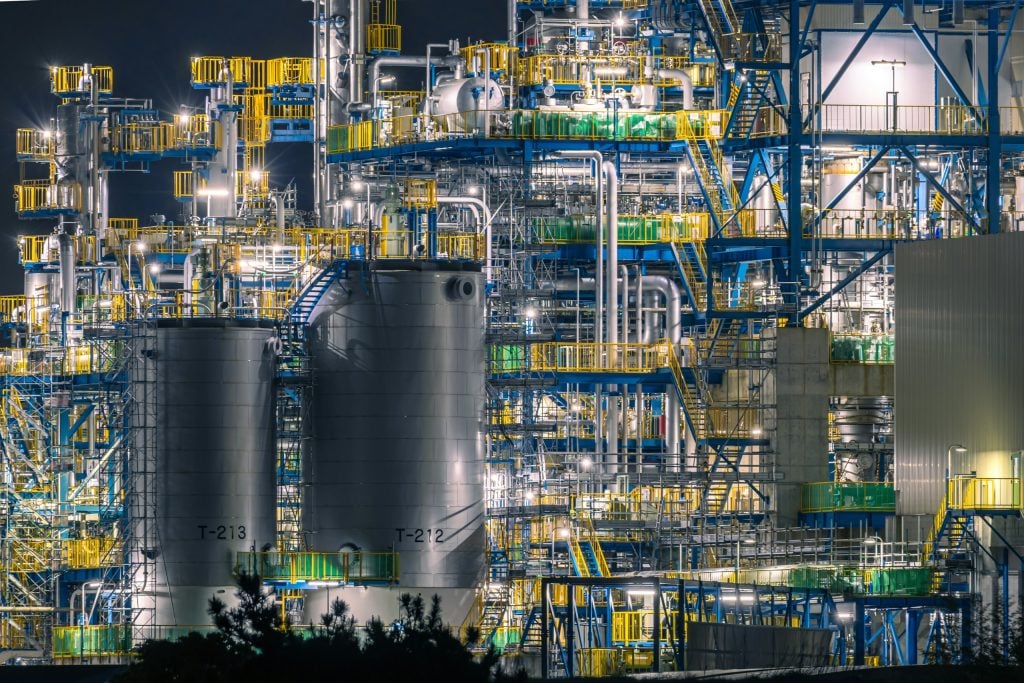
Image: Jakub Pabis, Unsplash
Checked 24 October 2026
Science industry process and plant engineer (degree), ST0473
Checked 24 October 2026
Checked 24 October 2026
BBC to include A level Maths minimum grade C plus another science subject.
Checked 24 October 2026
Checked 24 October 2026
Checked 24 October 2026
How to choose your subjects at school
Chemical Engineering also recommends Advanced Higher Chemistry.
Checked 24 October 2026
Chemical Engineering BEng: T Level and BTEC entry
Checked 24 October 2026
Checked 24 October 2026
T Level in engineering, manufacturing, processing and control
Checked 24 October 2026
Engineering and manufacturing foundation apprenticeship, FA0006
Checked 24 October 2026
A sector guide to UK chemical engineering
Checked 24 October 2026
Checked 24 October 2026
Checked 24 October 2026
Last checked 27 October 2026 by the Born to Engineer editorial team
If you have any feedback, spot any errors or have suggestion on how we can improve our resources please let us know at [email protected]
Careers guides
The guide is aimed at students considering a career in engineering and at parents and carers assisting them with their decision. It explains the…

Careers guides
This guide is for students planning their next year, parents and carers helping them, and teachers and careers leaders building a calendar. It lists…
For teachersCareers guides
The guide is aimed at career leaders, teachers and anyone planning careers education in a secondary school or college in England. It sets out…

Guide
For the 2026 entry, the UCAS personal statement has been altered and this change is more significant than many people think. Rather than writing…
Energy & Environment

Aerospace, Defence & Marine
Automotive & Transport