Construction & Infrastructure
HKU's super steel for green hydrogen resists corrosion up to 1700 mV using dual passivation, potentially replacing titanium and slashing electrolyser costs by 40x.
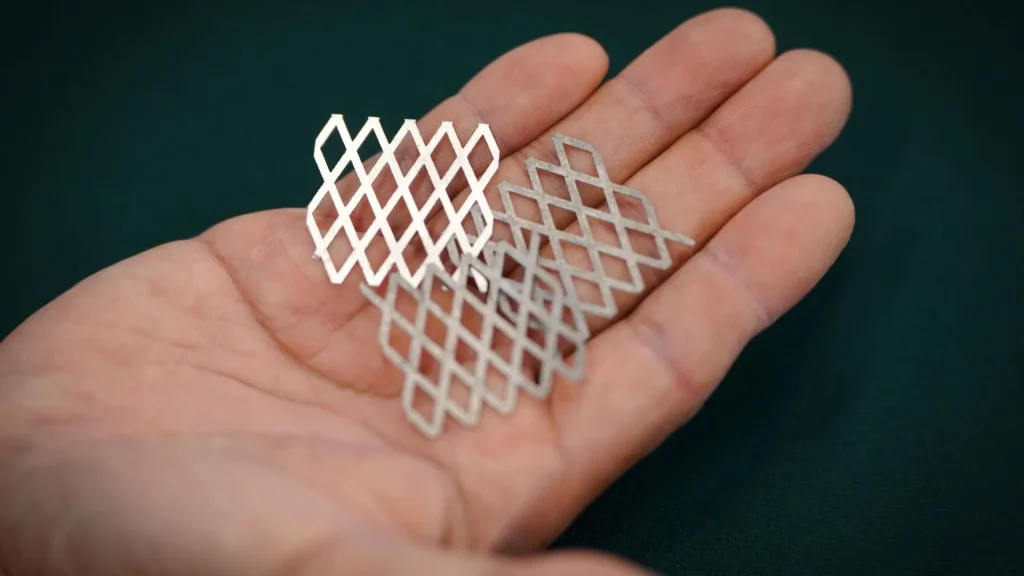
Manganese has a bad reputation in metallurgy. Add it to stainless steel and, conventional wisdom holds, you weaken the very corrosion resistance that makes stainless steel worth using. A team at the University of Hong Kong has spent six years proving that wisdom wrong. Their new alloy, SS-H2, is a super steel for green hydrogen production that withstands corrosive potentials up to 1,700 millivolts, roughly 70% higher than the ceiling for conventional stainless steels. The secret, paradoxically, is manganese.
The work, led by Prof Mingxin Huang and published in Materials Today, could reshape the economics of hydrogen electrolysis. In a proton exchange membrane (PEM) electrolyser, the structural components that hold the cell stack together must survive an aggressively oxidising environment. Today, that means using titanium, a metal that is strong and corrosion-resistant but punishingly expensive. For a 10-megawatt PEM electrolysis system, structural components account for roughly 53% of the total cost, around HK$17.8 million. If SS-H2 can do the same job, the figure drops by about a factor of 40.
The mechanism behind SS-H2’s performance is what the team calls sequential dual-passivation. All stainless steels rely on a thin, self-healing layer of chromium oxide that forms on the surface and blocks further corrosion. This passive film works well up to about 1,000 mV, beyond which it breaks down and the steel corrodes rapidly. In SS-H2, a second protective layer forms on top of the chromium oxide when the potential exceeds approximately 720 mV. This second layer is based on manganese oxide compounds.
The timing is everything. As the chromium oxide layer begins to break down at higher potentials, the manganese-based layer takes over, forming a composite barrier that holds firm up to 1,700 mV. It is as though the alloy has a backup goalkeeper who steps in precisely when the first one is beaten. The two layers work in sequence rather than in competition, which is why the team’s choice of the word “sequential” is deliberate and precise.
This runs directly counter to decades of metallurgical teaching. Manganese inclusions in conventional stainless steels create weak points where pitting corrosion initiates. But Huang’s team found that by carefully controlling the alloy composition and processing, they could ensure manganese contributed to surface protection rather than undermining it. The distinction lies in how the manganese is distributed within the steel’s microstructure and how it interacts with the electrochemical environment of a PEM cell.
One of the more striking aspects of this work is how far it has already progressed beyond the lab bench. The team reports that tonnes of SS-H2 wire have been produced, suggesting the alloy is compatible with existing steelmaking and wire-drawing processes. International patents have been filed, indicating commercial intent. For a materials science breakthrough, moving from discovery to tonnage production in six years is fast.
The green hydrogen industry needs this kind of speed. Governments and energy companies worldwide have committed billions to electrolyser capacity, but the cost per kilowatt of installed electrolysis remains stubbornly high. Materials costs are a major driver. Titanium is not just expensive to buy; it is difficult to machine, weld, and form into the complex shapes that electrolyser stacks require. A stainless steel alternative that can be processed with standard industrial equipment would simplify manufacturing and open the supply chain to a much wider range of fabricators.
There are caveats. SS-H2 has been demonstrated under laboratory electrochemical conditions, and real electrolysers present additional challenges: thermal cycling, mechanical stress, and long-duration exposure to high-purity water and dissolved gases. The alloy will need to prove itself in full-scale cell stacks operating for thousands of hours before electrolyser manufacturers commit to redesigning their products around it. But the fundamental corrosion data is compelling, and the fact that production-scale wire already exists removes one of the usual objections to laboratory materials breakthroughs.
Engineering deep dive
To understand why SS-H2 is unusual, it helps to know what passivation means at the atomic scale. When chromium-bearing steel is exposed to an oxidising environment, chromium atoms at the surface react with oxygen to form a dense layer of chromium(III) oxide, Cr₂O₃. This layer is only a few nanometres thick but is remarkably effective at blocking the diffusion of metal ions outward and corrosive species inward. The film is self-healing: if scratched, fresh chromium oxidises to repair the gap.
The problem is that this film has a stability window defined by pH and electrical potential. In the Pourbaix diagram for chromium, the passive region extends up to roughly 1,000 mV in acidic conditions typical of a PEM electrolyser. Above that potential, chromium oxide transitions to soluble chromium(VI) species, and the protective film dissolves. This is the transpassive region, where conventional stainless steels fail.
Manganese in standard stainless steels typically forms manganese sulphide (MnS) inclusions. These inclusions are electrochemically active and dissolve preferentially, creating pits that propagate into the bulk metal. This is why metallurgists have historically minimised manganese content in corrosion-resistant alloys. The HKU team's insight was that manganese need not form sulphide inclusions. By controlling the sulphur content and the thermomechanical processing route, they ensured that manganese remained in solid solution within the steel's austenitic matrix.
In this dissolved state, manganese becomes available to participate in surface reactions at higher potentials. When the chromium oxide layer begins to break down above 720 mV, manganese atoms at the surface oxidise, forming a manganese-rich oxide layer. The team's characterisation work, using X-ray photoelectron spectroscopy and transmission electron microscopy, showed this second layer sitting on top of the chromium oxide rather than replacing it. The composite film is both chemically stable and physically robust at potentials up to 1,700 mV.
The electrochemical performance translates directly to engineering value. In a PEM electrolyser, the bipolar plates and structural frames sit at potentials that can exceed 1,200 mV during normal operation and spike higher during transient conditions. Titanium handles these potentials easily because its own passive film (titanium dioxide) is stable to much higher voltages. SS-H2's dual-passivation mechanism brings stainless steel into the same operating envelope, at a fraction of the material and fabrication costs.
For engineers designing electrolysers, the implications go beyond simple material substitution. Stainless steel is easier to weld than titanium, which requires inert gas shielding and careful heat management. It is easier to stamp, press, and machine into the thin, complex bipolar plate geometries that PEM cells demand. And the global supply chain for stainless steel is orders of magnitude larger than for titanium, which means scaling electrolyser production from megawatts to gigawatts becomes more feasible.
Links to the curriculum: A level
Six years is a long time to spend proving that a textbook is wrong. But if SS-H2 performs in real electrolysers the way it has performed in the lab, the payoff will be measured not in academic citations but in the cost of clean hydrogen. That cost, more than any single policy or subsidy, will determine how fast the world can decarbonise the sectors that electricity alone cannot reach.
Credit via sciencedaily.com
Construction & Infrastructure
Energy & EnvironmentBreakthroughs
Energy & EnvironmentInnovation