Rolls-Royce SMR Nuclear Reactor Clears Key UK Regulatory Hurdle
The Rolls-Royce SMR nuclear reactor has cleared a key UK regulatory hurdle, bringing factory-built modular nuclear power closer to construction at Wylfa.

Key points
- The UK government has granted regulatory justification for the Rolls-Royce SMR, the first small modular reactor to receive this approval in the UK
- The 470 MWe pressurised water reactor fits on a 10-acre site and is designed for factory manufacture and rapid on-site assembly
- Construction at Wylfa in North Wales could begin after the Generic Design Assessment completes in 2026
- Each reactor could power approximately one million homes for at least 60 years
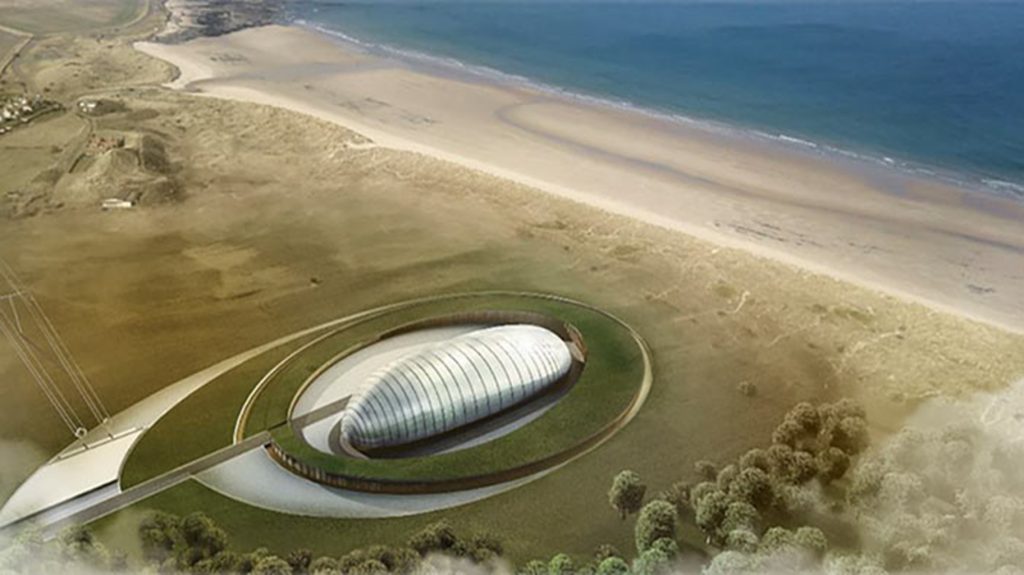
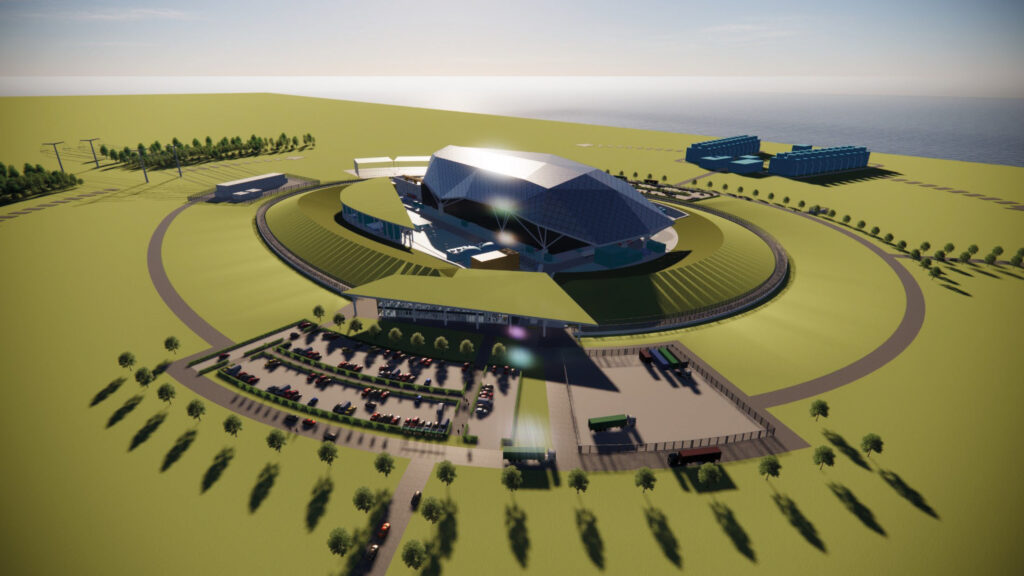
The traditional model for building a nuclear power station goes something like this: choose a site, pour concrete for a decade, watch the budget triple, and hope the technology is not obsolete by the time the first electron reaches the grid. Rolls-Royce SMR is betting on a different approach. Its small modular reactor, which cleared a key UK regulatory hurdle in March 2026, is designed to be manufactured in a factory and assembled on site in roughly four years. The components travel by road. The finished plant fits on ten acres, an area about the size of two football pitches.
The regulatory milestone is called nuclear justification, and it is the first time a small modular reactor has received this approval in the UK. The decision, announced by the government in March 2026, confirms that the benefits of the Rolls-Royce SMR nuclear design, principally low-carbon electricity at scale, outweigh its potential health and environmental risks. It is not the final green light for construction. The Generic Design Assessment, a separate technical review by the Office for Nuclear Regulation, is expected to complete later in 2026. But justification removes one of the larger political and regulatory obstacles, as reported by World Nuclear News.
Modular design for a modular grid
The Rolls-Royce SMR is a pressurised water reactor (PWR) producing 470 megawatts of electrical power, enough to supply approximately one million homes. That makes it smaller than the 3,200 MW Hinkley Point C currently under construction in Somerset, but large enough to serve a city the size of Sheffield. The reactor uses uranium dioxide fuel enriched with uranium-235, moderated and cooled by light water, the same proven technology that has powered naval vessels and commercial reactors for decades. The design life is at least 60 years.
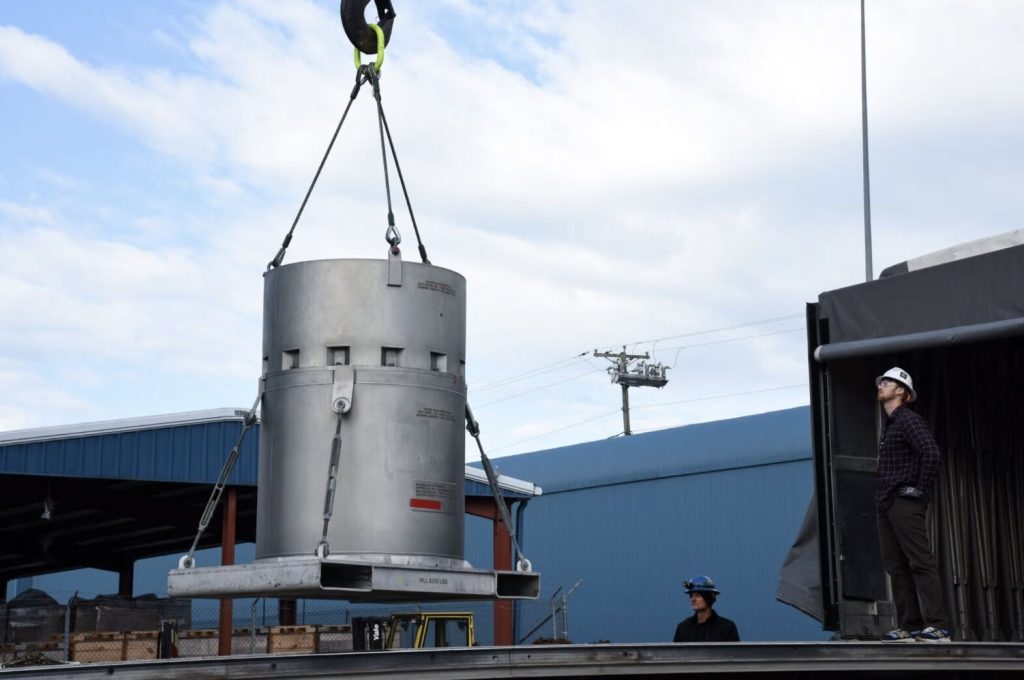
What makes it different is the manufacturing philosophy. Conventional nuclear plants are largely built in situ, with components fabricated on site from raw materials. The SMR reverses this. Major modules, the reactor pressure vessel, steam generators, and containment structures, are manufactured in factory conditions, transported to site, and assembled. Rolls-Royce has said the reactor itself could be constructed in approximately 500 days, with total project duration of about four years including site preparation.
The first proposed site is Wylfa, on the northern tip of Anglesey in North Wales, a location with existing nuclear infrastructure from the decommissioned Wylfa Magnox power station. The site was identified as suitable for multiple SMR units, and the coastal position provides access to cooling water. Other candidate sites include Trawsfynydd, Sellafield, and Oldbury.
Supply chain agreements have been progressing in parallel with the regulatory process. In March 2026, Rolls-Royce SMR signed a partnership with Swedish nuclear technology firm Studsvik AB to support reactor fuelling and maintenance. Earlier, Japanese firm Yokogawa Electric was contracted to provide control systems, and Canadian nuclear manufacturer BWXT signed a collaboration agreement for reactor vessel components. The pattern is clear: Rolls-Royce is building a global supply chain that mirrors the automotive industry’s model of specialist suppliers feeding a final assembly operation.
Engineering deep dive
Inside the Rolls-Royce SMR nuclear reactor
A pressurised water reactor works by sustaining a controlled nuclear fission chain reaction. Uranium-235 nuclei absorb slow (thermal) neutrons and split, releasing energy and additional neutrons that go on to cause further fissions. The energy appears as heat in the fuel rods, which is transferred to water circulating under high pressure through the reactor core. This primary circuit water, kept at roughly 155 bar to prevent it from boiling, passes through steam generators where it heats a secondary water circuit to produce steam. The steam drives a turbine connected to a generator. The principle is identical to burning coal or gas to make steam, except the heat source is nuclear rather than chemical.
Students studying A-level Physics will encounter fission in the nuclear physics module. The key relationship is Einstein's mass-energy equivalence, E = mc². The mass defect of a uranium-235 fission event, roughly 0.1 per cent of the original nuclear mass, releases about 200 MeV per fission. That is roughly fifty million times more energy per kilogram than burning coal, which is why nuclear fuel is so energy-dense and why a reactor the size of two football pitches can match the output of a large gas-fired plant.
The Rolls-Royce SMR uses a close-coupled three-loop configuration. "Close-coupled" means the steam generators are positioned physically close to the reactor vessel, reducing the length of primary circuit pipework and the volume of high-pressure water. Shorter pipes mean fewer potential leak points and a more compact overall footprint. Three loops provide redundancy: if one steam generator requires maintenance, the reactor can continue operating at reduced power on the remaining two.
The modular construction approach addresses one of nuclear energy's persistent problems: cost overruns driven by on-site complexity. Factory manufacturing offers controlled conditions, repeatable processes, and the ability to apply quality assurance techniques borrowed from aerospace and automotive production. Welding, for example, can be performed by automated systems and inspected using radiography and ultrasonic testing before the module leaves the factory. On a conventional site, the same weld might be performed in the open air, subject to weather, access constraints, and the logistical challenges of a busy construction site.
The 500-day reactor construction target assumes that site preparation, including foundations, cooling water infrastructure, and grid connection, proceeds in parallel with factory manufacturing. This is a critical path dependency: if the site is not ready when the modules arrive, they sit in storage. If the factory falls behind, the site team has nothing to assemble. The scheduling discipline required is closer to shipbuilding or aircraft assembly than to traditional civil construction.
Safety architecture in any PWR relies on multiple barriers between the radioactive fuel and the environment: the ceramic fuel pellet itself, the zirconium alloy fuel cladding, the reactor pressure vessel, the containment building, and the site boundary. The Rolls-Royce SMR incorporates passive safety features, meaning that in the event of a loss of coolant or a failure of active systems, natural processes such as gravity-driven water injection and natural convection cooling can maintain the reactor in a safe state without operator intervention or external power. This is a design philosophy that emerged from lessons learned at Three Mile Island and Fukushima, where active safety systems either failed or were overwhelmed.
The cooling system uses a modular forced-draft cooling tower rather than the large natural-draft hyperboloid towers associated with older stations. Forced-draft towers are shorter and can be factory-built, consistent with the modular philosophy. The trade-off is that they require fans and consume some of the plant's electrical output, but the overall efficiency penalty is small.
For students interested in energy engineering, the SMR model raises an interesting design question: is it better to build one very large reactor or several smaller ones? Large reactors benefit from economies of scale, lower cost per megawatt. Smaller reactors benefit from economies of replication, lower cost through learning and standardisation. The answer probably depends on how many units are built. Rolls-Royce's business case assumes a fleet, not a one-off, and the economics of the fifth or tenth reactor should look very different from the first.
Links to the curriculum: A level, GCSE
The UK government has committed to nuclear power as part of its energy strategy, citing the need for firm, low-carbon generation that does not depend on whether the wind is blowing. Whether the Rolls-Royce SMR can deliver on the promise of factory-built, on-time, on-budget nuclear remains unproven at scale. The regulatory pathway continues, and the first concrete at Wylfa is still some way off. But the approval of nuclear justification removes a barrier that has stopped other reactor designs in their tracks, and the engineering concept, a power station assembled like a machine rather than constructed like a cathedral, is closer to reality than it has ever been.
Credit via world-nuclear-news.org
Share
Related stories
All Energy & Environment
Energy & Environment
Rolls-Royce plans to roll out mini nuclear reactors by 2029
Energy & EnvironmentBreakthroughs