Energy & EnvironmentBreakthroughs
Pacific Fusion has completed four successful pulsed power fusion tests at Sandia's Z facility, demonstrating a target design that could unlock a third path to commercial fusion energy.
Every so often a fusion energy announcement appears in the headlines, and every so often the reservations follow. Although the physics is sound the engineering is not up to the task. The experiment has worked once but cannot be reproduced. The results seem promising yet commercial power is still decades away. The news from Pacific Fusion in February 2026 is different in character. The company has carried out four successful tests at the Sandia National Laboratories Z Pulsed Power Facility[1], showing a fusion target design which could be the missing element in an approach that most of the industry has been ignoring.
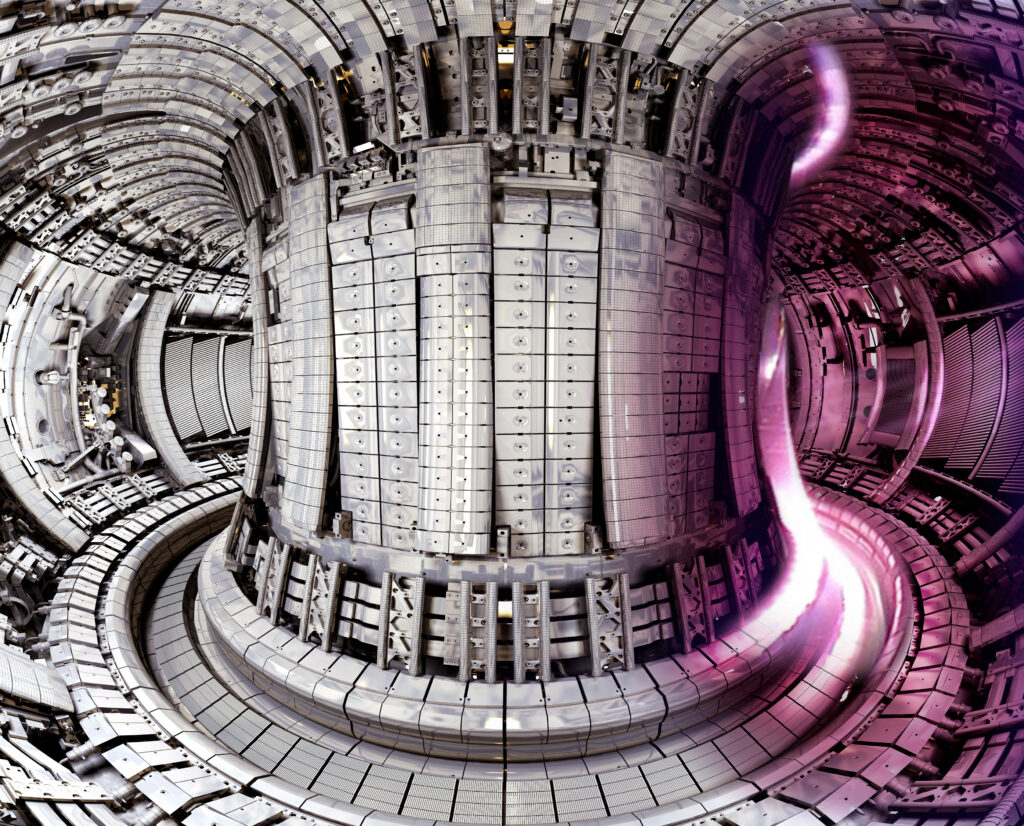
Fusion research may be divided into two categories. The approach based on magnetic confinement, exemplified by the ITER project in France, makes use of strong magnets to keep a plasma at millions of degrees for a number of seconds. Inertial confinement, as is the case at the National Ignition Facility in the United States, involves firing lasers at a small fuel pellet to compress it until fusion starts. Fusion reactions have been achieved in both cases, but in neither instance has there been a net energy gain from the wall plug.
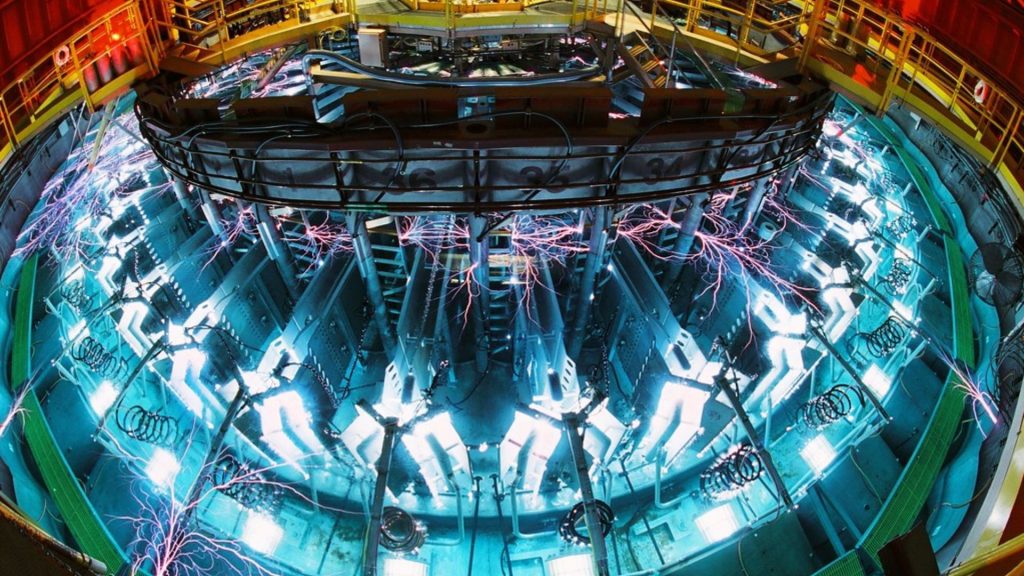
Pulsed power fusion follows another route. Rather than relying on lasers or magnets, it employs a huge surge of electric current to compress the fuel target. The Z machine at Sandia is capable of releasing a current of 22 million amperes in about 120 nanoseconds[2], generating magnetic pressures strong enough to cause a small target to collapse at speeds approaching hundreds of kilometres per second. This leads to intense compression and heating, which are precisely the conditions required for hydrogen isotopes to fuse.
The breakthrough of Pacific Fusion does not lie in the Z machine itself, which has been in operation since the 1990s, but in the target at its centre. The company has created a fuel target about the size of a pencil eraser, made of a thin plastic cylinder covered with aluminium[3]; within it, the deuterium-tritium fuel is arranged so that the magnetic fields generated during the implosion pre-magnetise the fuel before it is compressed.
Pre-magnetisation is the key insight. In a conventional pulsed-power implosion, the magnetic fields generated by the current pulse can leak through the target, reducing the energy delivered to the fuel. In Pacific Fusion’s design, Keith LeChien, the company’s CTO[4], refers to the magnetic fields as “leaky”. Instead of attempting to contain the fields perfectly, the shape of the target allows the fields to pass through the fuel in a controlled manner, thereby producing a seed magnetic field that is amplified during compression.
Pacific Fusion conducted four tests at the Z facility under a Cooperative Research and Development Agreement with Sandia.[5][6] In each of the tests, the pulsed-power fusion target performed as predicted, with magnetic sensors in each target showing the field entering it as the simulations predicted.[7]
It is just as important to have good consistency as it is to have good performance. Fusion experiments are well known for being fickle. Even minor variations in how the target is fabricated, in timing, or in the delivery of energy can lead to quite different results. The fact that there have been four successful shots out of four attempts indicates that Pacific Fusion has a manufacturing process that is robust enough to produce reliable targets and a theoretical model that is accurate enough to predict their behaviour.
The Z machine can fire only once a day, and each time it fires, it destroys the target and a large amount of the surrounding hardware. Although this firing rate is acceptable for a research programme, it is not suitable for a power plant. According to Pacific Fusion’s roadmap, a specially designed facility should be established in New Mexico that fires targets repeatedly to generate heat to drive a conventional steam turbine.
The company’s aim is to achieve a net gain in facilities by 2030.[8] This means the total fusion energy produced in a single experiment exceeds the total electrical energy supplied to the device. This represents a different and more rigorous criterion than the “scientific breakeven” obtained by NIF in 2022[9], since that latter figure accounted only for the energy carried by the laser beams, not the substantial energy consumed by the laser systems themselves.
To achieve a gain at the facility, it will be necessary to make improvements in all three areas: the driver, the pulsed power machine, and the target. Pacific Fusion is currently designing a next-generation driver that will deliver higher currents more efficiently than the Z machine, and the target design will continue to evolve with more refined fuel arrangements and better containment of the pre-magnetised field.
Engineering deep dive
Energy at the Z Pulsed Power Facility is stored in a bank of capacitors in a circular configuration known as a Marx generator; on trigger, as the capacitors discharge in series, the voltage is multiplied and then delivered to the central load area via 36 transmission lines that converge at the target.
The current pulse of 22 million amperes exerts a magnetic pressure of about 100 megapascals on the target surface. To put this into perspective, the pressure is approximately 1,000 times the atmospheric pressure, but it is focused on an area smaller than the tip of a finger. The aluminium outer layer of the target functions as a liner and collapses under this magnetic pressure at speeds exceeding 100 kilometres per second.
The target of Pacific Fusion contains a mixture of deuterium and tritium embedded in a structured inner capsule. To achieve pre-magnetisation, a magnetic field of about 10 to 30 tesla is introduced into the fuel prior to compression. When the implosion occurs, the trapped magnetic field is compressed along with the fuel, reaching hundreds of tesla. This intensified magnetic field prevents thermal conduction losses, so the fuel remains at a higher temperature for longer, improving the conditions for fusion reactions.
The energy balance equation for pulsed-power fusion depends on two factors: the yield per shot and the driver's efficiency. The Z machine's wall-plug efficiency, the ratio of energy delivered to the target to energy drawn from the grid, is about 15 per cent. A commercially built driver might be capable of reaching 40 to 50 per cent, which would greatly favour the breakeven calculation in terms of net gain.
Links to the curriculum: A level
Compared to magnetic or laser confinement, pulsed-power fusion has attracted less attention and received considerably less funding, since the Z machine was built as a facility for weapons physics rather than as a tool for energy research. However, Pacific Fusion’s results could alter this situation by showing that the method has real potential for power generation, not merely for simulating weapons.
For anyone studying nuclear physics or energy engineering, pulsed-power fusion provides an alternative way to enter a field that has usually been dominated by tokamaks and laser systems. The engineering difficulties are different: rather than dealing with superconducting magnets or precision optics, the issues concern high-voltage switching, the production of target masses, and the development of repetitive pulsed power systems. Those problems are certainly difficult. But they are engineering problems, and engineering problems, if sufficient time and a sufficient number of clever people are available, tend to be solved.
Credit via interestingengineering.com
Experimental results by Pacific Fusion clears obstacle to affordable commercial fusion
We successfully demonstrated a new family of target concepts — designed by Pacific Fusion and tested on Sandia’s powerful Z-machine — that is inexpensive and eliminates the need for external magnetic coils.
Checked 14 October 2026
Experimental results by Pacific Fusion clears obstacle to affordable commercial fusion
With our Sandia collaborators, we took four shots over five days. Each sent 22 million amps of electric current through a target in just 120 nanoseconds, a million times faster than the blink of an eye.
Checked 14 October 2026
Experimental results by Pacific Fusion clears obstacle to affordable commercial fusion
The targets are small metal cylinders, about the size of a pencil eraser, composed of a layer of conducting aluminum bonded to an insulating plastic.
Checked 14 October 2026
Cooperative Research and Development Agreement with Sandia National Laboratories
said Keith LeChien, CTO and Cofounder, Pacific Fusion.
Checked 14 October 2026
Cooperative Research and Development Agreement with Sandia National Laboratories
we are pleased to share that we have established a Cooperative Research and Development Agreement with Sandia National Laboratories.
Checked 14 October 2026
Experimental results by Pacific Fusion clears obstacle to affordable commercial fusion
Pacific Fusion won a competitive selection process to gain access to four shots on the Z Machine in Albuquerque, the world’s most powerful pulsed-power facility.
Checked 14 October 2026
Experimental results by Pacific Fusion clears obstacle to affordable commercial fusion
Tiny magnetic sensors placed in each target, called B-dot probes, measured the penetration of the magnetic field into the target.
Checked 14 October 2026
Validating the next building block toward affordable fusion power
keeping us on track to achieve net facility gain, the point at which a fusion machine produces more energy output than is initially stored in the machine, by 2030.
Checked 14 October 2026
Experimental results by Pacific Fusion clears obstacle to affordable commercial fusion
It’s the only approach ever to achieve controlled fusion ignition on Earth, first demonstrated at the National Ignition Facility (NIF) in 2022.
Checked 14 October 2026
Energy & EnvironmentBreakthroughs
Energy & Environment

Energy & EnvironmentBreakthroughs
Energy & Environment