Energy & Environment
Skyports Drone Services delivered 65 kg cargo loads to Orsted's Hornsea 2 wind turbines off Yorkshire using heavy-lift drones, cutting logistics costs and turbine downtime.
Getting a replacement gearbox for an offshore wind turbine is more difficult than it appears. The turbines are 80 to 100 metres tall and are fixed to the seabed many kilometres from the coast, being reachable only by boat or helicopter. It takes hours for a crew transfer vessel to get there. Helicopters cost thousands of pounds each time they are used and are not capable of carrying heavy equipment. That is why Skyports Drone Services’ delivery of a 65-kilogram cargo load directly to a wind turbine at the Hornsea 2 wind farm off the Yorkshire coast[1] was no mere gimmick; it was a solution to a problem which costs the renewables industry millions each year.
A four-week trial, carried out in cooperation with Orsted[2] - the Danish energy company which operates Hornsea 2 - examined whether an offshore wind cargo drone could reliably, safely, and without the cost and complexity associated with conventional logistics deliver heavy equipment and spare parts to the turbines.
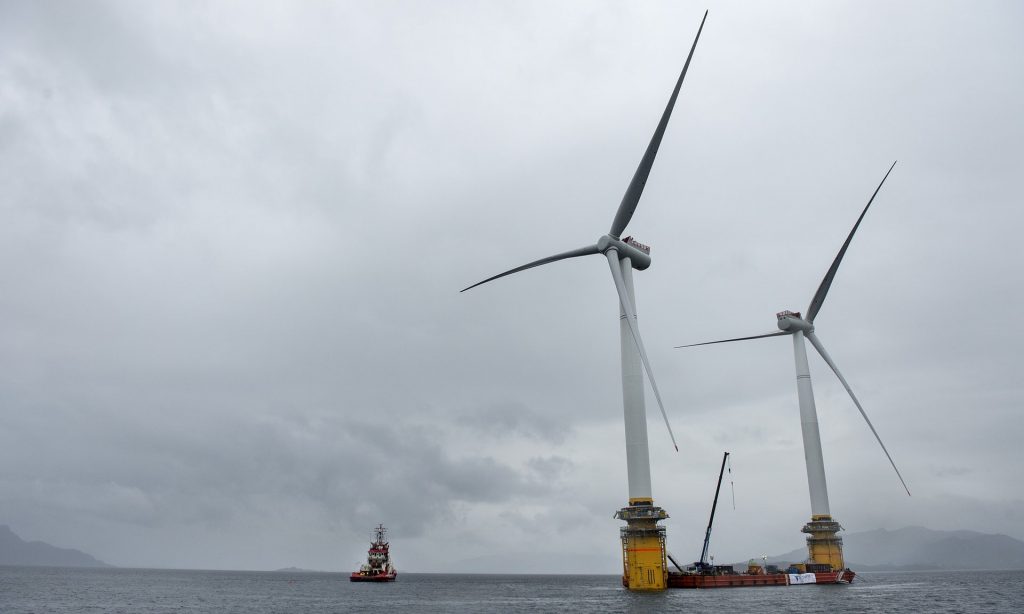
Hornsea 2 is one of the biggest offshore wind farms in the world and includes 165 turbines[3] situated on a site some 89 kilometres off the coast of Yorkshire. To keep the turbines going a continuous supply of parts, tools and consumables is needed. While the crew transfer vessels look after the personnel, heavy or urgent cargo has to wait for a weather window that enables safe crane operations and this can sometimes cause repairs to be delayed by several days.
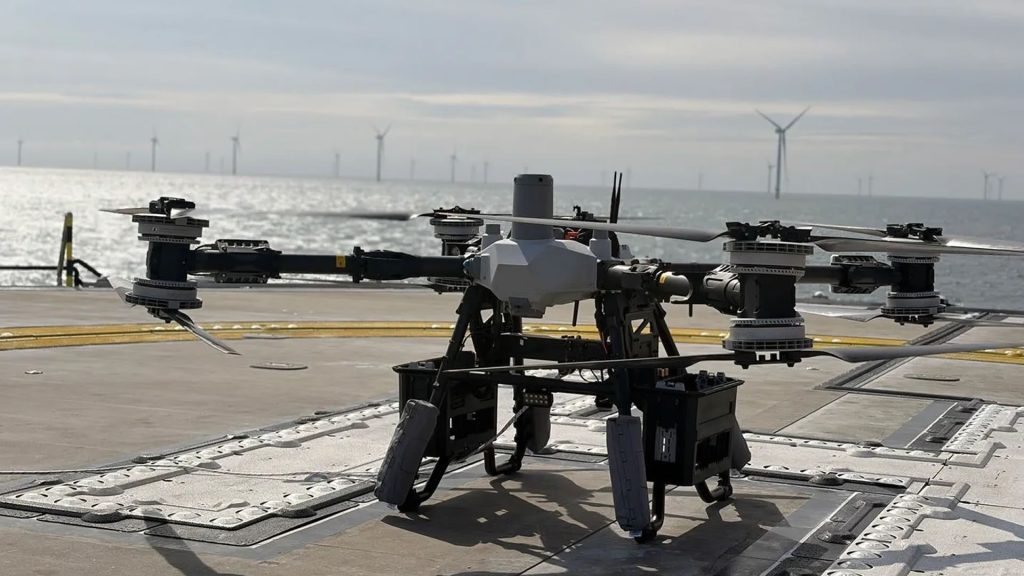
The drones used in the trial are heavy-lift, multirotor aircraft which have been designed for use in cargo operations. The kits they carried weighed 55 to 65 kilograms[4], which is sufficient for carrying gearbox components, hydraulic assemblies, sensor packages, and other maintenance equipment that would normally have to be mounted on the turbine platform using a vessel-mounted crane.
The flights took place beyond visual line of sight, a situation referred to as BVLOS in the aviation industry.[5] Since the drone pilot was located on a specialist service vessel, they were not able to see the aircraft while it was in flight. The offshore wind cargo drone instead flew on its own using GPS, its built-in sensors, and a pre-determined flight path. In order to carry out BVLOS operations, specific approval must be obtained from the UK Civil Aviation Authority[6], which Skyports secured by submitting a coordinated safety case that dealt with the risks of collision, the reliability of communication, and the emergency procedures.
A standard procedure was followed for each delivery. The drone took off from a service operations vessel[4] which was located near the wind farm, climbed to a specified altitude, flew to the target turbine and then descended to the helicopter landing platform on that turbine. An automatic hook system was used to release the cargo[7] so that no one stationed on the turbine had to manually attach or detach the load. The fact that no one on the turbine needed to manually attach or detach the load is more important than it may at first appear.
The cost of a helicopter flight to a wind turbine in the North Sea usually ranges from five to fifteen thousand pounds, depending on the distance and the weight of the cargo. Chartering a crew transfer vessel costs several thousand pounds per day. According to Skyports’ estimates, drone deliveries could reduce logistics costs for regular cargo by 50 to 70 per cent once the necessary infrastructure is in place.
Yet cost is only one aspect of the issue. When a turbine is out of action, speed becomes more important. Every day that a 15-megawatt turbine remains idle means a loss of about fifty thousand pounds in revenue at the current wholesale electricity prices. If a drone is able to deliver the part required for the repair hours or even days sooner than traditional logistics methods, the turbine can get back into service more quickly. For a fleet of 165 turbines, small increases in uptime result in substantial revenue gains over the course of a full year.
Weather dependence is the single factor that limits all offshore operations, including drone operations. The trial involved flights in wind speeds up to 40 knots, typical of North Sea conditions, and the aircraft operated within acceptable limits. As the payload increases, the range of tolerable wind speeds decreases, and the operations team addressed this trade-off by adjusting flight schedules in accordance with weather forecasts.
Alex Brown, the CEO of Skyports Drone Services, said: “At Hornsea 2, we’ve shown the potential for cargo drones as a viable alternative that minimizes these factors.”[8] Richard McCrilley, who was in charge of the project for Orsted, said: “We were able to cover both planned and reactive works.”[9] In earlier drone delivery trials in other sectors, ground personnel had been required to attach and detach the loads. By automating that procedure, there is no longer a need for extra staff on the turbine platform and a potential safety risk in bad weather is eliminated.
Engineering deep dive
The Skyports heavy-lift drone is based on an octocopter design, with eight rotors that provide redundancy and the thrust required for a 65-kilogram payload. The total maximum takeoff weight, when including both the aircraft and the cargo, is about 160 kilograms. The powerplant is entirely electric and powered by lithium-polymer battery packs, providing a flight duration of about 30 to 45 minutes, depending on payload and wind conditions.
A mechanical release device, activated by the drone's flight controller as the aircraft reaches a predetermined position above the turbine platform, is used in the automatic hook system. During the final descent phase, a laser altimeter ensures that the height is known to within a centimetre, and differential GPS corrections enable the horizontal position to be determined to within one metre. The cargo is hung under the aircraft by a five-metre sling, which remains stable during flight but allows the load to rest on the platform once the hook has disengaged.
Flying drones in offshore areas has its own set of communication difficulties. They maintain a data link with the coastal control station via 4G cellular networks where coverage is available, and use satellite communication as a backup in regions beyond the cellular network's reach. The command-and-control signals use a standard protocol that prioritises flight-safety commands over video and telemetry data, ensuring the pilot can always command the aircraft even when bandwidth is limited.
The UK's Civil Aviation Authority evaluated the trial within its regulatory sandbox framework, a system that enables innovative operations with increased monitoring and data sharing. To address the risk of a mid-air collision, the safety case used radar data from the wind farm's current vessel traffic system, as well as an onboard detect-and-avoid system that makes the drone visible to other users of the airspace via ADS-B transponders and radar reflectors.
Although Hornsea 2 is serving as a testing ground, the technology has applications across the offshore energy industry; oil and gas platforms, floating wind farms, and operations involving the maintenance of subsea cables all face similar logistical challenges. Skyports has already started talks with operators in the Norwegian and Dutch parts of the North Sea regarding the deployment of similar services.
The regulatory environment is changing rapidly. The European Union Aviation Safety Agency plans to establish a framework for regular BVLOS cargo operations, aiming to complete it by 2028. In the UK, the CAA’s positive experience from the Hornsea 2 trial is expected to help lead to wider approvals for offshore drone logistics in the sector.
For engineering students considering a career in renewable energy, the Hornsea 2 trial shows that the industry’s challenges extend well beyond turbine design. If a wind farm is to operate efficiently, it is necessary to have solutions in the areas of robotics, autonomous systems, materials handling, and logistics engineering. The turbines themselves are undoubtedly remarkable feats of engineering. Yet how does one get a gearbox to one of them, 89 kilometres out in the North Sea, in the middle of winter, without using a helicopter? That too turns out to be a similarly interesting problem.
Credit via interestingengineering.com
Big cargo drones deliver toolkits to wind turbines in the North Sea
Ørsted has completed a new trial of a large cargo drone at Hornsea 2, its offshore wind farm in the North Sea.
Skyports press release republished in full by Vertical Mag ('This press release was prepared and distributed by Skyports').
Checked 14 October 2026
Big cargo drones deliver toolkits to wind turbines in the North Sea
The four-week trial brought together specialists in safety, aviation, warehousing and site operations, alongside drone operator Skyports, working within the U.K. Civil Aviation Authority’s regulatory framework.
Skyports press release republished in full by Vertical Mag.
Checked 14 October 2026
The 165 Siemens Gamesa 8MW wind turbines deliver 20 percent more annual output than those used for Hornsea 1.
Checked 14 October 2026
Big cargo drones deliver toolkits to wind turbines in the North Sea
The kits, weighing approximately 55 kg to 65 kg, were packed in bags and flown to different turbines before technicians arrived. After the work was completed, the drone collected the kits and returned them to the Service Operations Vessel (SOV).
Skyports press release republished in full by Vertical Mag.
Checked 14 October 2026
Big cargo drones deliver toolkits to wind turbines in the North Sea
In a milestone for offshore drone operations, the team completed its first delivery beyond visual line of sight (BVLOS) inside the wind farm. The drone travelled around 4 km, with the flight planned, coordinated and monitored from a specialist service vessel.
Skyports press release republished in full by Vertical Mag.
Checked 14 October 2026
Big cargo drones deliver toolkits to wind turbines in the North Sea
The Civil Aviation Authority were integral in helping with the airspace approvals to conduct the project.
Skyports press release republished in full by Vertical Mag.
Checked 14 October 2026
Big cargo drones deliver toolkits to wind turbines in the North Sea
The team developed a new load-collection method using an automatic hook attached to the drone. This removed the need for an operator to connect the bag manually, making the process more automated, efficient and safe.
Skyports press release republished in full by Vertical Mag.
Checked 14 October 2026
Big cargo drones deliver toolkits to wind turbines in the North Sea
At Hornsea 2, we’ve shown the potential for cargo drones as a viable alternative that minimizes these factors.
Skyports press release republished in full by Vertical Mag. Quote attributed to Alex Brown, CEO, Skyports Drone Services.
Checked 14 October 2026
Big cargo drones deliver toolkits to wind turbines in the North Sea
We were able to cover both planned and reactive works,” said Richard McCrilley, project lead at Ørsted.
Skyports press release republished in full by Vertical Mag.
Checked 14 October 2026
Energy & Environment

Construction & Infrastructure
Construction & Infrastructure
Energy & Environment