Aerospace, Defence & Marine
Infinium's electro sustainable aviation fuel, made from captured CO₂ and renewable electricity, powers its first US commercial passenger flight with no aircraft modifications.
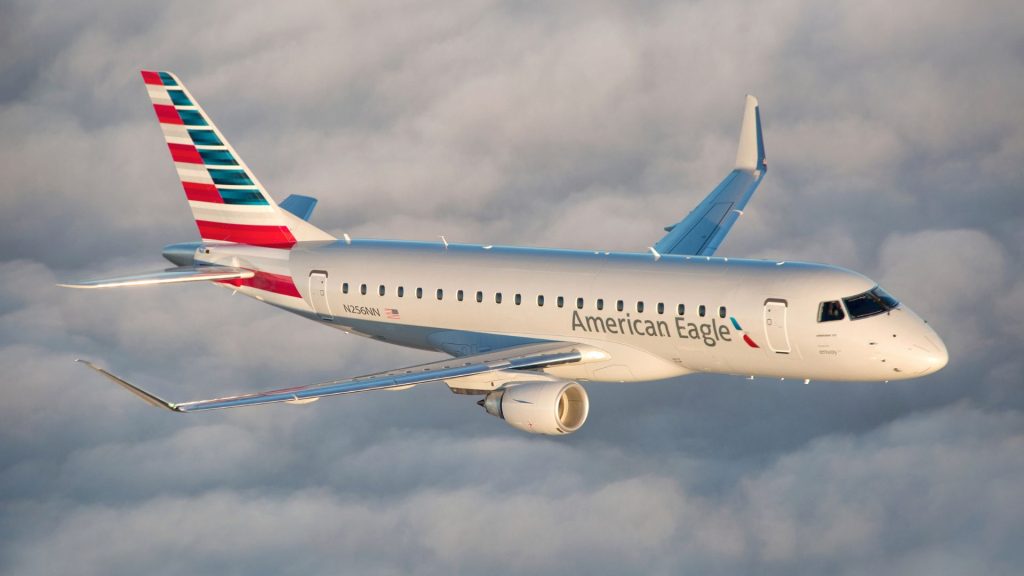
On 6 August 2026 a regional flight moved back from the gate at Corpus Christi International Airport and flew to Dallas-Fort Worth[1]. The flight appeared entirely normal. The aircraft was of the standard type. The fuelling was also standard and the passengers likely didn’t give the fuel a second thought. However, within the Jet A that was circulating through the airport’s common fuel system there was something which had never before been supplied to a US commercial flight: synthetic kerosene produced from carbon dioxide and electricity[2].
The fuel in question is known as electro sustainable aviation fuel or eSAF and was made at Infinium’s Pathfinder plant in Corpus Christi[3], Infinium being a company that produces clean fuels and is based in Sacramento. According to Interesting Engineering, the significance of this demonstration does not lie in the fact that the flight was impressive, but rather in the fact that the fuel was distributed through normal infrastructure; there were no special tanks, no modified fuel trucks, and no need to alter the engines. It was mixed with standard Jet A, a fuel certified to ASTM specifications[4], and pumped into the airport’s common storage area just as is done with any other delivery.
The biological feedstocks currently being produced or developed into sustainable aviation fuels are used cooking oil and agricultural and forestry wastes. Although these materials are useful, they are limited by supply. The amount of used cooking oil available in the world is finite and there is intense competition for biomass feedstocks among different sectors.
Infinium's method makes no use of biology at all; it begins with two inputs - waste carbon dioxide and hydrogen (this hydrogen is produced by splitting water with renewable electricity). The carbon dioxide and hydrogen are then combined in a reactor to produce synthetic hydrocarbons, which are long-chain molecules similar to the kerosene portion of crude oil. The technology is known as power-to-liquids and the company states that it achieves greenhouse gas reductions over 90% when compared to petrochemical jet fuel[5].
The Corpus Christi Pathfinder plant has been in operation since 2023, starting by producing eDiesel and eNaphtha for use in road transport and as chemical feedstock[6]. Aviation fuel is a more recent product line which requires extra refining stages in order to meet the strict specifications needed by jet engines; however, the basic chemistry is the same.
Robert Schuetzle, Infinium’s CEO, says the company has already proved commercial production of low-carbon fuels for trucking and industrial applications. Adding eSAF and delivering it to a passenger flight represents one more step toward wider adoption. The next facility, called Project Roadrunner, is under construction and is expected to begin producing eSAF in 2027 at a rate of more than five million gallons annually[7].
Engineering deep dive
Power-to-liquids technology seems almost like alchemy - converting gas and electricity into liquid fuel. However, the basic chemistry involved is well understood and is based on processes that have been known for more than a century. The difficulty has always been making it efficient and economical enough to compete with extracting crude oil from the ground.
The process starts off with electrolysis, during which water (H₂O) is split into hydrogen (H₂) and oxygen (O₂) by means of an electric current. This reaction is one that is known from GCSE and A-level Chemistry. If the electricity used comes from renewable sources such as wind, solar or hydroelectric power, the hydrogen produced is regarded as "green" since no fossil fuels have been burned in the process. The efficiency of the electrolyser is of great importance. Today's proton exchange membrane (PEM) electrolysers convert about 60 to 70 per cent of the electrical energy input into chemical energy which is stored in the hydrogen. Solid oxide electrolysers, which work at higher temperatures, can achieve greater efficiencies but are less developed in a commercial sense.
The carbon dioxide that has been captured then reacts with hydrogen through a process which usually has two stages. In the first stage, a reverse water-gas shift reaction converts the carbon dioxide and hydrogen into carbon monoxide (CO) and water; since the equilibrium of this reaction lies in favour of the production of CO at high temperatures, a large amount of thermal energy is needed. The carbon monoxide and the remaining hydrogen then go on to a Fischer-Tropsch reactor, where they combine on a catalyst (this is usually cobalt or iron based) to form hydrocarbon chains of different lengths. The Fischer-Tropsch process was developed in Germany in the 1920s, initially in order to produce synthetic fuel from coal gas; the chemistry is the same but the source of carbon is different.
Fischer-Tropsch synthesis yields a variety of hydrocarbons, including the lighter gases such as methane and ethane as well as heavy waxes. The kind of products obtained is determined by the catalyst, the temperature, and the pressure. In order to produce jet fuel it is necessary to have hydrocarbons with from eight to sixteen carbon atoms in each molecule, that is, in the C8 to C16 range. The lighter fractions can be pumped back into the reactor or employed as feedstock for naphtha. The more heavy fractions are cracked (that is, broken down into smaller molecules) by means of heat and catalysts, which is another common refinery process.
The synthetic kerosene produced is chemically very much like Jet A which is derived from petroleum. It has to comply with the ASTM D7566 specifications, these specifying strict limits on various properties such as flash point, freezing point, thermal stability, and energy density. It is currently allowed to be mixed with ordinary jet fuel in amounts up to 50 per cent, although the proportion that was used on the flight to Corpus Christi was not made public. The reason for the ASTM certification is that engines, seals, fuel pumps and storage tanks which are designed for Jet A function in the same way with the certified mixture and no modifications are needed.
When measured against battery-electric standards, the overall energy efficiency of the power-to-liquids process is fairly low. About 40 to 50 percent of the renewable electricity input is eventually stored as chemical energy in the liquid fuel. Compared with the 90 percent efficiency achieved when charging an electric vehicle battery, that seems wasteful, and it does. However, aircraft cannot operate on batteries (the energy density of jet fuel is some 50 times that of lithium-ion batteries on a mass basis), and for decades to come there is no feasible alternative to liquid hydrocarbons for long-haul aviation. Thus, power-to-liquids serves to fill that gap.
For A-level students studying either Chemistry or Physics, this process brings together the topics of electrolysis, chemical equilibria (specifically Le Chatelier's principle in the case of the reverse water-gas shift), catalysis, thermodynamics (using Hess's law for enthalpy calculations along the reaction chain), and energy efficiency calculations. It serves as a convincing illustration of how basic principles can be applied on an industrial scale.
Links to the curriculum: A level, GCSE
Each year commercial aviation uses almost 100 billion gallons of jet fuel and currently sustainable aviation fuel of all kinds makes up less than 1% of that amount[8]. In order to scale power-to-liquids to a significant share of global demand it would be necessary to have huge amounts of renewable electricity, a very large electrolyser capacity, and CO₂ capture facilities which at the required scale do not yet exist. These are serious engineering and economic difficulties. Yet the Corpus Christi flight has achieved something that was previously only theoretical - that electro sustainable aviation fuel can be made, certified, delivered via the present airport facilities, and burned in existing engines. What remains is a scaling issue, which is a different kind of challenge.
Credit via interestingengineering.com
Infinium and American Airlines announce commercial passenger flight powered by eSAF
The eSAF was allocated to an American flight that departed Corpus Christi International Airport (CRP) and landed at Dallas Fort Worth International Airport (DFW), demonstrating the real-world deployment of next-generation, drop-in sustainable aviation fuel.
Checked 14 October 2026
Infinium and American Airlines announce commercial passenger flight powered by eSAF
It was then delivered to the common jet fuel tanks at CRP before being allocated to American’s flight to DFW — the first delivery of SAF made without biobased feedstocks to a commercial airport in the U.S.
Checked 14 October 2026
Infinium and American Airlines announce commercial passenger flight powered by eSAF
The eSAF used for the flight was part of a batch produced and blended at Infinium’s Pathfinder facility in Corpus Christi, Texas — the world’s first commercial-scale power-to-liquids eFuels production site, which has been operating since 2023.
Checked 14 October 2026
Infinium and American Airlines announce commercial passenger flight powered by eSAF
The eSAF batch was blended with conventional jet fuel and tested to meet the ASTM International specification for JetA, certifying its use in today’s aircraft engines and fueling infrastructure without further modification.
Checked 14 October 2026
Infinium and American Airlines announce commercial passenger flight powered by eSAF
Infinium’s eSAF can reduce lifecycle GHG emissions by over 90% compared to conventional petroleum-based jet fuel.
Checked 14 October 2026
Infinium and American Airlines announce commercial passenger flight powered by eSAF
“Since 2023, we have been producing scalable, drop-in eDiesel and eNaphtha at our Pathfinder facility from waste carbon and renewable energy for use in commercial trucks and plastics processing,” said Infinium CEO Robert Schuetzle.
Checked 14 October 2026
Infinium and American Airlines announce commercial passenger flight powered by eSAF
is currently under construction and expected to begin eSAF production and deliveries in 2027. Once it reaches full capacity, Project Roadrunner is expected to produce over 5 million gallons of eSAF annually.
Checked 14 October 2026
Infinium and American Airlines announce commercial passenger flight powered by eSAF
Aviation currently consumes nearly 100 billion gallons of jet fuel annually, with global air travel exceeding 4 billion passengers per year. Despite growing momentum, sustainable aviation fuel accounts for less than 1% of total jet fuel use worldwide.
Checked 14 October 2026
Aerospace, Defence & Marine
Aerospace, Defence & MarineBreakthroughs
Energy & EnvironmentInnovation