Aerospace, Defence & MarineBreakthroughs
Ahead of its first images on 7 December, a deep dive into the engineering of NASA's Roman Space Telescope, from its lightweight mirror to its chilled 300-megapixel camera.
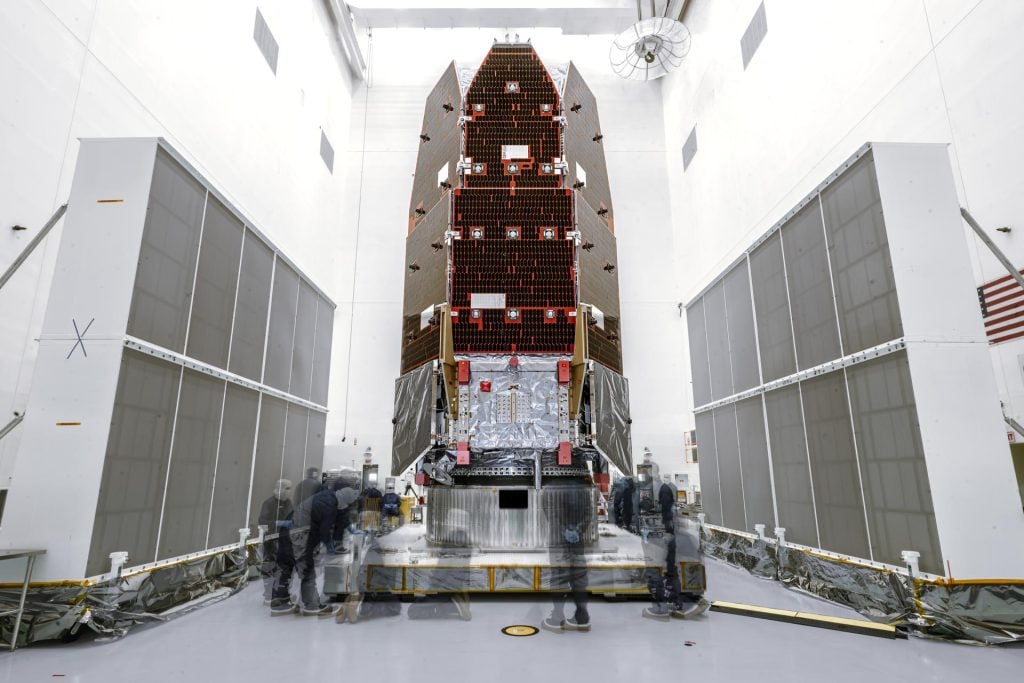
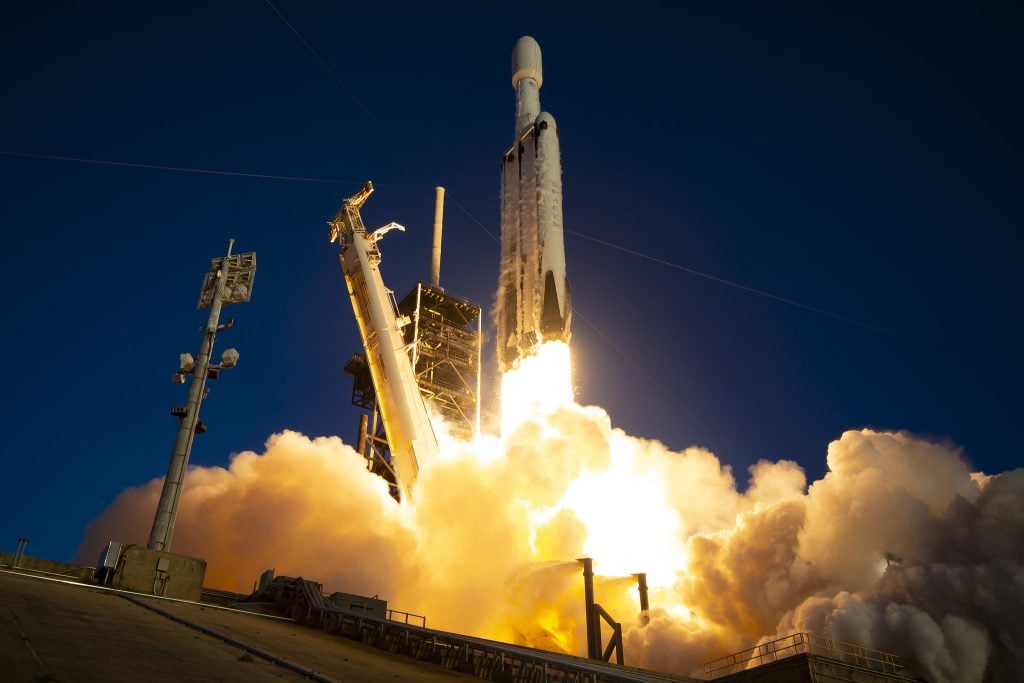
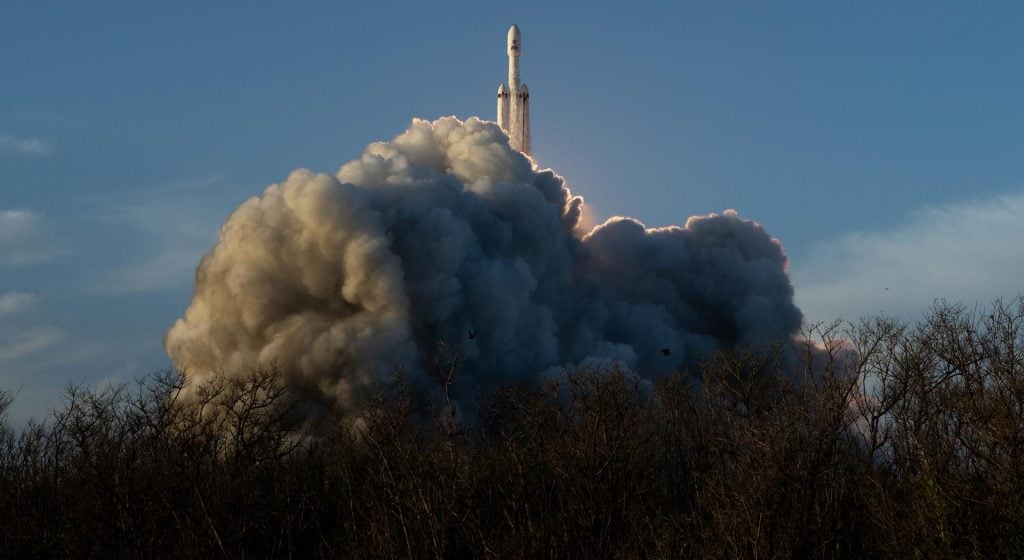
On 7 December NASA will show the world the first images from the Nancy Grace Roman Space Telescope[1]. Before those pictures arrive, it is worth looking at the machine that will take them. Roman is built to photograph huge areas of sky in one go, as sharply as Hubble, and almost every part of it has been engineered around that single job. (If you missed it, read our story on the Roman Space Telescope launch.)
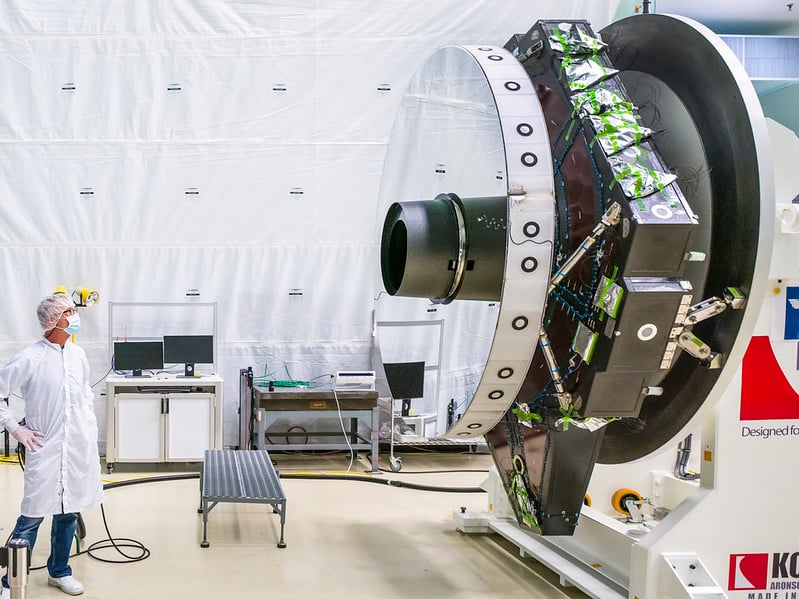
Roman’s primary mirror is 2.4 metres across, the same size as Hubble’s[2]. The difference is mass: it weighs 80% less than Hubble’s primary mirror[3]. A lighter mirror means a lighter observatory, and every kilogram saved makes the launch easier and leaves more room for fuel and instruments.
Size is only half the story. A telescope mirror has to keep its exact shape, and glass grows and shrinks as its temperature changes. Roman’s engineers hold the mirror’s temperature in a tight band to limit thermal distortions that would change its precisely tuned shape[4]. If the mirror warmed or cooled unevenly, stars would smear and the survey data would be useless.
The main instrument, the Wide Field Instrument, is a 300-megapixel infrared camera. Its heart is an array of 18 detectors made by Teledyne, cooled to nearly 300 degrees below zero Fahrenheit[5], which is roughly minus 180°C. Why so cold? Anything warm glows in infrared, including the camera itself. Chilling the detectors stops the instrument drowning out the faint glow of galaxies billions of light years away.
The detectors are not laid out in a neat rectangle. They are arranged in an arch to match the area where the optics give the sharpest image[6]. The result is a camera where each image covers a patch of sky bigger than the apparent size of a full Moon[7].
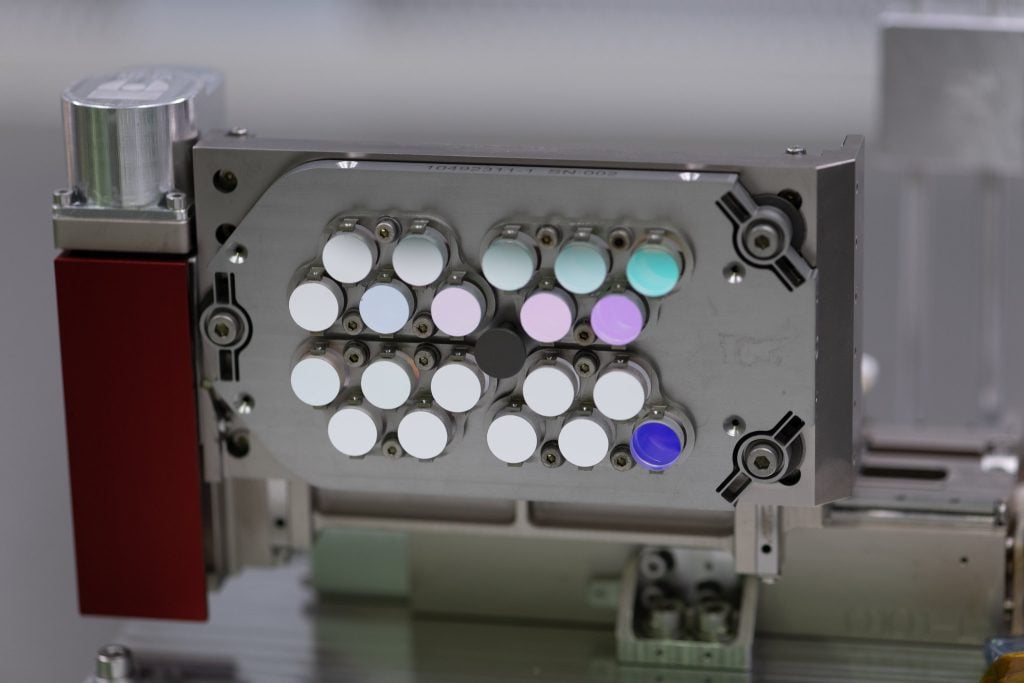
Before light reaches the detectors it passes through an element wheel holding eight filters and other elements, each the size of a Blu-ray disc[8]. Filters let astronomers pick which colours of infrared they record, and the other elements spread light into a spectrum so they can measure what distant objects are made of and how fast they are moving away.
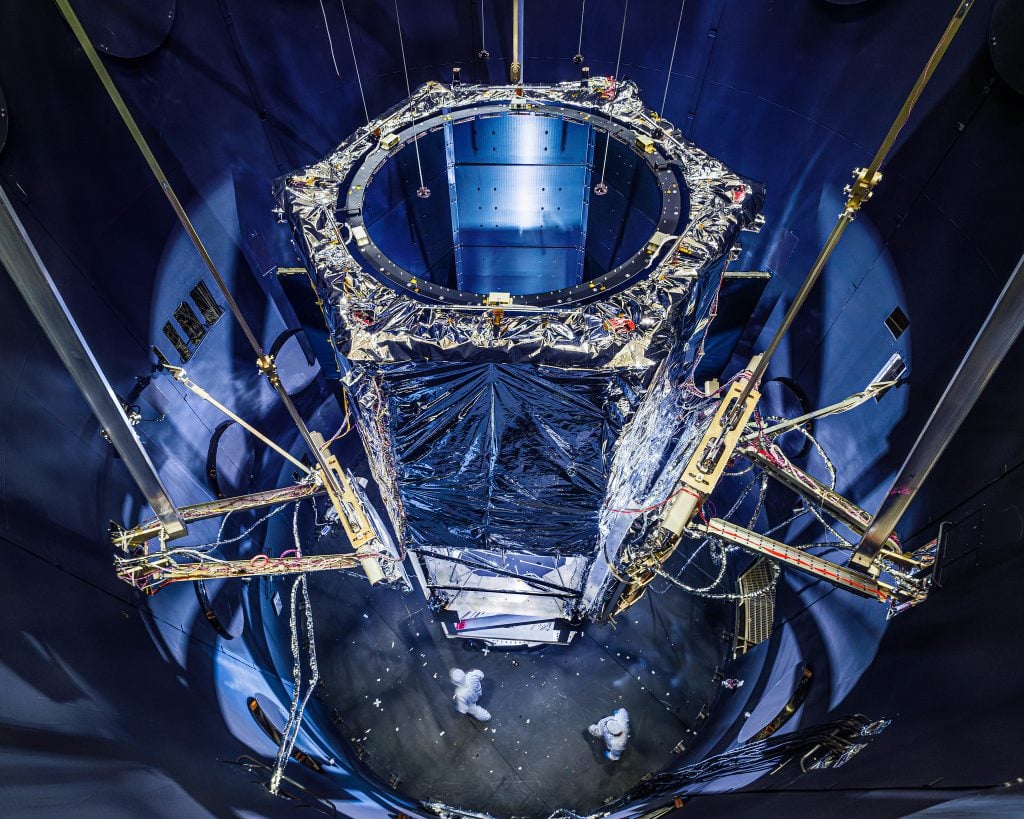
A wide, sharp camera is no use if the telescope wobbles. Roman points itself using six 45-pound reaction wheels[9], which are heavy spinning flywheels. Speeding one up or slowing it down makes the spacecraft turn the other way, with no fuel used. It is the same conservation of angular momentum you meet in physics lessons.
To lock onto a target, engineers set aside a small part of each of the 18 detectors to watch guide stars. The fine-guidance system reports where those stars are about four times each second[10], and the attitude control system nudges the observatory to keep them still. In tests during commissioning, Roman held steady to better than 1/100,000 of a degree for half an hour at a time for Wide Field Instrument observations[11]. NASA compares that to focusing a laser beam on a small coin from about 150 miles (240 km) away[12].
Roman’s second instrument is a technology demonstration called the Coronagraph Instrument. It uses custom masks and shape-shifting mirrors to block and correct a star’s blinding light[13], with the aim of revealing planets 100 million times fainter than their star[14]. The shape-shifting mirrors are deformable: tiny actuators push and pull their surfaces to cancel out ripples in the starlight, leaving a dark zone where a planet’s faint glow can show through.
The coronagraph saw cosmic light for the first time on 22 September, when it captured a faint star in a neighbouring galaxy called the Large Magellanic Cloud[15]. That first look was about proving light gets through the system and lands in focus, a key step before any planet hunting begins.
Roman’s solar panels generate 4,500 W of electricity[16], enough to run its computers, heaters, instruments and radio. That radio has a lot to send. Roman will return more than 1.4 terabytes of data daily[17], and inside the spacecraft its systems are linked by nearly 50 miles of electrical cable[18], about 80 km.
Fuel is where Roman has had a pleasant surprise. Its first course-correction burn on 31 August used less than 10% of the fuel budgeted for it, about 18 kg[19]. Thanks to that accuracy and other savings, NASA now says Roman has fuel for at least 22 years of potential science operations[20], against a ten-year fuel budget in the original design. Once in orbit around the second Lagrange point (L2), it only needs small station-keeping burns roughly every 28 days[21] to stay in place.
Roman is due to reach its orbit around L2 about 100 days after launch, in early December[22]. Engineers have spent the journey turning systems on, testing them and calibrating the instruments, and in October the mission moved into its science commissioning phase[23]. The first images on 7 December will be the public’s first proper look at what all that engineering can do.
Roman needed optical, mechanical, electrical, thermal and software engineers, plus people who plan orbits and write the code that turns raw pixels into science. If that sounds like you, start with aerospace engineering careers, see how code keeps missions running in software and systems engineering careers, or find your fit with which engineering discipline suits you.
NASA Invites Media, Public to View Roman Telescope’s First Images
NASA will release the first images from its Nancy Grace Roman Space Telescope during a live stream from the American Geophysical Union (AGU) Annual Meeting in San Francisco at 3:30 p.m. EST (12:30 p.m. PST) Monday, Dec. 7.
Checked 23 November 2026
Roman Space Telescope Frequently Asked Questions
Its primary mirror is 2.4 meters (7.9 feet) in diameter, which is the same size as the Hubble Space Telescope's primary mirror.
Checked 14 October 2026
Roman Space Telescope Frequently Asked Questions
And it weighs 80% less than Hubble's primary mirror
Checked 23 November 2026
Flash Talk: Roman Spacecraft Overview
to limit thermal distortions that would change its precisely tuned shape
Checked 23 November 2026
Flash Talk: Roman Spacecraft Overview
an array of 18 state-of-the-art detectors from partner Teledyne that are cooled to nearly 300 degrees below zero.
Checked 23 November 2026
Flash Talk: Roman Spacecraft Overview
The wide field detectors are arranged in an arch to match the area of best image quality provided by the optics.
Checked 23 November 2026
Using the WFI, each Roman image will capture a patch of the sky bigger than the apparent size of a full Moon.
Checked 23 November 2026
Flash Talk: Roman Spacecraft Overview
eight filters and other elements -- each the size of a blu-ray disk
Checked 23 November 2026
Flash Talk: Roman Spacecraft Overview
six 45-pound reaction wheels to quickly point Roman around the sky
Checked 23 November 2026
NASA Checks Roman Guidance System, Takes First Coronagraph Observation
The fine-guidance system reports the positions of the guide stars about four times each second
Checked 23 November 2026
NASA Checks Roman Guidance System, Takes First Coronagraph Observation
better than 1/100,000 of a degree for half an hour at a time for Wide Field Instrument observations
Checked 23 November 2026
NASA Checks Roman Guidance System, Takes First Coronagraph Observation
Roman’s current stability is roughly equivalent to focusing a laser beam on a U.S. dime from about 150 miles
Checked 23 November 2026
Flash Talk: Roman Spacecraft Overview
custom masks and shape-shifting mirrors to block and correct a star's blinding light
Checked 23 November 2026
Flash Talk: Roman Spacecraft Overview
revealing planets 100 million times fainter
Checked 23 November 2026
NASA Checks Roman Guidance System, Takes First Coronagraph Observation
the Coronagraph Instrument captured a faint star in a neighboring galaxy called the Large Magellanic Cloud
Checked 23 November 2026
Flash Talk: Roman Spacecraft Overview
deploy its solar panels to generate 4500W of electricity
Checked 23 November 2026
NASA Interview Opportunity: Catch Last Look at NASA’s Newest Space Telescope
Roman will return more than 1.4 terabytes of data daily.
Checked 23 November 2026
Flash Talk: Roman Spacecraft Overview
All these systems are linked by nearly 50 miles of electrical cable.
Checked 23 November 2026
Fuel Savings Double Potential Lifetime for NASA’s Roman Mission
required less than 10% of the fuel the team had budgeted for: about 40 pounds (18 kilograms),
Checked 23 November 2026
Fuel Savings Double Potential Lifetime for NASA’s Roman Mission
Roman has fuel for at least 22 years of potential science operations,
Checked 23 November 2026
Fuel Savings Double Potential Lifetime for NASA’s Roman Mission
Once in orbit around L2, Roman will only require periodic station-keeping burns roughly every 28 days.
Checked 23 November 2026
Fuel Savings Double Potential Lifetime for NASA’s Roman Mission
approximately 100 days after launch, or about early December.
Checked 23 November 2026
NASA’s Roman Space Telescope Enters Final Commissioning Phase
NASA’s Nancy Grace Roman Space Telescope mission has now entered the science commissioning phase, having successfully completed a comprehensive checkout and refinement of the observatory and primary instrument performance.
Checked 23 November 2026
Aerospace, Defence & MarineBreakthroughs
Aerospace, Defence & Marine