Floating Solar Engineering: Port of Barrow to Install UK's Largest Pontoon-Mounted Array
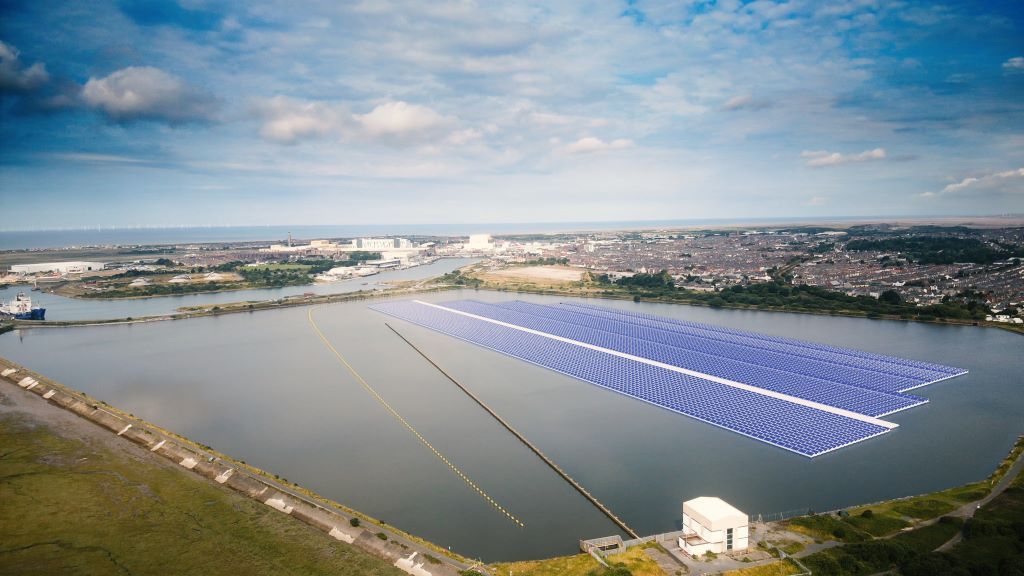
Associated British Ports has applied for planning permission for Barrow EnergyDock, a floating solar array of around 47,000 panels on Cavendish Dock that would be the largest in the UK.
Key points
- Associated British Ports (ABP) has submitted a planning application for the UK's largest floating solar project at Port of Barrow
- The 40MWp installation will use 47,000 solar panels mounted on floating pontoons anchored to the dock floor
- Engineering advantages include optimized land use, water cooling effects for improved efficiency, and compatibility with existing port activities
- The project is part of ABP's broader masterplan for economic growth in the Barrow region
- If approved, it would significantly surpass the UK's current largest floating solar installation (6.3MW)
Social Media Descriptions:
Associated British Ports (ABP) has submitted a planning application for what is projected to become the UK’s largest floating solar installation.
Located at the Port of Barrow’s Cavendish Dock in Cumbria, the “Barrow EnergyDock” project represents the first phase of ABP’s comprehensive master plan for driving economic growth in the Barrow region.
The proposed floating solar array will have a generating capacity of up to 40MWp, sufficient to supply electricity equivalent to approximately 14,000 homes annually[1][2]. The installation will comprise approximately 47,000 solar panels[3][4] mounted on floating pontoons anchored to the dock floor for stability.
The array covers roughly one-third of Cavendish Dock’s 591,000m² water surface[5][3]. It is strategically designed to allow existing port activities to continue while preserving valuable port land for operational and manufacturing purposes. This approach maximizes space efficiency within the port’s infrastructure.
The pontoon-mounted panels will be fixed at optimal angles for solar generation, employing a specialized anchoring system to secure the entire structure to the bottom of the dock[6]. This configuration enables the installation to maintain stability while maximizing energy capture throughout varying weather conditions.
ABP’s marine consultancy and survey company, ABPmer, conducted comprehensive environmental assessments before submitting the planning application. These studies included marine ecology and coastal waterbird surveys in and around Cavendish Dock, with results indicating that the development is not expected to cause a significant environmental impact[7].
The location in Cavendish Dock offers several technical advantages for floating solar deployment. The dock is unconnected to the sea and functions as a reservoir[5][8], providing a controlled water environment with minimal wave action-ideal conditions for floating solar panels. This controlled setting reduces structural stress on the installation while maintaining stable generating conditions.
ABP partnered with environmental and engineering consultancy Green Cat Renewables to support the planning application process. The company also held two public consultation events in autumn 2024, allowing residents to provide feedback and raise questions about the proposed development[9][10].
[PANEL] Engineering Deep Dive: Floating Solar Systems
Fundamentals of Floating Photovoltaic Technology
Floating solar photovoltaic (FPV) systems represent a specialized adaptation of conventional solar technology designed for water-based deployment. These systems utilize buoyant structures to support standard photovoltaic panels above water surfaces, presenting unique engineering challenges and advantages compared to land-based installations.
Structural Components and Materials
The core engineering components of floating solar installations include:
- Flotation System: High-density polyethene (HDPE) pontoons form the primary buoyancy structure. These materials must withstand prolonged water exposure while maintaining structural integrity. HDPE is typically selected for its UV resistance, chemical stability, and 20+ year lifespan under aquatic conditions.
- Anchoring Mechanisms: Unlike land-based systems, floating arrays require sophisticated anchoring systems to maintain position despite wind, waves, and water fluctuations. For installations like Barrow EnergyDock in contained water bodies, engineers typically employ:
- Tension mooring systems with concrete deadweights
- Adjustable tensioning mechanisms to accommodate water level variations
- Engineered safety factors of 1.5-2.0× expected maximum loads
- Panel Mounting Structures: Specialized racking systems connect the PV modules to the flotation units. These typically employ marine-grade aluminium and stainless steel fasteners to prevent galvanic corrosion in humid environments.
- Electrical Integration: Marine-grade cables with enhanced insulation properties route power from the array to the shore. These utilize:
- Double-jacketed designs with water-blocking compounds
- UV-resistant outer sheaths
- Submersible junction boxes with IP68+ ratings
Hydrodynamic Design Considerations
The Barrow EnergyDock array must contend with specific hydrodynamic forces uncommon to traditional solar installations:
- Wind Loading: Water-based installations experience amplified wind effects due to reduced friction and surface roughness compared to land. Engineers typically design for:
- Wind speeds of 100-130 mph (extreme weather conditions)
- Computational fluid dynamics modelling to assess lift, drag, and vortex shedding
- Structural reinforcement at perimeter sections where forces concentrate
- Wave Action: Even in protected waters like Cavendish Dock, wave action creates cyclical loading that can lead to material fatigue. Design principles include:
- Flexible connections between array sections to absorb wave energy
- Wave attenuation barriers at perimeter sections
- Fatigue load analysis using accelerated life testing protocols
- Water Level Variation: Engineering accommodations for water level changes include:
- Tension management systems with automatic or semi-automatic adjustment
- Slack calculation in mooring lines
- Strategic placement of electrical connection points above maximum water levels.
Thermal Management Advantages
One of the principal engineering advantages of floating solar systems is enhanced thermal performance:
- Panel Cooling Effect: Water bodies provide natural cooling for the photovoltaic panels. Technical measurements typically show:
- 5-10°C lower operating temperatures compared to land-based installations
- 3-8% efficiency improvement due to reduced thermal losses
- Extended panel lifespan from reduced thermal cycling stress
- Heat Dissipation Mechanisms: The engineering design maximizes this cooling advantage through:
- Optimized air gap between panel surface and water
- Convective airflow channels beneath panel arrays
- Strategic panel spacing to balance density with cooling performance
Monitoring and Maintenance Engineering
The aquatic environment necessitates specialized engineering approaches to system monitoring and maintenance:
- Corrosion Prevention: Engineers incorporate multi-layered protection against the accelerated corrosion risk:
- Cathodic protection systems for metal components
- Isolation of dissimilar metals to prevent galvanic corrosion
- Regular inspection protocols using specialized ultrasonic thickness testing
- Biofouling Management: Algae and aquatic growth can reduce system performance, requiring:
- Anti-fouling coatings on underwater components
- UV-resistant materials that resist biofilm adhesion
- Periodic cleaning protocols using water-safe methods
- Advanced Monitoring Systems: Remote condition monitoring employs:
- Strain gauges on critical mooring points.
- Distributed temperature sensing along power transmission routes
- Water-resistant security and surveillance systems
Environmental Engineering Considerations
The Barrow EnergyDock project incorporates specific engineering designs to mitigate environmental impact:
- Light Penetration Management: The array layout includes strategic gaps to ensure sufficient light reaches aquatic ecosystems, with:
- Around two-thirds of the dock’s water surface remains uncovered[3]
- Light gaps are distributed evenly throughout the array.
- Perimeter spacing to maintain shoreline habitat function
- Water Quality Monitoring: Integrated sensors track key parameters to detect any system impacts:
- Dissolved oxygen levels above and below the array
- Temperature stratification patterns
- Turbidity and sedimentation monitoring
- Wildlife Protection: Technical measures prevent wildlife entanglement or collision:
- Smooth surfaces without protrusions
- Cable management systems that eliminate loose elements
- Low-voltage DC isolation to minimize shock risks
Performance Optimization Engineering
The Barrow system incorporates advanced engineering principles to maximize energy yield:
- Panel Orientation: Unlike fixed land installations, floating systems can be oriented for optimal performance with:
- East-west configurations that maximize area utilization
- Specialized tilt angles (typically 5-15°) optimized for the water-based context.
- Row spacing calculations that balance density with shading prevention
- Dynamic Positioning: Some advanced floating systems incorporate:
- Partial rotation capabilities to track solar position
- Automated ballast systems to adjust panel angles seasonally
- Wind-responsive positioning to minimize extreme weather exposure
This engineering approach to floating solar represents a sophisticated adaptation of conventional PV technology to water-based deployment’s unique constraints and opportunities. For the Barrow EnergyDock project, these technical considerations have been carefully balanced to deliver a system optimized for the specific conditions of Cavendish Dock.
Unlike ground-mounted solar installations, the floating system preserves valuable port land for operational and manufacturing activities that have the potential to drive job creation and support the regional economy. The energy generated primarily supports Barrow’s advanced engineering sector, potentially stabilizing electricity costs for businesses operating within the port[11].
ABP said that deploying floating solar in Cavendish Dock, rather than ground-mount solar, “will provide renewable energy whilst preserving port land for operational and manufacturing uses”[12]. Bryan Davies, Divisional Port Manager (Northwest and Scotland) at ABP, said: “We’re excited to see the planning application submitted for Barrow EnergyDock, and to see the first element of ABP’s Port of Barrow Masterplan start to take shape.”[13]
The project represents the first element of ABP’s Port of Barrow Masterplan to take shape. This comprehensive plan, launched in September 2024[14], focuses on driving growth and strengthening the local economy in response to significant investment projected for the region over the next 10-20 years[15].
Kirsten Abbott, ABP’s Group Commercial Manager (Energy), emphasized that the project “aligns with the goals set out in ABP’s sustainability strategy-Ready for Tomorrow-and represents a significant step towards a greener future for the Port.”[16]
If approved, the Barrow EnergyDock would substantially exceed the capacity of the current largest floating solar development in the UK, a 6.3MW installation on the Queen Elizabeth II reservoir near London[17][18]. The system would join a small but growing number of floating solar installations in the UK, including Nova Innovation’s Edinburgh development, which has been powering Forth Ports’ headquarters since late 2023[19].
According to research from Lancaster University and Bangor University, the UK could produce as much as 2.7TWh of electricity annually from floating solar if it utilized just 10% of eligible lake surface areas[20][21]. The Barrow EnergyDock project could serve as a proof of concept for future deployments, demonstrating large-scale floating solar’s technical feasibility and economic benefits in the UK context.
The planning application is now under review, and the implementation timeline is dependent on approval processes. If successful, this engineering innovation would become a flagship example of how ports can leverage existing water assets to generate clean energy while maintaining essential maritime operations.
Credit via abports.co.uk
Sources
21 sources
Port of Barrow submits Planning Application for UK’s largest floating solar energy project
The solar array will have a generating capacity in the region of up to 40MWp, enough to power the equivalent of circa 14,000 homes each year.
Checked 18 November 2026
Plans go in for ‘UK’s largest’ floating solar energy project
The solar array will have a generating capacity in the region of up to 40MWp, enough to power the equivalent of circa 14,000 homes each year.
Checked 18 November 2026
Port of Barrow submits Planning Application for UK’s largest floating solar energy project
The proposed array would cover around one-third of the available water area in the dock and would be made up of circa 47,000 panels.
Checked 18 November 2026
Port of Barrow submits planning application for UK’s largest floating solar panel project
The proposed array would cover around one-third of the available water area in the dock and would be made up of approximately 47,000 panels.
Checked 18 November 2026
UK’s largest floating solar project set for Barrow
The array would be installed on the 591,000m² Cavendish Dock which these days is unconnected to the sea and operates as a reservoir.
Checked 18 November 2026
Port of Barrow submits Planning Application for UK’s largest floating solar energy project
The solar panels will be mounted on floating pontoons fixed at an optimum angle for solar generation, with the pontoons secured to the bottom of the dock by an anchoring system.
Checked 18 November 2026
Port of Barrow submits Planning Application for UK’s largest floating solar energy project
ABP's marine consultancy and survey company, ABPmer, carried out a range of marine ecology and coastal waterbird surveys and assessments in and around Cavendish Dock. The results suggest that no significant impacts are expected from the development.
Checked 18 November 2026
ABP plans to build England’s biggest floating solar plant
located in the Cavendish Dock, a former harbor basin and shipbuilding area that is now an enclosed reservoir.
Checked 18 November 2026
Port of Barrow submits Planning Application for UK’s largest floating solar energy project
ABP commissioned Green Cat Renewables, an environmental and engineering consultancy, to help develop and deliver the planning application elements of the project. Two public consultation events were held in the autumn of last year
Checked 18 November 2026
Plans for major floating solar farm in south Cumbrian port
ABP is hosting a public consultation in The Gateway Room at the Forum in Barrow on Wednesday November 20.
Checked 18 November 2026
Port of Barrow submits Planning Application for UK’s largest floating solar energy project
will help to better control the cost of electricity at the port.
Checked 18 November 2026
Port of Barrow submits Planning Application for UK’s largest floating solar energy project
The approach of deploying floating solar in Cavendish Dock, rather than ground-mount solar, will provide renewable energy whilst preserving port land for operational and manufacturing uses, that have the potential to support jobs and the wider economy.
Checked 18 November 2026
Port of Barrow submits Planning Application for UK’s largest floating solar energy project
Bryan Davies, Divisional Port Manager (Northwest and Scotland), ABP said: "We're excited to see the planning application submitted for Barrow EnergyDock, and to see the first element of ABP's Port of Barrow Masterplan start to take shape.
Checked 18 November 2026
ABP unveils ambitious masterplan for Port of Barrow
has today announced its ambitious plans for the Port of Barrow, which is designed to drive growth and strengthen the local economy in response to a wave of significant investment coming to the region by 2040 and beyond.
Checked 18 November 2026
Port of Barrow submits Planning Application for UK’s largest floating solar energy project
in response to the significant investment coming to the region over the next ten to twenty years.
Checked 18 November 2026
Plans go in for ‘UK’s largest’ floating solar energy project
It aligns with the goals set out in ABP's sustainability strategy – Ready for Tomorrow – and represents a significant step towards a greener future for the port.
Checked 18 November 2026
Some countries could meet their total electricity needs from floating solar panels, research shows
There are currently very few FPV installations in the UK, with the largest a 6.3MW floating solar farm on the Queen Elizabeth II reservoir, near London.
Checked 18 November 2026
The potential for floating solar in the UK
The largest of them is a 6.3MW development on the Queen Elizabeth II reservoir, near London, with Nova Innovation's Edinburgh development successfully powering Forth Ports' headquarters since late 2023.
Checked 18 November 2026
‘Sunshine on Leith’ powers Forth Ports HQ with Nova’s Floating Solar Technology
Marine energy pioneer Nova Innovation has installed a marine floating solar demonstrator to power Forth Ports' headquarters in the Port of Leith.
Checked 18 November 2026
Some countries could meet their total electricity needs from floating solar panels, research shows
The UK could produce 2.7 TWh of electricity each year from FPV, the researchers found.
Checked 18 November 2026
Some countries could meet their total electricity needs from floating solar panels
The UK could produce 2.7 TWh of electricity each year from FPV, the researchers found.
Checked 18 November 2026
Share
Related stories
All Energy & Environment
Energy & EnvironmentInnovation
Swansea Tidal Lagoon: The Renewable Energy Project Rises Again
Automotive & Transport
World's First Ammonia-Powered Dry Bulk Carrier Enters Commercial Service