
HealthBreakthroughs
China has approved the world's first commercial brain computer interface implant. Neuracle's coin-sized device reads neural signals to restore hand movement in paralysis patients.
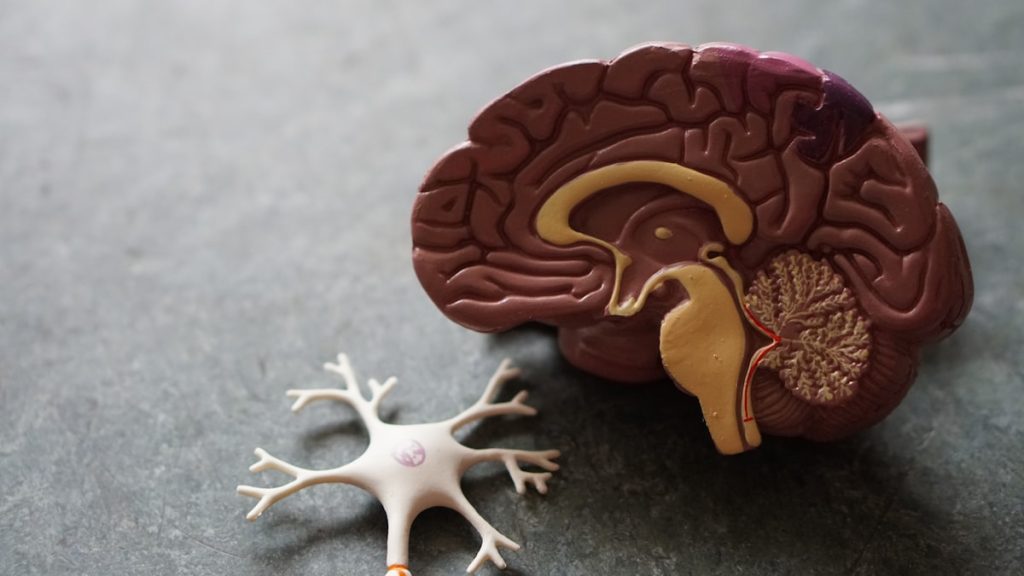
Neuracle received the first commercial approval for an invasive BCI. The epidural implant reads motor cortex signals to control a pneumatic glove. All 32 trial patients regained grasp ability.
Thirty-two people in China can now pick up a cup of water using nothing but their thoughts and a robotic glove. That is the headline number from clinical trials of a brain computer interface implant made by Shanghai-based Neuracle Medical Technology, which in March 2026 became the first invasive BCI in the world to receive commercial approval. Not approval for another round of trials. Not approval for limited research use. Approval to be prescribed by doctors and implanted in patients, as Nature reported, much like a pacemaker or a cochlear implant.
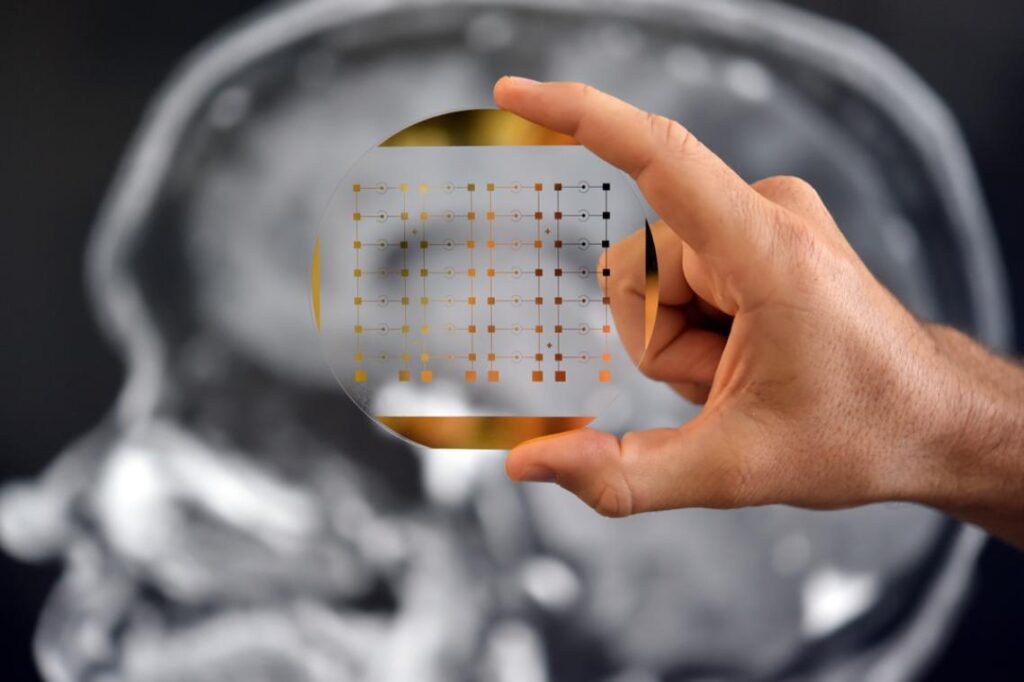
The device is about the size of a one-pound coin. It sits on the surface of the brain’s outer membrane, the dura mater, without penetrating the tissue underneath. Electrodes on its underside pick up electrical signals generated by neurons in the motor cortex, the strip of brain responsible for planning and executing movement. Those signals travel wirelessly to an external processor, which decodes them using machine-learning algorithms. The decoded instructions then drive a pneumatic glove, a soft robotic hand that inflates and deflates air bladders to open and close the patient’s fingers. Think about grabbing a cup. The implant reads that intention. The glove does the grabbing.
The approval covers adult patients with partial paralysis from spinal cord injuries who retain some upper-arm function. In clinical trials, all 32 participants regained the ability to grasp objects, a movement they could not perform before implantation. The surgical procedure places the device epidurally, meaning on top of the dura rather than inside the brain itself. This is a less invasive approach than the penetrating electrode arrays used by competitors such as Neuralink, which inserts hair-thin threads directly into brain tissue. Epidural placement reduces the risk of infection, bleeding, and long-term tissue damage, though it also means the device picks up signals from a larger area with slightly less spatial precision.
China’s National Medical Products Administration granted the approval on 13 March. Neuracle’s share price jumped roughly 10 per cent on the news. The Chinese government has listed BCI technology as a national strategic priority, including it for the first time in this year’s government work report alongside other designated “industries of the future.”
Engineering deep dive
The motor cortex is organised like a map. Different regions control different body parts, an arrangement neuroscientists call the motor homunculus. The hand area is disproportionately large, reflecting the fine motor control humans have evolved for tool use. When you decide to close your fist, populations of neurons in the hand area fire in coordinated patterns. Each neuron generates a tiny electrical potential, roughly 70 millivolts across its membrane at rest, spiking briefly when it fires. A single neuron's signal is too faint to detect from outside the skull, but thousands firing together produce measurable electrical fields.
Neuracle's implant uses electrocorticography, or ECoG, electrodes. These sit on the brain's surface rather than penetrating into it. ECoG captures local field potentials, the summed electrical activity of neural populations beneath each electrode. The spatial resolution is coarser than penetrating arrays, which can isolate individual neurons, but the signal quality is far more stable over time. Penetrating electrodes gradually accumulate scar tissue as the brain's immune system responds to the foreign material, degrading their performance over months and years. Surface electrodes largely avoid this problem, which is a practical advantage for a device intended to last a patient's lifetime.
The raw neural signals are amplified, filtered, and digitised by electronics within the implant. Wireless transmission, likely using a near-field inductive link similar to the technology in contactless bank cards, sends the data to an external processing unit worn on the body. The processor runs a decoding algorithm trained on each patient's individual neural patterns. During a calibration phase after surgery, the patient is asked to imagine specific hand movements while the system learns which patterns of neural activity correspond to which intended actions. This is supervised machine learning in a biomedical context, a direct application of the classification algorithms covered in university-level computing and some A-level further maths courses.
The pneumatic glove is an example of soft robotics. Unlike rigid mechanical hands, soft robotic actuators use air pressure to create movement. Bladders sewn into the glove inflate to curl the fingers closed and deflate to release them. The advantages are comfort, safety, and simplicity. A rigid exoskeleton applying the wrong force to a paralysed hand could cause injury. A pneumatic glove conforms to the hand's natural shape and applies distributed, compliant force. The engineering challenge lies in control: translating a decoded neural command like "close hand with moderate grip" into precisely timed valve openings and air pressures. This requires real-time feedback loops, another concept familiar from A-level control systems in Design and Technology.
Power management is a persistent challenge in implantable devices. The implant must consume as little energy as possible to minimise heat generation inside the skull. Excessive heat damages surrounding tissue. Engineers use low-power integrated circuits, often designed in specialised CMOS processes, and duty-cycle the wireless transmitter to send data in bursts rather than continuously. Charging is typically wireless, using the same inductive coupling that transmits data, so the patient never needs a physical connection through the skin.
The regulatory distinction between Neuracle's epidural approach and Neuralink's penetrating approach matters for commercial deployment. Penetrating arrays offer higher resolution but face a steeper regulatory path because of the greater surgical risk. Neuracle's approval suggests that regulators judged the epidural approach safe enough for routine clinical use, not just research. This decision could shape the entire BCI industry's direction, pushing other developers toward less invasive designs that can reach patients faster.
Links to the curriculum: A level, GCSE
Thirty-two patients is a small number. The long-term durability of the implant, the glove, and the decoding algorithms remains to be proven over years of daily use. And the device currently restores only basic grasp, not the full dexterity of a healthy hand. But the shift from experimental to commercial, from laboratory to clinic, is an engineering milestone. The question now is not whether brain computer interfaces work, but how quickly they can be made to work well enough, reliably enough, and affordably enough to help the millions of people living with paralysis worldwide.
Credit via nature.com
HealthBreakthroughs

HealthBreakthroughs

HealthBreakthroughs