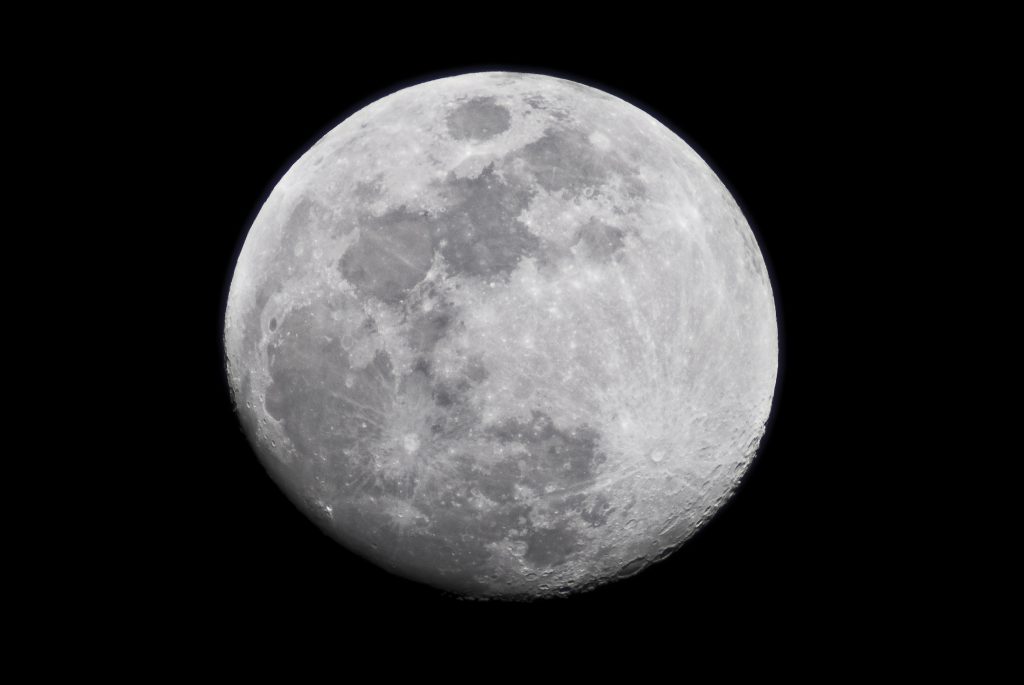
Artemis II Launch Sends Four Astronauts Towards the Moon
The Artemis II launch sends four astronauts on a ten-day lunar flyby, testing the SLS rocket and Orion spacecraft with shuttle-era RS-25 engines and an ablative heat shield rated to 2,760°C.
Key points
• NASA's Artemis II launches today (1 April 2026), sending four astronauts on a ten-day lunar flyby, the first crewed Moon mission since 1972.
• The SLS rocket produces 8.8 million pounds of thrust using four shuttle-era RS-25 engines with a combined 22 previous flights.
• Orion's ablative heat shield, made from 180 Avcoat blocks on a titanium skeleton, must withstand 2,760°C during re-entry at 40,000 km/h.
• Engineers modified the re-entry trajectory after unexpected char loss on the Artemis I test flight, a practical example of engineering problem-solving.
• The crew includes the first Black astronaut, first woman, and first non-American assigned to a lunar mission.
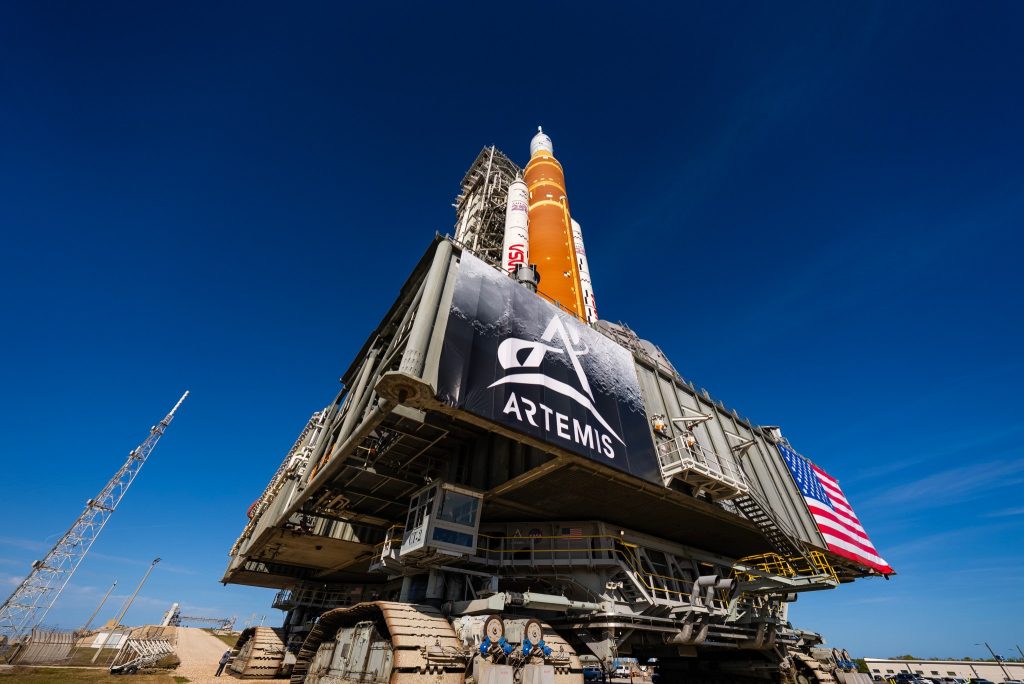
At 6:24 p.m. EDT today, if all goes to plan, four astronauts will sit strapped inside a capsule the size of a campervan atop 322 feet of rocket. Commander Reid Wiseman, pilot Victor Glover, and mission specialists Christina Koch and Jeremy Hansen will feel the Space Launch System ignite beneath them, producing 8.8 million pounds of thrust. Eight and a half minutes later, they will be in orbit. Two days after that, they will fire the main engines and point themselves at the Moon. No human being has done this since December 1972.
The Artemis II launch marks the first crewed flight of NASA’s Space Launch System and the Orion spacecraft together. It is a test flight, not a landing. The four crew members will loop around the Moon at roughly 6,000 miles from its surface and return to Earth over ten days, covering 685,000 miles. During re-entry, they will become the fastest humans in history, punching into the atmosphere at approximately 25,000 mph, a speed that will eclipse even the record set by Apollo 10’s crew in 1969.
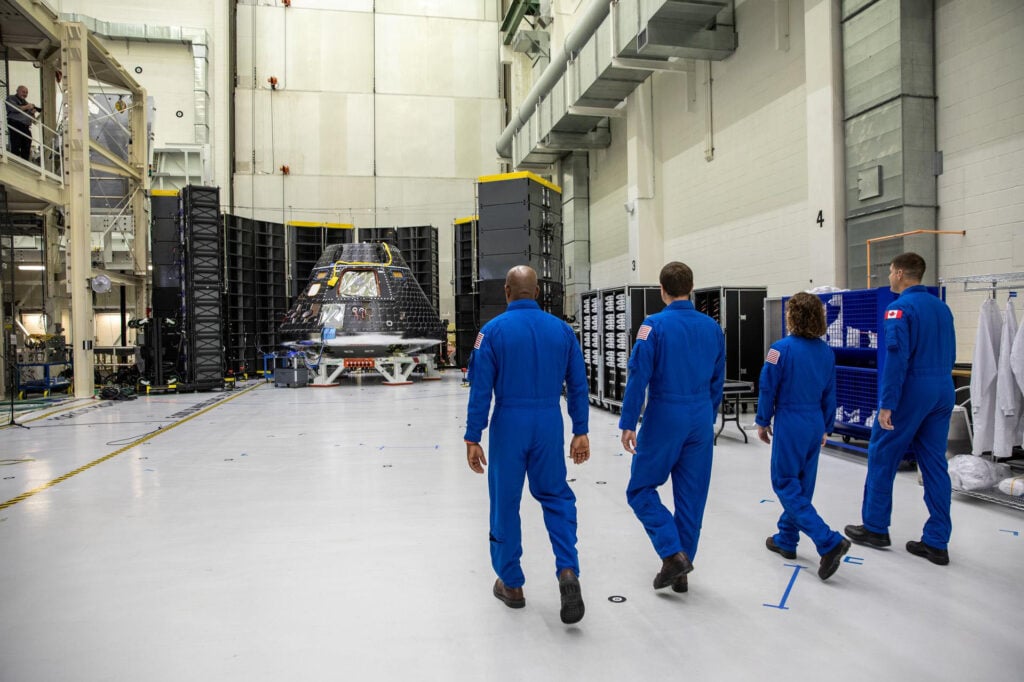
The mission carries more than records. Glover will be the first Black astronaut assigned to a lunar mission. Koch, who already holds the record for the longest single spaceflight by a woman at 328 days, will be the first woman to fly beyond low Earth orbit. Hansen, a former Royal Canadian Air Force fighter pilot, will be the first non-American to leave Earth’s neighbourhood. The crew nicknamed their Orion capsule “Integrity”, a word that doubles as an engineering principle.
Shuttle-era engines meet 3D-printed upgrades for the Artemis II launch
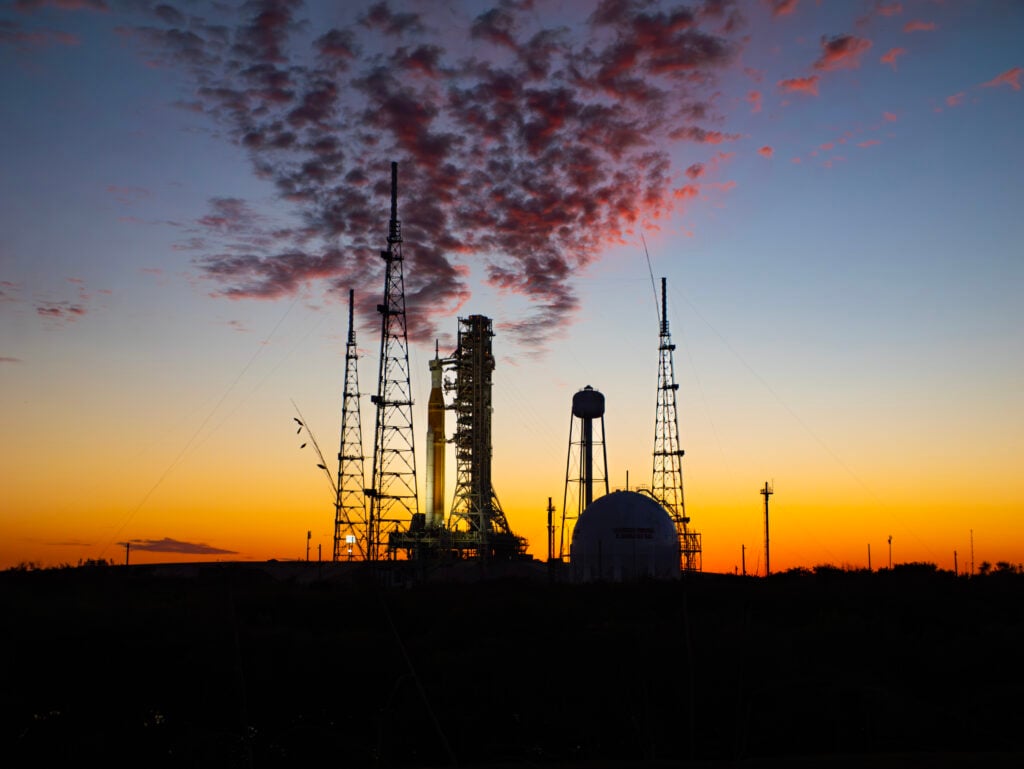
Perhaps the most striking engineering detail is what sits at the base of the SLS core stage. Four RS-25 engines, designated 2047, 2059, 2061, and 2062, will power the ascent. These are not new engines. Engine 2047 flew on STS-135, the final Space Shuttle mission in 2011. Engine 2059 flew on STS-134, the penultimate flight. Between them, these four powerplants have flown 22 shuttle missions. Engineers at Kennedy Space Center completed health checks on all four in the weeks before launch, confirming sensor connections, diagnostic readiness, and gimbal range, the ability of each engine nozzle to swivel for steering during ascent.
Reusing heritage hardware is not sentimental. It is pragmatic. Each RS-25 has a known performance history, a documented flight envelope, and decades of test data behind it. At the same time, updated engine controllers and 3D-printed components have been fitted to reduce build time and cost for future Artemis missions. It is a layered approach: proven reliability married to modern manufacturing.
Meanwhile, the Orion spacecraft itself is a different kind of engineering test. Built by Lockheed Martin, the crew module sits on top of a European-built service module that provides propulsion, electrical power, and thermal regulation. Inside, the life support systems will face their first real examination with humans aboard: oxygen regulation, carbon dioxide scrubbing, water recycling, and waste management across ten days in deep space. Fire suppression systems, emergency breathing gear, and backup computers provide multiple layers of redundancy. For the crew, daily life will mean wall-mounted sleeping bags, pre-packed food, wipes instead of showers, and exercise equipment to slow the muscle loss that microgravity causes.
Engineering deep dive
How the Artemis II Launch Systems Actually Work
The Space Launch System stands 322 feet tall, taller than the Statue of Liberty. Its thrust comes from two sources: a pair of five-segment solid rocket boosters strapped to an orange core stage, and the four RS-25 liquid-fuelled engines at the core stage's base. The solid boosters provide the initial kick, burning powdered aluminium and ammonium perchlorate at temperatures exceeding 3,300°C. They burn for roughly two minutes before separating and falling into the Atlantic. Think of A-level Chemistry: the oxidiser (ammonium perchlorate) decomposes to supply oxygen in an environment where there is none.
The RS-25 engines, by contrast, burn liquid hydrogen and liquid oxygen stored at cryogenic temperatures, around minus 253°C for the hydrogen. On launch day, engineers will load more than 700,000 gallons of these propellants into the core stage. The process is methodical: cavities inside the rocket are first purged with gaseous nitrogen to displace oxygen and moisture, creating a stable, non-reactive environment before the super-cooled fuels flow in. If you have studied thermodynamics at A-level, you will recognise this as managing the risk of uncontrolled phase changes and unwanted chemical reactions at extreme temperature differentials.
The heat shield problem
When Orion returns from the Moon, it will hit the atmosphere at roughly 40,000 km/h. At that speed, air cannot move out of the way fast enough. It compresses, heats, and forms a plasma sheath around the capsule that reaches approximately 2,760°C, hot enough to melt steel. The heat shield, 16.5 feet in diameter, is made from more than 180 precisely machined blocks of Avcoat, an ablative material bonded to a titanium skeleton. Ablation is the deliberate, controlled burning away of material to carry heat away from the structure beneath. It is a concept that connects directly to A-level Physics topics on heat transfer and materials science.
During the uncrewed Artemis I test flight, engineers observed unexpected charring and material loss from the heat shield during re-entry. Rather than redesigning the shield, the engineering team modified Orion's re-entry trajectory, steepening the descent angle to reduce the time the spacecraft spends in the thermal zone where the damage occurred. Ground testing and computational modelling confirmed this adjustment keeps char loss within structural and thermal margins. It is a textbook example of engineering problem-solving: when you cannot easily change the material, change the conditions it experiences.
The Ground Launch Sequencer
In the final minutes before liftoff, no human hand controls the sequence. The Ground Launch Sequencer, an automated system, orchestrates thousands of individual commands: opening and closing valves, transitioning power systems, verifying sensor readings, and managing the precise timing of ignition. At the moment of liftoff, a massive water sound suppression system floods the launch pad, cushioning the structure from acoustic energy powerful enough to damage the rocket itself. Students familiar with wave physics will appreciate the principle: the water absorbs and dissipates vibrational energy that would otherwise reflect off the concrete pad and back into the vehicle.
The Artemis II launch touches almost every corner of science and engineering. Cryogenic fuel handling is thermodynamics in practice. The RS-25's combustion cycle illustrates fluid dynamics and Newton's third law at an industrial scale. Ablative heat shielding is a materials science problem. Orbital mechanics, the trajectory from Earth orbit to a lunar flyby and back, is applied mathematics. And the life support system is chemical engineering in miniature: scrubbing CO2, electrolysing water, managing gas partial pressures in a sealed cabin. If you are considering an engineering degree, this single mission is a catalogue of the problems you will learn to solve.
Links to the curriculum: A level, GCSE
If Artemis II succeeds, it clears the path for Artemis III, which will test docking procedures with a lunar lander, and Artemis IV, currently targeted for 2028 as the first crewed landing since Apollo 17. The heat shield question will follow the programme: whether the modified trajectory holds up under repeated missions remains an open engineering challenge. For now, four people are about to travel further from Earth than any human has before, inside a spacecraft held together by engineering old and new, proven and experimental.
Credit via nasa.gov
Share
Related stories
All Aerospace, Defence & MarineAerospace, Defence & MarineBreakthroughs
Artemis II Moon Mission: How Engineers Sent Humans Back to the Moon