Automotive & Transport
Honda has invested in Niron Magnetics to develop iron nitride magnets that could free electric vehicle motors from dependence on rare earth materials.
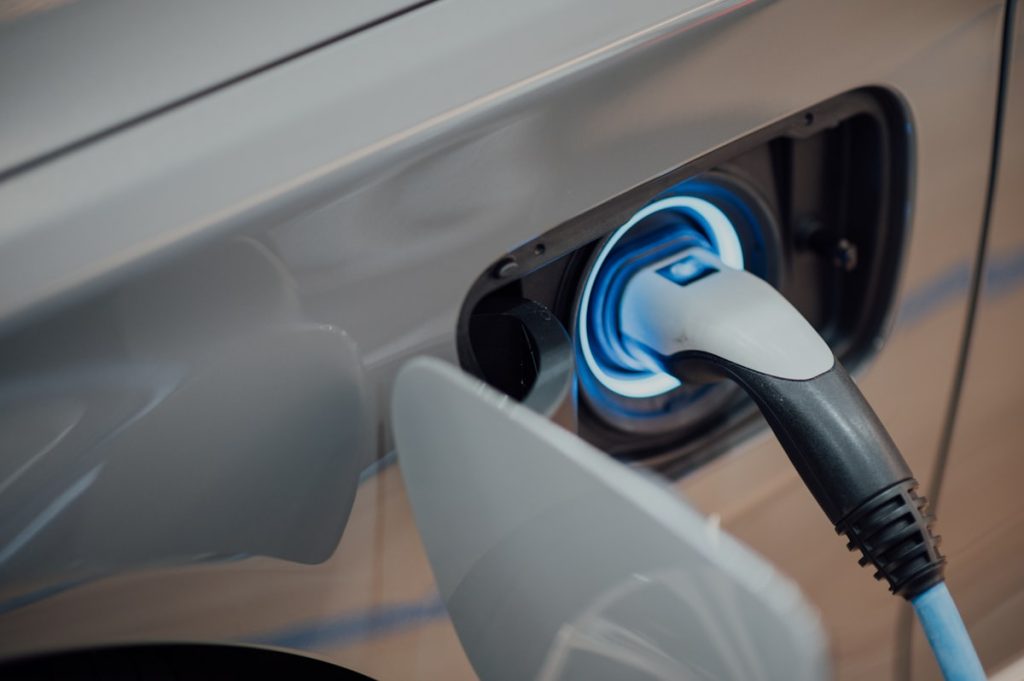
In every electric vehicle there is a ring of permanent magnets tucked inside the motor casing. They are tiny and rather plain in appearance, and the majority of drivers will never give them a thought. Yet if those magnets are not there the motor will not rotate, the wheels will not spin and the car will not move at all. The issue that has kept materials scientists and supply chain strategists up for most of the last ten years is the composition of those magnets.
Almost all high-performance permanent magnets make use of neodymium and other rare earth elements. Although it is called ‘rare’, the rare earth elements are not geologically scarce; rather, they are geographically concentrated. As a result, a small number of countries control the extraction and processing, and this concentration leads to a bottleneck which becomes more severe as demand for electric vehicles, wind turbines, and various industrial applications rises. In September 2026 Honda Motor took action on this issue by investing in Niron Magnetics[1], a company based in Minnesota which produces permanent magnets from iron and nitrogen rather than from rare earth elements.
The investment, which was announced on 9 September[1], is intended to help commercialise Niron’s iron nitride magnet technology. The company is currently constructing a manufacturing plant covering 287,000 square feet in Sartell, Minnesota, with production slated to begin in 2027[2]. When operating at full capacity, the factory will generate up to 1,500 tons of iron nitride magnets each year[2] and will supply customers in the automotive, robotics, industrial automation and consumer electronics sectors[3].
Honda is not dealing with this matter in a purely academic way since the company is extending the range of its electric vehicles and therefore requires a reliable source of high-performance magnets for its drive motors. Mahito Shikama, who is a director and executive officer at Honda, stated that the company has “high hopes” regarding Niron’s technology, pointing out that the majority of electric propulsion motors at present depend on rare-earth magnets, which are affected by resource limitations and market volatility[4].
Niron’s method involves the use of iron nitride, more precisely the compound Fe₁₆N₂. Theoretically, this material has a greater magnetic energy product - this being the key indicator of a magnet’s strength - than any existing permanent magnet material, such as neodymium magnets. The basic components are iron and nitrogen, both of which are common, cheap, and obtainable from various sources. Jonathan Rowntree, the chief executive of Niron, referred to the Honda investment as proof of “growing industry momentum” in favour of rare-earth-free alternatives[5].
For A-level Physics students who are studying magnetism and electromagnetic induction, the subject lies at the point where materials science and electrical engineering meet. The greater the strength of a permanent magnet, the more torque a motor can generate for a particular size and weight. This is the reason why EV manufacturers have in the past been willing to accept the supply chain risks associated with rare earth elements rather than go for weaker alternatives such as ferrite magnets.
Engineering deep dive
The principles behind permanent magnets revolve around a property known as magnetic anisotropy, which is the tendency for the atomic magnetic moments in a material to align themselves along a particular crystallographic direction. In neodymium-iron-boron (NdFeB) magnets, the crystal structure holds the magnetic domains in a fixed state of alignment so strongly that a large external magnetic field is required to demagnetise them. It is this resistance to demagnetisation, expressed as coercivity, that gives a material its value as a permanent magnet.
The attraction of iron nitride starts with its saturation magnetisation. Fe₁₆N₂ has a theoretical saturation magnetisation of about 2.9 Tesla, which is greater than that of NdFeB, typically 1.6 Tesla. Since saturation magnetisation determines the maximum amount of magnetic flux that a material can generate, more flux in a motor results in a greater force being exerted on the current-carrying conductors and thus in more torque.
This is where the engineering becomes difficult. Fe₁₆N₂ is a metastable phase, which means that the nitrogen atoms are located in positions within the iron crystal lattice that are thermodynamically unstable. When the material is heated to about 200°C, the nitrogen atoms move around and the crystal structure reorganises, causing the desirable magnetic properties to disappear. This presents a serious limitation for use in motors, since operating temperatures often go above 150°C during periods of heavy acceleration or when climbing hills.
To deal with this problem Niron's manufacturing process makes use of techniques which shape and stabilise the Fe₁₆N₂ phase at temperatures low enough to avoid decomposition. Although the exact details are kept secret, research that has been published in the area mentions methods including sputtering thin films, ball-milling iron powders in a nitrogen atmosphere, and rapid quenching from the molten state. In each case there is the same basic compromise: the conditions which result in well-ordered Fe₁₆N₂ crystals having a high coercivity are exactly the conditions under which the phase is prone to decompose.
Taking a material from small-scale laboratory samples through to factory production brings with it its own set of problems. In a research environment, a powder of iron nitride in the amount of a milligram which has good magnetic properties is considered a success. But in the case of a motor, you need kilograms of dense, uniformly magnetised material that has been shaped to close tolerances and bonded or sintered into a rotor assembly. The annual production capacity of 1,500 tonnes that Niron is aiming for would make it the first company in the world to manufacture iron nitride magnets on an industrial scale[6].
The idea of metastability is encountered by students taking A-level Design and Technology or Physics in a variety of engineering situations. A metastable material is similar to a ball lying in a shallow depression on a hillside since it remains stable as long as it does not receive enough energy to roll over the edge, even though it is not in the lowest energy state. Examples of this include tempered steel, amorphous metals and some pharmaceutical compounds all of which depend on metastable phases that have been achieved through careful processing. The engineering problem is always the same; it consists of producing the material, shaping it and putting it to use without ever providing it with enough energy to overcome the energy barrier and thus reach its stable but less useful form.
There is also a wider supply chain aspect which is linked to A-level subjects in Economics and Geography. The mining of rare earth elements results in a large amount of environmental waste, such as the radioactive byproducts thorium and uranium. The processing stage involves the use of strong acids and leads to the production of toxic waste water. The environmental cost is genuine and this is one of the reasons why many countries have been unwilling to set up their own rare earth production even though deposits are present. Iron nitride,on the other hand, is based on materials used in the steel industry and atmospheric nitrogen. Its environmental impact is expected to be much smaller, although independent lifecycle assessments will be required when production has actually started.
It has not yet been established whether iron nitride magnets can achieve the same level of thermal stability and resistance to demagnetisation as neodymium magnets when used under actual motor operating conditions. Although Niron has shown that it can produce working magnets, data on production-scale consistency and long-term reliability are still being collected. Should the technology live up to its promises, the consequences would reach well beyond electric vehicles and include applications in wind turbines, medical imaging and aerospace actuators - in any situation where a strong, lightweight and reliable magnet is required without the associated geopolitical complications.
Links to the curriculum: A level
It has not yet been established whether iron nitride magnets can achieve the same level of thermal stability and resistance to demagnetisation as neodymium magnets when used under actual motor operating conditions. Although Niron has shown that it can produce working magnets, data on production-scale consistency and long-term reliability are still being collected. Should the technology live up to its promises, the consequences would reach well beyond electric vehicles and include applications in wind turbines, medical imaging and aerospace actuators - in any situation where a strong, lightweight and reliable magnet is required without the associated geopolitical complications.
Niron Magnetics Secures Investment from Honda Motor Co., Ltd.
September 9 , 2026 — Niron Magnetics, the company commercializing the world’s first rare-earth-free Iron Nitride permanent magnets, today announced an investment from Honda Motor Co., Ltd. (“Honda”).
Checked 14 October 2026
Niron Magnetics Marks Steel Raising at Sartell Manufacturing Site
raise a ceremonial steel column at the 287,000 square-foot plant. The steel raising marks a major construction milestone for Niron’s Sartell plant, which will be operational in 2027. The plant at full operations will manufacture up to 1,500 tons of annual production capacity
Checked 14 October 2026
Niron Magnetics Secures Investment from Honda Motor Co., Ltd.
Niron’s Iron Nitride magnet technology is applicable across a wide range of applications, including automotive, robotics, industrial automation, emerging mobility platforms, AI and data center infrastructure and consumer electronics.
Checked 14 October 2026
Niron Magnetics Secures Investment from Honda Motor Co., Ltd.
Most electric propulsion motors today use permanent magnets made from rare earth metals, which are subject to resource constraints and fluctuations in market conditions. Niron Magnetics is addressing these challenges, and Honda has high hopes for its potential,” said Mahito Shikama
Checked 14 October 2026
Niron Magnetics Secures Investment from Honda Motor Co., Ltd.
“The investment adds to growing industry momentum as manufacturers increasingly direct resources to alternatives to rare-earth-based magnets.”
Checked 14 October 2026
Niron Magnetics Marks Steel Raising at Sartell Manufacturing Site
“The Sartell plant is where Niron’s technology moves from the lab to full-scale American manufacturing. This is the first facility of its kind anywhere in the world
Checked 14 October 2026
Automotive & Transport
ManufacturingInnovation
Energy & Environment
Automotive & TransportBreakthroughs