
Automotive & Transport
A new stainless steel green hydrogen alloy, SS-H2, resists corrosion up to 1700mV using a counter-intuitive manganese passivation layer.
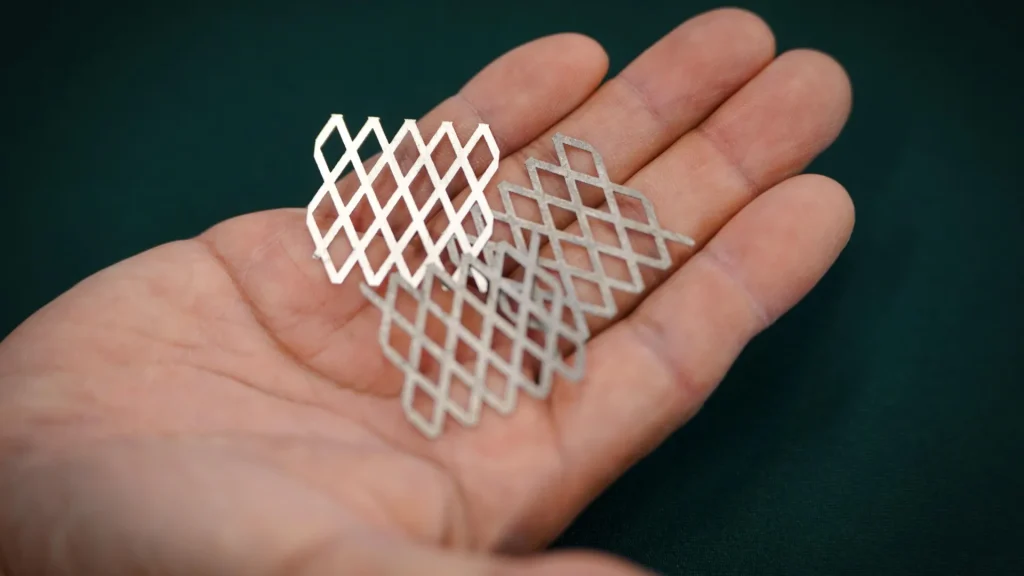
For over 100 years, corrosion scientists have regarded manganese as a disadvantage in stainless steel; however, a group at the University of Hong Kong has just challenged that view by developing a stainless steel green hydrogen alloy named SS-H2 which uses manganese to protect the steel rather than cause it to weaken, and in doing so may have overcome one of the more persistent cost problems facing green hydrogen.
The alloy, which is known as stainless steel for hydrogen, is capable of withstanding corrosion up to 1700 millivolts in environments that are rich in chlorides such as seawater, which is about the voltage level needed for water electrolysis to break water down into hydrogen and oxygen. Ordinary stainless steel gives in through a process called transpassive corrosion at about 1000 millivolts, indicating that it is incapable of functioning inside an electrolyser operating at the voltages required for efficient hydrogen production. Because of this gap between the voltage needed for electrolysis and the level that stainless steel can tolerate, engineers have had to resort to using titanium for the metallic parts of electrolysers, a material that works well but costs about 40 times as much as steel. The very issue of reducing the cost of green hydrogen produced with stainless steel is precisely the problem that SS-H2 was designed to address.
Ordinary stainless steel is resistant to corrosion since the chromium contained in the alloy reacts with oxygen to produce a thin and closely bonded layer of chromium oxide (Cr2O3) on the surface, this forming a passive film which protects the metal beneath. SS-H2 maintains this film but also has an additional one; as the paper in Materials Today explains, a manganese-based passivation layer develops at about 720 millivolts on top of the existing chromium oxide and thus provides protection well beyond the point at which conventional stainless steel would begin to break down.
Dr Kaiping Yu, who was one of the researchers, acknowledged that the team’s first response to the data had been one of disbelief. “At first we didn’t believe it since the general belief is that manganese reduces the corrosion resistance of stainless steel,” Yu said. “The finding that manganese-based passivation occurs is counter to what is currently known in the field of corrosion science.” The project, which was headed by Professor Mingxin Huang, took nearly six years to reach a confirmed understanding of the mechanism and to refine the alloy so that it could be produced on a large scale, and already tons of SS-H2 wire have come off the production lines.
Green hydrogen - produced by using renewable electricity to split water - is often presented as a solution for decarbonising industries that cannot easily be electrified, such as steelmaking and the production of shipping fuel. However, the cost of green hydrogen has always been high due to the price of the equipment required to produce it, titanium parts making up a significant portion of that cost. Since a steel that is about 40 times cheaper than titanium can withstand the same electrochemical conditions, the capital cost of constructing electrolysers and therefore the cost of the hydrogen they generate could drop considerably, even without any breakthrough in the electrolysis chemistry itself.
Engineering deep dive
Stainless steel isn't rust-resistant because it is chemically inert; in fact, it resists rust since it reacts in a controlled and predictable manner which helps to protect it. Chromium, which is contained in stainless steel at a concentration usually over 10.5 per cent, reacts with oxygen to form chromium oxide (Cr2O3), a very thin film - only a few nanometres thick - that sticks firmly to the surface of the metal and prevents further oxygen and chloride ions from getting to the metal underneath. This process is known as passivation, and the oxide layer that is produced is called the passive film. It is the same fundamental chemistry that A-level students study when looking at reactivity and oxidation, but it has been designed so that it is strong enough to be used in constructing kitchens, bridges and chemical plants.
Passivation only functions within a particular range of electrochemical potential, that is to say within the voltage difference between the metal's surface and the surrounding solution; if that potential is raised high enough then the passive film itself may start to break down, a phenomenon known as transpassive corrosion in which the protective oxide either dissolves or becomes unstable instead of protecting the metal. This is the electrochemical analogue of a fire door that works perfectly at ordinary temperatures but fails when it gets too hot. The passive film of conventional stainless steel breaks down at about 1000 millivolts, which thus sets a strict upper limit on the conditions under which it can be used.
The process of water electrolysis - which is the method employed to produce green hydrogen by splitting water molecules into hydrogen and oxygen with the aid of an electric current - requires voltages of about 1600 millivolts if it is to operate efficiently on an industrial scale, a figure that results from the thermodynamics of the water-splitting reaction together with the extra overpotential that is necessary to make the reaction proceed at a useful rate. There thus exists a gap of several hundred millivolts between the voltage required by electrolysis and that which ordinary stainless steel can withstand, a gap which SS-H2 specifically addresses.
As the researchers currently understand the mechanism of SS-H2, it includes a second passivation event. When the applied potential rises above the level at which ordinary passive films would start to fail, manganese in the alloy produces its own protective compound at the surface, placing this compound either on top of or alongside the existing chromium oxide and thus extending the range over which the metal remains passivated. The fact that manganese, an element which has hitherto been associated with promoting rather than preventing corrosion in stainless steels, acts in this way is still not fully accounted for by existing corrosion theory, which is the very reason why Dr Yu referred to the result as counter-intuitive rather than merely an incremental improvement.
This is relevant to anyone considering a career in materials engineering since it serves as a reminder that even though corrosion science is a well-developed field possessing established tools such as Pourbaix diagrams - which show which reactions are dominant at a given pH and potential - there is still room for true surprises. The mechanism known as sequential dual-passivation will need to be further characterised, probably by using techniques such as X-ray photoelectron spectroscopy in order to determine exactly what compounds form at the surface and in what amounts, before textbooks can be rewritten. For chemical and materials engineers, SS-H2 also shows a more general lesson in that cost reduction in emerging industries such as green hydrogen does not always result from coming up with a completely new process; at times it comes about by getting an old and well-understood material to endure conditions for which it was never intended.
Links to the curriculum: A level, GCSE
The SS-H2 still has to demonstrate its value outside the laboratory, in electrolysers that operate continuously over many years rather than in controlled test cells. However, the fundamental finding - that manganese is able to build up rather than break down a stainless steel’s protective barriers - provides materials scientists with a genuinely new mechanism to investigate, not just a slightly improved alloy. Given that the industry has for decades believed it already knew how corrosion resistance works, the mechanism is worth much more than the alloy itself.
Credit via sciencedaily.com
Automotive & Transport
Aerospace, Defence & Marine
Energy & EnvironmentBreakthroughs
Electronics & CommunicationsBreakthroughs