Construction & Infrastructure
A Rolls-Royce small modular reactor contract has been signed for three 470MW units at Wylfa, Anglesey, creating 8,000 jobs and powering 3 million homes.
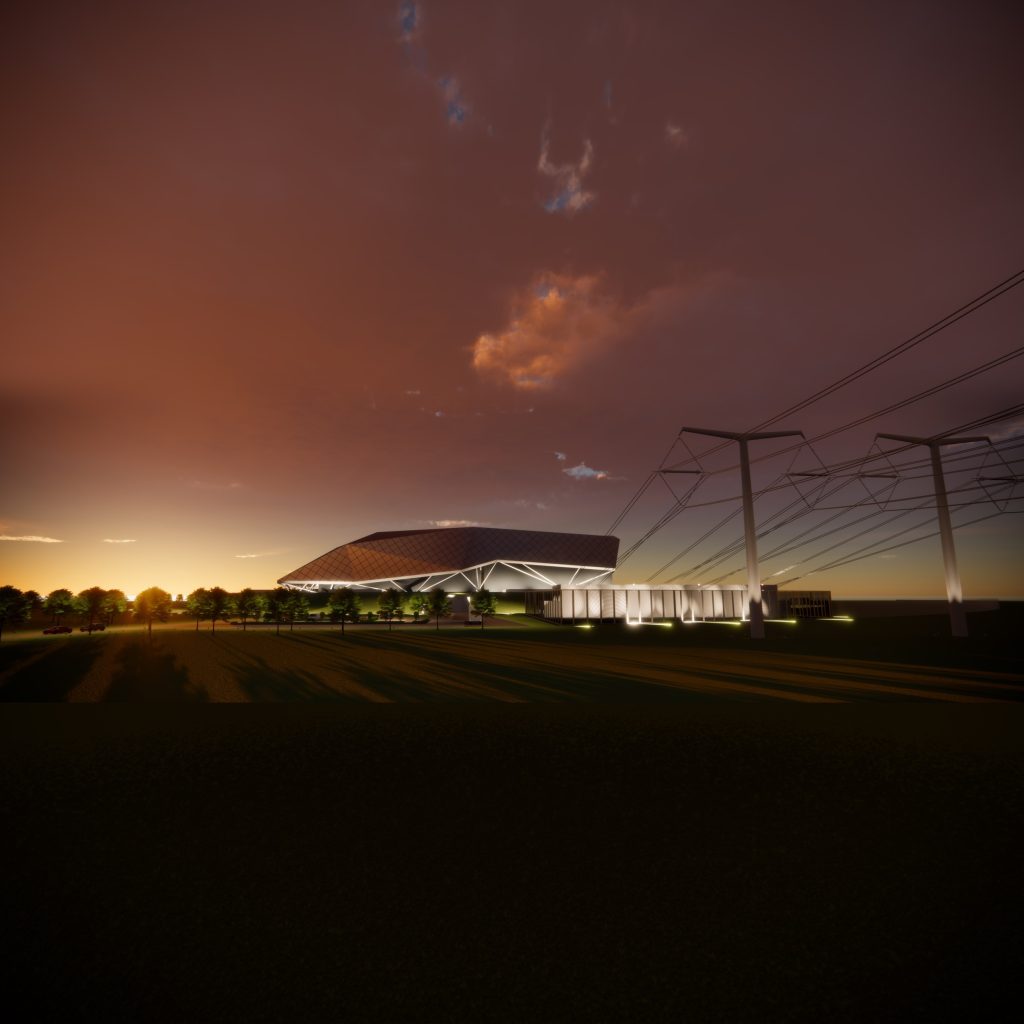
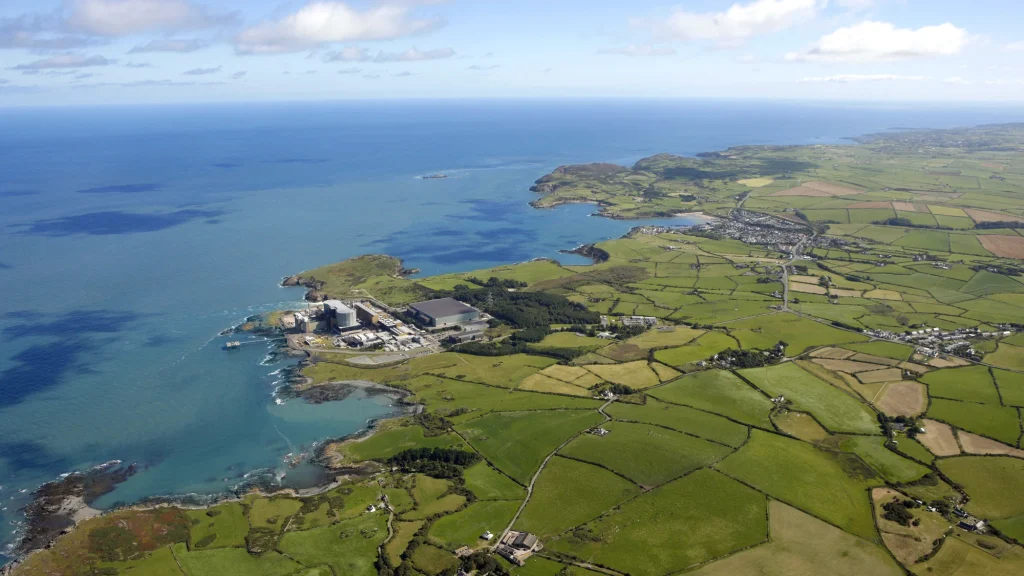
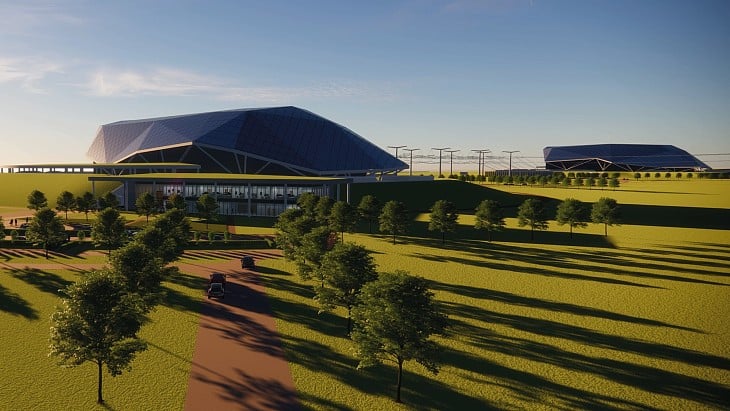
Three nuclear reactors on the coast of Anglesey, each one small enough to be assembled from factory-built modules rather than constructed entirely on site. That is the plan now locked into a formal contract between Rolls-Royce SMR and Great British Energy, Nuclear, signed in April 2026 and covering the delivery of the UK’s first fleet of small modular reactors at Wylfa, on the northern tip of Ynys Mon in North Wales.
The deal has been years in the making. Rolls-Royce first unveiled its SMR concept back in 2015, and the design passed a key stage of the UK’s Generic Design Assessment in 2024. But a contract is a different thing from a concept. It means money committed, timelines agreed, and jobs promised, 3,000 at the Wylfa site and another 5,000 across the national supply chain. The ambition is for the three reactors to be supplying power to the grid from the mid-2030s.
Each Rolls-Royce SMR unit is rated at 470 megawatts of electric power. Three of them together produce at least 1,400 megawatts, enough to power roughly three million homes for more than 60 years. To put that in context, the UK’s largest offshore wind farm, Hornsea 2, has a nameplate capacity of 1,386 megawatts, but it generates at that level only when the wind is blowing at optimum speed. Nuclear runs at full output around the clock, regardless of weather, providing what engineers call baseload power.
The site at Wylfa was chosen carefully. It previously hosted the Wylfa Magnox power station, which operated from 1971 to 2015, meaning the grid connections, cooling water intake, and much of the supporting infrastructure already exist. The site has capacity for up to eight SMR units, as reported by E&T Magazine, though only three are covered by the current contract.
The modular part of the name is where much of the engineering innovation lies. Conventional nuclear power stations are bespoke, one-off construction projects that routinely overrun on time and budget. Hinkley Point C, the large reactor being built in Somerset, was originally costed at £18 billion and is now expected to exceed £30 billion. The SMR approach aims to sidestep that pattern by manufacturing standardised components in factories, then shipping them to site for assembly. Think of it as the difference between building a house brick by brick on location versus assembling a prefabricated home from panels made in a workshop.
Engineering deep dive
The Rolls-Royce SMR is a pressurised water reactor, or PWR, the most widely deployed reactor type in the world. Its operating principle is one that A-level Physics students will find familiar from nuclear fission. Uranium-235 nuclei absorb slow-moving, or thermal, neutrons and split into two smaller nuclei, releasing energy and additional neutrons. Those neutrons are slowed down by a moderator, in this case ordinary water, and go on to trigger further fission events in a self-sustaining chain reaction.
The energy released by fission appears as kinetic energy of the fission fragments, which heats the surrounding fuel. In a PWR, water is pumped through the reactor core at high pressure, typically around 155 bar, preventing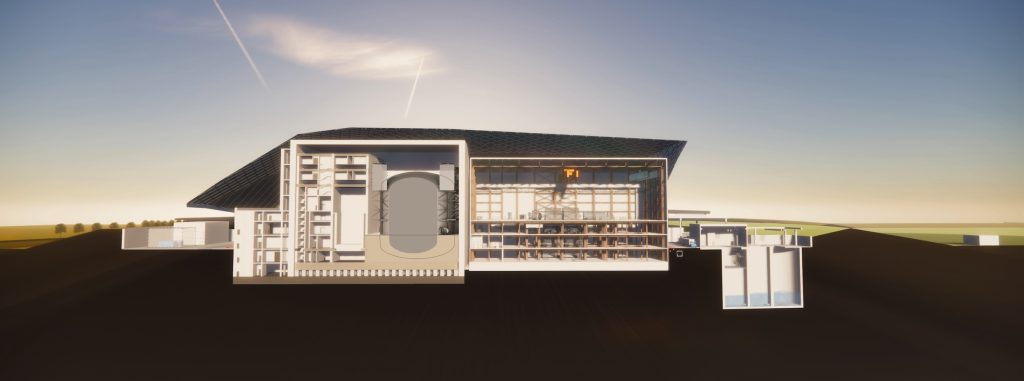 it from boiling even at temperatures above 300 degrees Celsius. This hot, pressurised water passes through a steam generator, a large heat exchanger where it transfers its thermal energy to a secondary water circuit at lower pressure. The secondary water boils, producing steam that drives a turbine connected to an electrical generator. The principle is identical to a coal or gas power station from the turbine onwards. The difference is in the heat source.
What makes the SMR design distinctive is its compactness. In a conventional large PWR, the reactor vessel, steam generators, pressuriser, and coolant pumps are separate components connected by large-bore piping. In the Rolls-Royce SMR, many of these are integrated into a more compact arrangement, reducing the overall footprint and simplifying construction. The entire nuclear island, meaning the reactor and its immediate support systems, fits within a building roughly the size of two football pitches.
Factory fabrication changes the economics and the quality control. In a factory setting, components can be manufactured using automated welding, precision machining, and standardised inspection processes. Welds can be X-rayed and ultrasonically tested in controlled conditions. Workers are not exposed to weather, and logistics are simpler. The finished modules are then transported to the site by road, where they are lifted into position and connected. This approach is well established in other industries; shipbuilding and offshore oil platform construction both extensively use modular fabrication, but it is relatively new in nuclear.
Safety is designed in rather than bolted on. The SMR uses passive safety systems that rely on natural physical processes, gravity, convection, and stored energy, rather than active pumps and operator intervention to keep the reactor safe during abnormal conditions. If the cooling pumps fail, for example, natural water circulation driven by temperature differences is sufficient to remove decay heat from the core. This is a direct application of the principle that hot fluids rise and cool fluids sink, driven by density differences. It means the reactor can reach a safe shutdown condition without any human action or external power supply.
The fuel itself is standard enriched uranium dioxide, the same type used in the existing global fleet of PWRs. Each fuel assembly contains fuel pellets, each about the size of a pencil eraser, stacked inside zirconium alloy cladding tubes. Zirconium is chosen because it has a very low neutron absorption cross-section, meaning it does not soak up the neutrons needed to sustain the chain reaction, while providing a strong, corrosion-resistant barrier between the fuel and the coolant.
For students interested in nuclear, mechanical, or materials engineering, the SMR programme offers a glimpse of how established physics is being repackaged through modern manufacturing techniques to solve a contemporary problem: how to build low-carbon power stations on time and on budget.
Links to the curriculum: A level, GCSE
The contract between Rolls-Royce SMR and Great British Energy Nuclear includes a two-stage structure, with the first phase covering site-specific design work and preparations. Whether the mid-2030s target for first power holds will depend on how smoothly the remaining regulatory approvals, detailed design, and supply chain mobilisation proceed. Nuclear projects have a long history of optimistic timelines. But the modular approach is, at least in principle, designed to break that pattern.
Credit via eandt.theiet.org
Construction & Infrastructure
Energy & EnvironmentBreakthroughs
Energy & Environment
Construction & Infrastructure