Energy & Environment
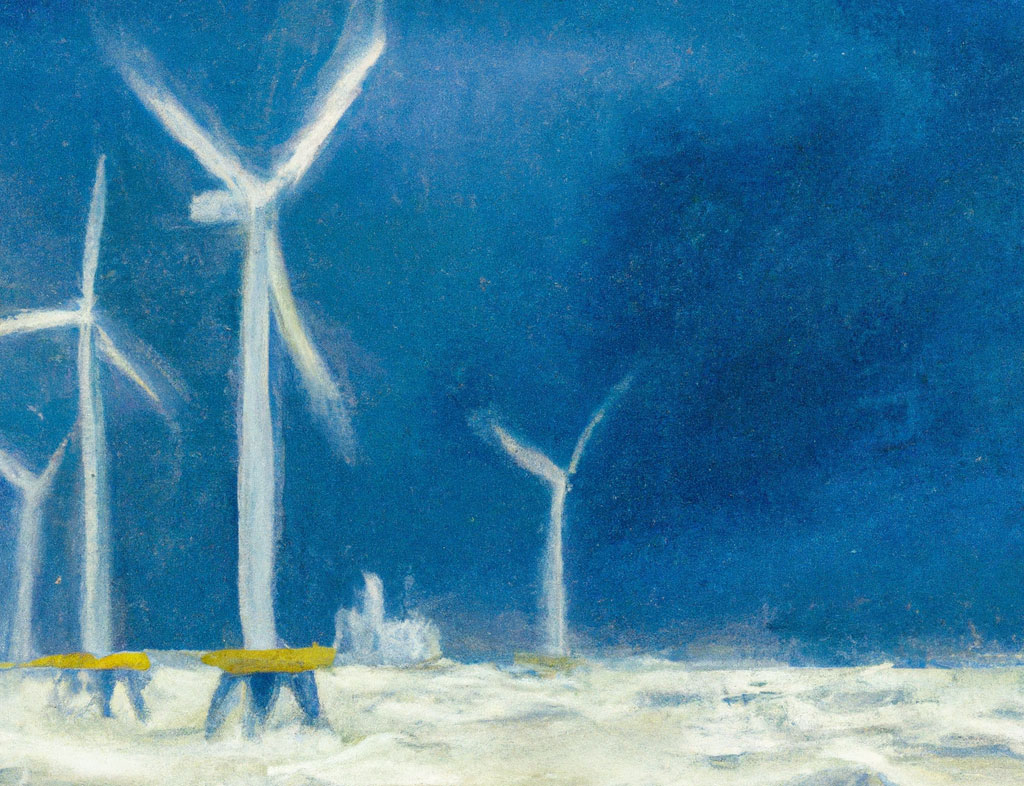
North Kyle Wind Farm in East Ayrshire stands on a former opencast coal mine with up to 45 metres of loose made ground. A new CECA case study shows how engineers made it solid enough for 49 turbines.
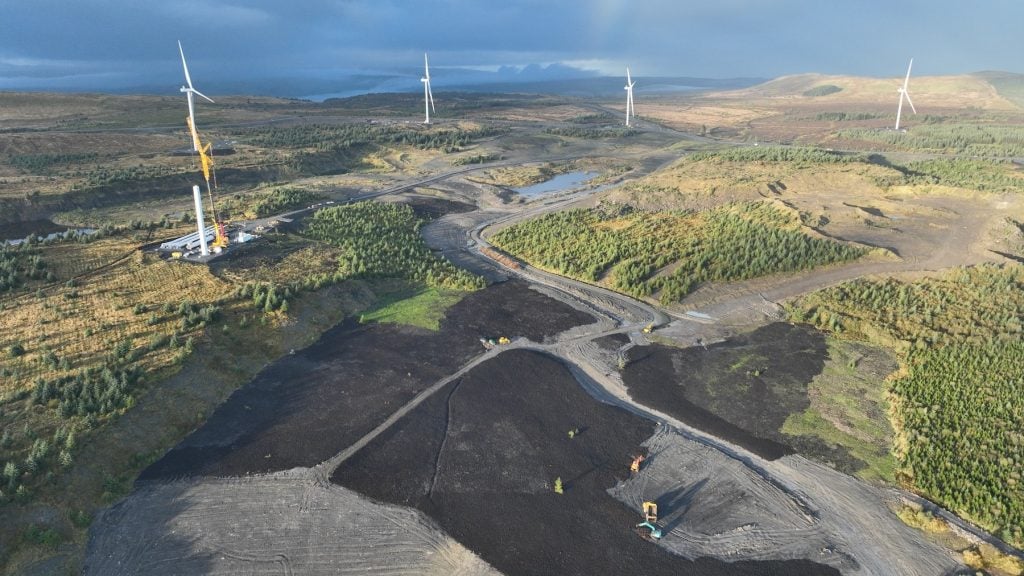
Imagine trying to stand a 4.5 megawatt wind turbine on a pile of loose rubble deeper than a 12-storey building is tall. That was the problem facing engineers at North Kyle Wind Farm in East Ayrshire, built on a former opencast coal mine where, as industry body CECA puts it, “made ground” extends to depths of up to 45 metres[1][2].
The wind farm is now finished. Developer Brockwell Energy announced in September that the 220.5MW site, with its 49 turbines, is fully operational[3][4]. On 11 November CECA, the Civil Engineering Contractors Association, picked it as one of its 30 projects for 30 years, and its case study shows how much of the hard work happened below ground. Getting the wind farm foundations right was the challenge that shaped the whole job.
Opencast mining strips away soil and rock to reach the coal, then pours the waste back into the hole. The result is made ground: a jumble of broken rock, clay and soil that was never compacted the way natural ground was over thousands of years. It can be loose, full of voids and different from one metre to the next. Put a heavy load on it and it can settle unevenly, and a wind turbine is very fussy about staying upright.
Principal contractor Jones Bros, from Ruthin in north Wales, worked with design consultancy Tony Gee and ground improvement specialist Menard UK to develop ground improvement solutions that, CECA says, helped deliver the project to programme and budget[5]. Two techniques did the heavy lifting: controlled modulus columns and dynamic compaction, which Jones Bros says was used for the first time on a UK wind farm[6]. Menard lists the job as using both methods beneath a series of gravity bases 21.5 and 22.2 metres across[7].
Dynamic compaction works just as the name suggests. A crane lifts a heavy steel weight and drops it repeatedly on a grid of points, pressing the loose material into a denser, firmer layer. Controlled modulus columns are different. Here, a rig drills into the ground and fills the hole with grout as it pulls out, creating stiff columns that help carry the load through the weak ground.
Once the ground was improved, Jones Bros built 49 reinforced concrete foundations.[8] They also made 24km of new access tracks and upgraded another 20km so turbine parts and transformers could be brought in.[9][10] Brockwell says all the turbine foundations were finished in the first 18 months after construction started in June 2023.[11][12] The first electricity was sent to the grid on 2 April 2025.[13]
The site was also restored as it was built. CECA notes that the team reused surplus peat across 24 hectares of former opencast land[14]. Brockwell expects North Kyle to generate the annual electricity consumption of around 186,600 homes[15], from an investment of approximately £300 million[16][17]. This year the project won Project of the Year and Onshore Construction Project of the Year at the National Wind Energy Awards[18].
Engineering deep dive
Start with the turbines. 220.5MW shared between 49 turbines gives 220.5 / 49 = 4.5MW each.
Dynamic compaction. The published sources do not give the weights used at North Kyle, so take a typical example: a 15 tonne steel pounder dropped from 20 metres (an assumption). Using GCSE energy equations, the gravitational potential energy released per drop is:
E = mgh = 15,000 kg × 9.81 m/s² × 20 m ≈ 2.9MJ
All of that becomes kinetic energy just before impact, so ½mv² = mgh and v = √(2gh) = √(2 × 9.81 × 20) ≈ 19.8 m/s, about 71km/h. For comparison, a 1,500kg car at 70mph (31m/s) carries ½ × 1,500 × 31² ≈ 0.72MJ, so each blow lands with about four times that energy, focused on a few square metres of ground.
Gravity bases. A gravity base holds a turbine up by sheer weight and spreads that weight over a wide circle. For a 22.2 metre diameter base, the area is:
A = πr² = π × 11.1² ≈ 387m²
Suppose the turbine, concrete and backfill together weigh 3,000 tonnes (an assumption for illustration). The weight is 3,000,000 × 9.81 ≈ 29.4MN, so the average pressure on the ground is:
p = F / A = 29,400,000 / 387 ≈ 76,000Pa, or 76kPa
For comparison, a 70kg person standing on two feet with a total sole area of about 0.05m² presses down at about 14kPa. The base pushes on the ground around five times harder, over an area bigger than a tennis court, and the wind tries to tip it over too. That is why the ground underneath has to be stiff and even, and why the engineers spent so long improving it.
These are the same ideas you meet in A-level Maths mechanics and Physics. Our guide to how Maths A-level prepares you for engineering explains where they lead.
Links to the curriculum: A level, GCSE
Britain has a lot of old mining land, much of it in windy upland areas. If we learn how to build safely on made ground, more of these sites could be used, although each one is different and needs its own ground investigation first.
Behind all this are geotechnical engineers who study the ground and design the improvements, civil engineers who plan the foundations and roads, and plant operators who run the cranes and rigs. The project gave jobs and training to 356 people, including trainees and higher apprentices[19]. Check out our guide to degrees versus degree apprenticeships to compare your options, and our explainer on the main types of engineering to see where civil and geotechnical engineering fit in.
Image: Brockwell Energy
Credit via ceca.co.uk
CECA 30 Projects for 30 Years: North Kyle Wind Farm, Jones Bros Ruthin
The site's mining legacy presented substantial challenges, with made ground extending to depths of up to 45 metres.
Checked 17 November 2026
CECA case study charts Jones Bros ground works on 45m-deep made ground at North Kyle Wind Farm
The trade body said the former opencast coal mining site presented made ground extending to depths of up to 45 metres.
Checked 17 November 2026
North Kyle Wind Farm Now Fully Operational
the 220.5 MW wind farm comprises 49 turbines
Checked 17 November 2026
North Kyle Wind Farm Now Fully Operational
Brockwell Energy's North Kyle Wind Farm in East Ayrshire is now fully operational
Checked 17 November 2026
CECA 30 Projects for 30 Years: North Kyle Wind Farm, Jones Bros Ruthin
Working with Tony Gee and Menard UK, Jones Bros developed ground improvement solutions that helped deliver the project to
Checked 17 November 2026
Jones Bros takes three top honours at National Wind Energy Awards
controlled modulus columns and dynamic compaction, which was used for the first time on a UK wind farm
Checked 17 November 2026
Menard UK, national specialist in ground improvement
CMCs and DC to a series of 21.5 m/22.2 m diameter gravity bases
Checked 17 November 2026
Constructing 49 reinforced concrete foundations, excavating, and backfilling for cabling
Checked 17 November 2026
Creating 24km of access tracks and upgrading a further 20km to allow for turbine and transformer delivery
Checked 17 November 2026
CECA case study charts Jones Bros ground works on 45m-deep made ground at North Kyle Wind Farm
The contractor built 24km of new access tracks and upgraded a further 20km to allow turbine and transformer deliveries.
Checked 17 November 2026
All turbine foundations completed within the first 18 months.
Checked 17 November 2026
Construction: Began in June 2023
Checked 17 November 2026
North Kyle Wind Farm Achieves First Export
North Kyle Wind Farm achieved its first export to the grid on 2 April 2025
Checked 17 November 2026
CECA 30 Projects for 30 Years: North Kyle Wind Farm, Jones Bros Ruthin
reused surplus peat across 24 hectares of former opencast land
Checked 17 November 2026
North Kyle Wind Farm Now Fully Operational
expected to produce the annual electricity consumption of around 186,600 homes
Checked 17 November 2026
North Kyle Wind Farm Now Fully Operational
an investment of approximately £300 million
Checked 17 November 2026
Jones Bros takes three top honours at National Wind Energy Awards
Jones Bros was Principal Contractor for the £300 million scheme.
Checked 17 November 2026
Jones Bros takes three top honours at National Wind Energy Awards
won both the Project of the Year and Onshore Construction Project of the Year at the National Wind Energy Awards
Checked 17 November 2026
CECA 30 Projects for 30 Years: North Kyle Wind Farm, Jones Bros Ruthin
With employment and training opportunities for 356 people, including trainees and higher apprentices,
Checked 17 November 2026
Energy & Environment
Energy & EnvironmentInfographics
Energy & Environment