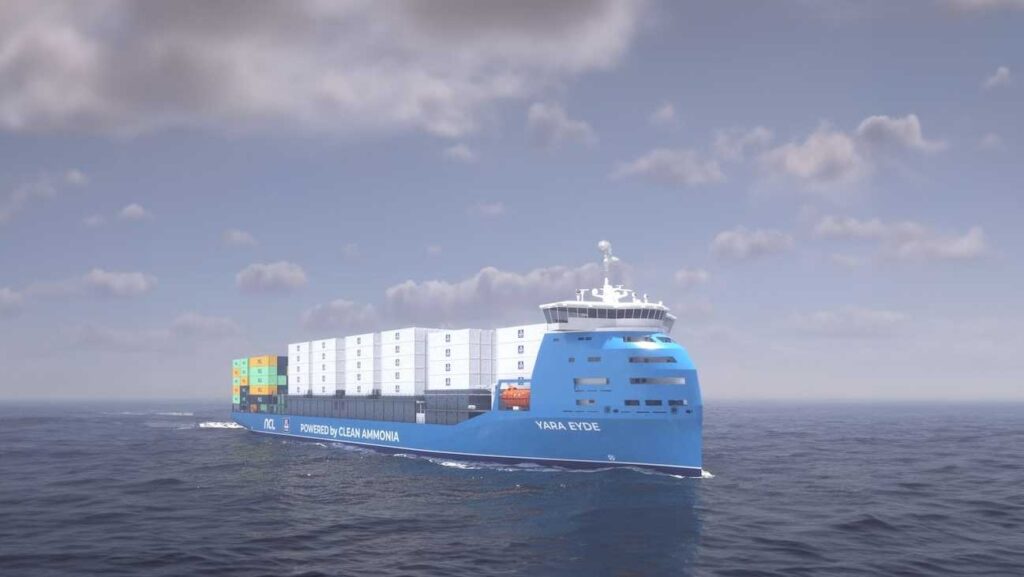
Plugging Ships Into Wind Turbines: Stillstrom Tests 11 kV Offshore Vessel Charging Unit
Stillstrom, a Maersk spin-out with a base in Aberdeen, has built and factory-tested a containerised 11 kV unit that lets service ships charge their batteries straight from offshore wind turbines.
Key points
- Stillstrom by Maersk has built and factory-tested a containerised 11 kV unit that lets service ships charge from offshore wind turbines.
- The tests were witnessed by the independent body DNV.
- The unit can be fitted to new or existing ships and moved between vessels.
- Stillstrom has a UK company in Aberdeen and expects sea trials of the full system by summer 2027.
Every day, crews on service ships help keep offshore wind farms running. They spend days living on board, crossing over to turbines to fix, inspect, and maintain them. It's ironic that most of these ships burn fuel while sitting next to huge electricity generators at sea. Stillstrom wants to change that by plugging them in.
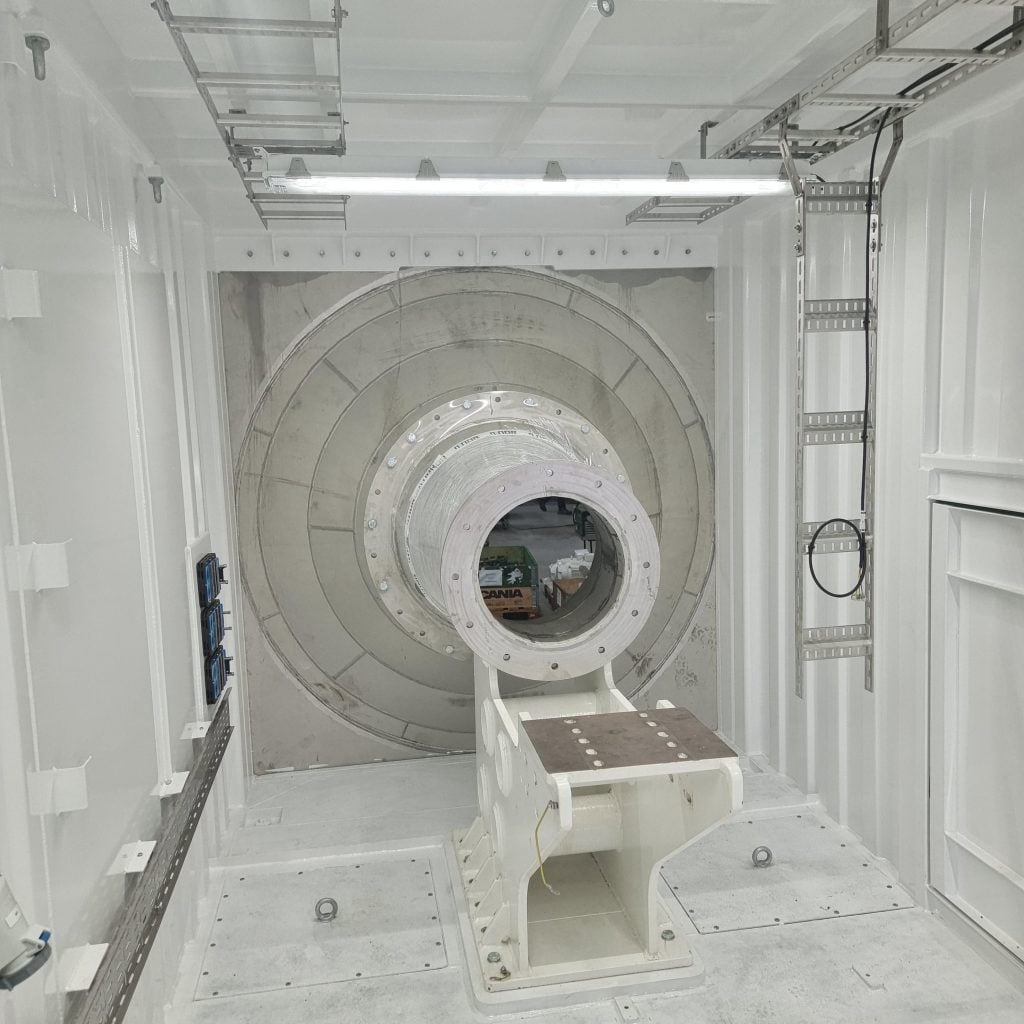
Stillstrom by Maersk has finished building and testing its Vessel Connection Unit, or VCU.[1] Factory acceptance testing means running all the checks before a machine leaves the workshop, and DNV, an independent certification body, watched the process.[2] The company says this is the world's first 11 kV interface unit for charging vessels at offshore wind farms.[1]
How offshore vessel charging works
The VCU is placed in a shipping container on the ship's deck. Inside, it holds the 11 kV connector package.[3] It pulls in a high-voltage cable from the turbine and locks it in place, letting a service vessel charge its batteries straight from the wind farm.[4][5] Since it's self-contained, the unit can be added to new ships, retrofitted to older ones, or even moved between ships with the right cabling.[6][7]
This is important because, according to the company, high-voltage power has never been transferred to a vessel offshore like this before.[8] The challenge isn't the electricity itself. It's making a safe, watertight, high-voltage connection on a moving ship, and then disconnecting it smoothly when finished.
The project has strong ties to Scotland. Stillstrom started in 2019 as a Maersk innovation project, became an independent company in 2022, and set up a UK branch in Aberdeen in March 2026.[9][10] Graeme Wood, Managing Director of Stillstrom UK, summed it up: “In simple terms, the VCU has been built and tested, and we are good to go.”[11]
The next step is to test the system at sea. The company expects its full charging system to be ready for longer offshore trials by summer 2027.[12] You can find more details in Stillstrom's announcement and Offshore Wind's report. For more about the cables bringing wind power ashore, check out our story on the 95 subsea cables at East Anglia THREE.
Engineering deep dive
why charge a ship at 11,000 volts?
Your phone charger works at a few volts and a UK plug socket at 230 V. Stillstrom's unit works at 11 kV, which is 11,000 volts. The reason comes straight out of A-level Physics: for a given power, a higher voltage means a smaller current, and a smaller current wastes far less energy as heat.
Step 1: pick a charging power. Stillstrom has not published a power rating for this unit, so take an assumed charging power of 5 MW (5,000,000 W) to see how the numbers behave.
Step 2: find the current. Large ship and grid systems use three-phase electricity, where power P = √3 × V × I. Rearranging, I = P ÷ (√3 × V). At 11,000 V: I = 5,000,000 ÷ (1.732 × 11,000) ≈ 262 A.
Now assume the same power had to flow at 690 V, a voltage often used for ship equipment (another assumption for comparison): I = 5,000,000 ÷ (1.732 × 690) ≈ 4,180 A. That is about 16 times the current.
Step 3: compare the heating losses. The power wasted in a cable is P = I²R. Squaring the current ratio, 16² ≈ 254, so the same cable would waste roughly 250 times more energy as heat at 690 V. To carry 4,000 A safely you would need very thick, heavy copper, which is not what you want to haul across a gap between a turbine and a rolling ship.
Step 4: how long does a charge take? Assume the vessel has a 4 MWh battery and needs topping up from 20% to 80%. That is 0.6 × 4 = 2.4 MWh. At 5 MW, time = energy ÷ power = 2.4 ÷ 5 = 0.48 hours, or about 29 minutes, ignoring losses. Real systems charge more slowly near full to protect the cells, so the true figure would be longer.
The same logic explains why the National Grid uses 275 kV and 400 kV lines to move power around Britain. High voltage is the engineer's trick for moving lots of power with little waste.
Links to the curriculum: A level, GCSE
What happens next
Testing in the factory is one thing, but the North Sea is a different challenge. Sea trials will have to prove the connection is safe in wind, waves, and salt spray, that crews can connect and disconnect it quickly, and that turbines can supply the power without affecting the grid. Standards and certification for charging at sea are still being developed along with the hardware.
What this means for you
Behind this are electrical engineers who design high-voltage connectors and protection systems, marine engineers who fit the equipment into working vessels, and offshore wind technicians who keep the turbines running. Many of these jobs are based in UK ports such as Aberdeen, where Stillstrom has its UK company. Our guide to starting a career in electrical engineering explains the subjects and qualifications you need, and our beginner’s guide to finding an engineering apprenticeship shows how to earn while you train.
Credit via stillstrom.com
Further reading
Sources
12 sources
Stillstrom builds world’s first 11 kV interface unit for charging vessels in Offshore Wind Farms
Stillstrom by Maersk has completed the build and factory acceptance testing of its proprietary Vessel Connection Unit (VCU)
Checked 10 November 2026
Stillstrom Completes 11 kV Unit for Vessel Charging at Offshore Wind Farms
The factory acceptance testing was witnessed by DNV.
Checked 10 November 2026
Stillstrom builds world’s first 11 kV interface unit for charging vessels in Offshore Wind Farms
The containerised VCU houses the 11 kV connector package.
Checked 10 November 2026
Stillstrom builds world’s first 11 kV interface unit for charging vessels in Offshore Wind Farms
Stillstrom's VCU draws in a high-voltage cable from the turbine and locks it into a connector package
Checked 10 November 2026
Stillstrom builds world’s first 11 kV interface unit for charging vessels in Offshore Wind Farms
a service operation vessel (SOV) charge its batteries directly from an offshore wind farm
Checked 10 November 2026
Stillstrom builds world’s first 11 kV interface unit for charging vessels in Offshore Wind Farms
Housed in its own container, the unit can be integrated on newbuild and retrofitted vessels alike
Checked 10 November 2026
Stillstrom Completes 11 kV Unit for Vessel Charging at Offshore Wind Farms
The unit can also be transferred between vessels where the necessary onboard cabling is available.
Checked 10 November 2026
Stillstrom builds world’s first 11 kV interface unit for charging vessels in Offshore Wind Farms
High-voltage power has never been transferred to a vessel offshore in this way
Checked 10 November 2026
Stillstrom builds world’s first 11 kV interface unit for charging vessels in Offshore Wind Farms
Founded in 2019 as a Maersk innovation project and established as an independent company in 2022
Checked 10 November 2026
Stillstrom Completes 11 kV Unit for Vessel Charging at Offshore Wind Farms
Stillstrom established a dedicated UK entity in Aberdeen in March 2026
Checked 10 November 2026
Stillstrom builds world’s first 11 kV interface unit for charging vessels in Offshore Wind Farms
In simple terms, the VCU has been built and tested, and we are good to go.
Checked 10 November 2026
Stillstrom builds world’s first 11 kV interface unit for charging vessels in Offshore Wind Farms
The company's complete charging system is expected to be ready for extended offshore trials by Summer next year.
Checked 10 November 2026
Share
Related stories
All Energy & Environment
Aerospace, Defence & Marine
Offshore Wind Cargo Drones Deliver 65 kg Loads to North Sea Turbines
Construction & Infrastructure
Floating Wind Turbine Ready for North Sea Tow-Out
Aerospace, Defence & Marine