For studentsReal engineer
Professor Eleanor Stride, biomedical engineer
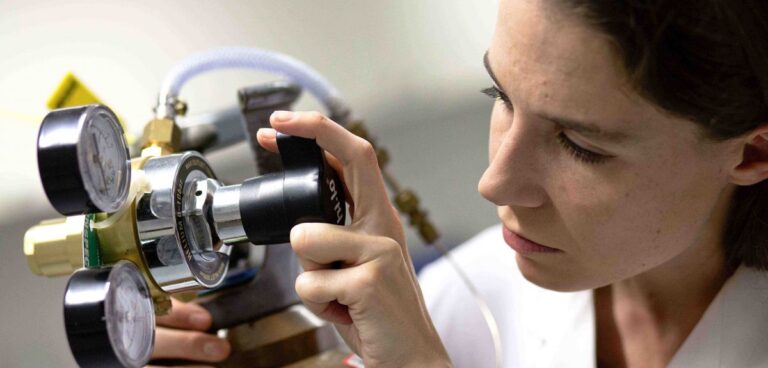
Professor Eleanor Stride is a biomedical engineer at the University of Oxford. She develops new ways of delivering chemotherapy drugs. Her work uses tiny…
Design, test, maintain and manage the technology that keeps patients alive and well
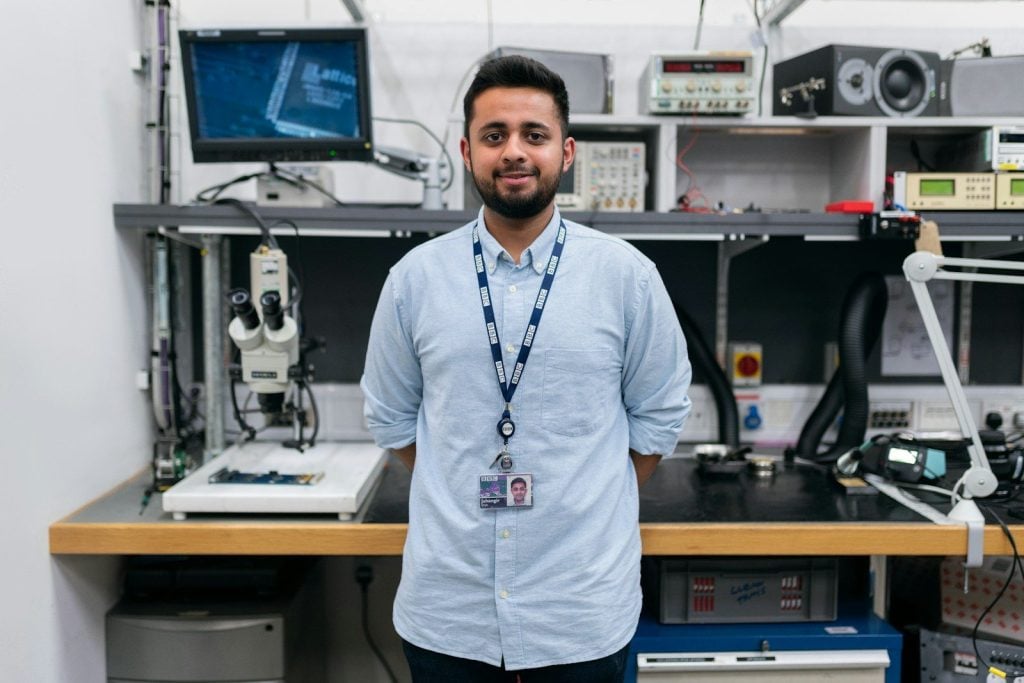
Biomedical engineers design, test, maintain and manage the technology that keeps people alive and well (scanners, monitors, prosthetics etc).
In the UK you can work for the NHS or medical technology companies. Most people enter the profession with an engineering or physical sciences degree and then do either the NHS Scientist Training Programme or an industry graduate scheme. Apprenticeship routes also exist. Starting pay in the NHS is £32,073 on Band 5.
Key points
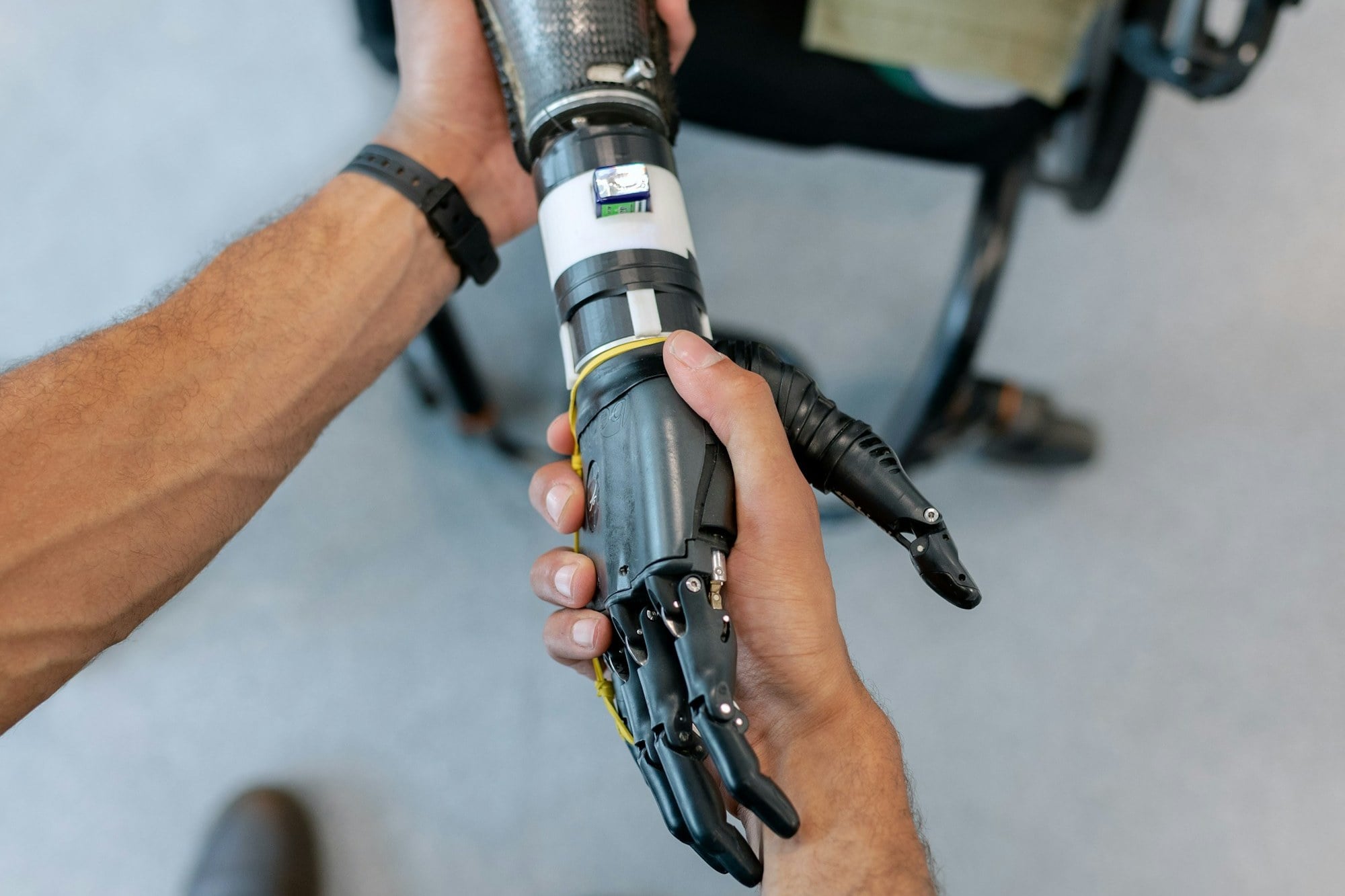
Biomedical engineers use physics, materials, electronics, and computing to help diagnose, treat, and rehabilitate patients. Some of them go on to design new devices. Others keep the hospital’s machines safe, calibrated, and ready.
In the NHS you’ll predominantly see a clinical engineer, a clinical scientist (in the field of clinical engineering) or a clinical technologist. In industry, it’s typically a biomedical, medical device or design engineer. IPEM (the professional body) defines the clinical engineer as one who “designs, develops, supports and manages medical devices” and they work in either the hospital or the industry.[6] The National Careers Service lists tasks such as managing scanners, imaging equipment, and monitoring systems; carrying out quality assurance; and constructing and testing of medical devices such as heart valves and hearing implants.[7]
This is a composite Tuesday, put together from the duties listed by Prospects and the National Careers Service rather than from the duties of one individual.
At 10am in ICU, a clinical engineer attends a ventilator flagged by a nurse for intermittent alarm. She checks the error log, swaps a sensor, and runs a test before signing it back in. At 11am she is in the medical physics workshop reviewing a safety incident report on an infusion pump. After lunch she attends a meeting about purchasing new patient monitors where she asks the awkward questions about maintenance.
Hours are normally 37 to 40 per week. Equipment safety and maintenance can be carried out outside normal hours, and some hospital posts have an evening or weekend rota.[7]
The vast majority of NHS staff are on the Agenda for Change pay scale. The figures below are the national rates for England from 1 April 2026.[8] Staff in London and some of the high cost areas will of course be on a supplement.
| Career stage | Typical pay | Source |
|---|---|---|
| Apprentice (any employer) | From £8 an hour legal minimum for under 19s and first-year apprentices | Acas, 2026 |
| NHS entry level, Band 5 | £32,073 to £39,043 | Prospects; NHS Employers, 2026/27 |
| NHS STP trainee or experienced engineer, Band 6 | £39,959 to £48,117 | NSHCS; NHS Employers, 2026/27 |
| NHS, significant experience, Band 7 | £49,387 to £56,515 | Prospects; NHS Employers, 2026/27 |
| NHS senior and lead roles, Bands 8a to 8c | £57,528 to £91,609 | NHS Employers, 2026/27 |
| Industry and NHS, starter to experienced | £26,000 to £75,000 | National Careers Service |
The apprentice rate is £8 an hour, and employers often pay more.[9] In the private sector, pay varies widely according to Prospects. For other disciplines see our engineering salaries guide.
Maths and Physics open the most doors. Biology is somewhat useful, but few courses accept it instead of Physics. Always check course pages before making your choice.
| Level | Essential | Helpful |
|---|---|---|
| GCSE | Maths, English, and a science at grade 4 or above (degree apprenticeships require 4 or 5 GCSEs at 9-4)[7] | Triple science, Computer Science, Design and Technology |
| A-level or equivalent | Maths, plus Physics or another science. UCL requires A*A in Maths and Physics. Biology can replace Physics if you have GCSE Physics at grade 7.[10] | Biology, Chemistry, Further Maths |
| Scottish Highers | Higher Maths and Higher Physics (Strathclyde). Higher Biology is recommended for the BEng and required for the MEng[11] | Advanced Higher Maths and Physics |
| T Level or BTEC | Accepted by some universities via set grades e.g. Sheffield’s foundation year (Distinction in a relevant T Level) and Exeter (Engineering T Levels plus A level Maths).[12][13] | Extra maths units |
UCL’s normal offer is A*AA, Sheffield requires AAB, and Exeter requires AAB to ABB.[10][14][13] Sheffield’s foundation year requires BBB or BBC with Maths and a science, which is a good backstop.[12] Our guide to how the Biology A-level prepares you for engineering explains where the subject is used.
The table covers England.
| Route | Typical length | What it costs or pays | Where it leads |
|---|---|---|---|
| BEng or MEng in biomedical engineering, or another engineering or physics degree | 3 years (BEng) or 4 years (MEng), plus an optional placement year | Fees up to £9,790 a year in England for 2026/27, covered by a loan[15] | Industry graduate schemes, or the STP |
| NHS Scientist Training Programme (after a degree) | 3 years | Paid at Band 6, with a fully funded part-time master’s | Clinical scientist, registered with the HCPC |
| Healthcare science practitioner degree apprenticeship (Level 6)[7] | At least 3 years | Paid job, no tuition fees | A BSc in healthcare science and a practitioner role |
| Clinical scientist apprenticeship (Level 7) | 36 months | Paid job. Government funding is only available for starters aged 16 to 21 since January 2026 | HCPC registration as a clinical scientist |
| T Level in engineering, manufacturing, processing and control | 2 years | Study with a placement of at least 315 hours (45 days)[16] | University, an apprenticeship or a technician job |
| Engineering and manufacturing foundation apprenticeship (Level 2) | About 8 months to gateway | Paid job for ages 16 to 21[17] | A Level 3 apprenticeship or a technician role |
The STP is the main route to becoming a clinical scientist in Clinical Engineering. You are employed for three years at Band 6, train in a hospital, and study for a fully funded MSc in parallel. Clinical Engineering is one of the physical sciences specialisms.[18] You need a 1st or 2:1 in a relevant pure or applied science or engineering subject, or a 2:2 with a relevant MSc or PhD.[3] NSHCS has just finished their 2026 recruitment round, and the next will likely open in January 2027 (dates to be confirmed).[2] The window is very short, so check the NSHCS applicants page from December. It is a very competitive route, so experience is key.
In Scotland the equivalent is the Scottish Medical Physics and Clinical Engineering Training Scheme. Year one is a masters and you need an honours degree in an engineering subject (electronic, mechanical or software).[19]
The Healthcare Science Practitioner Degree Apprenticeship takes a minimum of 3 years and requires GCSEs and A levels or equivalent. The standard is currently under review with a new assessment plan coming into effect for starters from 13th September 2027.[20] Practitioners in the physical sciences can join the Register of Clinical Technologists.[21] The Level 7 Clinical Scientist Apprenticeship requires a 2:1 or first and leads to HCPC registration, although it is now only government funded for younger starters.[5]
The T Level in Healthcare Science has now closed to new students. The final cohort started in September 2025. The Engineering, Manufacturing, Processing and Control T Level is the one that’s still running. You can search for vacancies via Find an apprenticeship. For more information on the options available, see Engineering degrees vs degree level apprenticeships.
Prospects lists hospital trusts, equipment manufacturers, pharmaceutical and biotech firms, charities, universities and government agencies.[1] Names to know include:
The Institute of Physics and Engineering in Medicine (IPEM) is the charity for medical physicists and clinical engineers. Student membership costs £26 per year.[24] IPEM also runs the Register of Clinical Technologists, accredited by the Professional Standards Authority.[25] Clinical scientists must be on the HCPC register to work in the NHS. The Academy for Healthcare Science has an accredited register for healthcare science practitioners.[26] Engineers can become EngTech, IEng or CEng via the Engineering Council through bodies such as IPEM, the IET or IMechE.[27]
Year 9 to 11 (ages 13-16). Keep Maths and Physics strong and take triple science if possible. Look at our guide to the various engineering disciplines to see which might suit you and read Professor Eleanor Stride’s story to get an idea of what biomedical engineering offers.
Year 12 (ages 16-17). Take Maths and Physics, with Biology or Chemistry if possible. Visit a local hospital’s clinical engineering department and ask about a visit, and use our work experience guide. Renishaw apprenticeship applications open on 30th November.
Year 13 (ages 17-18). Apply via UCAS for 2027 entry and to employers for apprenticeships in parallel. Check which degrees are IPEM or IET accredited. Our engineering scholarships guide has funding information.
No. Biomedical scientists predominantly test samples in the lab. Biomedical engineers work with the devices and the equipment.
No, Prospects also lists Electrical, Electronic and Mechanical Engineering and Physics as relevant degrees. Many employers will want at least a 2:1.
Normally they don’t. Maths and Physics are far more important though Strathclyde do require Higher Biology for their MEng.
Entry-level posts are typically Band 5 (paying £32,073 to £39,043 in England from April 2026). Experienced engineers are in Band 7 (£49,387 to £56,515).
Yes via the Healthcare Science Practitioner degree apprenticeship (which gives you the degree as you work). A foundation apprenticeship or an Engineering T Level can be a route in.
Feedback or corrections? Email [email protected].
Image: ThisisEngineering, Unsplash
Entry level salaries range from £32,073 to £39,043 (Band 5).
Checked 2 November 2026
Recruitment for 2026 has now concluded. Applications for next year will likely open in January 2027.
Checked 2 November 2026
NHS Scientist Training Programme
Applicants must have a 1st or 2.1 either in an undergraduate honours degree or an integrated master's degree in a pure or applied science subject relevant to the specialism
Checked 2 November 2026
In March 2025 it was announced enrolments onto the T Level in Healthcare Science will cease, after the Sept 2025 cohort.
Checked 2 November 2026
From 1 January 2026, Level 7 apprenticeships will only be government-funded for apprentices who, at the start of their apprenticeship training, are either aged 16-21
Checked 2 November 2026
Clinical engineers design, develop, support and manage medical devices
Checked 2 November 2026
Healthcare Science Practitioner Level 6 Degree Apprenticeship
Checked 2 November 2026
Please note that these rates are effective from 1 April 2026.
Checked 2 November 2026
The National Minimum Wage rate for apprentices is £8 per hour.
Checked 2 November 2026
A*A in Mathematics and Physics required (in any order). Biology acceptable in lieu of Physics, if Physics grade A or 7 achieved at GCSE
Checked 2 November 2026
How to choose your subjects at school
Recommended for BEng Biomedical Engineering and required for MEng Biomedical Engineering.
Checked 2 November 2026
Biomedical Engineering with a Foundation Year BEng
Distinction in the relevant T Level, including grade B in the core component
Checked 2 November 2026
GCE A-Level Maths grade B and another science* subject at grade B.
Checked 2 November 2026
Accredited by the Institute of Physics and Engineering in Medicine (IPEM) and the Institution of Engineering and Technology (IET)
Checked 2 November 2026
Student finance for new full-time students
Checked 2 November 2026
T Level in engineering, manufacturing, processing and control
industry placement runs for a minimum of 315 hours (45 days) overall
Checked 2 November 2026
Engineering and manufacturing foundation apprenticeship (FA0006)
The apprentice must normally be age 16 to 21 at the start of their apprenticeship.
Checked 2 November 2026
Scientist Training Programme trainee clinical scientist advert
Salary AfC Band 6 (plus high-cost area allowance where applicable)
Checked 2 November 2026
You'll need to complete a postgraduate-level work-based training programme to become a clinical engineer in the NHS.
Checked 2 November 2026
Healthcare science practitioner (integrated degree) (ST0413)
This apprenticeship is in revision
Checked 2 November 2026
Healthcare science practitioner (integrated degree) v1.0
are also eligible to join the accredited Register of Clinical Technologists (RCT) held by the Institute of Physics and Engineering Medicine (IPEM).
Checked 2 November 2026
~60 early careers roles are hired per year, placing graduates, interns and apprentices in structured programmes
Checked 2 November 2026
Our Leadership Development Programmes are designed for university leavers
Checked 2 November 2026
Student £26 annually
Checked 2 November 2026
Clinical Technologists can join the Register of Clinical Technologists (RCT) which is a register accredited by the Professional Standards Authority (PSA) and administered by IPEM.
Checked 2 November 2026
Academy for Healthcare Science
Consistent regulation for Healthcare Science Practitioners, Life Science Industry and Clinical Research Practitioners
Checked 2 November 2026
Only registrants can use these legally-protected titles
Checked 2 November 2026
Last checked 5 November 2026 by the Born to Engineer editorial team
If you have any feedback, spot any errors or have suggestion on how we can improve our resources please let us know at [email protected]
For studentsReal engineer
Professor Eleanor Stride is a biomedical engineer at the University of Oxford. She develops new ways of delivering chemotherapy drugs. Her work uses tiny…

Careers guides
The clue is in the name. Chemistry is a worthwhile A-Level to consider if you’re thinking of studying a degree and/or pursuing a career…

Careers guides
Biology A-level is easy to overlook, but it builds systems thinking, data skills and lab experience that suit biomedical, environmental and agricultural engineering.
For studentsReal engineer
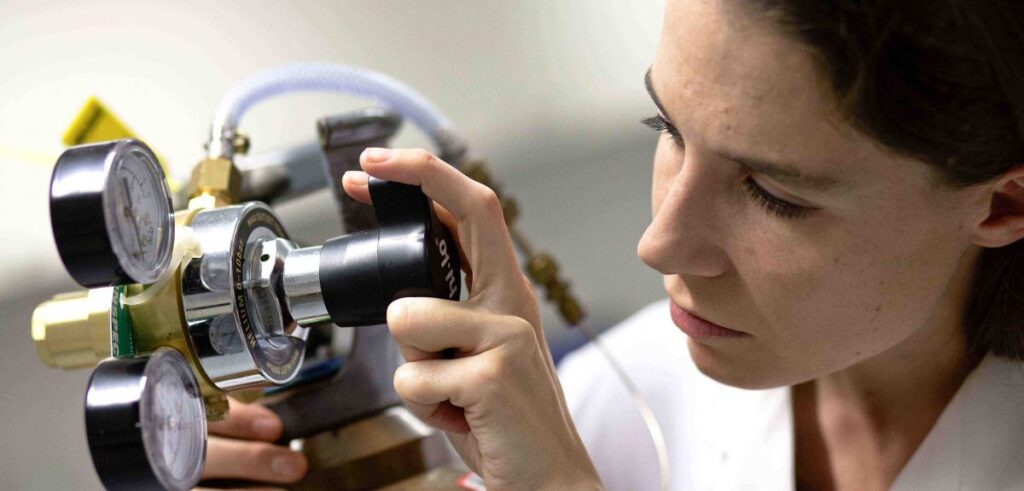
Professor Eleanor Stride is a biomedical engineer at the University of Oxford. She develops new ways of delivering chemotherapy drugs. Her work uses tiny…

For studentsCareers guides
What chemical engineers do, what they earn, which subjects help, and how to get in by degree, apprenticeship or T Level.