Construction & Infrastructure
Duct Tape Beats Sandbags in University of Hull Flood Door Tests
University of Hull tests for Flood Re found that duct tape on the outside of a front door cut flood leakage by up to…
2 November 2026 · 10 minutes
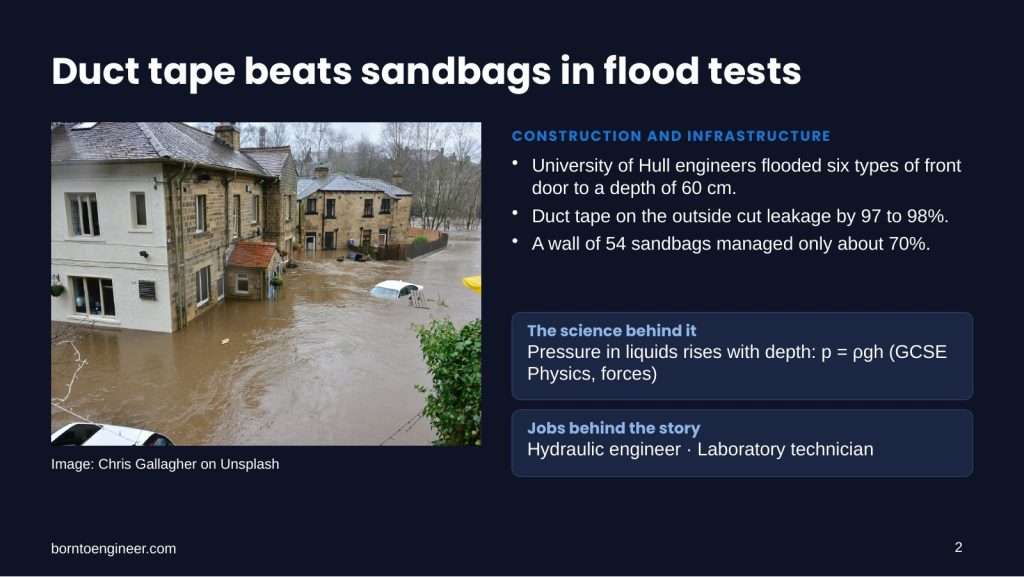
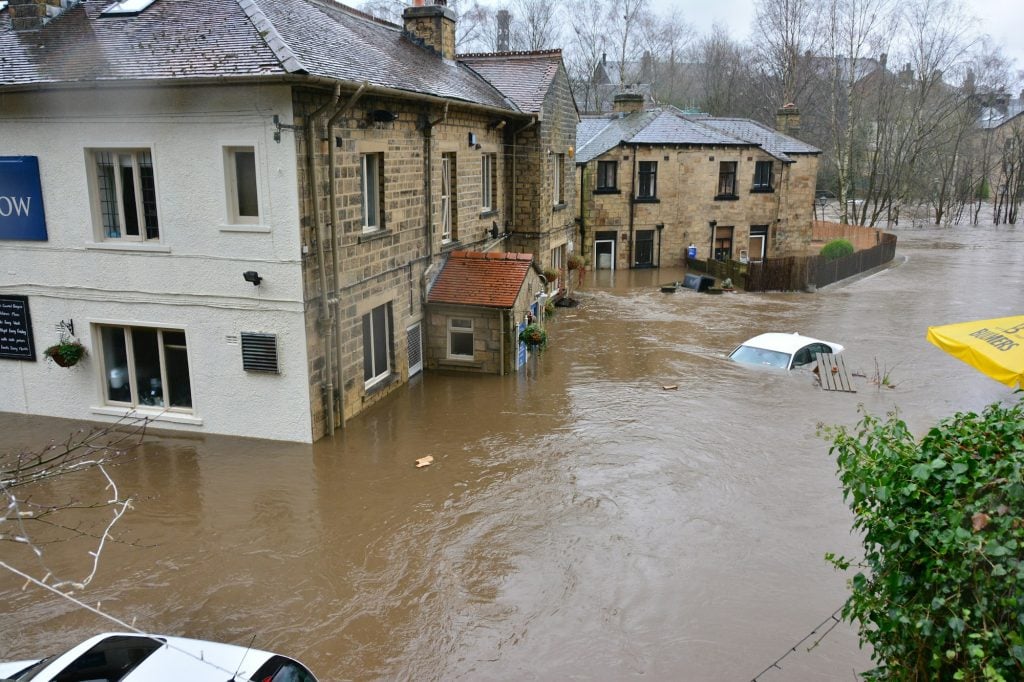
Engineers at the University of Hull tested six common door types in floodwater raised in 5 cm steps to 60 cm. Duct tape on the outside of a door cut leakage by 97 to 98%, while a wall of 54 sandbags managed around 70%. Tape on the outside works because the water presses it against the door. Read the story.
The science: pressure in liquids, p = ρgh (GCSE Physics, forces). Jobs: civil and hydraulic engineers, laboratory technicians.
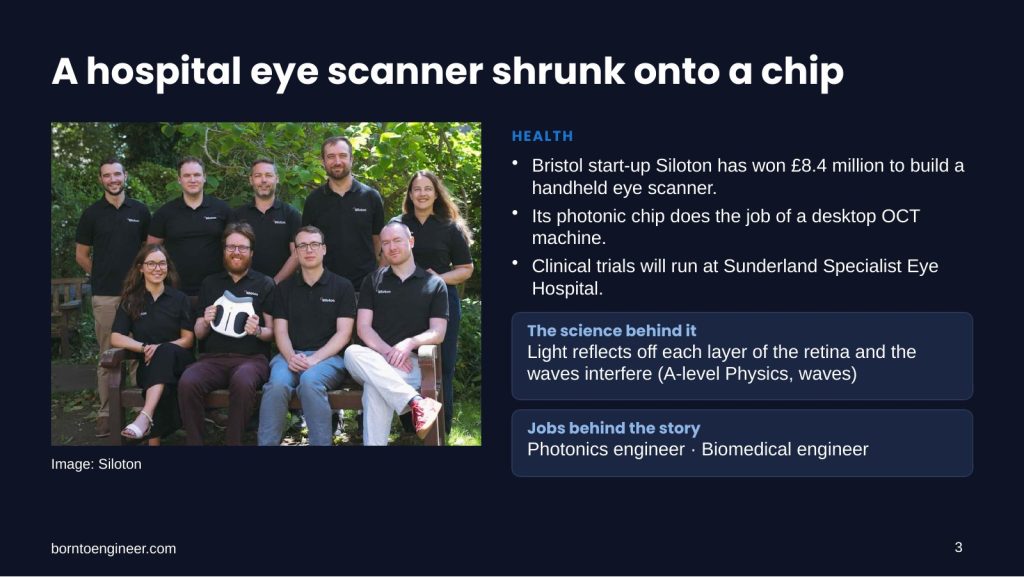
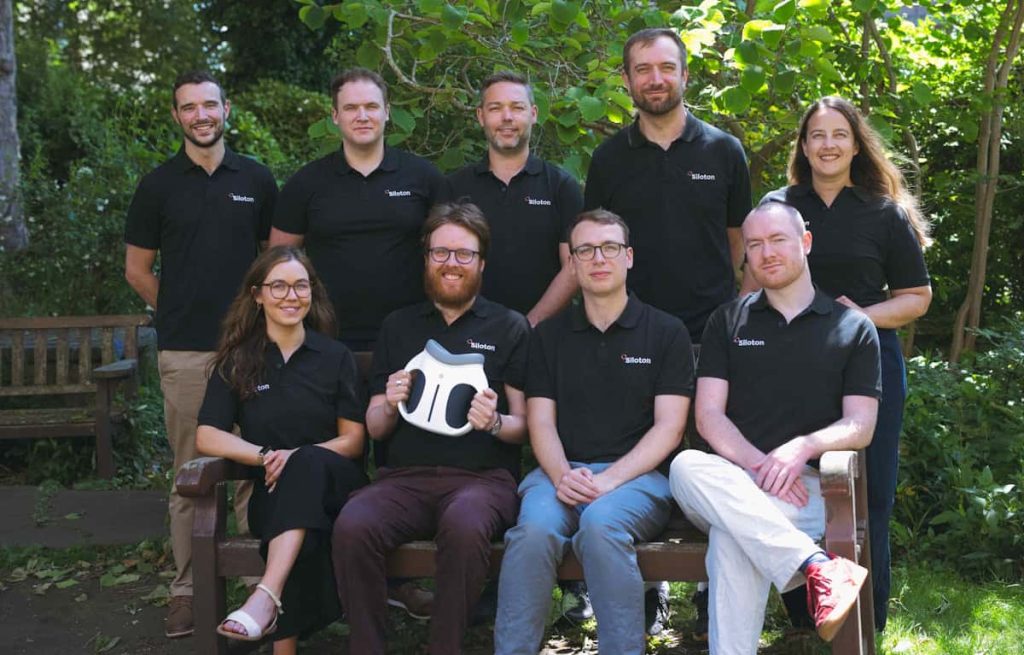
Bristol start-up Siloton has won £8.4 million from Innovate UK to develop GiraffeOCT, a handheld retinal scanner. Its photonic chip, BlueJay, does the job of a desktop optical coherence tomography (OCT) machine, and trials will run at Sunderland Specialist Eye Hospital. Read the story.
The science: light reflects off each layer of the retina and the reflected waves interfere (A-level Physics, waves). Jobs: photonics engineers, biomedical engineers.
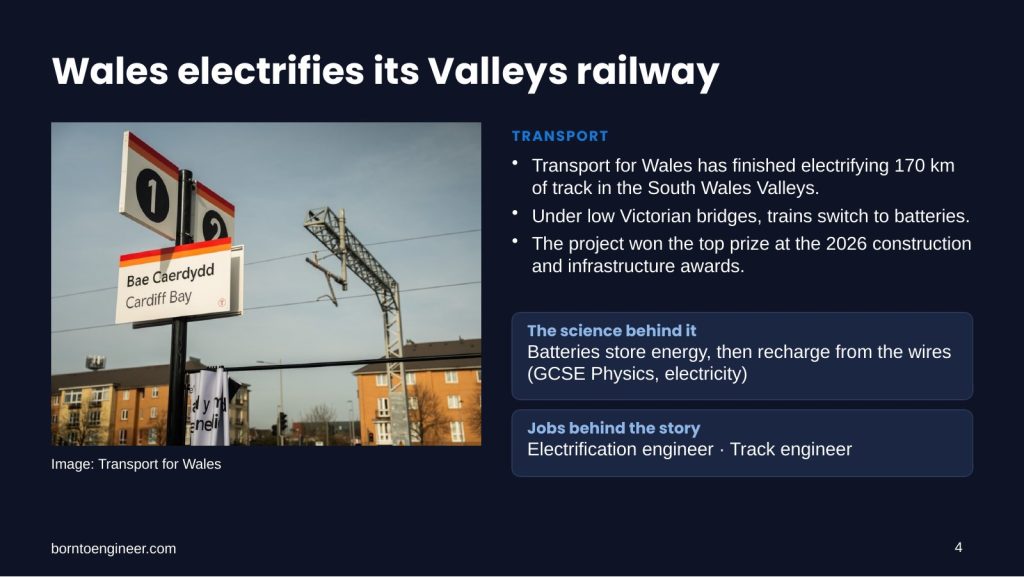
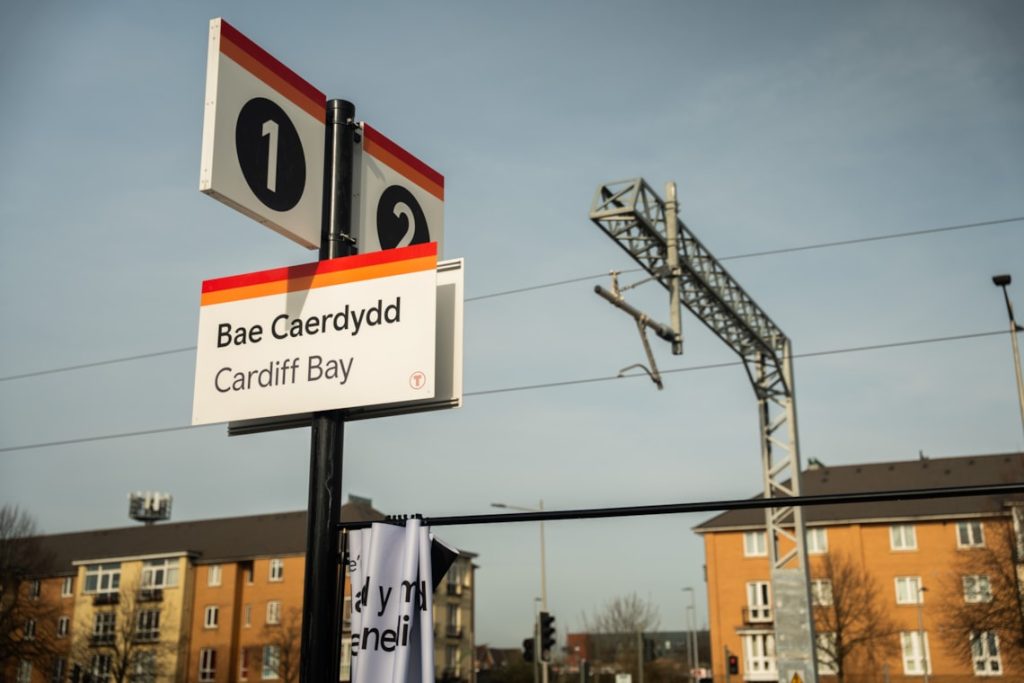
Transport for Wales has finished electrifying 170 km of the Core Valley Lines. Rather than rebuild every low Victorian bridge, the Smart Electrification System leaves gaps in the wires and trains run on batteries there, recharging when they are back under the wires. The project won the Sir John Armitt Prize at the British Construction and Infrastructure Awards 2026. Read the story.
The science: batteries as energy stores, charged from the overhead supply (GCSE Physics, electricity and energy). Jobs: electrification engineers, track and signalling engineers.
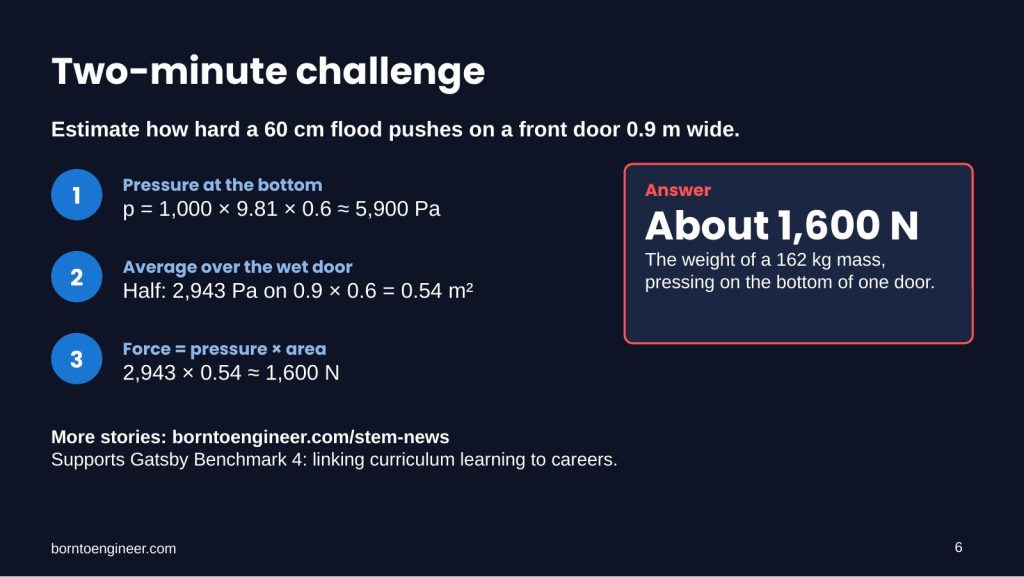
Estimate how hard a 60 cm flood pushes on a front door 0.9 m wide.
Answer: about 1,600 N, the weight of a 162 kg mass. Extension: halve the depth to 30 cm. The average pressure and the wet area both halve, so the force drops to a quarter, about 400 N.
More stories at borntoengineer.com/stem-news.
Links to the curriculum: A level, GCSE
Gatsby Benchmarks 2, 4, 5
Construction & Infrastructure
University of Hull tests for Flood Re found that duct tape on the outside of a front door cut flood leakage by up to…
Health
Bristol start-up Siloton wins £8.4 million from Innovate UK to develop GiraffeOCT, a handheld retinal scanner built on a photonic chip. It could bring…
Construction & Infrastructure
Transport for Wales completes the £1 billion Core Valley Lines electrification, using a Smart Electrification System that combines overhead wires with battery power to…