BepiColombo Mercury Orbit: Spacecraft Sheds Engine for Eight-Year Final Approach
ESA's BepiColombo has shed its transfer module after an eight-year journey, beginning the final approach to enter Mercury orbit in November 2026.
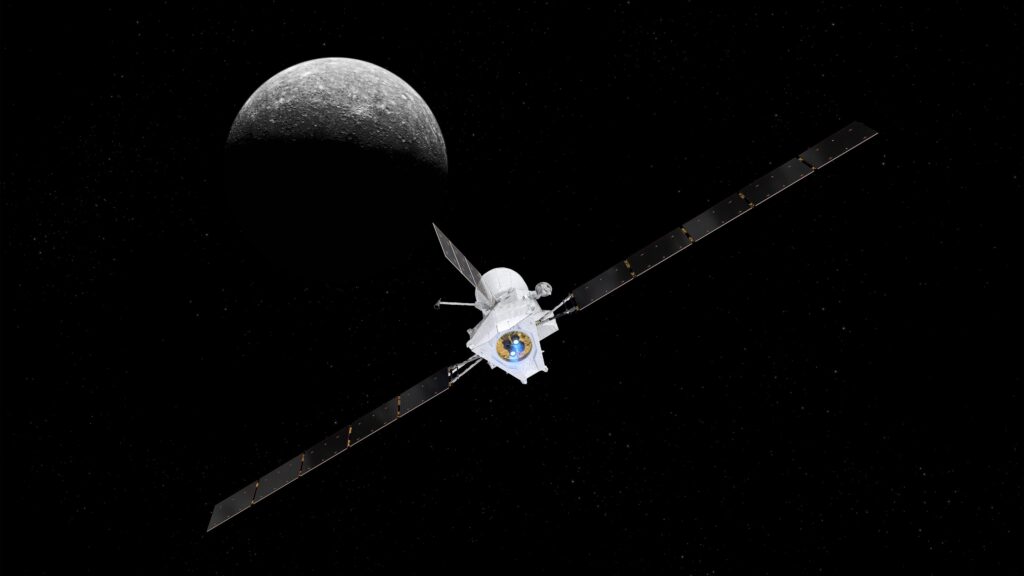
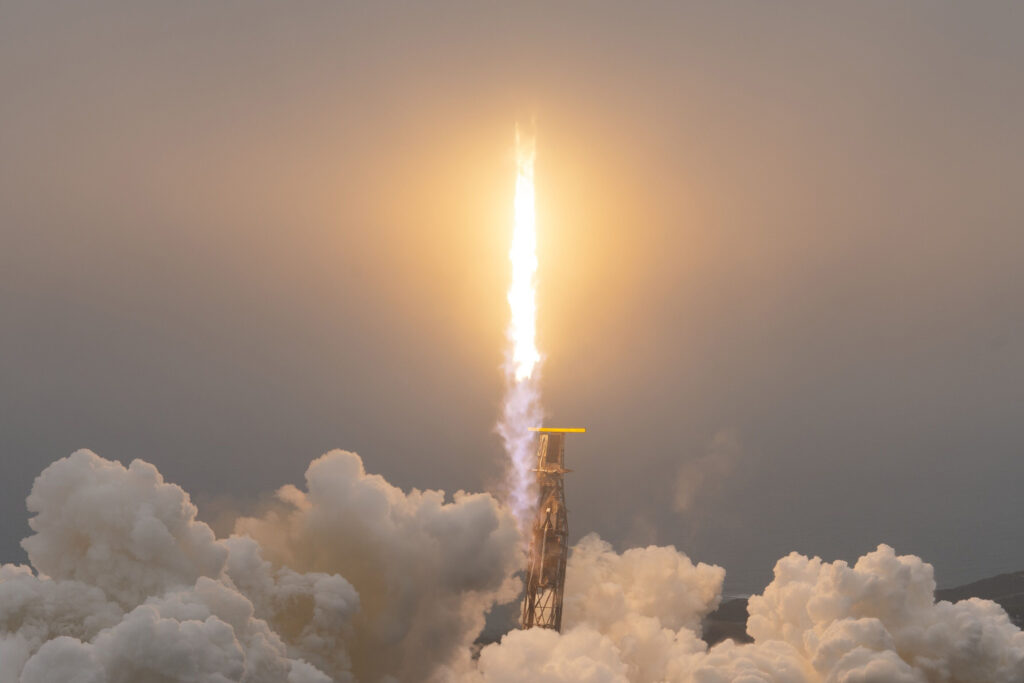
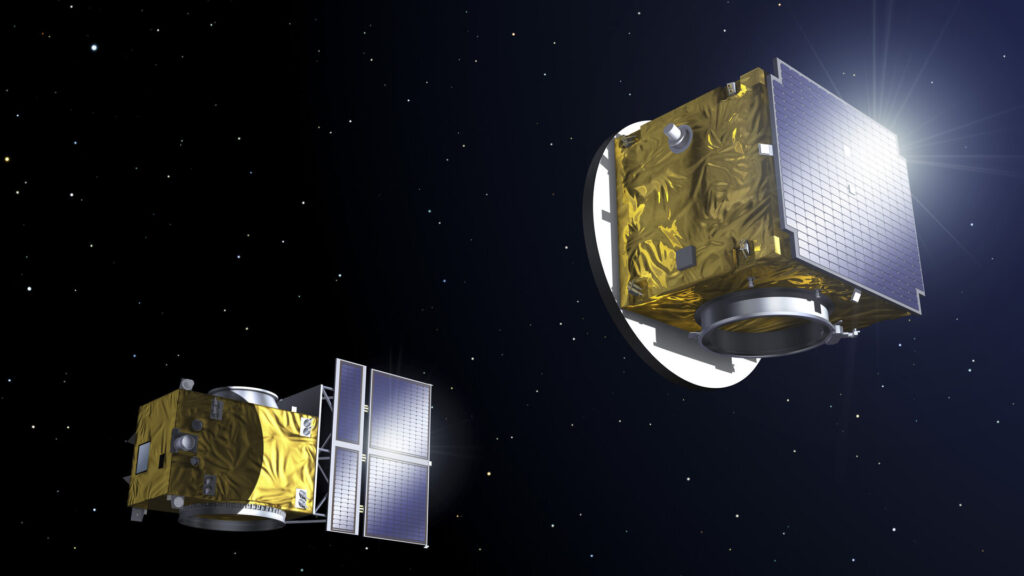
On 3 September 2026, after eight years, nine gravity assists, and travelling about 9.9 billion kilometres looping through the inner solar system[1], the ESA’s BepiColombo mission reached a point of no return. The Mercury Transfer Module, the propulsion unit used to guide the spacecraft since its launch in October 2018, detached and drifted into space[2][3]. The only remaining parts are two science orbiters linked together, now descending towards the smallest, hottest, and least understood planet in the solar system.
The separation marked the start of what the ESA calls the “arrival phase” and was immediately followed by a collective sigh at the European Space Operations Centre in Darmstadt, Germany[4]. Unlike the trip to Mars, the journey to Mercury is difficult because Mercury is deep in the Sun’s gravity well, causing a spacecraft heading towards the Sun to speed up rather than slow down. Without action, BepiColombo would have missed the planet. That is why mission planners avoided a direct route and instead designed a spiralling path using one flyby of Earth, two of Venus, and six of Mercury itself to gradually reduce its speed over eight years[5], as first reported by Euronews.
It was a serious test of patience. Although the originally scheduled arrival date was December 2025, problems with the spacecraft’s solar electric propulsion system forced engineers to revise the trajectory[6], adding almost a year to the journey. The spacecraft will now coast for an extra eleven weeks before carrying out the BepiColombo Mercury orbit insertion burn on 21 November 2026, without the transfer module[7].
The riskiest stage of the mission is the braking phase. Because Mercury has only about 38 per cent of Earth’s gravity, the spacecraft will travel at high speed. The engine must burn for the correct duration at the right position in space. If the burn is too short, BepiColombo would pass by; if too long, the spacecraft would crash. Real-time control from Earth is impossible since radio signals take several minutes to travel both ways. Therefore, the entire operation will be carried out using pre-loaded commands.
If the burn is successful, the two orbiters will spend the following weeks adjusting their orbits, separating from each other on 9 December[7]. The Mercury Planetary Orbiter, constructed by the ESA, will take a smaller orbit to map the geology and composition of the planet’s surface. The Mercury Magnetospheric Orbiter, built by JAXA[8], will move into a wider elliptical orbit to study Mercury’s surprisingly strong magnetic field and its interaction with the solar wind.
The sixteen scientific instruments were developed to address questions still unanswered since the NASA MESSENGER mission ended in 2015[9]. Why does Mercury have such a large iron core compared to its size? What processes cause the formation of the hollows, the strange bright pits found nowhere else in the solar system? Is there water ice hidden in the permanently shadowed craters at the poles?
For students studying A-level Physics, the mission is a textbook case of orbital mechanics. Each gravity assist uses the same principle of conservation of momentum as collisions on a snooker table, but on a scale suited to the masses of the planets and the distances between them.
Engineering deep dive
Surviving the Sun's Back Garden
Mercury's orbit lies between 46 and 70 million kilometres from the Sun. At perihelion, the solar radiation reaching the planet is about ten times greater than that reaching Earth[10]. Surface temperatures range from approximately -180°C on the night side to 450°C in direct sunlight. For engineers designing a spacecraft to function for years in that environment, thermal management was not just one difficulty. It was the difficulty.
The thermal protection system on BepiColombo is based on a multi-layered sunshield. The outermost layer has a high-temperature ceramic coating that reflects most solar radiation. Below this are insulating layers separated by vacuum gaps, working on the same principle as a vacuum flask. This relates directly to thermal physics taught at A-level: in space, radiation is the main way heat is transferred since there is no air and convection cannot occur. The insulation layers reduce conductive paths between the hot outer surface and the cooler spacecraft body.
The spacecraft's radiators, used to release extra heat into space, are located on the side always turned away from the sun. This is effective because BepiColombo keeps a fixed orientation relative to the sun during its orbit. This limits the instruments' pointing directions but ensures the thermal balance remains predictable. The solar panels, which would overheat if directed straight at the sun at Mercury's distance, are tilted at an angle and use specially developed photovoltaic cells that retain efficiency at high temperatures.
The gravity-assist course is an engineering method to solve a physics problem: moving towards the Sun increases kinetic energy, and to cancel that speed a conventional chemical rocket would need far more fuel than any launcher could carry. Instead, each time the spacecraft flew by a planet, it transferred a small portion of its kinetic energy to that planet, slowing down slightly. It is like throwing a tennis ball at a bowling ball rolling towards you - the tennis ball bounces back more slowly because it has given some energy to the bowling ball. Repeating this nine times over eight years slows the spacecraft enough for Mercury's gravity to capture it.
The solar electric propulsion system was used alongside gravity assists. Instead of burning chemical fuel in short bursts, the system ionised xenon gas and used an electric field to speed up the ions, creating a small but continuous thrust. Since ion engines have an exhaust velocity roughly ten times that of chemical rockets, they achieve a much greater change in velocity per kilogram of propellant. This efficiency enabled the mission. A-level students studying momentum and impulse will recognise the compromise: a smaller force applied over a longer time causes the same change in momentum as a large force applied briefly.
In November, the orbit insertion burn will use a conventional bipropellant engine, not an ion drive[11], since chemical propulsion is needed to provide the high thrust required for a time-critical manoeuvre. Engineers have only one chance to carry out the burn. The burn parameters were calculated using a model of Mercury's gravitational field improved with data from all six Mercury flybys. Tracking data from each flyby enhanced the model and reduced uncertainty about the final approach trajectory. This engineering is iterative: each flyby prepares for the next.
If BepiColombo succeeds, it will be the second mission to enter orbit around Mercury[9] and the first to place two orbiters into orbit simultaneously[12]. The scientific findings could lead to a new understanding of planetary formation in the inner solar system. However, the technical achievements may be just as significant. The thermal protection, solar electric propulsion, and multi-gravity-assist trajectory design are technologies and techniques that future missions to the inner planets will use.
Links to the curriculum: A level, GCSE
If BepiColombo succeeds, it will be the second mission to enter orbit around Mercury and the first to place two orbiters into orbit simultaneously. The scientific findings could lead to a new understanding of planetary formation in the inner solar system. However, the technical achievements may be just as significant. The thermal protection, solar electric propulsion, and multi-gravity-assist trajectory design are technologies and techniques that future missions to the inner planets will use.
Sources
12 sources
BepiColombo begins Mercury arrival with MTM separation success
Over the last eight years, BepiColombo has travelled 9.9 billion kilometres through the inner Solar System and completed nine planetary flybys to reach this historic milestone.
Checked 14 October 2026
BepiColombo begins Mercury arrival with MTM separation success
On 3 September 2026 at 15:49 CEST, the European Space Agency's BepiColombo Mission Control Team at the European Space Operations Centre (ESOC) received the signal they had been waiting for – BepiColombo’s Mercury Transfer Module (MTM) successfully separated from the spacecraft stack
Checked 14 October 2026
Launch date: 19/20 October 2018 Launch vehicle: Ariane 5
Checked 14 October 2026
BepiColombo begins Mercury arrival with MTM separation success
After an intense day of operations at ESA's mission control centre in Darmstadt, Germany, ESA, industry partners and the mission's scientific community celebrated the acquisition of signal confirming MTM's successful separation.
Checked 14 October 2026
the spacecraft is on an eight-year journey to Mercury, with one Earth flyby (April 2020), two Venus flybys (October 2020 and August 2021) and six Mercury flybys between October 2021 and January 2025 before arriving at Mercury in late 2026.
Checked 14 October 2026
BepiColombo begins Mercury arrival with MTM separation success
BepiColombo's route to Mercury needed a mid-course rethink after an issue reduced the power available from MTM's solar arrays. Mission teams adapted the trajectory, allowing the spacecraft to remain on track for arrival.
Checked 14 October 2026
MPO+Mio enter Mercury orbit: 21 November 2026 MPO and Mio separate: 9–10 December 2026
Checked 14 October 2026
JAXA provides the Mercury Magnetospheric Orbiter (Mio or MMO) and ESA provides the Mercury Planetary Orbiter (MPO)
Checked 14 October 2026
BepiColombo will be only the third mission to visit Mercury, and the second to enter orbit. The first was NASA’s Mariner 10, which flew past three times between 1974 and 1975; the second was NASA’s Messenger, which orbited the planet from 2011–2015.
Checked 14 October 2026
The solar intensity at Mercury is about 10 times that at Earth, and the mission will experience temperatures in excess of 450°C – comparable to a pizza oven.
Checked 14 October 2026
BepiColombo begins Mercury arrival with MTM separation success
Using MPO's chemical propulsion system, the MCT will fine-tune the trajectory ahead of Mercury orbit insertion on 21 November.
Checked 14 October 2026
BepiColombo begins Mercury arrival with MTM separation success
This separation is the first in a sequence of key manoeuvres that will ultimately see BepiColombo become the first mission to place two spacecraft in orbit around Mercury, in December 2026.
Checked 14 October 2026