ManufacturingBreakthroughs
Lucideon proposes a £500m ceramic matrix composites UK facility in Staffordshire, targeting aerospace, defence and nuclear supply chain sovereignty.

Although Stoke-on-Trent is not the first place most people associate with hypersonic flight, a suggestion put forward by Lucideon, a materials technology company headquartered in the city, might quickly alter that view.
The company has now revealed a plan worth £500 million for the construction of the UK’s first manufacturing plant on an industrial scale for ceramic matrix composites - advanced materials which enable jet engines to operate at temperatures at which conventional metal alloys would soften and fail. The site chosen is the Keele University Science Park and the aim is to establish a capability that Britain currently has no such thing as. As initially reported by The Engineer, two new companies, Oxide Ceramic Systems Limited and Non-Oxide Ceramic Systems Limited, have already been set up in order to carry out the project.
The figure showing this gap is striking. The United Kingdom currently lacks the ability to manufacture oxide or non-oxide high-temperature ceramics on an industrial scale. All the components that British aerospace and defence companies require - such as turbine shrouds and thermal protection tiles - have to be obtained from abroad. This dependence brings with it risk; if a foreign supplier encounters difficulties or if geopolitical tensions halt trade, UK manufacturers end up having to wait in a queue which they cannot control.
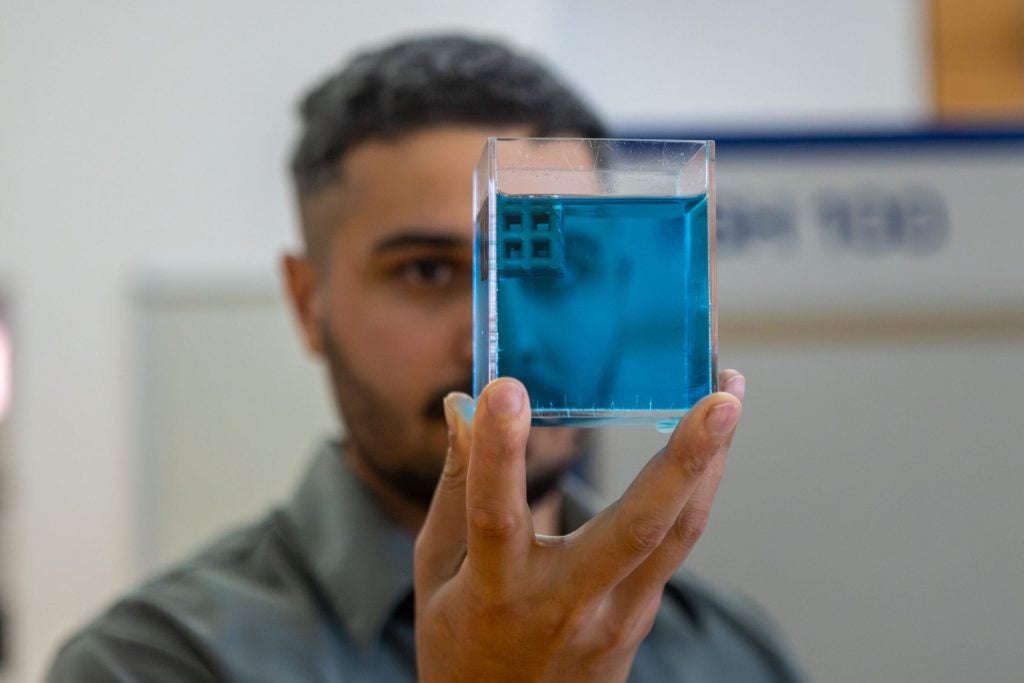
Ceramic matrix composites are at the forefront of materials engineering. By combining ceramic fibres with a ceramic matrix, they produce materials that can withstand temperatures above 1,600°C while weighing much less than the nickel superalloys they replace. In jet engines, this combination results in higher operating temperatures, improved fuel efficiency, and reduced cooling requirements. In nuclear reactors, it enables fuel cladding to survive accident conditions, and in hypersonic vehicles, it means that structural components remain intact when aerodynamic friction heats the aircraft’s skin to furnace-like temperatures.
The cost of the project is expected to exceed £500 million over a period of seven to ten years. Lucideon has requested that the government should provide just over £200 million, the rest to be financed by private investment and commercial revenue. It is no coincidence that the site is in Staffordshire since the area has for centuries had specialist knowledge in the manufacture of ceramics, ranging from Wedgwood pottery to modern technical ceramics, and Lucideon has itself been based in Stoke-on-Trent since 1948.
Tony Kinsella, the chief executive of Lucideon, has called the plan one which will “maximise our defence, energy, and economic security”. The facility will serve the aerospace, defence, and civil nuclear sectors and will provide a domestic supply chain for materials which are becoming more strategically important as engine designs move towards higher operating temperatures and as countries devote themselves to next-generation weapons systems.
The fact that the proposal is being made comes at a time when governments in Europe and North America are reviewing the extent of their reliance on concentrated supply chains for advanced materials; the UK’s Integrated Review has already regarded sovereign manufacturing capability as a national priority and ceramic matrix composites are clearly part of that discussion.
Engineering deep dive
There is a problem with metals in that when they are heated beyond a particular temperature they cease to be strong. The nickel superalloys, which form the main structural component of the turbine blades in modern jet engines, begin to fail above approximately 1,100°C. Although engineers have raised this limit using single-crystal casting and thermal barrier coatings, the basic limitation still exists in that as the temperature increases the metal atoms vibrate more and eventually the crystal lattice can no longer maintain its shape when under load.
Ceramic matrix composites take a completely different route. Rather than attempting to overcome the limitations of metals, they begin with materials that are naturally stable at very high temperatures. Silicon carbide (SiC) fibres, each thinner than a human hair, are woven into a fabric-like preform. The preform is then filled with a ceramic matrix, usually also silicon carbide, by means of chemical vapour infiltration (CVI) or melt infiltration. The end product is a material in which the fibres carry the structural load while the matrix transfers stress between them and guards the fibres against the environment.
You will see this principle being described in the section on stress and strain in A-level Physics. Individual ceramic fibres are brittle and will break if pulled. However, when a large number of fibres are woven together and held together by a matrix, their behaviour is different: if a crack begins in the matrix, it reaches a fibre and is redirected along the fibre-matrix interface rather than going straight through. It is this redirection of cracks which is responsible for the toughness of CMCs, a feature which pure ceramics are well known to lack.
The difficulty involved is in the manufacturing process. This consists of putting the fibre preform into a furnace and then passing precursor gases - usually methyltrichlorosilane and hydrogen - over it at temperatures ranging from 900°C to 1,100°C. The gases break down and deposit silicon carbide onto the fibres, thus slowly filling the spaces in the preform. The process is slow in nature; it can take weeks for a single component to be completely infiltrated, and the porosity of the final part has to be carefully controlled in order to prevent weak spots.
CMC systems based on oxides involve a different chemical approach; those containing alumina fibres in either an alumina or a mullite matrix have good resistance to oxidation and do not require protective coatings, but they generally function at somewhat lower temperatures than SiC/SiC systems. Lucideon's intention to produce both oxide and non-oxide systems within the same facility is ambitious since the two types demand different processing equipment and expertise.
For students who are studying materials as part of their work in Design and Technology or Physics, CMCs show a more general principle namely that composite materials are designed rather than discovered. In order to obtain particular properties, engineers select the type of fibre, the weave structure, the chemistry of the matrix and the method of processing. A CMC intended for use in a turbine shroud has a different fibre layup from one that is designed for a rocket nozzle, even if both of them make use of the same base materials. It is this capacity to adjust the properties by means of the architecture, rather than just picking from an existing range of alloys, that makes composites engineering such a rich and rapidly developing area.
The link to A-level material is straightforward. Concepts such as Young's modulus, thermal expansion coefficients, stress concentration factors, and the difference between toughness and hardness all come up in CMC design. The reason why a ceramic is hard yet brittle and why the addition of fibres alters that situation is exactly the kind of thinking that A-level Physics and Maths are developing.
Links to the curriculum: A level
It is still uncertain whether the government will support Lucideon’s proposal. The amount requested - - £200 million) is considerable and there are strong competing demands on public spending. However, the strategic case is difficult to ignore. If Britain desires to develop the next generation of jet engines, nuclear reactors, and defence systems without having to rely on foreign suppliers for their most demanding components, it will have to produce these materials domestically. In fact, it appears that Staffordshire has been getting ready for this situation for longer than anybody realised.
Credit via theengineer.co.uk
ManufacturingBreakthroughs
Energy & EnvironmentInnovation
Electronics & CommunicationsBreakthroughs

Energy & EnvironmentInnovation